Exploring postgraduate students' research identities when using digital technology for research
Abstract
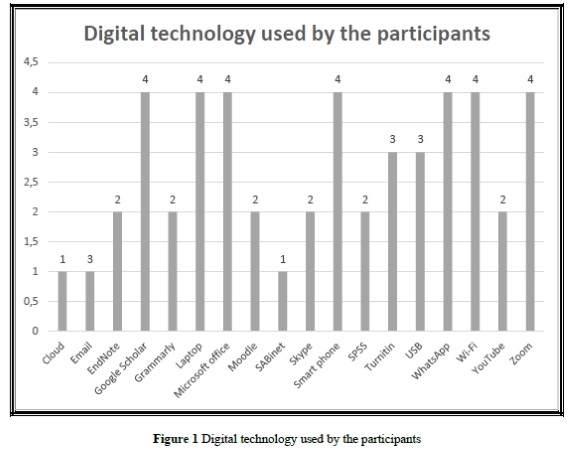
Postgraduate students use digital technology for their research, adopting specific identities related to their digital practices. Research identities are cognitive positions taken by researchers when using digital technology for research. Debate exists in literature regarding the classification of these research identities, with concepts like professional, societal, personal, and natural identities being prominent. Given the diverse age groups and digital competency among postgraduate students, their research identities vary widely. In this qualitative case study reported on here, we explored how 4 purposively and conveniently selected master's students identified their research identities using digital technology such as laptops, Google Scholar, YouTube, Grammarly, WhatsApp, Microsoft Office, and EndNote. Data were generated through reflective journals, semi-structured interviews, and focus group discussions, and analysed using thematic interpretation and the unified theory of acceptance and use of technology (UTAUT) framework. The findings reveal that participants mostly recognised their professional, societal, and personal research identities, but failed to recognise their natural identities. We recommend that postgraduate students reflect on their personalisation identities to better understand their individual and research needs.
digital technology; identity; postgraduate professional; research; social
 Thumbnail