GeoGebra for learning and teaching: A parallel investigation
Abstract
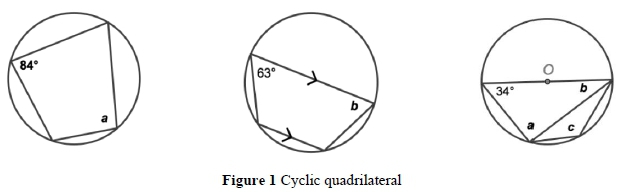
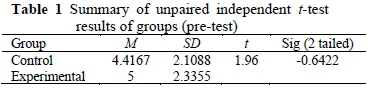
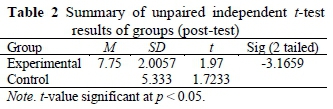
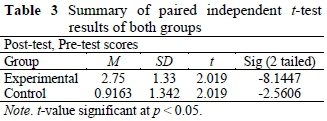
In the study reported on here, we investigated the effects of the use of dynamic geometry software (DGS) (i.e., GeoGebra) on learners' learning and a teacher's beliefs. The learners and teacher involved in the study were from a high-poverty, rural high school in South Africa. We compared grade 11 learners (N = 56) who used GeoGebra in the context of learning circle geometry with learners who experienced geometry through traditional lecture-based instruction. Participating learners were from classes in a public school located in the rural Umkhanyakude district of KwaZulu-Natal, Republic of South Africa. Results showed that learners using GeoGebra were more successful at solving problems and justifying their statements, while the other learners provided a limited justification for their answers. In a parallel and complementary investigation the teacher's attitudes toward using GeoGebra as an instructional tool were considered qualitatively. Results showed that even in high-poverty, rural settings where the availability of technological resources are limited, the use of GeoGebra affected learners' learning and had positive effects on the teacher's beliefs regarding teaching and learning.
Euclidean geometry; GeoGebra; performance; theorems and proofs
 Thumbnail