Test-taking skills of secondary students: the relationship with motivation, attitudes, anxiety and attitudes towards tests
Abstract
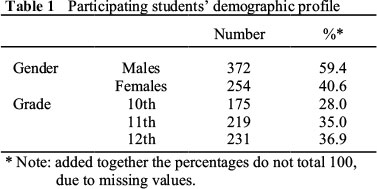
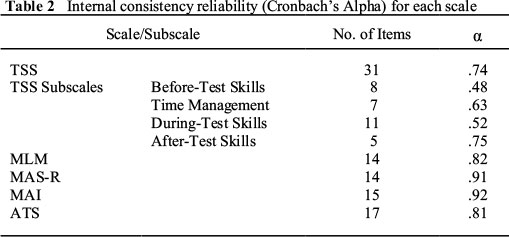
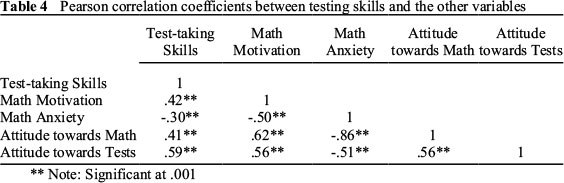
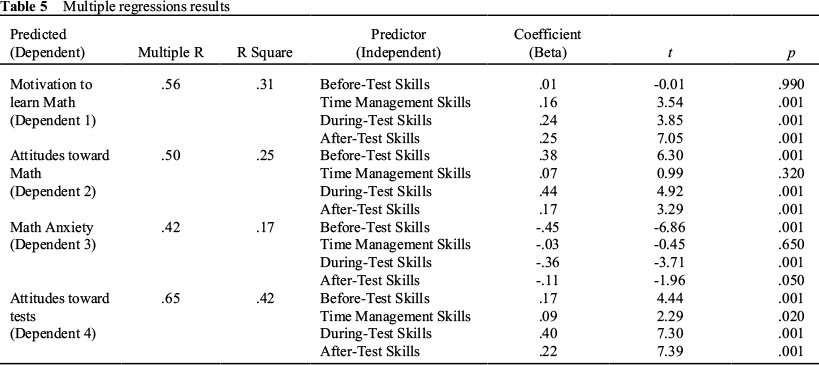
Test-taking skills are cognitive skills that enable students to undergo any test-taking situation in an appropriate manner. This study is aimed at assessing the relationship between students' test-taking skills and each of the following variables: motivation to learn mathematics; mathematics anxiety; attitudes towards mathematics; and attitudes towards tests. The study was conducted on a random sample of 626 (372 males and 254 females) secondary school students. The following instruments were used in the data collection: the Test-taking Skills Scale (TSS); the Mathematics Motivated Strategies for Learning Questionnaire (MMSLQ); the Mathematics Anxiety Scale-Revised (MAS-R); the Mathematics Attitude Inventory (MAI); and the Attitude towards Tests Scale (ATS). A positive and significant relationship was reported between students' test-taking skills and each student's motivation to learn mathematics, attitudes towards mathematics, and attitudes towards tests; while mathematics anxiety was shown to have a significant negative relationship with test-taking skills. Test-taking skills account for more than 30% of the variation in motivation to learn mathematics, 25% in attitudes towards mathematics, 17% in mathematics anxiety, and more than 40% in attitude toward tests. The study concluded the improvement of secondary students' testing skills to be significantly correlated with variables that play a substantial role in a student's level of achievement in mathematics.
attitudes toward mathematics; attitudes toward tests; mathematics anxiety; motivation to learn mathematics; test-taking skills