The implications of the National Norms and Standards for school funding policy on equity in South African public schools
Abstract
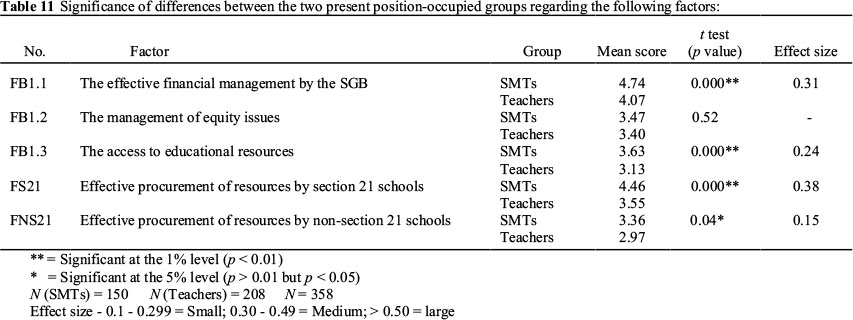
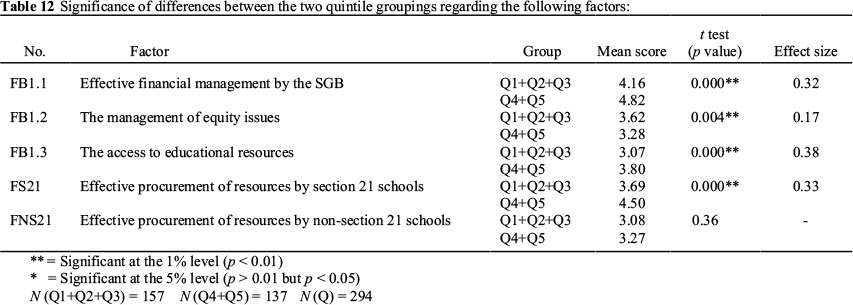
The government's educational reforms since 1994 have focused on equity and redress. Redressing historical imbalances and achieving equity are fundamental policy mechanisms in attempts to restructure South African education. This aspiration is demonstrated in many education policies including the National Norms and Standards for School Funding (NNSSF) policy. While inequalities in resource allocation from the state have been removed, inequalities persist due to the inability of the state to provide free education to all, parents' inability to pay user-fees, the unavailability of qualified teachers in rural schools and unfavourable learner-teacher ratios. A quantitative research was conducted to investigate the implications of the NNSSF policy on equity in public schools in the Tshwane West District of the Gauteng Province. Based on the three first order factors derived from the first analytic procedure, namely, "The effective financial management", "The management of equity issues" and "Access to educational resources", it was found that despite substantial government interventions in the education system, equity has not been fully realised.
access; equity; financial management; funding; inequality; National Norms and Standards; no-fee schools; policy; school fees; social justice
 Thumbnail
 Thumbnail
 Thumbnail