Corrective feedback via e-mail on the correct use of past tense among Iranian EFL learners
Abstract
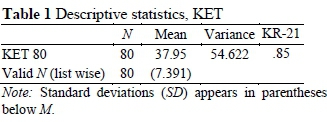
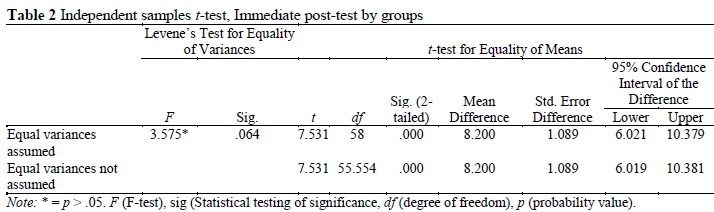
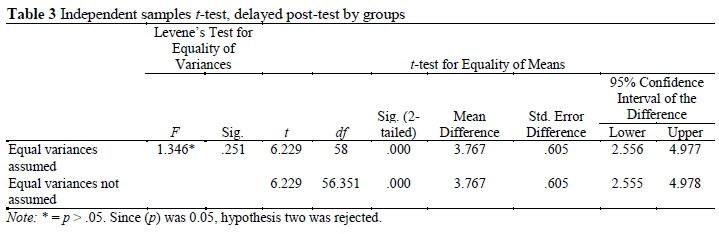
This study explores the differential effect of two types of corrective feedback strategies - explicit and implicit - on the acquisition and retention of correct past form of irregular verbs by Iranian English as Foreign Language (EFL) learners. Sixty out of 80 pre-intermediate EFL learners were selected as the participants, based on their performance on Key English Test (KET); their scores were between one standard deviation (SD) above and below the mean (M). Thereafter, they were randomly assigned into two experimental groups: the explicit group (N = 30) who received explicit corrective feedback and the implicit group (N = 30), who received implicit feedback. Results indicate that the explicit group outperformed the implicit group on the immediate and delayed post-tests. The findings of this study have theoretical and pedagogical implications for teachers. Feedback strategy provides teachers with information on effective teaching and student comprehension, and encourages them to use technology in a way that reduces anxiety and facilitates social learning.
acquisition; computer mediated communication (CMC); electronic mail (email); interactional feedback; past tense; retention