Exploring self-directed learning behaviour among Grade 9 natural sciences learners
Abstract
Research on adolescence has shifted from perceiving it as a period of turmoil and confusion to focusing on developmental transition and adjustment. There is increased emphasis on understanding adolescent learning and development in response to educational environments. However, little is known about self-directed learning (SDL) in adolescent development as manifested within a specific subject. SDL involves learners owning their learning and being intrinsically motivated. In this article we describe the findings related to behaviour demonstrated by Grade 9 adolescent learners of natural sciences. The exploration provided a basis for understanding how to support meaningful learning within the context of secondary school natural sciences education, thereby enhancing learners' SDL behaviour. In this multiple case study we examined the patterns that emerged from focus group interviews with 5 learner participants randomly selected from 5 schools in a school district in South Africa (n = 25). Inductive thematic analysis was used to analyse the transcribed data, with the aim of identifying specific patterns and emerging themes, which were framed according to Garrison's 3-dimensional SDL model. The findings indicate a lack of SDL behaviour among learners in all 3 dimensions, but particularly in self-monitoring. Based on the findings, we recommend that learners in this stage of their education develop the abilities necessary to create a strong foundation for the learning requirements they may face in higher education and beyond. Future studies are needed to determine the extent to which enhancing adolescent SDL behaviour supports positive development.
adolescent; natural sciences; self-directed learning; self-directed learning behaviour
Introduction
Self-directed learning (SDL) is defined as "a process in which individuals take the initiative, with or without the help of others, in diagnosing their learning needs, formulating learning goals, identifying human and material resources for learning, choosing and implementing appropriate learning strategies, and evaluating learning outcomes" (Knowles, 1975:18). The concept of SDL emerged from the field of adult learning (Morris & Rohs, 2021; Uys, 2021). However, this has changed recently, with SDL now also being studied at school level (Olivier & Wentworth, 2021; Van Deur, 2017). Krugell (2019), for example, explored the affordances of case studies in improving school learners' SDL. Nevertheless, little research was done on exploring SDL in the context of specific subjects, particularly in school settings. Van Deur (2017) examined managing SDL in primary school education. Abubakar and Arshad (2015) focused on the roles of teachers and learners in developing learners' skills in secondary school chemistry in Nigeria. The findings of their study seem to support the idea that SDL is a process that occurs spontaneously as one learns (Karatas & Zeybek, 2020). However, the ability and the desire to self-direct are not inherent abilities that manifest uniformly in all settings (Loeng, 2020). This is consistent with assertions that SDL is a discipline-specific and context-specific process (Hiemstra & Brockett, 2012) in the sense that a learner with a high degree of SDL readiness in one discipline may not demonstrate the same level of readiness in another discipline (Brandt, 2020). These assertions drawn from the literature underscore the need for a more nuanced understanding of SDL in specific-subject domains within the school context.
However, while SDL was initially largely framed within the field of andragogy, Garrison (1997) was the first to propose a three-dimensional SDL model that extended application of SDL to the school context. Although Garrison's (1997) model helps legitimise exploration of SDL in the school context, it has mainly been applied in the context of undergraduate students (Abd-El-Fattah, 2010; Azizah & Susanti, 2021; Zhu, Bonk & Doo, 2020). Furthermore, the studies cited above were limited to measuring Garrison's (1997) three-dimensional SDL model through self-reports, which may not fully encapsulate the complexity or the context of learners' SDL behaviour. Recognising these gaps, we aimed to contribute to the scholarship by applying Garrison's (1997) model to identify and describe SDL behaviour of Grade 9 natural sciences learners at five selected schools in the North West province of South Africa, using qualitative methods. A qualitative approach was considered necessary to avoid response bias, as the emphasis was on searching for patterns and trends associated with learners' SDL behaviour using Garrison's (1997) SDL model as a lens to view learners' responses.
In this article we also discuss the potential for fostering learner SDL behaviour among Grade 9 learners to inform intervention and policy. This is especially important given that Grade 9 learners, who are considered adolescents (someone between the ages of 10 and 19), are in a maturation phase where they can pivot rapidly in a positive or a negative direction (Dahl, Allen, Wilbrecht & Suleiman, 2018). Learners in the adolescent phase are at risk of manifesting mood and anxiety disorders (Pfeifer & Allen, 2021), behavioural challenges in the classroom (Masedi, Pila-Nemutandani, Kolobe & Tsabedze, 2023), a lack of motivation (Uus, Mettis & Väljataga, 2022), and vulnerability to peer influence (Blakemore, 2018). Given that little is known about SDL in adolescence (Schweder & Raufelder, 2022), it is necessary to highlight the potential of teachers and schools developing SDL behaviour in learners as a means of laying the foundation for life skills that will help them navigate the sensitive and critical phase of adolescence more smoothly (Zhao, Zheng, Pan & Zhou, 2021).
Literature Review
Self-directed learning
SDL provides a learning perspective that enables individuals to adjust to the demands of the changing world (Brandt, 2020; Lama, 2021; Morris, 2019). Based on Knowles' foundational definition of SDL, Robinson and Persky (2020:293) explain SDL as a six-stage process:
developing goals for study; outlining assessment with respect to how the learner will know when they achieve those goals; identify the structure and sequence of activities; lay out a timeline to complete activities; identify resources to achieve each goal; and locate a mentor/faculty member to provide feedback on the plan.
Onah, Pang and Sinclair (2020) applied a six-step process to qualitatively explore SDL skills among university students. While their model was not adopted in our study, it demonstrates how SDL can be meaningfully investigated through qualitative methods. By contrast, we address a gap in the literature, by applying Garrison's (1997) SDL model, which was specifically designed for schools setting but has previously been used mainly in higher education settings. In so doing, we contribute to a broader understanding of SDL among adolescents. Furthermore, other studies that have explored SDL from Garrison's perspective have focused on quantifying and measuring SDL. Azizah and Susanti (2021) conducted quantitative research with 20 students at a state university in Surabaya. The findings of their study reveal that the self-management dimension of SDL was the most prevalent, followed by motivation. The findings also show that self-monitoring was the least prevalent dimension. However, using quantitative survey instruments to explain SDL behaviour, one runs the risk of having limited explanatory power. Mentz and De Beer (2021) assert that the predominantly quantitative approach in SDL research often does not provide a thick description of SDL, as SDL quantitative instruments tend to lack the sensitivity required to measure nuanced changes in SDL. Thus, with our study we broadened the line of inquiry by implementing a qualitative approach.
Self-directed learning behaviour
Nakayama, Mutsuura and Yamamoto (2021:395) consider learner characteristics to be "individual mental factors that may affect learning", while learner behaviour is regarded as a skill. However, researchers of SDL use the terms "SDL skills" (Brandt, 2020:9; Karatas & Zeybek, 2020; Lama, 2021:310) and "SDL characteristics" (Chianchana, 2016:8; Du Toit-Brits & Van Zyl, 2017:122) interchangeably. SDL behaviour can be regarded as abilities, sets of skills, or characteristics required for SDL.
The differences in descriptions of SDL by various authors illustrate the multifaceted nature of SDL, which should be considered when choosing an SDL model to describe and explain learners' SDL behaviour within the school context. The three-dimensional model by Garrison (1997) has the potential to provide a robust framework for exploring learners' SDL behaviour, given that the model accommodates both internal and external SDL activities, and because it integrates cognitive, motivational, and social aspects relevant for a school setting (García Botero, Botero Restrepo, Zhu & Questier, 2021). The SDL behaviour based on Garrison's (1997) model can be described as follows:
• The self-management dimension refers to the social and behavioural implementation of learning activities associated with the learning process (Garrison, 1997). SDL behaviour related to the self-management dimension concerns "the enactment of learning goals and the management of learning resources and support" (Garrison, 1997:22).
• The self-monitoring dimension is defined as "the process whereby the learner takes responsibility for the construction of personal meaning", which reflects "a commitment and obligation to construct meaning through critical reflection and collaborative confirmation" (Garrison, 1997:24).
• The motivation dimension reflects "perceived value and anticipated success of learning goals at the time learning is initiated", where SDL behaviour associated with motivation includes "commitment to a particular goal and the intent to act" (Garrison, 1997:26).
Natural Sciences
The context of this study is natural sciences (NS) in the Senior Phase (Grades 7-9) in South African secondary schools. This research involved learners in Grade 9, which forms part of the General Education and Training (GET) band. In NS, the teaching and learning process has three distinct aims: Specific Aim 1 is to practise science (the syntactical nature of science); Specific Aim 2 is to know the subject content and make connections (the substantive nature of science); and Specific Aim 3 is to understand how science is used (science-and-society approaches) (Department of Basic Education [DBE], Republic of South Africa [RSA], 2011:10). Within the context of this study, Grade 9 is considered a crucial time for laying the foundation for life skills to assist learners to negotiate the delicate and critical phase of adolescence.
Adolescent learning and development
Adolescence is the transitional stage of development between childhood and adulthood, representing a critical period for identity development and learning (Dahl et al., 2018). In this transitional stage, schools play a significant role in shaping adolescents' self-understanding (Schweder & Raufelder, 2022; Verhoeven, Poorthuis & Volman, 2019). Literature on educational psychology plays a crucial role in understanding the learning processes, emotional development, and responses of adolescents in educational settings (Garaigordobil, 2023). Research trends involve examining the transition to young adulthood, the contextual factors influencing adolescent issues, and the resilience demonstrated in high-risk situations (Galambos & Leadbeater, 2000). Hengstler (2001) posits that fostering self-directed adolescent learners in distributed learning environments is essential for transitioning into adulthood. Schweder and Raufelder (2019:74) assert that when SDL is introduced in a school context, teachers can provide individualised feedback based on each learner's "existing physiological and psychological state and abilities." Empirical evidence has shown that SDL intervals during instruction have positive impacts on adolescents' motivational profiles and learning (Schweder & Raufelder, 2022). Given the benefits of SDL for adolescents' development, we explore adolescent SDL behaviour in the school context to inform how subject-specific learning processes can be better aligned to address identified gaps.
Theoretical Framework
To support the data analysis, we drew on Garrison's (1997) model of SDL, which comprises the dimensions of self-monitoring, self-management, and motivation. According to Garrison (1997), these three dimensions are conceptualised based on collaborative constructivism, which draws on insight from social constructivism and cognitive theories of learning.
Social constructivism emphasises that a learner constructs meaning in collaboration with others and in isolation (Chuang, 2021). Cognitive theories are concerned with the learner's internal thinking processes. Vygotsky (1978) posits that learners first socially construct knowledge (collaborative construction) after which the new knowledge is internalised. Cognitive theories explain learners' internal thinking processes (Allen, Rosch & Riggio, 2022). However, for the NS classroom, it is essential to focus on what Veresov (2004:4) refers to as the "hidden dimension" of Vygotsky's work. The word "category", as Vygotsky's term has been translated into English, refers to the inter-psychological category (where learners construct knowledge together in social groups) and the intra-psychological category (where internalisation occurs). However, Veresov (2004:6) shows that the Russian word used by Vygotsky (1978) means "dramatic event, collision of characters on the stage." This means that cognitive dissonance should be created in the classroom, and this requires engaging pedagogies. This could also unlock SDL behaviour consistent with Garrison's (1997) model.
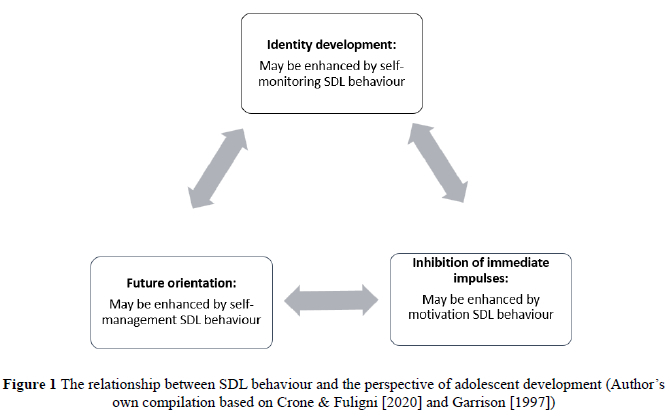
Applying collaborative constructivist theory to foster SDL behaviour with a sustainable vision in line with adolescent development in a classroom context can be achieved by enacting the three dimensions of SDL proposed by Garrison (1997), namely self-management, self-monitoring, and motivation. Shahrouri (2016) found that implementing Garrison's (1997) model can facilitate teachers' efforts to meet learning outcomes. While Shahrouri (2016) highlights the potential of Garrison's model, his study lacks specific pedagogical guidance on how the model can be applied in a way that is responsive to adolescents' developmental needs. This gap highlights the need to explore how SDL behaviour intersects with key developmental processes. By framing SDL according to the perspective of adolescent development, as illustrated in Figure 1, we draw on collaborative constructivist theory to offer a pedagogical foundation for fostering SDL behaviour in ways that are in line with the developmental processes of adolescents.
By using collaborative constructivist theory, which asserts that learning is mediated socially and constructed through interaction and reflection, Garrison's (1997) SDL model can be effectively integrated within the school context by aligning its dimensions with the key processes of adolescent development. The three aspects of the revised model is described below.
• The identity development aspect is concerned with the process through which adolescents form a clear and coherent sense of who they are (Crone & Fuligni, 2020). Thus, well-established self-monitoring behaviour related to the development of cognitive processes by learners can help adolescents set and achieve goals consistent with their values. Self-management behaviour can also support identity development, by enabling learners to make autonomous decisions about their learning path.
• The future orientation aspect involves the ability of adolescents to think about, plan for, and set goals for the future (Crone & Fuligni, 2020). Development of self-management behaviour associated with task control can support the development of adolescent decision-making and goal-setting skills. Self-monitoring behaviour is consistent with the growing metacognitive capacity of adolescents to reflect on their actions and evaluate progress towards personal and academic goals, thereby reinforcing future-oriented thinking.
• Lastly, inhibition of immediate impulses is consistent with a future-oriented adolescent, who is more likely to delay immediate rewards in favour of long-term benefits (Crone & Fuligni, 2020). Motivation plays a key role in initiating and sustaining effort towards learning and achieving goals (Garrison, 1997). Thus, motivation behaviour can support adolescents' ability to inhibit immediate impulses, which is necessary to pursue long-term goals and maintain self-control, given that motivation is related to adolescents' emerging sense of purpose and their ability to regulate emotions and impulses in pursuit of longer-term outcomes (Verhoeven et al., 2019).
The interrelationship of the SDL behaviour provides a unique opportunity to shape how adolescents transition into learners who are driven (motivation behaviour) to take collaborative control (self-management behaviour) of their cognitive processes (self-monitoring behaviour), ensuring positive development of their identity, where they become responsible, self-aware, and goal-directed adults. Accordingly, to achieve this, exploring the current SDL behaviour of Grade 9 learners is necessary as a starting point. The following research question guided this process: What is the SDL behaviour of Grade 9 Natural Sciences learners at five selected schools in the North West province?
Based on our understanding, the aim was to identify which SDL dimension corresponds well with the adolescent development process, suggesting that enhancing learners' SDL behaviour can meaningfully support their developmental needs.
Methodology
Based on the research question, we employed a qualitative design using a multiple case study approach. This design was well suited for gaining an in-depth understanding of learners' SDL behaviour within a specific social context (Alharahsheh & Pius, 2020). Nieuwenhuis (2016) explains that purposive sampling involves selecting participants based on specific characteristics or criteria that qualify them as holders of the necessary data for the study. In the context of this study, the participants had to be Grade 9 learners who had been taught NS. We included 25 Grade 9 NS learners who were conveniently sampled from one school district in the North West province, South Africa. The use of convenience sampling helped to mitigate time and logistical constraints in accessing five schools, which were situated within the same school district in the same province. To ensure reliability and credibility of the data, learners were randomly selected from a class list at each school, which guaranteed a fair and unbiased selection process.
Ethical guidelines were adhered to, as we requested an independent person to serve as a mediator in obtaining permission from the school principals and the school governing bodies. In addition, consent from the parents and the learner participants was obtained, mediated by an independent person. The participants were 14 girls and 11 boys with ages ranging from 14 to 16 years and representing different ethnic groups. Although the schools were in the same school district, they were heterogeneous in terms of socio-economic background. For instance, Schools D and E still faced persistent challenges in accessing learning materials, facilities, and resources. School A was situated in a township, while Schools B and C were in an urban area and were well resourced.
To collect data, semi-structured interviews were conducted using focus groups with five learner participants from each of the five schools (n = 25). According to Willemsen, Aardoom, Chavannes and Versluis (2022), a group of four to five participants is considered sufficient for an optimal discussion that allows all participants to express their views. Each interview session lasted 20 to 30 minutes and was held on the school grounds after school hours at times that we agreed upon with the participants. The focus group interview questions were prepared in advance, informed by the above-mentioned theoretical framework, and they were designed to elicit SDL behaviour. For example, participants were asked to describe some of the activities that enabled them to better understand the topics taught in NS lessons. This question was aimed at behaviour related to the self-management dimension. Participants were also asked to describe the study methods that helped them to perform well in NS, which was aimed at eliciting self-monitoring behaviour through prompting. Lastly, the participants were asked to describe their roles as learners in NS lessons, where motivation behaviour was targeted. The use of interviews as an approach was well suited, as it allowed for the use of prompts to gather more information relevant to the line of inquiry (Willemsen et al., 2022).
Data Analysis
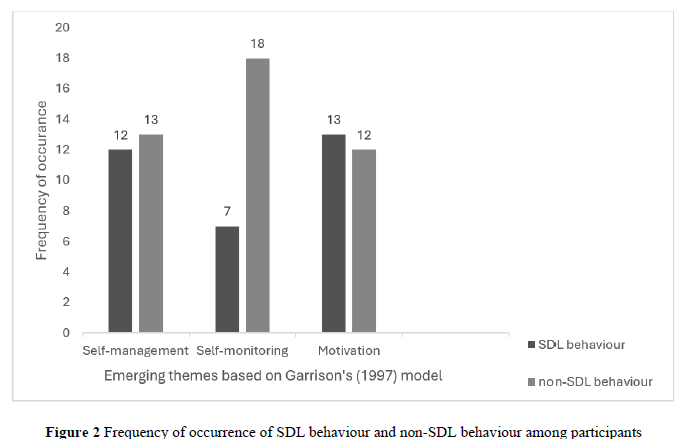
Data analysis was conducted following an inductive process after the focus group interviews were recorded and transcribed and the transcripts were manually coded using Saldaña's (2009) coding protocol. The first cycle involved open coding, which was achieved by reading the transcripts several times and inserting codes and comments on participants' responses using the review feature in Microsoft Word. This process allowed us to identify initial patterns related to learners' espoused behaviour. The second cycle involved in vivo coding, where participants' own words and phrases were used as codes. This step provided a descriptive understanding of the nature of behaviour, allowing key expressions to remain grounded in their experiences. The third cycle involved axial coding, which was used to explore the relationships between the initial codes, where they were grouped into categories that revealed underlying patterns and connections across the data. Finally, pattern coding served to develop broader sub-themes from the axial categories, which were organised into themes based on Garrison's (1997) dimensions of SDL. This iterative process allowed for refinement of sub-themes, which were grouped into sub-themes of behaviour that reflected SDL and behaviour that did not reflect SDL. Figure 2 depicts the frequency of occurrence of SDL behaviour and non-SDL behaviour for each of the themes. In reporting the findings, participants' identities were protected by using codes, such as "B1", where the letter indicates the relevant school (in this case school B). The number denotes the learner participant in the focus group, which comprised a total of five participants.
Trustworthiness was ensured by employing strategies such as synthesising multiple data sources from diverse participant perspectives, a method referred to as data triangulation (Creswell, 2009). Engaging in peer debriefing to validate interpretations, ensuring reflexivity during the research process, and maintaining a comprehensive audit trail of coding and analysis decisions guaranteed dependability.
Research Findings
The findings are discussed according to three themes, based on Garrison's (1997) SDL dimensions, which were derived from the codes and sub-themes obtained from the analysis of the interview data, as shown in Tables 1 to 3. Each table indicates the codes and sub-themes that emerged, as well as their frequency of occurrence, to enable a comparison between prevalent sub-themes that reflect SDL behaviour and those that do not reflect SDL behaviour, based on Garrison's model.
Theme 1: Self-management Behaviour This theme consists of SDL behaviour related to an active learning orientation. In response to the question, "What are the activities that enabled you to better understand the topics taught in Natural Sciences?", A4 said, "Practising your work", and C1 said, "I prefer a practical activity.'" B1 responded that "[s]he [the teacher] puts up videos for us to understand better.'" Another participant commented that "[w]hen the teacher has taught us and then we don't understand, she actually likes to make experiments, so that we can understand" (D4).
The data presented in Table 1 reveals that the dominant behaviour that emerged was not related to SDL but rather to the sub-theme of behaviour related to passive learning, accounting for 52% of the total frequency of occurrence illustrated by the following:
I understand those topics because when Mrs TPE is teaching us (E1).
On my side, when my teacher makes drawings on the board, so that some of us can see what she's talking about (D3).
You know, our teacher who always teaches us Natural Sciences: when he talks about something, you know, he likes to make actions for us to understand. So, that thing it always makes me to understand (C2).
We expected the finding that behaviour related to passive learning dominated, given that in a more traditional educational setting such as a school, the teacher provides "learning objectives, assessments, and resources to help students learn the material" (Robinson & Persky, 2020:292). This may limit learners' ability to achieve their learning goals and manage their learning experiences, as expected from a self-directed learner.
Theme 2: Self-monitoring Behaviour
The sub-theme that emerged for SDL behaviour related to the self-monitoring dimension was behaviour related to management of the learning process. This sub-theme accounted for only 28% of the overall frequency of occurrence, which shows that SDL behaviour related to self-monitoring was underdeveloped in this cohort of learners. In response to the interview question aimed at probing for internal cognitive learning processes, participants C4 and C2 showed a high degree of autonomy in managing their learning process.
I research. I get into research and go to the library and take books for science, and I do my own work personally at home [or] maybe before the lesson. I look at the topics that we are going to talk about next week. I read it earlier, so that I can know what we are going to talk about. (C4)
Well, I'm not that person who loves to listen to teachers when they teach, because usually when I listen to them, I don't hear them at all. So, every time when I learn, I want to read things for myself, and I understand if something … If I come across something that I don't understand, it is then I go to a teacher and ask him or her. (C2)
Table 2 shows that the dominant learner behaviour was not related to SDL, and included behaviour related to transmission-oriented learning and behaviour showing a lack of initiative towards learning. "To be honest, I don't really go back and check the things. I just wait for the exams, and I study. That's how I learn'" (B2). "I also don't really go back and check the things. I just wait for the exams, and I study. That's how I learrí" (B3). More prevalent behaviour included learners relying on practise and repetition as strategies for learning. "I learn more when I read. So, every time after each lesson, I go and read it over and over again, and that's how it stays'" (B4). "I read my notes and make my own notes out of what my teacher has taught me" (D4). These responses confirm the finding that learners actively engage in individual learning strategies after lessons, such as repeatedly reading their notes and reorganising content in their own words. These practices suggest attempts at self-regulated learning. However, learners in all five schools reported that disruptive classroom environments, including noise and peer misconduct, may hinder sustained attention and meaningful classroom participation. This was expressed by learners in all five schools.
While in the classroom, other learners don't listen to the teacher, and they bully other learners in the class (D5).
Sometimes in class, people are making noise, and you can't hear properly (B4).
Some learners make noise, and I cannot learn in a noisy area (C5).
They make noise when she's [the teacher's] in class, so I don't hear her well (El).
Theme 3: Motivation Behaviour The theme of motivation consists of the sub-theme of SDL behaviour related to commitment to learning, as shown in Table 3. In response to the question, "What is your role in Natural Sciences?" followed by a probing question on why that role is important to them, the participants responded as follows. "I think it's about learning new stuff in the class and getting to process that information and getting educated and then getting to pass" (B4). "I'm interested in, like, a career that contains ... that talks about pets and all" (C2). "When I grow up, I wanted to be a doctor. So, TPE, who teaches us natural science, said that I must do natural science if I want to be a doctor" (E2). The responses show that learners were motivated by intrinsic factors, such as career aspirations, as well as an honest interest in the subject, as is evident from the following.
My opinion on this: first, I can say natural sciences is a very important subject, whereby we learn about what is happening in real life (C3).
Natural science is a very fun and interesting subject. I love it very much (C5).
I like to add something. You know, as you grow up ...we have many myths how the earth was created, the moon is created. So, in natural science we can prove those myths wrong (C4).
By contrast, other learners expressed behaviour related to extrinsic motivation, such as achieving good grades and advancing to the next grade.
I know Grade 9 is a very challenging grade. So, many learners must work very hard to go to the next grade (C5).
As my duty as a learner in natural science, I must try to improve my levels of natural science, so that when I go to Grade 10 I can know the parts of the body (E4).
I would say that while the teacher is in class, we pay more attention to her [and] listen to what she says, so that it would be easier when we get to the next grade (E5).
The findings show that the learners' motivation stemmed from the need to pass their exams and advance to the next grade. This contrasts with Garrison's (1997:19) description of what a self-directed learner is: "learners are motivated to assume personal responsibility and collaborative control of the cognitive (self-monitoring) and contextual (self-management) processes in constructing and confirming meaningful and worthwhile learning outcomes." However, more positive affective outcomes related to the motivation dimension emerged.
I have to cooperate in class and respect the NS teacher (A1).
My role in natural sciences class is to listen and express my feelings (D4).
These positive affective outcomes seem to suggest that learners' intrinsic motivation was influenced by social aspects of learning. The "[f] irst point is that he [the teacher] makes sure that we enjoy the lesson." (D4). Figure 2 provides a summary of the frequency of occurrence of SDL behaviour and non-SDL behaviour for each theme.
study adds to the body of knowledge by identifying SDL behaviour of secondary school learners in the context of the subject of NS. Identifying learner SDL behaviour is crucial, as failing to identify and develop SDL behaviour in school could lead to learners struggling to learn independently in the future (Lama, 2021). The data reveal several notable findings, which are discussed under the following three main themes: self-management, self-monitoring, and motivation.
Self-management Behaviour
In our study, most learners (52%) (see Figure 2), had a strong preference for learning where the teacher managed the process and the learners remained passive recipients of knowledge. This suggests that basic self-management SDL behaviour was not being developed fully in most Grade 9 learners. This finding is not surprising, as a large body of educational research shows that transmission-mode approaches are common in science classrooms (Bantwini, 2017; Dhurumraj & Broadhurst, 2023; Petersen, Golightly & Dudu, 2019; Sebatana & Dudu, 2022). However, a few learners mentioned that engaging in practical activities and experiments was a helpful way to learn, which reveals an active learning orientation characteristic of the self-management dimension of SDL. Researchers who have investigated SDL skills in the school context have reported executive functions related to learning among learners, such as goal setting, planning, and management of learning resources (Abubakar & Arshad, 2015; Gooria, Appavoo, Bhunjun & Gokhool, 2021; Mok, Cheong, Moore & Kennedy, 2006). The self-management dimension, as observed in the studies cited above, involves external task control of learning, encompassing the enactment of learning goals and the management of learning resources and support. Interpreting these findings through the lens of collaborative constructivism and the perspective of adolescent development (see Figure 1), reveals that learners' ability to manage their learning tasks independently suggests emerging identity development, as they began to take ownership of their educational trajectory.
Learner responses that reflected the self-management SDL dimension through their appreciation of engaging with practical work are consistent with Specific Aim 1 in the NS curriculum document, which relates to learners conducting science experiments. With this specific goal in mind, learners actively "plan and do simple investigations and solve problems that need some practical ability", also known as psychomotor abilities (DBE, RSA, 2011:10). The affordances of problem-based learning to enhance self-directedness are well recorded in the research literature (Abubakar & Arshad, 2015; Petersen et al., 2019; Sebatana & Dudu, 2022).
This alignment suggests an opportunity to foster self-management SDL behaviour in the school context. This can be achieved by modifying and customising approaches suggested in the adult SDL literature, where, as indicated by Robinson and Persky (2020), learners must identify goals, decide how progress will be measured, define the structure and sequence of activities, locate resources, and solicit feedback. Problem-based and inquiry-based learning approaches, for example, can form the basis of a modified teaching approach suitable for high school learners (Moust, Bouhuijs & Schmidt, 2021). Key elements that teachers may consider when designing problem-based or inquiry-based learning activities are the following: (1) orient learners to the real world or to solve an unstructured problem; (2) help organise learners to work collaboratively in small groups; (3) encourage learners to gather appropriate information and resources needed to solve the problem; (4) allow learners to take ownership of the learning process by allowing them to participate actively in problem-solving; and (5) allow learners to evaluate the problem-solving process through the use of self- and peer assessment (Chen & Yang, 2019; Savery, 2015; Simamora, Sidabutar & Surya, 2017).
According to Schweder and Raufelder (2022), an SDL environment enhances adolescents' self-efficacy and positive emotions, which is associated with preventing a decline in motivation in teenagers. Based on this evidence, supporting self-management SDL behaviour is best achieved by avoiding instructional and learning processes that support behaviourist learning modalities, which habitually reinforce (repeat) patterns of perceiving, thinking, judging, feeling, and acting (Morris, 2019). Such instructional and learning processes perpetuate behaviour that may be relatively inflexible, where the learner fails to see the need to adapt to social and contextual changes, resulting in low motivation for SDL (Morris, 2019).
Self-monitoring Behaviour
The findings reveal that only a few learners (28%) (see Figure 2), proactively sought opportunities to learn. The vast majority preferred more passive learning approaches characterised by basic surface-learning methods, such as recalling, revising, and memorising. Such learning approaches leave little room for active personal input from learners. In a similar study, Abubakar and Arshad (2015) found that learners frequently assessed their own learning and that of their peers as part of a process of constructing and confirming meaningful learning outcomes. Mok et al. (2006) report cognitive skills such as inquiry and information processing as metacognitive abilities related to the self-monitoring dimension of SDL.
Learners in their study reported that working in groups and seeking assistance from peers helped them gain deeper understanding. From a constructivist perspective, the reported behaviour allowed learners to practise self-management within a socially supported environment, while self-monitoring behaviour such as reflecting and assessing their work as part of their learning were absent from learners' responses in our study. However, their responses were in line with Specific Aim 2 in the NS curriculum document, which requires of learners to know the subject content and to make connections, which are supported through peer learning and help-seeking behaviour. With this purpose in mind, the teacher's responsibility is to provide a framework of information for learners and to aid them in making mental connections between ideas and concepts, rather than have them memorise facts (DBE, RSA, 2011:10).
The alignment between the self-monitoring dimension and Specific Aim 2 suggests scope for fostering self-monitoring behaviour in and beyond the classroom. According to Garrison (1997), this can be achieved by providing learners with opportunities to construct meaning, which can be fostered through critical reflection and collaborative confirmation. Teachers can, for example, encourage and guide learners' techniques of reflective thinking and develop classroom exercises that involve self-evaluation of work completed, as well as peer evaluation. Such self-reflective activities involve learners making judgements about how well they have completed the task and evaluating areas that are lacking and require further attention and improvement (Bozkurt, 2020).
Based on insight from the literature on adolescent development, it is suggested that schools and teachers should foster adolescents' understanding of their own thoughts and feelings through reflective and exploratory learning experiences. This will help prevent negative influences on adolescents' identity development (Verhoeven et al., 2019). To do this, self-monitoring SDL behaviour must be nurtured in safe, respectful, and supportive educational contexts. Thus, by embedding collaborative learning structures and reflective activities, educators can support self-monitoring behaviour in a developmentally appropriate manner.
Motivation Behaviour
In our study, 52% of learners (see Figure 2), reported intrinsic motivation, such as a love for the subject, a desire to learn new things, and future career goals. Extrinsic goals related to advancing to the next grade were also reported. According to Garrison (1997), the motivation dimension requires that learners are allowed to set goals based on their work, which are informed by the learning outcomes. Doing so will enable learners to develop the necessary metacognitive skills, such as reflective thinking, critical thinking, assessing their own progress, and adjusting their approach based on those insights. However, findings based on the motivation dimension (Garrison, 1997) were absent. Gooria et al. (2021) found that learners who had previous exposure to online courses demonstrated high collaborative skills and were more apt and motivated to adopt SDL.
What also emerged from the learners' responses was the use of technology for learning, which featured under the theme of self-monitoring. This supports the notion that not only can the use of technology in learning support learner motivation, but it can also foster self-monitoring behaviour. The motivation patterns observed in learners, especially those related to long-term goals, such as career aspirations, demonstrate a stronger future orientation, which is a key aspect of adolescent development, (see Figure 1). When SDL behaviour related to the motivation dimension was probed, it was found to be affective outcomes such as cooperation, respect, and expressing one's feelings. This finding is consistent with the reported benefits of interpersonal communication. Abubakar and Arshad (2015) assert that learners engaged in group work in small groups tend to achieve better learning outcomes and exhibit improved knowledge retention, as small groups facilitate the sharing of ideas and promote positive interdependence. This is in line with the social constructivist learning perspective, which emphasises that learners construct meaning through collaborative interaction and independent work (Chuang, 2021).
The interpersonal aspects revealed in learners' responses further emphasise the importance of social aspects in learning, which concern how individuals interact and communicate with others. This links to Specific Aim 3 in the NS curriculum document, which supports affective outcomes such as understanding other people's points of view and effectively cooperating with others. With this goal in mind, the main objective was to foster awareness of how NS could be applied to daily life (DBE, RSA, 2011:10). This alignment presents an opportunity to encourage motivation SDL behaviour in the school context. This can be achieved by teachers cultivating autonomy and supportive communication through intentionally emphasising the contribution of effort to learning success, letting learners know the value and the benefits of learning, and relating learning objectives to learners' future life goals, such as career aspirations (Froiland, Oros, Smith & Hirchert, 2012; Trigueros, Mínguez, González-Bernal, Jahouh, Soto-Camara & Aguilar-Parra, 2019).
This assertion is confirmed by the literature on adolescent development, which recommends that teachers provide learning experiences that encourage adolescents to relate what they learn in school to their aspirations for the future (Verhoeven et al., 2019). Such experiences may be enhanced by implementing motivation SDL processes, such as providing learners with the opportunity to set learning goals that link with their interests. Doing so may result in learners being goal-oriented, activity-oriented, or learning-oriented (Van der Walt, 2019). The main goal is to link learning objectives with adolescent goals (Crone & Fuligni, 2020).
In conclusion, there seems to be correspondence between the goals formulated in the specific aims of NS and Garrison's (1997) dimensions of SDL. This suggests that SDL behaviour can be supported and developed in subjects through integrating overall subject learning goals. It is important to note that while the three dimensions of SDL have been discussed separately, they are, in fact, interconnected and often overlap in the teaching and learning process.
Conclusion
With this study we aimed to identify SDL behaviour expressed by Grade 9 NS learners. We addressed learner SDL behaviour in the context of the subject of NS. However, due to the discipline-specific nature of SDL, the learners could have expressed different SDL behaviour across different subjects. The findings illustrate the adverse impact that the learning environment can have on learners' SDL behaviour. Based on the interview responses, most learners indicated low levels of self-monitoring behaviour resulting from transmission-oriented learning. Additionally, the learning environment negatively impacted learners' self-management, as they lacked control over setting learning goals and managing resources. Although generalisability of the results was not our intent, due to the qualitative nature thereof, the findings have implications for science education, which could be applied in similar contexts, despite the limitation of a lack of generalisability. For instance, the study could link each of the three dimensions of SDL to the learning goals encapsulated in the three specific aims for NS. Although the three specific aims were discussed in the context of NS, they are applicable across subjects, as they correspond to the psychomotor, affective, and knowledge domains of learning. This correspondence afforded the opportunity to elaborate on how best to support the development of SDL behaviour in the context of NS, which could also apply in other subject domains. In addition, recommendations were offered on how best to foster learners' SDL behaviour by drawing on insight from a developmental science perspective on adolescence. This may lead to sustainable adolescent development, which can better serve the Grade 9 learner to successfully transition to becoming an independent, responsible lifelong learner (see Figure 1).
Although our study provides valuable insight, the data were insufficient to address the socio-political environment, as well as other contextual factors, which may have impacted the nature of SDL behaviour expressed by the learners. To address this gap, future studies can investigate more empirically validated measures associated with SDL behaviour across different subjects and socio-economic backgrounds. Nevertheless, SDL behaviour expressed by the learners related to motivation underscore the importance of increasing learners' exposure to diverse science-related career opportunities, as this supports a future orientation, which is a key aspect of adolescent development. Further research is required to assess the degree to which enhancing adolescent SDL behaviour influences and facilitates their positive development.
A contribution of the study is that it offers space for identifying how the subject of NS can be adapted to help learners develop SDL behaviour. The findings confirm that SDL behaviour related to all three dimensions of SDL, particularly self-monitoring, were lacking, due to learners having little control over the learning process. We thus conclude that teachers and policymakers should be intentional in implementing learning processes to enhance SDL behaviour, which is at the core of lifelong learning. This means that all stakeholders need to find solutions to systemic problems that plague school science education and militate against SDL, such as time constraints, a full curriculum, and teacher-centred approaches (De Beer, 2019). To achieve this aim, valuable insight is provided that can be applied in practice to help prepare Grade 9 NS learners to take responsibility for their learning as they continue to learn independently, and to study the more specialised science disciplines offered in the higher grades and at higher education institutions.
Authors' Contributions
All authors contributed to the conceptualisation of the research, literature review, empirical research and data analysis.
Notesi. Published under a Creative Commons Attribution Licence.
References
-
Abd-El-Fattah SM 2010. Garrison's model of self-directed learning: Preliminary validation and relationship to academic achievement. The Spanish Journal of Psychology, 13(2):586-596. https://doi.org/10.1017/S1138741600002262
» https://doi.org/10.1017/S1138741600002262 -
Abubakar AB & Arshad MY 2015. Self-directed learning and skills of problem-based learning: A case of Nigerian secondary schools chemistry students. International Education Studies, 8(12):70-78. https://doi.org/10.5539/ies.v8n12p70
» https://doi.org/10.5539/ies.v8n12p70 -
Alharahsheh HH & Pius A 2020. A review of key paradigms: Positivism vs interpretivism. Global Academic Journal of Humanities and Social Sciences, 2(3):39-43. https://doi.org/10.36348/gajhss.2020.v02i03.001
» https://doi.org/10.36348/gajhss.2020.v02i03.001 -
Allen SJ, Rosch DM & Riggio RE 2022. Advancing leadership education and development: Integrating adult learning theory. Journal of Management Education, 46(2):252-283. https://doi.org/10.1177/10525629211008645
» https://doi.org/10.1177/10525629211008645 -
Azizah SBH, RT & Susanti A 2021. The correlation between students' speaking skills and self-directed learning in virtual English community. Paramasastra: Jurnal Ilmiah Bahasa Sastra dan Pembelajarannya, 8(2):146-163. https://doi.org/10.26740/paramasastra.v8n2.p146-163
» https://doi.org/10.26740/paramasastra.v8n2.p146-163 -
Bantwini B 2017. Analysis of teaching and learning of natural sciences and technology in selected Eastern Cape province primary schools, South Africa. Journal of Education, 67:39-64. https://doi.org/10.17159/2520-9868/i67a02
» https://doi.org/10.17159/2520-9868/i67a02 -
Blakemore SJ 2018. Avoiding social risk in adolescence. Current Directions in Psychological Science, 27(2):116-122. https://doi.org/10.1177/0963721417738144
» https://doi.org/10.1177/0963721417738144 -
Bozkurt F 2020. Teacher candidates' views on self and peer assessment as a tool for student development. Australian Journal of Teacher Education, 45(1):47-60. Available at https://ro.ecu.edu.au/cgi/viewcontent.cgi?article=4373&context=ajte. Accessed 10 February 2026.
» https://ro.ecu.edu.au/cgi/viewcontent.cgi?article=4373&context=ajte -
Brandt WC 2020. Measuring student success skills: A review of the literature on self-directed learning. Dover, NH: National Center for the Improvement of Educational Assessment. Available at https://files.eric.ed.gov/fulltext/ED607782.pdf. Accessed 11 February 2026.
» https://files.eric.ed.gov/fulltext/ED607782.pdf -
Chen CH & Yang YC 2019. Revisiting the effects of project-based learning on students' academic achievement: A meta-analysis investigating moderators. Educational Research Review, 26:7181. https://doi.org/10.1016/j.edurev.2018.11.001
» https://doi.org/10.1016/j.edurev.2018.11.001 -
Chianchana C 2016. Developing of the measurement model of self-directed learning characteristics. The European Proceedings of Social & Behavioural Sciences, 8:7-17. https://doi.org/10.15405/epsbs.2016.05.2
» https://doi.org/10.15405/epsbs.2016.05.2 -
Chuang S 2021. The applications of constructivist learning theory and social learning theory on adult continuous development. Performance Improvement, 60(3):6-14. https://doi.org/10.1002/pfi.21963
» https://doi.org/10.1002/pfi.21963 - Creswell JW 2009. Research design: Qualitative, quantitative, and mixed methods approaches (3rd ed). Thousand Oaks, CA: Sage.
-
Crone EA & Fuligni AJ 2020. Self and others in adolescence. Annual Review of Psychology, 71:447-469. https://doi.org/10.1146/annurev-psych-010419-050937
» https://doi.org/10.1146/annurev-psych-010419-050937 -
Dahl RE, Allen NB, Wilbrecht L & Suleiman AB 2018. Importance of investing in adolescence from a developmental science perspective. Nature, 554(7693):441-450. https://doi.org/10.1038/nature25770
» https://doi.org/10.1038/nature25770 -
De Beer J (ed.) 2019. The decolonisation of the curriculum project: The affordances of indigenous knowledge for self-directed learning (NWU Self-Directed Learning Series Vol. 2). Cape Town, South Africa: AOSIS. https://doi.org/10.4102/aosis.2019.BK133
» https://doi.org/10.4102/aosis.2019.BK133 -
Department of Basic Education, Republic of South Africa 2011. Curriculum and Assessment Policy Statement Grades 7-9 Natural Sciences. Pretoria: Author. Available at https://www.education.gov.za/Portals/0/CD/National%20Curriculum%20Statements%20and%20Vocational/CAPS%20SP%20%20NATURAL%20SCIENCES%20GR%207-9%20%20WEB.pdf. Accessed 11 February 2026.
» https://www.education.gov.za/Portals/0/CD/National%20Curriculum%20Statements%20and%20Vocational/CAPS%20SP%20%20NATURAL%20SCIENCES%20GR%207-9%20%20WEB.pdf -
Dhurumraj T & Broadhurst JL 2023. Investigating the classroom teaching practices of life sciences teachers in Gauteng. International Journal of Research in Business and Social Science, 12(2):393-406. https://doi.org/10.20525/ijrbs.v12i2.2389
» https://doi.org/10.20525/ijrbs.v12i2.2389 -
Du Toit-Brits C & Van Zyl CM 2017. Self-directed learning characteristics: Making learning personal, empowering and successful. Africa Education Review, 14(3-4):122-141. https://doi.org/10.1080/18146627.2016.1267576
» https://doi.org/10.1080/18146627.2016.1267576 -
Froiland JM, Oros E, Smith L & Hirchert T 2012. Intrinsic motivation to learn: The nexus between psychological health and academic success. Contemporary School Psychology, 16:91-100. https://doi.org/10.1007/BF03340978
» https://doi.org/10.1007/BF03340978 -
Galambos NL & Leadbeater BJ 2000. Trends in adolescent research for the new millennium. International Journal of Behavioral Development, 24(3):289-294. https://doi.org/10.1080/01650250050118268
» https://doi.org/10.1080/01650250050118268 -
Garaigordobil M 2023. Educational psychology: The key to prevention and child-adolescent mental health. Psicothema, 35(4):327-339. Available at https://www.infocop.es/wp-content/uploads/2023/11/4815.pdf. Accessed 9 February 2025.
» https://www.infocop.es/wp-content/uploads/2023/11/4815.pdf -
García Botero G, Botero Restrepo MA, Zhu C & Questier F 2021. Complementing in-class language learning with voluntary out-of-class MALL. Does training in self-regulation and scaffolding make a difference? Computer Assisted Language Learning, 34(8):1013-1039. https://doi.org/10.1080/09588221.2019.1650780
» https://doi.org/10.1080/09588221.2019.1650780 -
Garrison DR 1997. Self-directed learning: Toward a comprehensive model. Adult Education Quarterly, 48(1):18-33. https://doi.org/10.1177/074171369704800103
» https://doi.org/10.1177/074171369704800103 -
Gooria V, Appavoo P, Bhunjun U & Gokhool AC 2021. Self-directed learning: Readiness of secondary school students in Mauritius. In D Burgos & J Olivier (eds). Radical solutions for education in Africa: Open education and self-directed learning in the continent. Singapore: Springer. https://doi.org/10.1007/978-981-16-4099-5_13
» https://doi.org/10.1007/978-981-16-4099-5_13 - Hengstler JE 2001. Key factors in adolescent distributed learning. Academic Exchange Quarterly, 5(2):43.
-
Hiemstra R & Brockett RG 2012. Reframing the meaning of self-directed learning: An updated model. In Proceedings of the 54th Annual Adult Education Research Conference. Available at https://newprairiepress.org/aerc/2012/papers/22. Accessed 5 September 2019.
» https://newprairiepress.org/aerc/2012/papers/22 -
Karatas K & Zeybek G 2020. The role of the academic field in the relationship between self-directed learning and 21st century skills. Bulletin of Education and Research, 42(2):33-52. Available at https://files.eric.ed.gov/fulltext/EJ1281054.pdf. Accessed 8 February 2026.
» https://files.eric.ed.gov/fulltext/EJ1281054.pdf - Knowles MS 1975. Self-directed learning: A guide for learners and teachers. New York, NY: Association Press.
- Krugell JF 2019. Die rol van gevallestudies in die bevordering van selfgerigte leer in Ekonomie-onderrig op skool. Doktorale proefskrif. Potchefstroom, Suid-Afrika: Noordwes-Universiteit.
-
Lama G 2021. Self-directed learning in secondary education during remote study process. Case study in Latvia. In L Daniela (ed). Human, technologies and quality of education. Riga, Latvia: University of Latvia. https://doi.org/10.22364/htqe.2021.22
» https://doi.org/10.22364/htqe.2021.22 -
Loeng S 2020. Self-directed learning: A core concept in adult education. Education Research International, 2020:3816132. https://doi.org/10.1155/2020/3816132
» https://doi.org/10.1155/2020/3816132 -
Masedi PA, Pila-Nemutandani RG, Kolobe PS & Tsabedze WF 2023. Mainstream teachers' lived experiences of adolescents with behavioural difficulties: An exploratory study. South African Journal of Education, 43(1):Art. #2108, 12 pages. https://doi.org/10.15700/saje.v43n1a2108
» https://doi.org/10.15700/saje.v43n1a2108 -
Mentz E & De Beer JJ 2021. Cultural-historical activity theory as a lens in mixed methods research on self-directed learning. South African Journal of Higher Education, 35(5):163-183. https://doi.org/10.2853/35-5-4364
» https://doi.org/10.2853/35-5-4364 - Mok MM, Cheong CY, Moore PJ & Kennedy KJ 2006. The development and validation of the Self-directed Learning Scales (SLS). Journal of Applied Measurement, 7(4):418-449.
-
Morris TH 2019. Self-directed learning: A fundamental competence in a rapidly changing world. International Review of Education, 65(4):633-653. https://doi.org/10.1007/s11159-019-09793-2
» https://doi.org/10.1007/s11159-019-09793-2 -
Morris TH & Rohs M 2021. Digitization bolstering self-directed learning for information literate adults-A systematic review. Computers and Education Open, 2:100048. https://doi.org/10.1016/j.caeo.2021.100048
» https://doi.org/10.1016/j.caeo.2021.100048 - Moust J, Bouhuijs P & Schmidt H 2021. Introduction to problem-based learning (4th ed). London, England: Routledge.
-
Nakayama M, Mutsuura K & Yamamoto H 2021. Impact of learner's characteristics and learning behaviour on learning performance during a fully online course. In M Nakayama (ed). Note taking activities in e-learning environments. Gateway East, Singapore: Springer. https://doi.org/10.1007/978-981-16-6104-4
» https://doi.org/10.1007/978-981-16-6104-4 - Nieuwenhuis J 2016. Introducing qualitative research. In K Maree (ed). First steps in research (2nd ed). Pretoria, South Africa: Van Schaik.
-
Olivier J & Wentworth A 2021. Self-directed learning at school and in higher education in Africa. In D Burgos & J Olivier (eds). Radical solutions for education in Africa: Open education and self-directed learning in the continent. Singapore: Springer. https://doi.org/10.1007/978-981-16-4099-5_2
» https://doi.org/10.1007/978-981-16-4099-5_2 -
Onah DFO, Pang ELL & Sinclair JE 2020. Cognitive optimism of distinctive initiatives to foster self-directed and self-regulated learning skills: A comparative analysis of conventional and blended-learning in undergraduate studies. Education and Information Technologies, 25:4365-4380. https://doi.org/10.1007/s10639-020-10172-w
» https://doi.org/10.1007/s10639-020-10172-w -
Petersen N, Golightly A & Dudu WT 2019. Engaging pedagogies to facilitate the border-crossing between the Natural Sciences and indigenous knowledge: Implications for science teacher education. In J de Beer (ed). The decolonisation of the curriculum project: The affordances of indigenous knowledge for self-directed learning (NWU Self-Directed Learning Series Vol. 2). Cape Town, South Africa: AOSIS. https://doi.org/10.4102/aosis.2019.BK133.06
» https://doi.org/10.4102/aosis.2019.BK133.06 -
Pfeifer JH & Allen NB 2021. Puberty initiates cascading relationships between neurodevelopmental, social, and internalizing processes across adolescence. Biological Psychiatry, 89(2):99-108. https://doi.org/10.1016/j.biopsych.2020.09.002
» https://doi.org/10.1016/j.biopsych.2020.09.002 -
Robinson JD & Persky AM 2020. Developing self-directed learners. American Journal of Pharmaceutical Education, 84(3):847512. https://doi.org/10.5688/ajpe847512
» https://doi.org/10.5688/ajpe847512 - Saldaña J 2009. The coding manual for qualitative researchers. London, England: Sage.
- Savery JR 2015. Overview of problem-based learning: Definitions and distinctions. In A Walker, H Leary, CE Hmelo-Silver & PA Ertmer (eds). Essential readings in problem-based learning: Exploring and extending the legacy of Howard S. Barrows. West Lafayette, IN: Purdue University Press.
-
Schweder S & Raufelder D 2019. Positive emotions, learning behavior and teacher support in self-directed learning during adolescence: Do age and gender matter? Journal of Adolescence, 73:73-84. https://doi.org/10.1016/j.adolescence.2019.04.004
» https://doi.org/10.1016/j.adolescence.2019.04.004 -
Schweder S & Raufelder D 2022. Adolescents' expectancy-value profiles in school context: The impact of self-directed learning intervals. Journal of Adolescence, 94(4):569-586. https://doi.org/10.1002/jad.12047
» https://doi.org/10.1002/jad.12047 -
Sebatana MJ & Dudu WT 2022. Enhancing Grade 10 physical sciences teachers' self-directedness in implementing blended problem-based learning. Science Education International, 33(4):427-437. https://doi.org/10.33828/sei.v33.i4.11
» https://doi.org/10.33828/sei.v33.i4.11 -
Shahrouri E 2016. The impact of Garrison's model of self-directed learning on improving academic self-concept for undergraduate students: AUE as a model. International Journal of Education, Learning and Development, 4(10):36-45. Available at https://eajoumals.org/ijeld/wp-content/uploads/sites/52/2017/01/THE-IMPACT-OF-GARRISONS-MODEL.pdf. Accessed 5 February 2026.
» https://eajoumals.org/ijeld/wp-content/uploads/sites/52/2017/01/THE-IMPACT-OF-GARRISONS-MODEL.pdf -
Simamora RE, Sidabutar DR & Surya E 2017. Improving learning activity and students' problem solving skill through problem based learning (PBL) in junior high school. International Journal of Sciences: Basic and Applied Research (IJSBAR), 33(2):321-331. Available at https://lmsspada.kemdiktisaintek.go.id/pluginfile.php/645008/mod_resource/content/1/7368-21585-1-PB1.pdf. Accessed 5 February 2026.
» https://lmsspada.kemdiktisaintek.go.id/pluginfile.php/645008/mod_resource/content/1/7368-21585-1-PB1.pdf -
Trigueros R, Mínguez LA, González-Bernal JJ, Jahouh M, Soto-Camara R & Aguilar-Parra JM 2019. Influence of teaching style on Physical Education adolescents' motivation and health-related lifestyle [Special issue]. Nutrients, 11(11):2594. https://doi.org/10.3390/nu11112594
» https://doi.org/10.3390/nu11112594 -
Uus Õ, Mettis K & Valjataga T 2022. Cognitive skills in adolescents' self-directed learning efficacy. Creative Education, 13:583-598. https://doi.org/10.4236/ce.2022.132035
» https://doi.org/10.4236/ce.2022.132035 -
Uys WF 2021. An integrative review of fourteen self-directed learning models. Journal for New Generation Sciences, 19(2):48-66. Available at https://joumals.co.za/doi/epdf/10.10520/ejc-newgen-v19-n2-a4. Accessed 4 February 2026.
» https://joumals.co.za/doi/epdf/10.10520/ejc-newgen-v19-n2-a4 -
Van der Walt JL 2019. The term "self-directed learning"-back to Knowles, or another way to forge ahead? Journal of Research on Christian Education, 28(1):1-20. https://doi.org/10.1080/10656219.2019.1593265
» https://doi.org/10.1080/10656219.2019.1593265 - Van Deur P 2017. Managing self-directed learning in primary school education: Emerging research and opportunities. Hershey, PA: IGI Global.
- Veresov N 2004. Zone of proximal development (ZPD): The hidden dimension? In AL Østern & R Heilä-Ylikallio (eds). Sprãk som kultur - Brytningar I tid och rum (Vol. 1). Vaasa, Finland: Abo Akademi, Pedagogiska fakulteten.
-
Verhoeven M, Poorthuis AMG & Volman M 2019. The role of school in adolescents' identity development. A literature review. Educational Psychology Review, 31:35-63. https://doi.org/10.1007/s10648-018-9457-3
» https://doi.org/10.1007/s10648-018-9457-3 - Vygotsky LS 1978. Mind in society: The development of higher psychological processes. Cambridge, MA: Harvard University Press.
-
Willemsen RF, Aardoom JJ, Chavannes NH & Versluis A 2022. Online synchronous focus group interviews: Practical considerations. Qualitative Research, 23(6):1810-1820. https://doi.org/10.1177/14687941221110161
» https://doi.org/10.1177/14687941221110161 -
Zhao Y, Zheng Z, Pan C & Zhou L 2021. Self-esteem and academic engagement among adolescents: A moderated mediation model. Frontiers in Psychology, 12:690828. https://doi.org/10.3389/fpsyg.2021.690828
» https://doi.org/10.3389/fpsyg.2021.690828 -
Zhu M, Bonk CJ & Doo MY 2020. Self-directed learning in MOOCs: Exploring the relationships among motivation, self-monitoring, and self-management. Educational Technology Research and Development, 68(5):2073-2093. https://doi.org/10.1007/s11423-020-09747-8
» https://doi.org/10.1007/s11423-020-09747-8
Revised: 13 August 2025
Accepted: 6 October 2025
Published: 28 February 2026