Exploring the role of self-control in the relationship between happiness and internet addiction among teenagers
Abstract
The internet has revolutionised communication, providing teenagers with opportunities for connection and sharing information. However, excessive internet use raises concerns about its negative impact on daily life and well-being. With this study we examined the mediating role of self-control in the relationship between happiness and internet addiction among 260 teenagers using a cross-sectional design. Validated self-administered assessments measured happiness, self-control, and internet addiction. Smart PLS analyses revealed a significant negative relationship between happiness and internet addiction, with self-control mediating this association. These findings highlight the importance of fostering self-control to mitigate the risks of internet addiction. Schools should implement strategies to promote self-regulation, encourage balanced internet use, and engage with parents to support students' well-being.
happiness; internet addiction; mediation; self-control; teenagers
Introduction
Modern-day teenagers have been born into a digital world (Rideout, Foehr & Roberts, 2010) in which they are surrounded by computers, video games, mobile devices, and internet connectivity (Suryabrahmanyam & Smahel, 2011). Technological advances enable teenagers to use internet facilities for various needs, from socialising to accessing information and entertainment. The internet is increasingly used, allowing users to freely share information and communicate with many people without the constraints of cost, distance, and time. It has become a necessity for teenagers, integrated into their daily lives. Recent global research underscores the pervasive integration of digital technology into teenagers' lives. As of February 2024, individuals aged 18 to 24 represented 19% of global internet users, highlighting the significant presence of young adults online (Petrosyan, 2024). Additionally, a 2023 report indicates that 79% of people aged 15 to 24 use the internet, surpassing the 65% usage rate of the general population (International Telecommunication Union [ITU], 2023). This widespread connectivity facilitates various activities, from socialising to accessing information and entertainment, making the internet an integral part of daily life for many teenagers worldwide. However, the ease of internet access sometimes yields negative impacts. Many teenagers choose to spend hours online every day. Young (2009) found that males often engaged in online gaming and visited sites related to adult content and gambling, while females preferred social platforms such as Facebook, YouTube, Instagram, or Twitter.
Sarwono (2013) asserts that teenagers, being in a stage of identity crisis, tend to be highly curious, always seeking new experiences, and can quickly become addicted to the internet. Kuss and Billieux (2017) report that many teenagers are addicted to the internet, leading to various problems. Kuss, Griffiths, Karila and Billieux (2014) state that internet addiction has detrimental effects on an individual's life, resulting in adverse outcomes, including psychological, educational, and social issues (Young & Abreu, 2011).
Teenagers with internet addiction often prefer using social media for social interaction, as it provides them with a platform to express themselves, a freedom they might lack in direct interaction. Recent studies have further explored the relationship between internet addiction, social media use, and their impact on adolescents' social skills and happiness. Varela, Pérez, Rodríguez-Rivas, Chuecas and Romo (2023) found that social media addiction is a significant risk factor for reduced life satisfaction among adolescents. The study suggests that excessive use of social media can negatively affect adolescents' well-being, leading to decreased happiness and life satisfaction. These findings align with earlier studies, such as that by Karabacak and Oztunc (2014), who report that internet use can lead individuals to establish interpersonal relationships without acquiring social skills, differing from real-world interaction. Similarly, Wang, Ho, Chan and Tse (2015) indicate that individuals with strong social relationships who use the internet to build and maintain connections are susceptible to internet addiction. Furthermore, Kim, Kim, Park, Kim and Choi (2018) propose that internet addiction is related to happiness, with online interpersonal relationships potentially bringing about superficial and temporary happiness.
Argyle (2001) emphasises the significance of an individual's social relationships with their environment in shaping their perceptions of happiness. Numerous studies suggest that individuals with higher levels of happiness are less prone to internet addiction, whereas unhappy individuals are more likely to use the internet as an escape from existing problems, thereby increasing their susceptibility to internet addiction (Uysal, Satici & Akin, 2013).
Individuals who maintain positive social relationships tend to view the internet as a complement rather than an escape (Servidio, 2014). Their familiarity with and attachment to the internet are less intense compared to real-world interactions (Holmberg, 2014). Studies indicate that happiness increases with the quality of social ties and that enhancing one's happiness can reduce the likelihood of internet addiction (Ye & Lin, 2015).
Young (2009) defines internet addiction as a syndrome characterised by individuals' incapacity to regulate the duration of their internet usage. Those with internet addiction continuously think about when they can get back online and often need to elevate the level of their internet use to attain gratification, leading to complications in their daily existence (Kuss & Griffiths, 2015). Özdemir, Kuzucu and Ak (2014) highlight how problems stemming from excessive internet use can have significant repercussions on various aspects of academic achievement. They found that individuals with low self-control tend to experience difficulties in managing their time effectively, achieving their goals, and obtaining satisfactory results in their activities. This suggests that internet addiction can negatively impact academic performance by undermining crucial aspects of self-regulation and goal-directed behaviour. Furthermore, Kim et al. (2018) reveal a strong association between internet addiction and lower levels of self-control, as well as a propensity towards procrastination. This suggests that individuals who struggle with controlling their internet use may also face challenges in regulating their behaviour and prioritising academic tasks, ultimately affecting their academic outcomes. On the contrary, studies have consistently shown that individuals with high levels of self-control tend to exhibit better academic performance and engage in fewer misbehaviour (Tangney, Baumeister & Boone, 2004). This implies that self-control plays a crucial role in academic success by facilitating effective time management, goal achievement, and resistance to distractions, such as excessive internet use.
The increasing prevalence of internet addiction among teenagers has become a growing concern within school environments, as it poses potential risks to teenagers' physical and mental health. Concurrently, research underscores the importance of happiness, which reflects emotional well-being as a protective factor against maladaptive behaviour among adolescents. However, a noticeable gap exists in our understanding of how these two factors, internet addiction and happiness, intersect, particularly regarding the mediating role of self-control. Despite prior research exploring the direct relationships between happiness, self-control, and internet addiction, there has been limited investigation into the mediating mechanism through which happiness influences internet addiction via self-control. Addressing this gap is crucial for schools to develop targeted interventions aimed at preventing and addressing internet addiction among teenagers while promoting their overall well-being. By comprehensively understanding the role of self-control as a mediator, educators can design effective strategies to support students in managing their internet use responsibly.
Happiness and Internet Addiction
In recent years, internet use has burgeoned, and the internet has evolved into a vital instrument in academia, business, and entertainment (Mei, Yau, Chai, Guo & Potenza, 2016). Arnbjamardóttir (2015) notes that the internet has become indispensable for living in modern society, with a significant proportion of users being teenagers. Internet use is proliferating globally, with many people, especially teenagers, using the internet, not only as a source of information but also for entertainment (Li, C, Dang, Zhang, Zhang & Guo, 2014). The increasing number of internet users has heightened attention to individuals who may encounter problems or suffer from internet addiction (Willoughby, 2008).
According to Young (2009), the intentional use of the internet determines the likelihood of experiencing internet addiction, particularly during solitary periods spent in front of a computer. Individuals who use the internet for educational purposes are less prone to internet addiction, as they do not rely on it solely for entertainment or as an escape from real-life problems.
Recent studies in Africa have unveiled concerning findings regarding the prevalence of internet addiction among students in secondary schools and universities. According to Muche and Asrese (2022), evidence indicates moderate to severe levels of internet addiction among this demographic. This highlights the growing issue of problematic internet use within educational institutions across the continent. Moreover, Endomba, Demina, Meille, Ndoadoumgue, Danwang, Petit and Trojak (2022) estimate that four out of 10 individuals in Africa are presumed to be affected by internet addiction.
Teenagers use the internet to establish connections and maintain relationships with others (Lee, 2009). They allocate more time to being with their peers than their parents, considering interaction with friends a fundamental need to fulfil (Papalia, Olds & Feldman, 2009). Argyle (2001) emphasises that a positive social relationship with the environment significantly affects happiness. Individuals who maintain positive social relationships tend to experience happiness, while those with poor social connections often feel lonely and unhappy in life. Argyle (2001) further notes that anyone facing challenges in social relationships desires happiness. The absence of social relationships can lead an individual to feel a sense of worthlessness and isolation (Zulkarnain, Daulay, Yusuf & Yasmin, 2019). Individuals experiencing loneliness and struggling with social situations often find a solution by developing online friendships (Ang, Chan & Lee, 2018; Bozoglan, Demirer & Sahin, 2013; Çevik & Yildiz, 2017). Therefore, individuals with lower happiness levels due to low self-esteem may turn to the internet as a means of escaping the real world, seeking to establish a new version of themselves in response to their dissatisfaction with their real-world selves (Blachnio, Przepiórka, Senol-Durak, Durak & Sherstyuk, 2016; Perella & Caviglia, 2017).
The increase in internet addiction among teenagers with more active social relationships may stem from deficiencies in social skills. Numerous studies indicate that the internet allows these individuals to connect with others without necessitating the social skills required for in-person interaction in the real world (Caplan, 2005). However, contrasting perspectives exist. Some studies suggest that people with strong social relationships, such as extroverts, are susceptible to internet addiction as it fulfils their need to socialise online (Hwang, 2014; Wang et al., 2015). Conversely, other studies assert the opposite, stating that individuals with robust social relationships use the internet directly to connect with their friends rather than as a substitute for addressing poor social relationships (Servidio, 2014).
Research indicates that happiness plays a crucial role in mitigating the risk of internet addiction among adolescents. Studies consistently demonstrate that teenagers experiencing low levels of happiness are more susceptible to excessive internet use (Maftei & Opariuc-Dan, 2023; Sapmaz & Totan, 2018). Similarly, Koç (2017) found that negative emotions and dissatisfaction with life are significant predictors of problematic internet behaviour. These findings suggest that adolescents with poor emotional well-being may turn to the internet as a coping mechanism for distressing emotions. Bozoglan et al. (2013) established that loneliness is a key predictor of internet addiction. Adolescents who struggle with forming meaningful offline connections may use the internet to compensate for social deficits. This aligns with the compensatory internet use theory (Kardefelt-Winther, 2014), which proposes that individuals engage in excessive online activities to escape negative emotions or fulfil unmet psychological needs.
Additionally, Ostovar, Allahyar, Aminpoor, Moafian, Nor and Griffiths (2016) and Ummet and Eksi (2016) emphasise that teenagers experiencing stress, anxiety, depression, or difficulties in building social relationships are more likely to develop problematic internet use. These psychological challenges often lead individuals to seek virtual companionship as an alternative to real-world interaction, further increasing their dependence on online platforms. From a theoretical standpoint, this relationship can be explained by the self-determination theory (Deci & Ryan, 2000). The theory posits that individuals have three fundamental psychological needs: autonomy, competence, and relatedness. When these needs are unmet in real life, adolescents may turn to the internet to seek validation, social connections, or a sense of control. However, excessive reliance on online interaction may lead to compulsive use, reinforcing a cycle of internet addiction and psychological distress.
Conversely, studies suggest that enhancing happiness may serve as a protective factor against internet addiction. Çardak (2013) and Ye and Lin (2015) highlight that higher happiness levels are associated with lower internet addiction tendencies. This aligns with the broaden-and-build theory of positive emotions (Fredrickson, 2001), which proposes that positive emotions broaden cognitive and behavioural repertoires, fostering resilience against maladaptive behaviour. In the context of internet addiction, increased happiness may promote healthier coping strategies and reduce the need for excessive online engagement.
Self-control and Internet Addiction
The internet, a global communication network connecting computers worldwide, serves diverse needs across the globe. The surge in internet use is fuelled by the universal desire for information and entertainment, particularly among teenagers (Li et al., 2014). The perceived benefits of internet use contribute to teenagers developing dependence or addiction to this ubiquitous tool (Siomos, Dafouli, Braimiotis, Mouzas & Angelopoulos, 2008).
Internet addiction is a syndrome characterised by spending a substantial amount of time on the internet and experiencing difficulty in regulating one's use of the internet (Young, 2009). Excessive internet use leads to detrimental outcomes, encompassing psychological, academic, and social challenges (Young & Abreu, 2011). Young (2009) indicates that individuals who suffer from internet addiction are those who have many social, academic, and work-related problems, for which they employ the internet as an escape mechanism.
As internet users, teenagers need self-control to avoid problems in this environment. According to Sarwono (2013), thinking skills increase in late teens, and emotional maturation contributes to improved self-control compared to early adolescence. Individuals with good self-control can manage their impulses (Tangney et al., 2004) and avoid pathological behaviour such as internet addiction. In other words, those who exercise self-control in internet use can integrate it as needed with other life activities without encountering problems. However, some research on internet use behaviour suggests that individuals in their late teens often exhibit low self-control, contributing to them experiencing internet addiction (Puspita & Mulyana, 2018).
An individual afflicted with internet addiction exhibits a persistent inclination to remain engaged in online activities, often at the expense of their obligations and alternative pursuits. This compulsive behaviour is characterised by an incessant need to maintain an online presence and an insatiable desire to prolong internet use (Kuss & Griffiths, 2017). Furthermore, individuals grappling with internet addiction typically know that they ought to curtail their excessive online activities. Nevertheless, a conspicuous deficit in self-control impedes their ability to enact such restraint (Young & Abreu, 2011).
Some studies have linked self-control to internet addiction in adolescents. Research has shown that teens with low self-control prefer to use the internet to relax rather than to complete their tasks (Akhter, 2013; Panek, 2012). This phenomenon can be elucidated by the fact that teenagers often grapple with the rigorous demands of their academic pursuits, necessitating a high level of commitment and expertise in various subjects. Given their challenges in meeting these academic requirements, some adolescents may find solace and a sense of accomplishment in their virtual lives, where success appears more attainable. Consequently, they may become susceptible to internet addiction (Kuss & Griffiths, 2017). Multiple studies corroborate this perspective by highlighting the relationship between low self-control and tendencies toward internet addiction and procrastination among adolescents (Geng, Han, Gao, Jou & Huang, 2018; Kandemir, 2014; Kim et al., 2018; Saleem, Owaisi & Tufail, 2015).
Baumeister, Vohs and Tice (2007) reveal that self-control is vital for restraining an individual's internal urge for gratification, which can interfere with daily life. Someone with high self-control will be able to use the internet as needed. Meanwhile, individuals with low self-control cannot direct and regulate their behaviour online, which can lead to internet addiction. Adolescents' self-control improves in their late teens (Sarwono, 2013). However, some research suggests that older teens also experience internet addiction due to a lack of self-control (Puspita & Mulyana, 2018).
The relationship between self-control, internet addiction, and loneliness has been extensively studied, highlighting the role of self-control as a mediating factor in excessive internet use. Özdemir et al. (2014) investigated these relationships and found that loneliness significantly contributed to internet addiction through the mechanism of low self-control. Their study revealed that individuals with lower self-control were more likely to turn to the internet as a means of compensating for social deficits, leading to problematic internet behaviour. Self-control plays a crucial mediating role in the relationship between loneliness and internet addiction. Individuals who experience social isolation or emotional distress may attempt to alleviate feelings of loneliness by engaging in online activities such as social networking, gaming, or chat rooms (Young, 2009). However, when self-control is low, these online interactions can become excessive and compulsive, reinforcing addictive internet behaviour (Özdemir et al., 2014). Li, S, Ren, Chiu, Wang and Lei (2021) demonstrate that self-control moderates the relationship between depression and internet addiction. Individuals with higher self-control are better equipped to regulate their emotions and resist the urge to engage in excessive internet use.
This phenomenon aligns with the compensatory internet use theory (Kardefelt-Winther, 2014), which posits that individuals who struggle with unmet psychological needs use the internet as a coping mechanism. Since self-control regulates impulsive behaviour, low self-control intensifies the reliance on online interaction, making individuals more vulnerable to internet addiction.
Conceptual Framework
The increasing reliance on digital technology has led to a growing concern over internet addiction, compulsive behaviour characterised by excessive interaction between individuals and digital devices. Griffiths (2005) explains internet addiction as an engagement with online activities that, despite lacking the involvement of drugs, can become compulsive and difficult to regulate. This behaviour can manifest in both passive forms, such as consuming online videos or browsing social media, and active forms, like participating in online gaming or interactive platforms. Importantly, these digital interactions often involve reinforcing elements such as instant gratification, social validation, and escape from reality, that contribute to the escalation of addictive tendencies. Adolescence is a crucial period of emotional and social development during which various psychosocial factors can contribute to problematic internet use (Zulkarnain, Tarmidi, Purwasih & Nartova-Buchaver, 2025) Kuss, Griffiths and Binder (2013) explore how low levels of life satisfaction, happiness, and self-confidence, coupled with exposure to adverse events, significantly increase the likelihood of internet addiction. Adolescents who experience emotional distress or social isolation may seek comfort and validation in the online world, which, over time, reinforces compulsive digital engagement. Among these factors, self-control has emerged as a critical predictor of internet addiction (Young & Abreu, 2011). Adolescents with lower self-control struggle to regulate their impulses, making them more vulnerable to excessive and uncontrolled internet use. This is particularly relevant in the school setting, where students face academic stress, peer influences, and digital distractions.
Recent studies suggest that self-control serves as a mediating factor between psychosocial variables (such as depression, loneliness, and low life satisfaction) and internet addiction (Li, S et al., 2021). By acting as a mediator, self-control determines the extent to which psychosocial stressors influence compulsive internet use. Adolescents with strong self-control may cope with stress and emotional challenges more effectively, reducing their reliance on online platforms for comfort. Conversely, those with weaker self-control may succumb to impulsive behaviour, reinforcing excessive digital engagement as a coping mechanism. The relationship between psychosocial factors, self-control, and internet addiction emphasises the complex interplay between emotional well-being and digital habits. While factors such as low life satisfaction, loneliness, and depression can increase susceptibility to problematic internet use, self-control acts as a crucial mediating variable, shaping an individual's ability to regulate their digital consumption. Strengthening self-regulation skills through school-based interventions is essential in mitigating internet addiction and promoting responsible use of technology. By addressing underlying emotional and behavioural factors, schools can create a supportive environment where students develop healthy coping mechanisms and achieve a balanced digital lifestyle.
Method
Participants
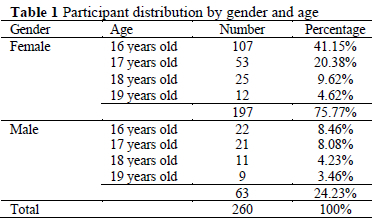
In this study we employed purposive sampling to select senior high school students in Medan, Indonesia. Participants were chosen based on specific criteria relevant to the objectives of the study, including their age (ranging from 15 to 18 years old), enrolment in a senior high school, and active internet use. These criteria ensured that the respondents had sufficient experience and exposure to the topic under investigation. The questionnaires were distributed in person during school hours to facilitate accessibility and maximise participation. A total of 315 questionnaires were distributed, and we received 260 completed questionnaires in return, resulting in a response rate of 82.5%. Notably, the majority of participants were 16 years old (129), and the sample was predominantly composed of female participants (197). The data are displayed in Table 1.
Statistical Analysis
We employed partial least squares structural equation modelling (PLS-SEM) as data analysis method in this research. PLS-SEM is a robust multivariate data analysis approach that integrates aspects of factor analysis and multiple regression analysis to comprehensively assess the research variables and their interrelationships. The PLS-SEM analysis method encompasses two distinct models: the outer model and the inner model. The outer model serves as a measurement model, elucidating how the observable variables manifest and represent the underlying latent variables targeted for measurement. In contrast, the inner model, often called the structural model, quantifies the strength of the relationships and estimations among these latent variables or constructs (Hair, Risher, Sarstedt & Ringle, 2019). Outer model testing involves average variance extracted (AVE), cross loadings, and composite reliability. According to Gefen, Straub and Boudreau (2000), an AVE value of approximately 0.4 or greater provides a reliable indication of strong convergent validity for each respective construct. A convergent construct is considered valid when the factor loading value is 0.5 to 0.7 or higher (Hair et al., 2019).
Measurement
Internet addiction scale
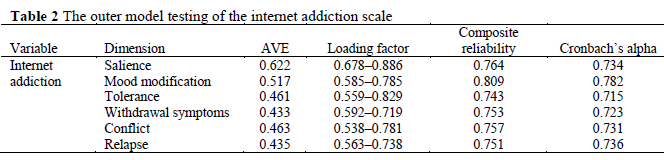
The internet addiction scale, proposed by Kuss, Shorter, Rooij, Griffiths and Schoenmakers (2014), comprises six dimensions: salience, mood modification, tolerance, withdrawal symptoms, conflict, and relapse. The scale employs a 5-point Likert scale, with responses ranging from 1 to 5. The validity analysis was conducted using confirmatory factor analysis (CFA) to ensure that each instrument maintained an appropriate factor structure corresponding to the measured construct. Additionally, reporting model fit indices and reliability values, such as composite reliability (CR) and AVE, would strengthen the credibility of the study findings. The outcomes of outer model testing are represented in Table 2. All reliability coefficients are above the acceptable threshold, indicating a high level of reliability in the measurements.
Happiness scale
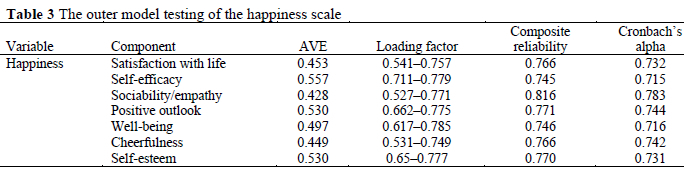
The happiness scale is constructed using a framework of seven components (Hills & Argyle, 1998) that encompass satisfaction with life, self-efficacy, sociability/empathy, positive outlook, well-being, cheerfulness, and self-esteem. The outcomes of the outer model testing are visually represented in Table 3.
Self-control scale
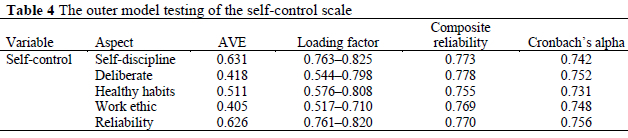
The self-control scale, encompassing five distinct aspects was proposed by Tangney et al. (2004). The aspects are self-discipline, deliberation, adherence to healthy habits, work ethic, and reliability. The outcomes of the outer model testing are represented in Table 4.
Result
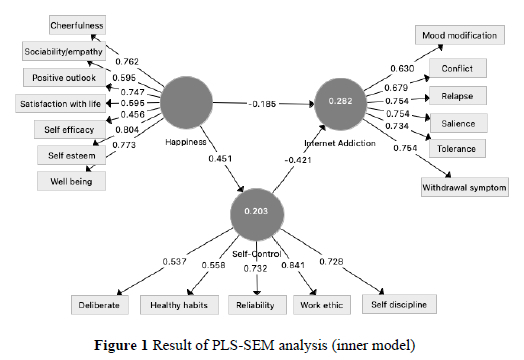
The statistical analysis reveals a negative correlation between happiness and self-control with internet addiction. A graphical representation of these findings is presented in Figure 1.
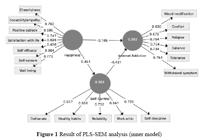
To evaluate the mediating impact of self-control, we conducted a mediation analysis using the PLS-SEM method. The results indicate a significant indirect effect of happiness on internet addiction through self-control. The statistically significant indirect effect suggests that self-control plays a partial mediating role in the relationship between happiness and internet addiction.
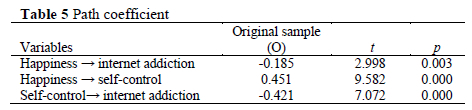
We also examined the direct effect of happiness on internet addiction, independent of self-control. The results demonstrate a statistically significant and negative correlation between happiness and internet addiction (β = -0.185, p < 0.01). It indicates that higher happiness levels are associated with lower levels of internet addiction among teenagers. The mediation effect size indicates how self-control mediates the relationship between happiness and internet addiction. The results are represented in Table 5.
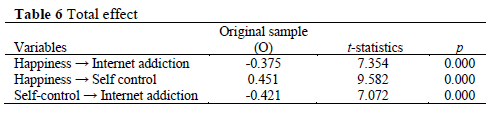
The smart PLS analysis results indicate the total effect of happiness on internet addiction (β = -0.375, p < 0.01). In other words, it quantifies the total impact of happiness on internet addiction, considering any mediating influence of self-control in the relationship. The findings are represented in Table 6.
Discussion
The outcomes of this study suggest a negative correlation between happiness and internet addiction among teenagers. It indicates that teenagers' internet addiction might be influenced by their lack of happiness. One factor explaining how happiness affects internet addiction is social relationships. Teenagers with good social relationships are happier because their friendships generate a positive mood and prevent loneliness. Conversely, teenagers with poor social relationships feel isolated from their environment, resulting in less happiness (Argyle, 2001).
During adolescence, friends play a crucial role in fulfilling individuals' social needs, such as attention, affection, and friendship (Campbell, Hansen & Nangle, 2010). Happy individuals engage in more and better social interactions, spending increased time with their friends, contributing to their overall happiness (Argyle, 2001). Experiencing numerous actual events in one's life can lead to increased openness and, consequently, greater happiness. However, individuals who struggle with social awkwardness may find it challenging to fulfil their social needs, prompting them to turn to the internet and potentially develop internet addiction (Bozoglan et al., 2013).
Few social relationships or friendships may be hindered by poor social skills, leading to loneliness (Burke, Woszidlo & Segrin, 2012). Some research proposes that teenagers experiencing stress, anxiety, depression, and difficulties in developing positive social relationships may suffer from a lack of community with others, thereby increasing their vulnerability to internet addiction (Ostovar et al., 2016). The internet is perceived as a means to fill a void in the real world, without requiring the development of social skills to connect with others, thus resulting in internet addiction (Karabacak & Oztunc, 2014). However, it does not address the issues related to a person' s inability to relate to others in the real world (Bozoglan et al., 2013). Communication over the internet cannot replicate the perceived familiarity obtained through friendships in the real world (Green, Hilken, Friedman, Grossman, Gasiewskj, Adler & Sabini, 2005).
Another contributing factor that can elucidate the impact of happiness on internet addiction is self-esteem and well-being. As Vohs and Baumeister (2016) mention, this relates to an individual' s holistic perception of themselves. Teenagers with high self-esteem tend to embrace themselves and experience greater happiness, whereas those with low self-esteem frequently possess negative self-perception, leading to reduced levels of happiness. Perella and Caviglia (2017) state that low self-esteem predicts pathological internet use. Teenagers with low self-esteem may use the internet to escape negative thoughts or feelings, contributing to internet addiction (Blachnio et al., 2016).
Well-being is positively associated with an individual' s capacity for positive behavioural inclinations (Zulkarnain, Tuapattinaja, Yurliani & Iskandar, 2020). Excessive internet use, particularly involving activities like social media, online gaming, or compulsive browsing, has been linked to diminished levels of well-being among teenagers. It can lead to increased stress, anxiety, and decreased life satisfaction (Smith & Johnson, 2020). Kuss and Griffiths (2017) state that people experiencing internet addiction tend to be very lonely, lack feelings in their family or friendships, are awkward in social situations, and have low self-esteem and well-being.
Fantaw (2021) mentions a negative correlation between internet addiction and the overall well-being among student at Addis Ababa University. This suggests that students who engage in problematic internet use are less likely to experience satisfaction with their lives and may struggle to pursue personal growth and fulfil their potential. Furthermore, those who exhibit uncontrolled internet use are more prone to leading lives lacking in meaning and purpose. They may also encounter challenges in building positive and fulfilling relationships with family members, friends, and their community. Additionally, such students may find it difficult to make independent and autonomous decisions, further impacting their overall functioning and quality of life. These findings emphasise the importance of addressing internet addiction among students and promoting healthier online habits to support their well-being and personal development. Understanding this relationship can help educators and administrators develop strategies to support students' mental health and well-being by addressing internet addiction.
The findings of this study suggest that self-control is negatively related to internet addiction among teenagers. This implies that individuals with greater self-control are less likely to experience internet addiction, while conversely, those with lower self-control are more susceptible to it. Lower self-control leads to more significant internet addiction (Kim et al., 2018; Panek, 2012). Self-control refers to an individual' s capacity to regulate their attention, thoughts, impulses, emotions, and behaviour (Tangney et al., 2004). It plays a vital role in restraining impulse gratification that can interfere with daily life (Vohs & Baumeister, 2016). Students with higher self-control have better impulse management - they are able to resist the immediate allure of internet activities such as social media, gaming, or browsing. This resistance helps prevent excessive internet use and the development of addictive behaviour.
Young and Abreu (2011) state that self-control consistently predicts internet addiction, which is a habit or behaviour formed due to a lack of awareness, attention, and control. Individuals addicted to the internet may realise that they are using it excessively and do not intend to continue, however, their inability to cease their actions stems from a deficiency in self-control (Young & Abreu, 2011). Sjâstad and Baumeister (2018) found that a person with low self-control struggles to resist internal impulses, leading them to engage in activities that should be avoided. Koo and Kwon (2014) found that self-control is a protective factor that can prevent individuals from experiencing internet addiction.
According to Kuss and Griffiths (2015), internet addiction in adolescents stems from issues related to identity formation, identity conflict, and the individual' s ability to regulate emotions. For certain adolescents, the internet has become a primary medium through which they shape their identity, potentially leading to the development of internet addiction. Individuals struggling with internet addiction often demonstrate persistent preoccupation with the internet, extending even offline. This preoccupation is accompanied by diminished self-control, leading to a significant amount of time dedicated to online activities (Kuss & Griffiths, 2015).
The findings in this study confirm the essential role of self-control as a mediator in the relationship between happiness and internet addiction among teenagers. The study demonstrates a discernible inverse correlation between happiness, self-control, and the prevalence of internet addiction. In essence, this indicates that individuals with lower levels of happiness and self-control face an elevated risk of falling into internet addiction, while those with greater happiness and self-control exhibit a reduced likelihood of experiencing such addictive behaviour. Mei et al. (2016), found that a higher degree of internet addiction was linked to decreased levels of happiness, diminished self-control, and lowered self-esteem among teenagers. Additionally, Kuss and Griffiths (2015) state that individuals addicted to the internet frequently encounter emotions of isolation and a perception of not fitting in their familial and social networks. They may feel discomfort in social situations, experience diminished self-esteem, and lack self-confidence. In academic settings, students who struggle with internet addiction may experience detrimental effects on their academic performance, such as decreased focus, productivity, and overall engagement in learning activities. Moreover, internet addiction may contribute to heightened stress levels and mental health issues, further impacting students' academic success and overall well-being.
The internet allows users, including teenagers, to quickly meet their social needs. However, in fulfilling those needs, individuals require self-control to adjust their behaviour to conform to social norms and expectations (Hurlock, 2011). Someone with good self-control in using the internet will be able to set the time they spend online, ensuring that internet use does not interfere with other activities. They can control their impulses and, thus, avoid problems (Vohs & Baumeister, 2016). A lack of self-control can significantly contribute to the development of internet addiction, particularly among students within the school environment. Individuals who exhibit deficiencies in self-regulation may find themselves increasingly reliant on the internet, perceiving it as a central and indispensable aspect of their lives. This continuous engagement in online activities can become compulsive, leading individuals to prioritise internet use over other responsibilities and activities, including academic pursuits. Kuss and Griffiths (2015) emphasise the pervasive impact of internet addiction on individuals' daily lives. Students who struggle with self-control may find themselves constantly drawn to the online world, even when they should be focusing on schoolwork or other important tasks. This persistent compulsion to engage in online activities can disrupt students' academic performance, leading to decreased productivity, attention deficits, and ultimately, poorer academic outcomes. Within the school environment, the consequences of internet addiction resulting from a lack of self-control can be particularly pronounced. Students may experience difficulties in concentrating during classes, completing assignments on time, and effectively managing their study schedules. Moreover, excessive internet use can detract from valuable learning opportunities and hinder students' ability to fully engage in educational activities.
Students who experience higher levels of happiness tend to demonstrate greater efficiency and are more likely to achieve success in various areas of their lives, including academic pursuits. According to Argyle (2001), happy individuals are predisposed to operating more effectively, leading to successful completion of college. Furthermore, the findings of this study indicate that both happiness and self-control play crucial roles in influencing internet addiction among adolescents, albeit to varying degrees. While happiness undoubtedly contributes to overall well-being and may serve as a protective factor against addictive behaviour, self-control emerges as a more significant determinant in mitigating internet addiction. Students with low self-control may be particularly vulnerable to the allure of excessive internet use as a coping mechanism for addressing challenges and difficulties in their lives. In the absence of effective self-regulation strategies, these individuals may resort to seeking solace and distraction through internet activities, ultimately leading to the development of internet addiction (Koo & Kwon, 2014).
Through this study we found that self-control serves as only a partial mediator in the relationship between happiness and internet addiction. Self-control plays a crucial role in regulating internet use, but it does not fully explain the relationship between happiness and internet addiction. This makes self-control a partial mediator rather than a full mediator. Research indicates that happiness itself has a direct effect on internet addiction. People with lower levels of happiness may engage in excessive internet use as a way to escape negative emotions or compensate for dissatisfaction in their offline lives (Kardefelt-Winther, 2014). This suggests that even in the absence of self-control issues, unhappiness alone can lead to problematic internet use, reinforcing the idea that self-control does not fully mediate this relationship. While self-control helps regulate behaviour, it is not always sufficient to prevent internet addiction. Studies suggest that individuals with moderate self-control may still engage in excessive internet use due to habit formation, digital environment influences, or emotional dysregulation (Li, S et al., 2021). Moreover, some aspects of internet addiction, such as compulsive checking behaviour, may not be entirely within conscious control, reducing the effectiveness of self-control in mediating this relationship.
The study findings on self-control as a partial mediator between happiness and internet addiction should be translated into actionable strategies within educational settings. Educators can implement self-regulation training programmes that help students develop better impulse control and decision-making skills, particularly in managing online activities. Given that unhappiness can directly lead to problematic internet use, emotional well-being interventions, such as promoting positive psychology practices, mindfulness, and stress management could serve as protective measures. Furthermore, since external factors like habit formation and digital environment influence internet addiction beyond self-control, schools should integrate digital literacy programmes that educate students about responsible internet use. Additionally, fostering stronger peer and teacher support systems can mitigate feelings of isolation and enhance students' emotional resilience, potentially reducing their reliance on excessive internet use as a coping mechanism. By incorporating these strategies, educators can address not only self-control but also the broader emotional and environmental factors contributing to internet addiction, leading to more effective school-based interventions.
Conclusion
With this study we highlight the critical role of self-control in the complex relationship between happiness and internet addiction among adolescents, particularly within the school environment. The findings confirm that higher levels of happiness are associated with a lower likelihood of internet addiction, while self-control serves as a key mediating factor. Happiness not only exerts a direct influence on internet addiction but also has an indirect effect by enhancing self-control, which, in turn, regulates internet use. To translate these findings into practical applications, educators and school administrators should implement self-regulation training programmes to help students develop impulse control and responsible digital habits. Additionally, digital literacy initiatives should be incorporated into the curriculum to educate students on healthy and balanced internet use. Schools should also provide mental health and counselling services to support students experiencing emotional distress, as unhappiness can directly contribute to problematic internet use. Moreover, parental engagement programmes can equip families with effective strategies to reinforce self-control and monitor online behaviour at home. Finally, fostering a balanced and supportive school environment, through extracurricular activities, peer mentorship, and stress management programmes can promote students' emotional well-being and reduce their dependence on excessive internet use. By implementing these targeted interventions, schools can empower students to cultivate healthier internet habits, enhance their overall well-being, and develop the self-control necessary for a more balanced and fulfilling academic experience.
Limitations of the Study
One of the limitations of this study is the emphasis on correlation without strong causal evidence. Although this research demonstrates a relationship between happiness, self-control, and internet addiction, the cross-sectional design used does not allow for determining the direction of this relationship. Therefore, future research is recommended to use a longitudinal or experimental approach to obtain stronger evidence regarding the causal relationship between these variables.
Future research should incorporate additional psychological, environmental, and cognitive variables that may influence internet addiction. Additionally, coping strategies, loneliness, and social support may be considered as potential mediating variables in the relationship between happiness and internet addiction.
Authors' Contributions
ZZ conducted the research, authored the article, revised it and submitted the article. IKN created the theoretical framework and conceptualised the main research idea. RS planned the study and oversaw its progress; RS anchored the review and revisions.
Notesi. Published under a Creative Commons Attribution Licence.
References
-
Akhter N 2013. Relationship between Internet addiction and academic performance among university undergraduates. Educational Research and Reviews, 8(19):1793-1796. https://doi.org/10.5897/ERR2013.1539
» https://doi.org/10.5897/ERR2013.1539 -
Ang CS, Chan NN & Lee CS 2018. Shyness, loneliness avoidance, and internet addiction: What are the relationships? The Journal of Psychology, 152(1):25-35. https://doi.org/10.1080/00223980.2017.1399854
» https://doi.org/10.1080/00223980.2017.1399854 - Argyle M 2001. The psychology of happiness (2nd ed). Sussex, England: Routledge.
-
Arnbjarnardóttir E 2015. Adolescent's internet use: Academic achievement and well-being. BSc Psychology thesis. Reykjavík, Iceland: Reykjavik University. Available at https://skemman.is/bitstream/1946/22595/1/Eir%20Arnbjarnard%c3%b3ttir%20%28BSc%20report%29%20PDF.pdf. Accessed 23 November 2025.
» https://skemman.is/bitstream/1946/22595/1/Eir%20Arnbjarnard%c3%b3ttir%20%28BSc%20report%29%20PDF.pdf -
Baumeister RF, Vohs KD & Tice DM 2007. The strength model of self-control. Current Directions in Psychological Science, 16(6):351-355. https://doi.org/10.1111/j.1467-8721.2007.00534.x
» https://doi.org/10.1111/j.1467-8721.2007.00534.x -
Blachnio A, Przepiórka A, Senol-Durak E, Durak M & Sherstyuk L 2016. The role of self-esteem in Internet addiction: A comparison between Turkish, Polish, and Ukrainian samples. European Journal of Psychiatry, 30(2):149-155. Available at https://scielo.isciii.es/pdf/ejpen/v30n2/original06.pdf. Accessed 21 November 2025.
» https://scielo.isciii.es/pdf/ejpen/v30n2/original06.pdf -
Bozoglan B, Demirer V & Sahin I 2013. Loneliness, self-esteem, and life satisfaction as predictors of Internet addiction: A cross-sectional study among Turkish university students. Scandinavian Journal of Psychology, 54(4):313-319. https://doi.org/10.1111/sjop.12049
» https://doi.org/10.1111/sjop.12049 -
Burke TJ, Woszidlo A & Segrin C 2012. Social skills, family conflict, and loneliness in families. Communication Reports, 25(2):75-87. https://doi.org/10.1080/08934215.2012.719461
» https://doi.org/10.1080/08934215.2012.719461 -
Campbell C, Hansen DJ & Nangle DW 2010. Social skills and psychological adjustment. In D Nangle, D Hansen, C Erdley & P Norton (eds). Practitioner's guide to empirically based measures of social skills. New York, NY: Springer. https://doi.org/10.1007/978-1-4419-0609-0_4
» https://doi.org/10.1007/978-1-4419-0609-0_4 -
Caplan SE 2005. A social skill account of problematic Internet use. Journal of Communication, 55(4):721-736. https://doi.org/10.1111/j.1460-2466.2005.tb03019.x
» https://doi.org/10.1111/j.1460-2466.2005.tb03019.x -
Çardak M 2013. Psychological well-being and Internet addiction among university students. TOJET: The Turkish Online Journal of Educational Technology, 12(3):134-141. Available at https://files.eric.ed.gov/fulltext/EJ1016863.pdf. Accessed 21 November 2025.
» https://files.eric.ed.gov/fulltext/EJ1016863.pdf -
Çevik GB & Yildiz MA 2017. The roles of perceived social support, coping, and loneliness in predicting Internet addiction in adolescents. Journal of Education and Practice, 8(12):64-73. Available at https://files.eric.ed.gov/fulltext/EJ1140618.pdf. Accessed 19 November 2025.
» https://files.eric.ed.gov/fulltext/EJ1140618.pdf -
Deci EL & Ryan RM 2000. The "what" and "why" of goal pursuits: Human needs and the self-determination of behavior. Psychological Inquiry, 11(4):227-268. https://doi.org/10.1207/S15327965PLI1104_01
» https://doi.org/10.1207/S15327965PLI1104_01 -
Endomba FT, Demina A, Meille V, Ndoadoumgue AL, Danwang C, Petit B & Trojak B 2022. Prevalence of internet addiction in Africa: A systematic review and meta-analysis. Journal of Behavioral Addictions, 11(3):739-753. https://doi.org/10.1556/2006.2022.00052
» https://doi.org/10.1556/2006.2022.00052 -
Fantaw C 2021. The relationship between internet addiction and psychological wellbeing among Addis Ababa University main campus students. Primary Health Care, 11(1):363. https://doi.org/10.35248/2167-1079.21.11.363
» https://doi.org/10.35248/2167-1079.21.11.363 -
Fredrickson BL 2001. The role of positive emotions in positive psychology: The broaden-and-build theory of positive emotions. American Psychologist, 56(3):218-226. https://doi.org/10.1037/0003-066X.56.3.218
» https://doi.org/10.1037/0003-066X.56.3.218 -
Gefen D, Straub DW & Boudreau MC 2000. Structural equation modelling and regression: Guidelines for research practice. Communications of the Association for Information Systems, 4:1 -77. https://doi.org/10.17705/1CAIS.00407
» https://doi.org/10.17705/1CAIS.00407 -
Geng J, Han L, Gao F, Jou M & Huang CC 2018. Internet addiction and procrastination among Chinese young adults: A moderated mediation model. Computers in Human Behavior, 84:320333. https://doi.org/10.1016/j.chb.2018.03.013
» https://doi.org/10.1016/j.chb.2018.03.013 -
Green MC, Hilken J, Friedman H, Grossman K, Gasiewskj J, Adler R & Sabini J 2005. Communication via instant messenger: Short- and long-term effects. Journal of Applied Social Psychology, 35(3):445-462. https://doi.org/10.1111/j.1559-1816.2005.tb02130.x
» https://doi.org/10.1111/j.1559-1816.2005.tb02130.x -
Griffiths M 2005. A 'components' model of addiction within a biopsychosocial framework. Journal of Substance Use, 10(4):191-197. https://doi.org/10.1080/14659890500114359
» https://doi.org/10.1080/14659890500114359 -
Hair JF, Risher JJ, Sarstedt M & Ringle CM 2019. When to use and how to report the results of PLS-SEM. European Business Review, 31(1):2-24. https://doi.org/10.1108/EBR-11-2018-0203
» https://doi.org/10.1108/EBR-11-2018-0203 -
Hills P & Argyle M 1998. Positive moods derived from leisure and their relationship to happiness and personality. Personality and Individual Differences, 25(3):523-535. https://doi.org/10.1016/S0191-8869(98)00082-8
» https://doi.org/10.1016/S0191-8869(98)00082-8 -
Holmberg L 2014. Seeking social connectedness online and offlline: Does happiness require real contact? Bachelor thesis. Örebro, Sweden: Örebro University. Available at https://www.diva-portal.org/smash/get/diva2:736737/FULLTEXT01.pdf. Accessed 18 November 2025.
» https://www.diva-portal.org/smash/get/diva2:736737/FULLTEXT01.pdf - Hurlock EB 2011. Developmental psychology. Jakarta, Indonesia: Erlangga.
-
Hwang Y 2014. Personal characters and addictive use of Facebook. Journal of Information Technology Services, 13(4):45-63. https://doi.org/10.9716/KITS.2014.13.4.045
» https://doi.org/10.9716/KITS.2014.13.4.045 -
International Telecommunication Union 2023. Facts and figures 2023 - Youth Internet use. Available at https://www.itu.int/itu-d/reports/statistics/2023/10/10/ff23-youth-intemet-use/. Accessed 17 November 2025.
» https://www.itu.int/itu-d/reports/statistics/2023/10/10/ff23-youth-intemet-use/ -
Kandemir M 2014. Predictors of academic procrastination: Coping with stress, Internet addiction and academic motivation. World Applied Science Journal, 32(5):930-938. https://doi.org/10.5829/idosi.wasj.2014.32.05.60
» https://doi.org/10.5829/idosi.wasj.2014.32.05.60 -
Karabacak K & Oztunc M 2014. The effect of addiction for communication tools on the feelings of shyness and loneliness. International Journal of Academic Research, 6(1):368-373. https://doi.org/10.7813/2075-4124.2014/6-1/B.49
» https://doi.org/10.7813/2075-4124.2014/6-1/B.49 -
Kardefelt-Winther D 2014. A conceptual and methodological critique of internet addiction research: Towards a model of compensatory internet use. Computers in Human Behavior, 31:351-354. https://doi.org/10.1016/j.chb.2013.10.059
» https://doi.org/10.1016/j.chb.2013.10.059 -
Kim SY, Kim MS, Park B, Kim JH & Choi HG 2018. Lack of sleep is associated with internet use for leisure. Plos One, 13(1):e0191713. https://doi.org/10.1371/joumal.pone.0191713
» https://doi.org/10.1371/joumal.pone.0191713 - Koç P 2017. Internet addiction and subjective wellbeing in university students. Journal of Positive Psychology & Wellbeing, 1(1):34-41.
-
Koo HJ & Kwon JH 2014. Risk and protective factors of Internet addiction: A meta-analysis of empirical studies in Korea. Yonsei Medical Journal, 55(6):1691-1711. https://doi.org/10.3349/ymj.2014.55.6.1691
» https://doi.org/10.3349/ymj.2014.55.6.1691 -
Kuss DJ & Billieux J 2017. Editorial: Technological addiction: Conceptualisation, measurement, etiology and treatment. Addictive Behaviors, 64:231-233. https://doi.org/10.1016/j.addbeh.2016.04.005
» https://doi.org/10.1016/j.addbeh.2016.04.005 - Kuss DJ & Griffiths MD 2015. Internet addiction in psychotherapy. Basingstoke, England: Palgrave Macmillan.
-
Kuss DJ & Griffiths MD 2017. Social networking sites and addiction: Ten lessons learned. International Journal of Environmental Research and Public Health, 14(3):311. https://doi.org/10.3390/ijerph14030311
» https://doi.org/10.3390/ijerph14030311 -
Kuss DJ, Griffiths MD & Binder JF 2013. Internet addiction in students: Prevalence and risk factors. Computers in Human Behavior, 29(3):959-966. https://doi.org/10.1016/j.chb.2012.12.024
» https://doi.org/10.1016/j.chb.2012.12.024 -
Kuss DJ, Griffiths MD, Karila L & Billieux J 2014. Internet addiction: A systematic review of epidemiological research for the last decade. Current Pharmaceutical Design, 20(25):4026-4052. https://doi.org/10.2174/13816128113199990617
» https://doi.org/10.2174/13816128113199990617 -
Kuss DJ, Shorter GW, Van Rooij AJ, Griffiths MD & Schoenmakers TM 2014. Assessing Internet addiction using the parsimonious Internet addiction components model-preliminary study. International Journal of Mental Health and Addiction, 12(3):351-366. https://doi.org/10.1007/s11469-013-9459-9
» https://doi.org/10.1007/s11469-013-9459-9 -
Lee SJ 2009. Online communication and adolescent social ties: Who benefits more from Internet use? Journal of Computer-Mediated Communication, 14(3):509-531. https://doi.org/10.1111/j.1083-6101.2009.01451.x
» https://doi.org/10.1111/j.1083-6101.2009.01451.x -
Li C, Dang J, Zhang X, Zhang Q & Guo J 2014. Internet addiction among Chinese adolescents: The effect of parental behavior and self-control. Computers in Human Behavior, 41:1 -7. https://doi.org/10.1016/j.chb.2014.09.001
» https://doi.org/10.1016/j.chb.2014.09.001 -
Li S, Ren P, Chiu MM, Wang C & Lei H 2021. The relationship between self-control and Internet addiction among students: A meta-analysis. Frontiers in Psychology, 12:735755. https://doi.org/10.3389/fpsyg.2021.735755
» https://doi.org/10.3389/fpsyg.2021.735755 -
Maftei A & Opariuc-Dan C 2023. Perfect people, happier lives? When the quest for perfection compromises happiness: The roles played by substance use and internet addiction. Frontiers in Public Health, 11:1234164. https://doi.org/10.3389/fpubh.2023.1234164
» https://doi.org/10.3389/fpubh.2023.1234164 -
Mei S, Yau YHC, Chai J, Guo J & Potenza MN 2016. Problematic Internet use, well-being, self-esteem, and self-control: Data from a high-school survey in China. Addictive Behaviors, 61:74-79. https://doi.org/10.1016/j.addbeh.2016.05.009
» https://doi.org/10.1016/j.addbeh.2016.05.009 -
Muche H & Asrese K 2022. Prevalence of Internet addiction and associated factors among students in an Ethiopian University: A cross-sectional study. Journal of Social Work Practice in the Addictions, 22(2):143-159. https://doi.org/10.1080/1533256X.2021.1903681
» https://doi.org/10.1080/1533256X.2021.1903681 -
Ostovar S, Allahyar N, Aminpoor H, Moafian F, Nor MBM & Griffiths MD 2016. Internet addiction and its psychosocial risks (depression, anxiety, stress and loneliness) among Iranian adolescents and young adults: A structural equation model in a cross-sectional study. International Journal Mental Health Addiction, 14(3):257-267. https://doi.org/10.1007/s11469-015-9628-0
» https://doi.org/10.1007/s11469-015-9628-0 -
Özdemir Y, Kuzucu Y & Ak S 2014. Depression, loneliness and Internet addiction: How important is low self-control. Computers in Human Behavior, 34:284-290. https://doi.org/10.1016/j.chb.2014.02.009
» https://doi.org/10.1016/j.chb.2014.02.009 -
Panek ET 2012. Immediate media: How instant gratification, self-control, and the expansion of media choice affect our everyday lives. PhD dissertation. Ann Arbor, MI: University of Michigan. Available at https://www.proquest.com/docview/1151405198?pq-origsite=gscholar&fromopenview=true&sourcetype=Dissertations%20&%20Theses. Accessed 11 November 2025.
» https://www.proquest.com/docview/1151405198?pq-origsite=gscholar&fromopenview=true&sourcetype=Dissertations%20&%20Theses - Papalia DE, Olds SW & Feldman RD 2009. Perkembangan manusia [Human development] (10th ed). Jakarta, Indonesia: Salemba Humanika.
-
Perella R & Caviglia G 2017. Internet addiction, self-esteem, and relational patterns in adolescents. Clinical Neuropsychiatry, 14(1):82-87. Available at https://www.researchgate.net/profile/Giorgio-Caviglia-2/publication/316597717_Intemet_addiction_self-esteem_and_relational_pattems_in_adolescents/links/5f87466a458515b7cf81dac3/Intemet-addiction-self-esteem-and-relational-patterns-in-adolescents.pdf. Accessed 11 November 2025.
» https://www.researchgate.net/profile/Giorgio-Caviglia-2/publication/316597717_Intemet_addiction_self-esteem_and_relational_pattems_in_adolescents/links/5f87466a458515b7cf81dac3/Intemet-addiction-self-esteem-and-relational-patterns-in-adolescents.pdf -
Petrosyan A 2024. Age distribution of internet users worldwide. Available at https://www.statista.com/statistics/272365/age-distribution-of-internet-users-worldwide/. Accessed 23 October 2025.
» https://www.statista.com/statistics/272365/age-distribution-of-internet-users-worldwide/ - Puspita ST & Mulyana OP 2018. Relationship between self-control and games online addiction among adolescence. Jurnal Psikologi Pendidikan, 5(1):1-5.
-
Rideout VJ, Foehr UG & Roberts DF 2010. Generation M2: Media in the lives of 8-to-18-year-olds. Menlo Park, CA: Kaiser Family Foundation. Available at https://files.eric.ed.gov/fulltext/ED527859.pdf. Accessed 28 November 2025.
» https://files.eric.ed.gov/fulltext/ED527859.pdf - Saleem M, Owaisi AM & Tufail MW 2015. Internet addiction: It's impact on procrastination of higher learning students in Pakistan. The Sindh University Journal of Education, 44(2):205-230.
-
Sapmaz F & Totan T 2018. Modelling the happiness classification of addicted, addiction risk, threshold and non-addicted groups on internet usage. Malaysian Online Journal of Educational Technology, 6(1):45-55. Available at https://files.eric.ed.gov/fulltext/EJ1165451.pdf. Accessed 7 November 2025.
» https://files.eric.ed.gov/fulltext/EJ1165451.pdf - Sarwono SW 2013. Psikologi remaja [Psychology of adolescence]. Jakarta, Indonesia: Rajawali Pers.
-
Servidio R 2014. Exploring the effects of demographic factors, Internet usage and personality traits on Internet addiction in a sample of Italian university students. Computers in Human Behavior, 35:8592. https://doi.org/10.1016/j.chb.2014.02.024
» https://doi.org/10.1016/j.chb.2014.02.024 -
Siomos KE, Dafouli ED, Braimiotis DA, Mouzas OD & Angelopoulos NV 2008. Internet addiction among Greek adolescent students. CyberPsychology & Behavior, 11(6):653-657. https://doi.org/10.1089/cpb.2008.0088
» https://doi.org/10.1089/cpb.2008.0088 -
Sjåstad H & Baumeister RF 2018. The future and the will: Planning requires self-control, and ego depletion leads to planning aversion. Journal of Experimental Social Psychology, 76:127-141. https://doi.org/10.1016/j.jesp.2018.01.005
» https://doi.org/10.1016/j.jesp.2018.01.005 -
Smith JA & Johnson MR 2020. The impact of excessive internet use on adolescent wellbeing. Journal of Adolescent Psychology, 45(2): 123-136. https://doi.org/10.1234/jap.2020.123456
» https://doi.org/10.1234/jap.2020.123456 -
Suryabrahmanyam K & Smahel D 2011. Digital youth: The role of media in development. New York, NY: Springer. https://doi.org/10.1007/978-1-4419-6278-2
» https://doi.org/10.1007/978-1-4419-6278-2 -
Tangney JP, Baumeister RF & Boone AL 2004. High self-control predicts good adjustment, less pathology, better grades, and interpersonal success. Journal of Personality, 72(2):271-324. https://doi.org/10.1111/j.0022-3506.2004.00263.x
» https://doi.org/10.1111/j.0022-3506.2004.00263.x -
Ummet D & Eksi F 2016. Türkiye'deki genç yetiçkinlerde internet bagimliligi: Yalnizlik ve sanal ortam yalnizlik baglaminda bir inceleme [Internet addiction in young adults in Turkey: Loneliness and virtual-environment loneliness]. Addicta: The Turkish Journal on Addiction, 3(1):29-53. https://doi.org/10.15805/addicta.2016.3.0008
» https://doi.org/10.15805/addicta.2016.3.0008 -
Uysal R, Satici SA & Akin A 2013. Mediating effect of Facebook® addiction on the relationship between subjective vitality and subjective happiness. Psychological Reports, 113(3):948-953. https://doi.org/10.2466/02.09.18.PR0.113x32z3
» https://doi.org/10.2466/02.09.18.PR0.113x32z3 -
Varela JJ, Pérez JC, Rodríguez-Rivas ME, Chuecas MJ & Romo J 2023. Wellbeing, social media addiction and coping strategies among Chilean adolescents during the pandemic. Frontiers in Psychiatry, 14:1211431. https://doi.org/10.3389/fpsyt.2023.1211431
» https://doi.org/10.3389/fpsyt.2023.1211431 - Vohs KD & Baumeister RF (eds.) 2016. Handbook of self-regulation: Research, theory, and applications (3rd ed). New York, NY: The Guilford Press.
-
Wang CW, Ho RTH, Chan CLW & Tse S 2015. Exploring personality characteristics of Chinese adolescents with internet-related addictive behaviors: Trait differences for gaming addiction and social networking addiction. Addictive Behaviors, 42:32-35. https://doi.org/10.1016/j.addbeh.2014.10.039
» https://doi.org/10.1016/j.addbeh.2014.10.039 -
Willoughby T 2008. A short-term longitudinal study of Internet and computer game use by adolescent boys and girls: Prevalence, frequency of use, and psychosocial predictors. Developmental Psychology, 44(1):195-204. https://doi.org/10.1037/0012-1649.44.1.195
» https://doi.org/10.1037/0012-1649.44.1.195 -
Ye Y & Lin L 2015. Examining relations between locus of control, loneliness, subjective well-being, and preference for online social interaction. Psychological Reports, 116(1): 164-175. https://doi.org/10.2466/07.09.PR0.116k14w3
» https://doi.org/10.2466/07.09.PR0.116k14w3 -
Young K 2009. Understanding online gaming addiction and treatment issues for adolescents. The American Journal of Family Therapy, 37(5):355-372. https://doi.org/10.1080/01926180902942191
» https://doi.org/10.1080/01926180902942191 - Young KS & De Abreu CN (eds.) 2011. Internet addiction: A handbook and guide to evaluation and treatment. Hoboken, NJ: John Wiley & Sons.
-
Zulkarnain Z, Daulay DA, Yusuf EA & Yasmin M 2019. Homesickness, locus of control and social support among first-year boarding-school students. Psychology in Russia: State of the Art, 12(2): 134145. https://doi.org/10.11621/pir.2019.0210
» https://doi.org/10.11621/pir.2019.0210 -
Zulkarnain Z, Tarmidi T, Purwasih E & Nartova-Buchaver S 2025. Parenting styles, loneliness and problematic Internet use among adolescents: A cross-sectional analysis. The Journal of Education Culture and Society, 16(1):231-249. https://doi.org/10.15503/jecs2025.2.231.249
» https://doi.org/10.15503/jecs2025.2.231.249 -
Zulkarnain Z, Tuapattinaja JMR, Yurliani R & Iskandar R 2020. Psychological well-being of housewives living with HIV/AIDS: Stigma and forgiveness. HIV & AIDS Review, 19(1):24-29. https://doi.org/10.5114/hivar.2020.93158
» https://doi.org/10.5114/hivar.2020.93158
Revised: 18 March 2025
Accepted: 22 July 2025
Published: 31 December 2025