Decolonising higher education in Africa: Arriving at a glocal solution
Abstract
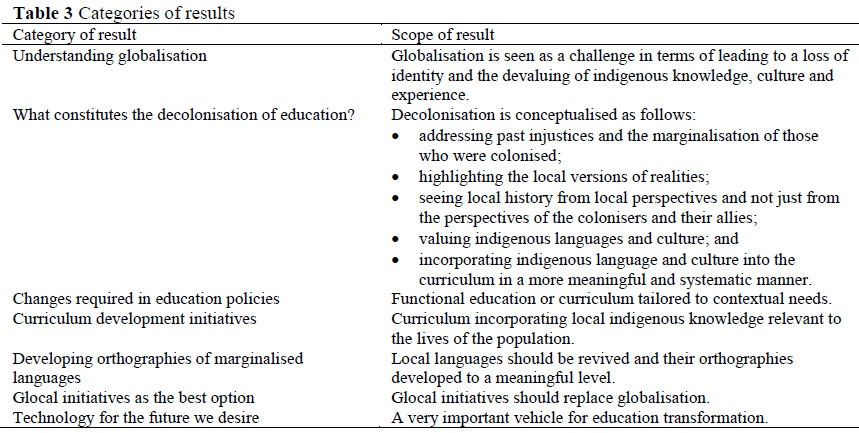
The recent student unrest in South African public higher education institutions highlighted the call for the decolonisation of education across post-colonial countries. This research explored the construct of the "decolonisation of education" through the lens of students of different nationalities across Africa, their perspectives on approaches to the actualisation of a decolonised curriculum, and the applicability of technology in education. Qualitative research methods and the Transformative Learning Theory were employed. Findings show that decolonising education for students means addressing past injustices and marginalisation by valuing and leveraging indigenous languages and culture, while incorporating relevant and cost-effective technology. The authors recommend that decolonisation ought to involve glocal initiatives from the perspectives of young people, where education is foregrounded in indigenous knowledge and integrated international worldviews.
culture; decolonising education; discourse; glocal; indigenous knowledge; language; technology; transformative learning theory