Factors influencing teachers' level of digital citizenship in underdeveloped regions of China
Abstract
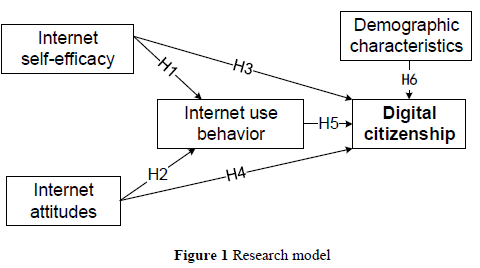
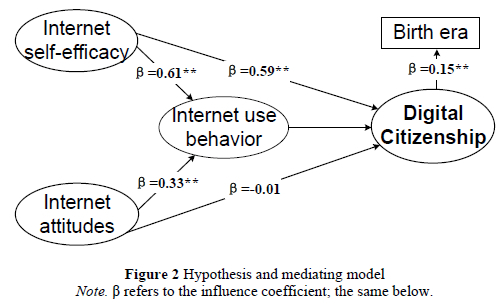
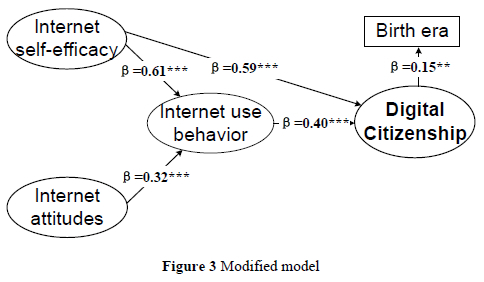
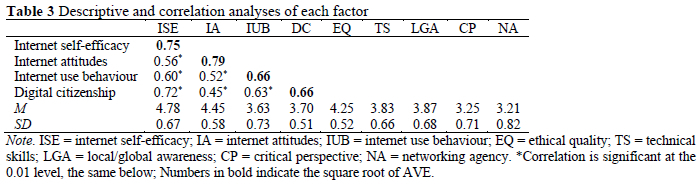
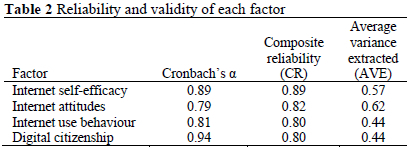
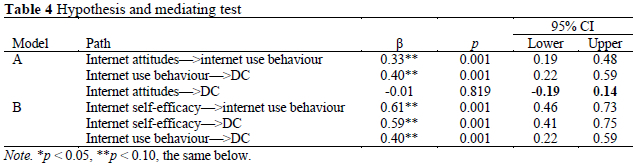
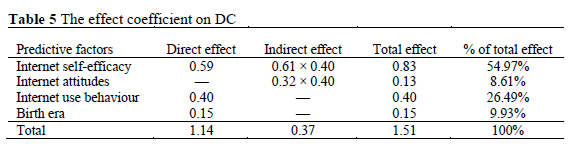
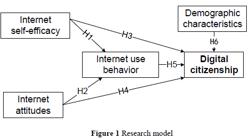
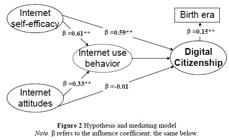
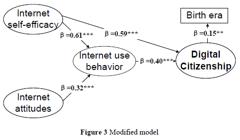
In digital times, new demands for higher levels of digital citizenship (DC) have aroused concern. Based on the study reported on here, we propose that 4 predictive factors, i.e., internet self-efficacy, internet attitudes, internet use behaviour and demographic characteristics affect teachers' level of DC in underdeveloped regions of China. From 21 different provinces, 240 primary teachers in underdeveloped regions in China participated in this quantitative research. The description, significance, correlation, and structural equation modelling (SEM) were statistically performed and analysed. We concluded the following: 1) The average score for DC is low and its 5 dimensions score differently with the highest being the ethical element and the lowest being networking agency and critical perspective; no statistically-significant differences exist for gender, school types, teaching subject and professional rank in predicting DC, but do exist for birth-era, suggesting that young teachers have a higher level of DC. 2) Internet self-efficacy, internet attitudes and internet use behaviour are positively correlated with DC. 3) In the SEM test, internet use behaviour acts as a mediator in the research model; internet self-efficacy is the major determinant of DC, followed by internet use behaviour and internet attitudes. The results were analysed and recommendations to promote teachers' high-level DC in underdeveloped regions are proposed.
Chinese teachers; digital citizenship; internet attitudes; internet self-efficacy; internet use behaviour
 Thumbnail
 Thumbnail
 Thumbnail