The arts in science? Using poetry to teach Chemistry in Grade 9 Philip
Abstract
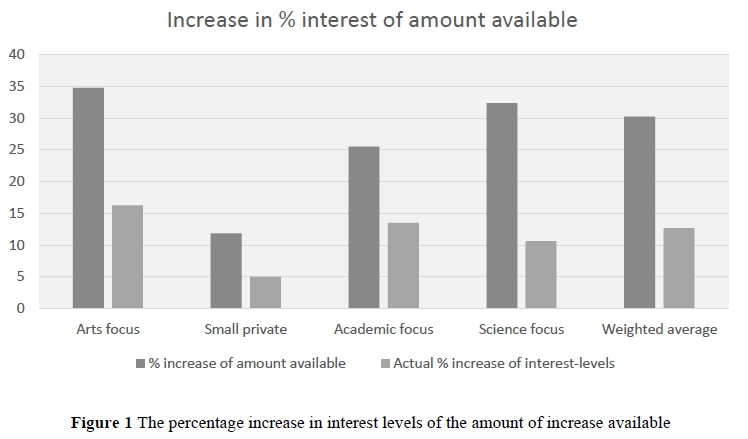
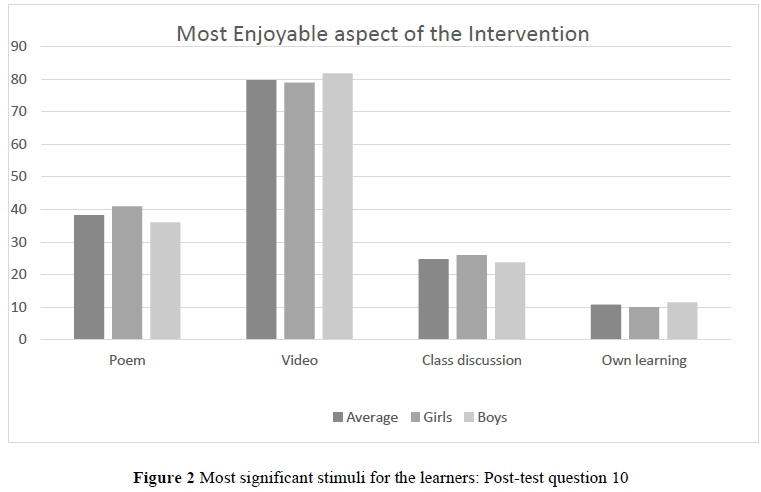
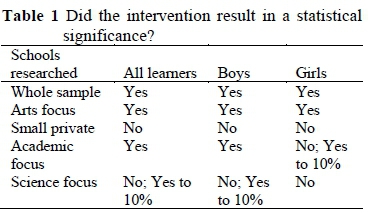
Modern science education the world over deliberately remains in the objective, rational, positivist paradigm. In South African classrooms, this paradigm is often alienating for young learners who then stop learning science at the end of Grade 9. Literature indicates that an arts-rich education improves learner engagement, attitudes and test scores, as evidenced by science Nobel laureates who engage more with the arts than other scientists. The research reported in this study involved the presentation of a lesson on acids and bases to 222 Grade 9 learners in 4 schools in the greater Tshwane region to establish whether their interest levels in the subject would improve when using a poem and video that characterise, describe and demonstrate scientific concepts. An in-class intervention of 40 minutes was used with identical Likert-scale, pre and post-tests analysed using the Wilcoxon and f-test. The results showed that the arts-rich lesson engaged learners in a manner which holistically improved their interest levels. The results were independent of gender, home language and the type of large, urban, government school that they attended. The results were not significant for the small, semi-rural, private school research site.
art-infused education; holistic education; science education; science poetry
 Thumbnail
 Thumbnail