Saudi Arabian teachers' experiences on emergency remote teaching during COVID-19
Abstract
Shortly after the outbreak of the COVID-19 pandemic, research into the optimal strategies for promoting emergency remote teaching (ERT) had increased. These studies were extremely important since they alerted policymakers to take serious steps to promote readiness for ERT. The aim with this study was to determine the ERT experiences as reported by high-school teachers in Saudi Arabia. I used a mixed-mode design in which both quantitative and qualitative methods were used. I collected the data using a questionnaire on the teachers' experiences during the COVID-19 pandemic, and focus-group discussions to get information about the best practices to promote readiness for ERT. The participants of the study were 373 high-school teachers working in Asir region schools in Saudi Arabia. Of that number, 12 teachers were randomly selected and divided into 2 focus groups of 6 participants each. The findings show that teachers reported negative and positive teaching experiences during the pandemic. In addition, 3 major themes with regard to the best practices for ERT emerged from the focus-group discussions: instructor-related practices, technology-related practices, and student-related practices. In the conclusion I refer to a few major matters that need to be emphasised to promote readiness for ERT.
COVID-19; emergency remote teaching; Saudi teachers
Introduction
Mankind has witnessed several pandemics such as H1N1 influenza (swine flu), severe acute respiratory syndrome (SARS), human immunodeficiency virus/acquired immunodeficiency syndrome (HIV/AIDS), the Spanish flu, and cholera. The recent outbreak of the coronavirus disease (COVID-19) is probably the worst of all the others mentioned due to the huge number of victims and negative social and economic impact (Whitworth, 2020). On 11 March 2020, all educational institutions in Saudi Arabia were closed to prevent the spread of the new virus. Like in many other countries, the Saudi Ministry of Education decided to shift to full online teaching and learning. Consequently, teachers, students, policymakers, and parents encountered the serious challenge of implementing an extremely rapid shift to remote teaching. The COVID-19 disease affected all aspects of life and countries all over the world attempted to control the spread of the virus. The disease affected global economies, changed our society, imposed the closure of schools, stores, and malls, and brought about nationwide lockdowns (Shim & Lee, 2020).
Education was affected by the virus at all levels. According to Pokhrel and Chhetri (2021), the new situation affected around two billion students from all educational levels in 200 countries. This situation hastened a sudden shift from traditional teaching to remote teaching. Saudi schools also shifted their teaching mode and resources to developing self-learning modules and used several teaching platforms for the students to maintain learning continuity, often known as emergency remote teaching (ERT) (Bozkurt & Sharma, 2020).
ERT was used during the disruptive time of the COVID-19 pandemic. ERT has arisen in response to the abrupt temporary transitions of the teaching mode caused by disruptive crises such as war, famine, pandemics, and the like (Hodges, Moore, Lockee, Trust & Bond, 2020). Remote teaching has been proven to be an essential part of the teaching process during normal and disruptive times (Bulusan, Codamon-Dugyon & Bolintao, 2022). However, remote teaching and learning need more instructional plans, designs, and technological facilities to allow for students and institutions to be more prepared for any future disruptions (Carlson, 2020).
Unlike ERT, online teaching is intentionally designed and developed with the help of content experts and designers to be delivered through learning management systems, which allow both teachers and students to be involved in teaching and learning from different places (Whittle, Tiwari, Yan & Williams, 2020). The switch from the traditional mode of teaching to the remote one is a difficult task, especially when the delivery of the course spans months (Saqlain, 2021). According to Shim and Lee (2020), students and parents encounter serious challenges during ERT due to the unavailability of a pre-designed course plan.
In several recent studies (Agçam, Akbana & Rathert, 2021; Bulusan et al., 2022; Cahyadi, Hendryadi, Widyastuti, Mufidah & Achmadi, 2021; El-Sakran, Salman & Alzaatreh, 2022; Misirli & Ergulec, 2021; Potyrala, Demeshkant, Czerwiec, Jancarz-Lanczkowska & Tomczyk, 2021; Rodrigues, Costa & Moro, 2022; Saqlain, 2021) researchers have attempted to determine the perspectives and/or challenges encountered by students, teachers, and parents during ERT. These studies enriched the literature by providing extra information about stakeholders' readiness for the ERT caused by the disruptive virus. Previously, literature on ERT has focused on the instructors' perceptions of ERT practices (Agçam et al., 2021), the ERT difficulties encountered by Filipino university students in non-laboratory courses (Bulusan et al., 2022), the assessment of ERT at tertiary level in Indonesia (Cahyadi et al., 2021), the influence of ERT on Emirati college students (El-Sakran et al., 2022), Turkish parents' experiences and perceptions about ERT (Misirli & Ergulec, 2021), opinions of Polish head teachers about the future of ERT (Potyrala et al., 2021), assessment patterns used in primary schools in Portugal (Rodrigues et al., 2022), and a personal reflection on ERT (Saqlain, 2021). However, few studies concentrated on identifying practices to promote readiness for ERT. Therefore, I aimed to bridge the gap in this area by investigating the best practices to promote readiness for ERT from the perspectives of high-school teachers in Saudi Arabia. To this end, the following research questions were formulated:
1) What were the teachers' experiences of ERT during COVID-19?
2) What are the best practices to promote readiness for ERT from the point of view of high-school teachers in Saudi Arabia?
Literature Review
Online teaching, distance education, and ERT Online teaching, distance education, and ERT are all forms of remote learning, but they differ in their characteristics, purpose, and context. Online teaching involves planned and structured courses delivered over the internet, often through learning management systems (LMS) or virtual classrooms. It is typically a deliberate and well-designed form of education, where instructors and students engage in a virtual environment, regardless of geographic distance. Online teaching relies on digital resources, multimedia, and interactive tools (Moore, 2013).
Distance education is a broader term that encompasses various modes of learning where the instructor and the learner are physically separated. It includes all forms of education delivered remotely, including online, correspondence courses, or even traditional electronic mail (email)-based courses. It can be asynchronous (self-paced) or synchronous (in real time) and may involve the use of technology or various media (Zawacki-Richter & Jung, 2023). ERT refers to a temporary shift to remote teaching and learning during crises, such as the COVID-19 pandemic, without the time for proper instructional design. It is an emergency response to maintain educational continuity during unexpected disruptions. ERT often lacks the full features of online teaching, with quick adaptations of existing material for remote delivery (Hodges et al., 2020).
These types of remote learning are different in that online teaching is planned and intentional, while ERT is a rapid response to a crisis. Distance education is a broader concept that encompasses various forms of remote learning. Online teaching is often designed specifically for optimal learning experiences, while ERT may be less structured and more focused on immediate needs. Online teaching and ERT both use technology, but ERT may rely on simpler tools and platforms due to time constraints. Online teaching is a long-term strategy, whereas ERT is a short-term solution during emergencies.
However, the three types of remote teaching share several similarities. All involve some form of remote or virtual learning, often facilitated through digital technology. They all rely on technology to facilitate teaching and learning, although the extent and sophistication of technology may vary. They can potentially reach learners who are geographically distant from educational institutions.
Emergency remote teaching
There is a substantial difference between ERT and online learning since ERT is an improvised reaction to exceptional circumstances rather than a planned response (Seabra, Abelha, Teixeira & Aires, 2022). For regular online teaching, teachers have adequate time to design and plan course materials, teaching strategies, activities, and assessment (Aladsani, 2022). In the ERT environment, teachers have insufficient time and limited resources to cope with the rapid transition to complete online teaching and learning (Hodges et al., 2020). Typical online courses are designed and offered under ordinary circumstances, while ERT courses are offered during extraordinary conditions such as famine, wars, and pandemics that involve unstable emotions (Aladsani, 2022). The main purpose of ERT is to preserve the process of teaching and learning, while ensuring the safety of all members (Hodges et al., 2020).
Several challenges emerged due to the abrupt transition to ERT in comparison to those that emerge in regular online teaching and learning settings. In the academic context, sudden calamities lead to the closure of educational institutions leaving them vulnerable (Aladsani, 2022). The major challenges that may emerge in an ERT situation are the lack of readiness of educational institutions, teachers' lack of experience in presenting online classes, and parents' lack of preparation in such situations, which can negatively affect students' involvement in the learning process (Ibrahim, Padilla-Valdez & Rosli, 2022).
Several factors may have influenced students' readiness to engage in online learning in Saudi Arabia such as infrastructure, limited access to technology, and a lack of digital literacy. The availability of reliable internet access and the affordability of devices such as smartphones and laptops played a significant role in determining students' readiness for online education. In addition, students' ability to navigate digital platforms, use online tools, and access educational content online was a critical factor. Many institutions and organisations were offering digital literacy programmes to help students develop these skills (Alharthi, 2023).
In a similar vein, the ability of Saudi parents to assist their children during online learning varied widely depending on various factors, including the parents' education level, digital literacy, work commitments, and the availability of resources at home. Parents with a higher level of education may be better equipped to provide academic support to their children. They can assist with homework, answer questions, and help with understanding complex topics. Parents who are digitally literate and comfortable with technology are more likely to be able to assist their children with online learning. They can help troubleshoot technical issues, navigate online platforms, and support their children in accessing online resources. Like in other countries, many parents in Saudi Arabia have work commitments that may limit their availability to assist their children with online learning during the day. This may be a challenge, especially for working parents who cannot be at home to supervise their children's online classes (Alharthi, 2023).
The situation of ERT may result in teachers delivering their classes using a teacher-centred instead of a learner-centred approach. Teachers may also prefer using traditional methods of assessment that rely on supervised exams, which pose real challenges during the online administration of those exams (Moorhouse, 2020; Rodrigues et al., 2022). Notwithstanding, the context of ERT presented several traits such as reviewing the strategies of the teacher-centred approach used in the class and how to shift to approaches that provide for more autonomy in learning. Furthermore, teachers were obliged to use technology in their teaching style, and the formats of assessments had been changed from traditional and supervised exams to more appropriate assessment methods that suited remote teaching (Aladsani, 2022).
Emergency remote teaching and teachers' experiences
The ERT situation highlights the importance of instructors changing positions to manage social, administrative, educational, and technical responsibilities (Kidd & Keengwe, 2010). The social role entails supporting the online social environment; the administrative role involves defining objectives for the class; the educational role pertains to using technology to cope with ERT; and the technical role entails utilising technology to cope with ERT. Teachers need to receive professional training and development to manage teaching in disruptive times to be well-prepared for the new situation (Valsaraj, More, Biju, Payini & Pallath, 2021). However, teachers expected to encounter massive amounts of uncertainties and anxieties concerning the new learning environment. The new situation would leave them bewildered about how to handle it. This was particularly true when faced with challenges like the sudden shift to online learning, changes in teaching methods, and adapting to unforeseen circumstances.
It is extremely important to understand the teachers' experiences and strategies for responding to ERT during the COVID-19 pandemic. A study conducted among administrators and faculty members of 600 educational institutions in the United States of America (USA) found that 97% of the faculty members lacked online teaching experience, 56% of them reported a lack of previous experience using virtual teaching, 48% of them reported reduced expectations of student work, and 32% reported a significant deterioration in the quality of students' work (Seaman, Allen & Ralph, 2021). In a study by Sinacori (2020) on nursing educators in New Jersey on the experiences of transition from traditional teaching to remote teaching, show that the participants needed a drastic alertness to adapt to the new teaching style, and professional development for mentorship, technological support, and LMS.
According to Johnson, Veletsianos and Seaman (2020), administrators and faculty members in the USA managed to adopt new teaching methods regardless of their previous experience. In a similar vein, Eisenbach, Greathouse and Acquaviva (2020) point out that teachers in the USA were able to cope with the challenges brought about by ERT. Teachers exhibited creativity and critical thinking during COVID-19. Nonetheless, faculty members revealed some challenges during ERT such as problems with internet access, changes in students' personal needs, and obscure government directives or educational transition. In addition, they reported the need for support to adapt the practices of transition, and that they relied on informal self-directed networks for teaching assistance (Trust & Whalen, 2020).
Valsaraj et al. (2021) studied the faculty experiences on ERT during the COVID-19 pandemic in some selected private universities in four countries: Oman, United Arab Emirates, India, and Malaysia. The main themes obtained from this multicentre study were the anxiety experienced by the faculty members and lack of readiness. Iyer, Blut, Xiao and Grewal (2020) argue that teachers may encounter serious challenges in teaching online during disruptive times because of the lack of sufficient time to choose between asynchronous and synchronous online modes of learning, many students defaulted to whatever was immediately available. Teachers should be resilient enough to diverge from the original plan of content delivery.
Promoting emergency remote teaching
Societies aspire to attain sustainable development as one of their highest priorities. Sustainable development has been the subject of debate on how to balance global economic growth and social progress with the goal of achieving environmental sustainability (Alsarayreh, Al-Khasawneh & Al Soub, 2022; Echegoyen-Sanz & Martín-Ezpeleta, 2021). Undoubtedly, education is critical to sustainable development, as is evidenced by several initiatives at national and international levels (United Nations Educational, Scientific and Cultural Organization [UNESCO], n.d.). The complexity issues - especially in education during the COVID-19 pandemic - led to imperious demands and focus on education for sustainable development (ESD) to appropriately ponder on this issue. The outbreak of catastrophes poses serious challenges for students, parents, and teachers to arrange and implement efficient procedures for sustainable education (Yu, Huang, Han, He & Li, 2020). These procedures may include domains such as values, attitudes, and behaviour. The importance of these domains is the fact that more research is needed to deal with beliefs, attitudes, and competencies in both environmental education and environmentally sustainable education (Pegalajar-Palomino, Martínez-Valdivia & Burgos-García, 2021). Most studies in this field have focused on only three pillars (environment, society, and economy), but very few studies have concentrated on sustainable education. Research on sustainable education is extremely important in preparation of any extraordinary circumstances such as calamities or pandemics. As a result, I believe that it is critical to broaden the implications for sustainable education by advocating for a new environment for education stakeholders.
The pandemic of COVID-19 has changed the stakeholders' attitudes toward online education, and many online education platforms have been used during the pandemic. Both parents and students found themselves obliged to accept the online system of education to sustain education, regardless of their assumptions and irrespective of their digital literacy. The use of remote teaching helped to enforce social distancing between students and teachers. Teachers would be able to present their classes and curriculum online and assign assignments and homework online with the help of teaching platforms. Teachers can also imitate face-to-face instruction by displaying images of themselves on the screen, and students can engage with them by asking and responding to questions (Shamir-Inbal & Blau, 2021).
Ferri, Grifoni and Guzzo (2020) argue that students should gain certain skills for the sake of education sustainability. One of these skills is the student's ability to use devices for online learning, which is useful for communicating with teachers and vice versa. Policymakers must take some action to ensure the long-term viability of online education, such as measuring students' typing abilities as well as cognitive burdens. Cognitive burdens may include learning materials, resource usefulness, ease of use of online platforms, and timely response from teachers. It is also critical to assess the efficacy, contentment, interest, and attitudes about the transition to ERT. Reliable measurement of such characteristics is critical for the long-term viability of online education. The evaluation results may be used by instructors, parents, students, and curriculum designers to modify their tactics for meeting the demands of online education (Mahdy & Sayed, 2022).
The outbreak of the COVID-19 pandemic alerted educators and researchers about the vital role of digital literacy in promoting readiness for ERT. The pandemic encouraged curriculum designers to consider the incorporation of digital technology into the new virtual schooling environment. Furthermore, instructors and students had to increase their knowledge of educational technology to keep up with the abrupt shift from face-to-face to online educational environments (Bhagat & Kim, 2020). Convenient access to educational technology can promote long-term education and increase educators' digital literacy (Román, Castro, Baeza, Knab, Huss-Lederman & Chacon, 2021).
Ede, Masuku and Jili (2021) point out that higher education institutions should obtain adequate information and equipment of communication technology, evolve indispensable facilities, implement regulations and rules, and sufficiently maintain this technology to successfully promote ERT. Joseph, Thompson, Soobramoney and Wing (2022) present a four-stage model to promote readiness for ERT in South African universities. The stages include preparation, synchronous and asynchronous learning and teaching, electronic assessment (e-assessment), and reflections. The preparation stage ensures that both students and teachers gain the necessary resources and skills for transformation ERT. The second and third stages ensure the effective implementation of teaching, learning, and assessment strategies that were required to successfully address learning outcomes. The last stage reflects the best practices of teaching in the ERT environment, analysing the impact of those practices on students' performance.
Theoretical Framework
Creating a theoretical framework for ERT involves drawing upon relevant educational theories and concepts to provide a structured lens through which to understand and analyse the unique challenges and dynamics of teaching in emergencies like the COVID-19 pandemic. This study was guided by the technological pedagogical content knowledge (TPACK) theory that emphasises the intersection of technological knowledge (TK), pedagogical knowledge (PK), and content knowledge (CK) to guide effective teaching with technology.
TK refers to understanding how technology should be used effectively and adapted for educational purposes (Koehler, Mishra & Cain, 2013). PK involves knowledge of teaching strategies, instructional methods, and classroom management techniques (Shulman, 1987). CK refers to expertise in subject matter and understanding the core concepts and principles of a particular academic discipline (Shulman, 1987). TPACK is the integration and intersection of TK, PK, and CK, where teachers possess the knowledge and skills to effectively design and implement technology-enhanced learning experiences. TPACK is not a fixed body of knowledge but is dynamic and evolves as new technology, teaching methods, and content emerge (Koehler et al., 2013). TPACK is used to guide educators in effectively integrating technology into their teaching practices, with a focus on enhancing student learning outcomes (Harris & Hofer, 2011).
Methodology
Design
With this study I aimed to investigate the teachers' experiences of ERT and how to promote readiness for ERT from their perspectives. I applied a mixed method approach, in which both quantitative and qualitative designs were employed for data collection. Quantitative data were used to explore teachers' experiences of ERT, while qualitative data were used to present ideas/strategies to promote readiness for ERT from teachers' perspectives.
Participants
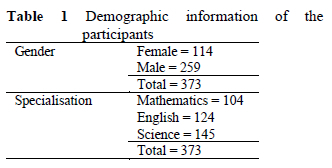
The number of participants in the study was 373 teachers (114 female and 259 male). The teachers were purposively selected from various high schools in the Asir region and from three specialisations: science, mathematics, and English language (Table 1). The teachers' experiences of ERT were explored using a questionnaire. I received a letter of consent from King Khalid University, which was sent to the Directorate of Education in the Asir Region. The administrators working at the education department assisted to send the questionnaire to the teachers working in schools in the Asir region. Consequently, the questionnaire was sent via online platforms and completed by the teachers. Focus-group discussions (FGDs) were also held to get ideas from the teachers on how to promote readiness for ERT. Two FGDs were held, each with six teachers who were recruited using the convenience sampling method.
Research Instruments
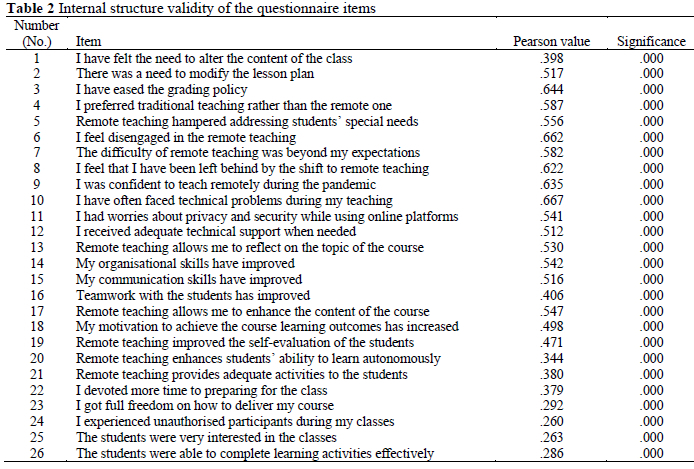
Both a questionnaire and focus-group sessions were used to obtain data for the study. I developed the questionnaire based on a comprehensive review of previous studies (Aladsani, 2022; Echegoyen-Sanz & Martín-Ezpeleta, 2021; Ferri et al., 2020; Khlaif, Salha & Kouraichi, 2021; Pegalajar-Palomino et al., 2021; Shamir-Inbal & Blau, 2021; Valsaraj et al., 2021). The questionnaire consists of 26 items about the teachers' experiences of ERT during COVID-19. The participants' responses were based on a 5-point Likert scale ranging from a lower level of agreement to a higher level (1 - Strongly disagree and 5 -Strongly agree). I used two different methods to ensure the validity and reliability of the questionnaire. To ensure content validity, the questionnaire was sent to six colleagues from the Faculty of Education for them to give their opinions about the items in the instrument. The faculty members recommended paraphrasing some of the items and deleting some others. The final number of questionnaire items remained at 26. In addition, I conducted a pilot study with 30 participants who were not included in the data collection of the main study. The main goal of the pilot study was to ensure internal structure validity using Pearson correlation and reliability using Cronbach's alpha. To assess the internal structure validity of a questionnaire, researchers typically examine how the individual items or questions in the questionnaire relate to one another. The Pearson correlation coefficient is a common statistical tool used for this purpose. I calculated the correlations of the questionnaire items to determine whether they were measuring the same underlying construct or concept.
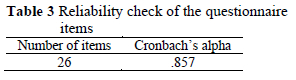
As seen in Table 2, all questionnaire items used in this study were internally valid as the Pearson correlation value ranged between .260 to .667 with a significance level of (0.00 < α). In addition, I used Cronbach's alpha to ensure the reliability of the questionnaire (see Table 3).
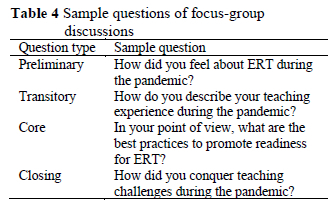
DeVellis (1991) argues that Cronbach's alpha (α) of at least equal to 0.70 (α > 0.70) indicates good reliability of a questionnaire. The data collected for this study were calculated using Statistical Package for Social Sciences (SPSS) 22.0 for Windows. The Cronbach's alpha value was found to be 0.857, which is higher than 0.70. The questionnaire was thus reliable for use in this study. The second instrument used in this study was online FGDs, in which four primary questions were used. By consulting four experts in the education field in this regard, the interview questions were ensured to be valid, reliable and comprehensive. The respondents were permitted to express themselves in either English or Arabic to avoid ambiguity throughout the dialogue and to develop deeper connections.
In addition, some steps were taken to ensure trustworthiness of the data. Firstly, the goals of the data collection process were clearly articulated; this helps to collect relevant data and avoid unnecessary information. The FGD questions used in the study are presented in Table 4. Secondly, data validation checks during collection were to identify errors and anomalies early on. This included range checks, data type validation, and cross-field consistency checks. In the third instance, the data were regularly cleaned and pre-processed to remove duplication, to correct errors, and to manage missing values. Finally, as data trustworthiness is an ongoing process, I monitored data quality and made improvements as needed.
Data Analysis
The SPSS for Windows 26.0 was used to record and tabulate the quantitative data. To establish the instructors' experiences with ERT during COVID-19, descriptive statistics such as means and standard deviation were generated. I also recorded each focus group session, which lasted roughly 50 minutes. The recorded sessions were converted to field notes. I then ensured data cleaning by asking transcribers to verify the obtained data, and the transcribed texts were returned to the respondents for member-checking to ensure credibility (Creswell & Creswell, 2017). The data set was thematically analysed in which I looked for themes and patterns relating to the best practices to promote readiness for ERT. I generated codes from the transcripts, organised them into categories, formed codebook hierarchies, and connected categories into themes. These themes led to the creation of the dimensions of best practices to promote readiness for ERT that addressed the main question in this study. Confirmability was ensured by involving external researchers to validate the themes, categories, and codes generated from the data (Graneheim & Lundman, 2004).
Ethical Considerations
Ethical considerations are fundamental in conducting research. They ensure that research is conducted responsibly, with respect for the rights and well-being of participants, and according to accepted principles of morality and integrity. I obtained informed consent from the participants before involving them in the study. This means that participants were provided with clear information about the purpose of the study, procedures, potential risks, and benefits. The participants were also informed of their right to withdraw from the study at any time without consequences.
I took certain measures to protect the privacy and confidentiality of participants. This includes safeguarding of personal information and ensuring that the individuals could not be identified as a result of any published or disseminated research results. I also conducted the work with honesty and integrity, which included reporting results accurately and not manipulating data. Fabrication, falsification, and plagiarism are considered serious breaches of research ethics.
Findings
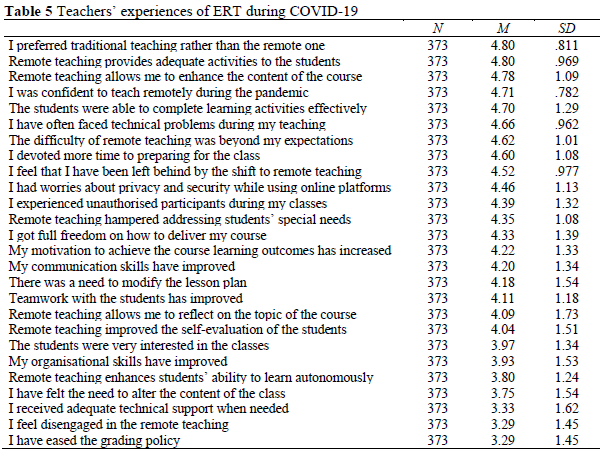
I used descriptive analysis, including means and standard deviations, to provide an answer to the first question: What are the teachers' experiences of ERT during COVID-19? The teachers reported variant experiences during COVID-19 (see Table 5).
The questionnaire items are provided in ascending order, beginning with the highest mean score and ending with the lowest. I decided to mention the five highest and lowest means of the teachers' experiences in teaching during the COVID-19 pandemic. The experiences with the highest mean scores were "I preferred traditional teaching rather than the remote one" (M = 4.80, SD = .811), followed by "Remote teaching provides adequate activities to the students" (M = 4.80, SD = .969), "Remote teaching allows me to enhance the content of the course" (M = 4.78, SD = 1.09), "I was confident to teach remotely during the pandemic" (M = 4.71, SD = .782), and finally "The students were able to complete learning activities effectively" (M = 4.70, SD = 1.29).
On the other hand, the experiences with the lowest mean scores were "Remote teaching enhances students' ability to learn autonomously" (M = 3.80, SD = 1.24), followed by "I have felt the need to alter the content of the class" (M = 3.75, SD = 1.54), "I received adequate technical support when needed" (M = 3.33, SD = 1.62), "I feel disengaged in the remote teaching" (M = 3.29, SD = 1.45), and finally "I have eased the grading policy" (M = 3.29, SD = 1.45). The standard deviation is a measure of the dispersion or spread of a set of data points. In the context of scores or data, a low standard deviation indicates that the data points are close to the mean (average), while a high standard deviation indicates that the data points are more spread out from the mean. The standard deviations obtained from this study were relatively small, and this indicates that most of the data items were close to the mean, precise, and consistent.
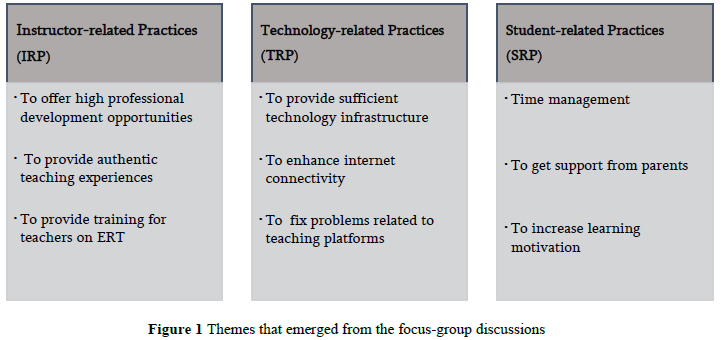
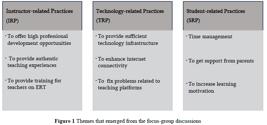
In addition to the quantitative results, several themes have emerged from the focus-group discussions (FGD) that determine the best practices to promote readiness for ERT (see Figure 1).
Instructor-related Experiences
The first emerging theme is instructor-related practices. This theme points to the support that could be offered to instructors to cope with ERT. For instance, the participants mentioned three issues under this theme, such as offering high professional development opportunities.
Policymakers should provide periodic professional development to increase the performance quality of teachers. I think this is a very important issue since the frequency of professional development experiences is episodic and its quality is different, limited duration, and follow-up or support is almost non-existent. (Participant 11)
Participants also mentioned authentic teaching experiences as one of the priorities to promote readiness for ERT. Two participants asserted the following:
It is extremely important to provide authentic learning experiences in the case of ERT. It prepares students for real work as traditional-based learning. The activities in authentic learning match the real-world teaching and tasks (Participant 9). Authentic teaching experiences are relevant to students. It shows how students can apply theory to the profession; learning becomes more effective when it is relevant to students (Participant 1).
Another component of instructor-related practices is to provide training for teachers on ERT. Two participants emphasised this point:
Teachers should receive professional training to cope with the demands of ERT. It is vital to train teachers during emergency cases since they are the ones who perform teaching tasks, create an effective learning environment, and solve learning problems faced by students. (Participant 4)
Schools are responsible for supporting teachers to deliver their lessons online. This can be achieved by providing training and workshops to equip them with the necessary skills to make a more effective teaching environment (Participant 8).
Technology-related Practices
The second theme of the best practices is related to technology. This included three components: provision of sufficient technology infrastructure, enhancement of the internet connectivity, and fixing problems related to teaching platforms. One participant pointed out: "It is extremely important to provide quick solutions to technical problems since it is the essence of ERT. It is also important to ensure data confidentiality for both teachers and students' (Participant 12).
Another participant stated that "[t]eachers and students need to know how to use digital devices because the process of teaching and learning during ERT would be ineffective without considering this important point" (Participant 5).
Some participants emphasised the importance of enhancing internet access and connectivity during emergency cases: "Internet connectivity is one of the most important components during ERT. It avails access to course content, learning resources, the ability to watch and rewatch lectures online, and attend virtual classes" (Participant 2).
In addition, some participants averred the importance of fixing problems related to online teaching platforms:
Students and teachers experienced some challenges with the teaching platforms used during ERT. I believe there is a persistent need to fix any problem related to teaching platforms. I also think that online teaching platforms should be simple and clear for both teachers and students. This helps in customizing the teaching materials easily and making them available for students. (Participant 6)
Student-related Practices
The third theme that emerged from this study was student-related practices, which contained three elements: time management, getting support from parents, and increasing students' learning motivation "I think time management plays a crucial factor in online teaching and even traditional teaching. It helps in keep tracking assignments deadlines and test schedules. The students should be aware of that" (Participant 10).
Some participants emphasised the parents' role in ERT:
Parents have a vital role in occasional teaching cases. They should encourage and motivate their children when virtual schooling starts. Learning motivation is very important in this case (Participant 5).
Parents should be involved in this case. They can help in creating a healthy environment and good homework habits. They can also help their children to set goals and make plans (Participant 9).
Discussion
With this study I sought to investigate the teachers' experiences during COVID-19. I also sought to determine the best practices to promote readiness for ERT from school teachers' perspectives. The results show perceived negative experiences of ERT such as inadequate activities provided to the students, and the technical problems faced by both teachers and students. The results also reveal some perceived positive experiences such as devoting more time to preparing the course content and achieving the course learning outcomes. The results of this study agree with the results reported in previous studies (Al-Nofaie, 2020; Atmojo & Nugroho, 2020). Notably, the negative and positive experiences perceived by the teachers created new opportunities and uncovered some challenges experienced by teachers and students during COVID-19.
The first theme was about instructors' practices. This theme stems from developmental opportunities, authentic teaching experiences, and training teachers to improve their teaching skills. This suggests it is assumed that teachers understand the concepts of ERT. I argue that policymakers are accountable for making teachers aware of virtual and interactive classes, and for boosting collaboration between teachers and students. McMurtrie (2020) indicates that teachers must experience presence, enabling them to sense the ERT teaching community. This finding is in line with the findings of Iwai (2020); and Reimers, Schleicher, Saavedra and Tuominen (2020) who explain that teachers in ERT are incompetent to establish effective communication with the students.
The technology-related practices stem from providing technology infrastructure, enhancing internet connectivity, and fixing teaching platform problems. These practices are viewed as essential in ERT due to COVID-19, as all schools resorted to using technology to ensure uninterrupted teaching. The technology-related practices are explained by the lack of technological infrastructure resulting from the abrupt shift to ERT. These practices are extremely important to maintain progressive and effective teaching and learning (Brereton, 2021). In addition, the lack of technological infrastructure would lead to inconsistency in using teaching platforms and this causes confusion and increases stress among students (Jelinska & Paradowski, 2021).
The student-related practices stemmed from time management, getting support from parents, and increasing learning motivation. This situation explains the inability of students to respond to the given tasks and assignments. This finding agrees with Bulusan et al.'s (2022) empirical findings, which emphasise the importance of encouraging students to manage their study time to achieve self-regulated learning. The findings of this study indicate the vital role of parents to support their children and increase their motivation. Parents should show adequate socialisation with their children during the learning process (Shim & Lee, 2020). Family support allows parents to better understand the best strategies to assist their children and to reduce the students' learning challenges (Raguindin, Listing & Custodio, 2021).
The findings of this study highlight several reasons for the unpreparedness of Saudi schools for ERT. These reasons include inadequate internet connectivity and technological infrastructure, insufficient teacher training in the use of digital tools and remote teaching methods, which hinder the development of effective pedagogical strategies, and the absence of pre-established contingency plans or policies for emergency transitions to remote learning.
To enhance preparedness for ERT in the future, I make three key recommendations. Firstly, prioritising investments in nationwide technological infrastructure is crucial to ensure reliable internet connectivity and provide essential devices for both students and teachers, bridging the digital divide and improving access to learning resources. Secondly, schools should establish ongoing professional development programmes to train educators in using digital tools effectively and adopting remote teaching strategies, enabling them to address ERT challenges with greater expertise. Lastly, developing robust contingency plans, including pre-designed curricula and clear implementation guidelines is vital to facilitate seamless transition during emergencies. Implementing these measures will strengthen the education system' s resilience, ensuring that it can maintain quality and continuity in times of crisis.
Conclusion
This study reveals different teaching experiences of Saudi high school teachers during cOvID-19. It also represents different themes on best practice to promote readiness for ERT. These themes included instructor-related practices, technology-related practices, and student-related practices. The practices reported in this study enable a clear picture of ERT needs to be improved and addressed in subsequent years in order to improve readiness for ERT. To achieve this goal, different units and agencies should collaborate to mitigate the challenges faced by both teachers and students. Furthermore, the study foregrounds solid foundations for best practice. It concludes that the intertwined foundations are crucial to promote ERT readiness in the future.
The study findings may be used as a base for future studies concerned with this research area, especially interdisciplinary research. The themes that emerged from this study can be used in future research using different research methods or instruments, which may support and validate the findings of this study. Despite the useful findings obtained from the study, one should caution against indiscriminate generalisation. The study was limited to high school teachers in Saudi Arabia. Further research on the topic may involve a greater number of higher institutions or schools in- and outside Saudi Arabia.
Notesi. Published under a Creative Commons Attribution Licence.
Acknowledgement
The author wishes to extend his appreciation to the Deanship of Scientific Research at King Khalid University for funding this work under General Research Group grant number (RGP/22/46).
References
-
Agçam R, Akbana YE & Rathert S 2021. Dealing with emergency remote teaching: The case of pre-service English language teachers in Turkey. Journal of Language and Education, 7(4):16-29. https://doi.org/10.17323/jle.2021.11995
» https://doi.org/10.17323/jle.2021.11995 -
Aladsani HK 2022. A narrative approach to university instructors' stories about promoting student engagement during COVID-19 emergency remote teaching in Saudi Arabia. Journal of Research on Technology in Education, 54(Suppl. 1):S165-S181. https://doi.org/10.1080/15391523.2021.1922958
» https://doi.org/10.1080/15391523.2021.1922958 -
Alharthi M 2023. Parental involvement in children's online education during COVID-19; A phenomenological study in Saudi Arabia. Early Childhood Education Journal, 51(2):345-359. https://doi.org/10.1007/s10643-021-01286-y
» https://doi.org/10.1007/s10643-021-01286-y -
Al-Nofaie H 2020. Saudi university students' perceptions towards virtual education during Covid-19 pandemic: A case study of language learning via Blackboard. Arab World English Journal (AWEJ), 11(3):4-20. https://doi.org/10.24093/awej/vol11no3.1
» https://doi.org/10.24093/awej/vol11no3.1 -
Alsarayreh RS, Al-Khasawneh FM & Al Soub TF 2022. Parental engagement in online teaching and learning during COVID-19 pandemic: Implications for sustainable education. Journal of Teacher Education for Sustainability, 24(1):129-144. https://doi.org/10.2478/jtes-2022-0010
» https://doi.org/10.2478/jtes-2022-0010 -
Atmojo AEP & Nugroho A 2020. EFL classes must go online! Teaching activities and challenges during COVID-19 pandemic in Indonesia. Register Journal, 13(1):49-76. https://doi.org/10.18326/rgt.v13i1.49-76
» https://doi.org/10.18326/rgt.v13i1.49-76 -
Bhagat S & Kim DJ 2020. Higher education amidst COVID-19: Challenges and silver lining. Information Systems Management, 37(4):366-371. https://doi.org/10.1080/10580530.2020.1824040
» https://doi.org/10.1080/10580530.2020.1824040 -
Bozkurt A & Sharma RC 2020. Editorial: Emergency remote teaching in a time of global crisis due to CoronaVirus pandemic. Asian Journal of Distance Education, 15(1):i-vi. https://doi.org/10.5281/zenodo.3778083
» https://doi.org/10.5281/zenodo.3778083 - Brereton P 2021. Emergency remote training: Guiding and supporting teachers in preparation for emergency remote teaching. Language Research Bulletin, 35:1-13.
-
Bulusan F, Codamon-Dugyon EM & Bolintao JJM 2022. Exploring the challenges of tertiary students in non-laboratory courses after the first year of emergency remote teaching. European Journal of Educational Research, 11(1):481-492. https://doi.org/10.12973/eu-jer.11.1.481
» https://doi.org/10.12973/eu-jer.11.1.481 -
Cahyadi A, Hendryadi, Widyastuti S, Mufidah VN & Achmadi 2021. Emergency remote teaching evaluation of the higher education in Indonesia. Heliyon, 7(8):e07788. https://doi.org/10.1016/j.heliyon.2021.e07788
» https://doi.org/10.1016/j.heliyon.2021.e07788 -
Carlson M 2020. Emergency remote learning compared to online learning. Available at https://learningsolutionsmag.com/articles/emergency-remote-learning-compared-to-online-learning. Accessed 12 February 2022.
» https://learningsolutionsmag.com/articles/emergency-remote-learning-compared-to-online-learning - Creswell JW & Creswell JD 2017. Research design: Qualitative, quantitative, and mixed methods approaches (5th ed). New York, NY: Sage.
- DeVellis RF 1991. Scale development: Theory and applications. Newbury Park, CA: Sage.
-
Echegoyen-Sanz & Martín-Ezpeleta A 2021. Fostering creativity in the classroom. Ecofeminist movies for a better future. Journal of Education Culture and Society, 12(1):117-130. https://doi.org/10.15503/jecs2021.1.117.130
» https://doi.org/10.15503/jecs2021.1.117.130 -
Ede CI, Masuku MM & Jili NN 2021. Implications of COVID-19 lockdown on South African business sector. International Journal of Financial Research, 12(4):12-23. https://doi.org/10.5430/ijfr.v12n4p12
» https://doi.org/10.5430/ijfr.v12n4p12 -
Eisenbach BB, Greathouse P & Acquaviva C 2020. COVID-19, middle level teacher candidates, and colloquialisms: Navigating emergency remote field experiences. Middle Grades Review, 6(2):1-5. Available at https://files.eric.ed.gov/fulltext/EJ1257482.pdf. Accessed 22 March 2022.
» https://files.eric.ed.gov/fulltext/EJ1257482.pdf -
El-Sakran A, Salman R & Alzaatreh A 2022. Impacts of emergency remote teaching on college students amid COVID-19 in the UAE [Special issue]. International Journal of Environmental Research and Public Health, 19(5):2979. https://doi.org/10.3390/ijerph19052979
» https://doi.org/10.3390/ijerph19052979 -
Ferri F, Grifoni P & Guzzo T 2020. Online learning and emergency remote teaching: Opportunities and challenges in emergency situations [Special issue]. Societies, 10(4):86. https://doi.org/10.3390/soc10040086
» https://doi.org/10.3390/soc10040086 -
Graneheim UH & Lundman B 2004. Qualitative content analysis in nursing research: Concepts, procedures and measures to achieve trustworthiness. Nurse Education Today, 24(2):105-112. https://doi.org/10.1016/j.nedt.2003.10.001
» https://doi.org/10.1016/j.nedt.2003.10.001 -
Harris JB & Hofer MJ 2011. Technological pedagogical content knowledge (TPACK) in action: A descriptive study of secondary teachers' curriculum-based, technology-related instructional planning. Journal of Research on Technology in Education, 43(3):211-229. https://doi.org/10.1080/15391523.2011.10782570
» https://doi.org/10.1080/15391523.2011.10782570 -
Hodges C, Moore S, Lockee B, Trust T & Bond A 2020. The difference between emergency remote teaching and online learning. EDUCAUSE Review, 27(1):1-9. Available at https://er.educause.edu/articles/2020/3/the-difference-between-emergency-remote-teaching-and-online-learning. Accessed 23 February 2022.
» https://er.educause.edu/articles/2020/3/the-difference-between-emergency-remote-teaching-and-online-learning -
Ibrahim F, Padilla-Valdez N & Rosli UK 2022. Hub-and-spokes practices of blended learning: Trajectories of emergency remote teaching in Brunei Darussalam. Education and Information Technologies, 27(1):525-549. https://doi.org/10.1007/s10639-021-10754-2
» https://doi.org/10.1007/s10639-021-10754-2 -
Iwai Y 2020. Online learning during the COVID-19 pandemic: What do we gain and what do we lose when classrooms go virtual? Scientific American, 13(1):119-132. Available at https://bit.ly/3oHE6Eo. Accessed 28 February 2022.
» https://bit.ly/3oHE6Eo -
Iyer GR, Blut M, Xiao SH & Grewal D 2020. Impulse buying: A meta-analytic review. Journal of the Academy of Marketing Science, 48(3):384-404. https://doi.org/10.1007/s11747-019-00670-w
» https://doi.org/10.1007/s11747-019-00670-w -
Jelinska M & Paradowski MB 2021. Teachers' engagement in and coping with emergency remote instruction during COVID-19-induced school closures: A multinational contextual perspective. Online Learning, 25(1):303-328. https://doi.org/10.24059/olj.v25i1.2492
» https://doi.org/10.24059/olj.v25i1.2492 -
Johnson N, Veletsianos G & Seaman J 2020. U.S. faculty and administrators' experiences and approaches in the early weeks of the COVID-19 pandemic. Online Learning, 24(2):6-21. https://doi.org/10.24059/olj.v24i2.2285
» https://doi.org/10.24059/olj.v24i2.2285 -
Joseph S, Thompson R, Soobramoney S & Wing JW 2022. Emergency remote teaching and learning during COVID-19 pandemic: Efficacy of a four-stage model. Tuning Journal for Higher Education, 9(2):245-277. https://doi.org/10.18543/tjhe.2134
» https://doi.org/10.18543/tjhe.2134 -
Khlaif ZN, Salha S & Kouraichi B 2021. Emergency remote learning during COVID-19 crisis: Students' engagement. Education and Information Technologies, 26:7033-7055. https://doi.org/10.1007/s10639-021-10566-4
» https://doi.org/10.1007/s10639-021-10566-4 -
Kidd TT & Keengwe J 2010. Information literacy in the digital age: Implications for adult learning. In TT Kid & J Keengwe (eds). Adult learning in the digital age: Perspectives on online technologies and outcomes. Hershey, PA: Information Science Reference. https://doi.org/10.4018/978-1-60566-828-4.ch012
» https://doi.org/10.4018/978-1-60566-828-4.ch012 -
Koehler MJ, Mishra P & Cain W 2013. What is technological pedagogical content knowledge (TPACK)? Journal of Education, 193(3): 13-19. https://doi.org/10.1177/002205741319300303
» https://doi.org/10.1177/002205741319300303 -
Mahdy MAA & Sayed RKA 2022. Evaluation of the online learning of veterinary anatomy education during the Covid-19 pandemic lockdown in Egypt: Students' perceptions. Anatomical Sciences Education, 15(1):67-82. https://doi.org/10.1002/ase.2149
» https://doi.org/10.1002/ase.2149 -
McMurtrie B 2020. The Coronavirus has pushed courses online. Professors are trying hard to keep up. The Chronicle of Higher Education, 66(26). Available at https://bit.ly/3GFsmsh. Accessed 6 March 2022.
» https://bit.ly/3GFsmsh -
Misirli O & Ergulec F 2021. Emergency remote teaching during the COVID-19 pandemic: Parents experiences and perspectives. Education and Information Technologies, 26(6):6699-6718. https://doi.org/10.1007/s10639-021-10520-4
» https://doi.org/10.1007/s10639-021-10520-4 -
Moore MG 2013. Handbook of distance education (3rd ed). New York, NY: Routledge. https://doi.org/10.4324/9780203803738
» https://doi.org/10.4324/9780203803738 -
Moorhouse BL 2020. Adaptations to a face-to-face initial teacher education course 'forced' online due to the COVID-19 pandemic. Journal of Education for Teaching, 46(4):609-611. https://doi.org/10.1080/02607476.2020.1755205
» https://doi.org/10.1080/02607476.2020.1755205 -
Pegalajar-Palomino MC, Martínez-Valdivia E & Burgos-García A 2021. Análisis de la responsabilidad social en estudiantes universitarios de educación [Analysis of social responsibility in university education students]. Formación Universitaria, 14(2):95-104. https://doi.org/10.4067/s0718-50062021000200095
» https://doi.org/10.4067/s0718-50062021000200095 -
Pokhrel S & Chhetri R 2021. A literature review on the impact of COVID-19 pandemic on teaching and learning. Higher Education for the Future, 8(1):133-141. https://doi.org/10.1177/2347631120983481
» https://doi.org/10.1177/2347631120983481 -
Potyrala K, Demeshkant N, Czerwiec K, Jancarz-Lanczkowska B & Tomczyk L 2021. Head teachers' opinions on the future of school education conditioned by emergency remote teaching. Education and Information Technologies, 26(6):7451-7475. https://doi.org/10.1007/s10639-021-10600-5
» https://doi.org/10.1007/s10639-021-10600-5 -
Raguindin PZJ, Lising RLS & Custodio ZU 2021. Strategies for parental involvement during Emergency Remote Teaching Scale: Its psychometric properties. European Journal of Educational Research, 10(1):427-439. https://doi.Org/10.12973/eu-jer.10.1.427
» https://doi.Org/10.12973/eu-jer.10.1.427 -
Reimers F, Schleicher A, Saavedra J & Tuominen S 2020. Supporting the continuation of teaching and learning during the COVID-19 Pandemic: Annotated resources for online learning. Paris, France: Organisation for Economic Co-Operation and Development (OECD). Available at https://globaled.gse.harvard.edU/sites/g/files/omnuum3976/files/geii/files/supporting-the-continuation-of-teaching-and-learning-during-the-covid-19-pandemic.pdf. Accessed 6 March 2022.
» https://globaled.gse.harvard.edU/sites/g/files/omnuum3976/files/geii/files/supporting-the-continuation-of-teaching-and-learning-during-the-covid-19-pandemic.pdf -
Rodrigues C, Costa JM & Moro S 2022. Assessment patterns during Portuguese emergency remote teaching. Sustainability, 14(5):3131. https://doi.org/10.3390/su14053131
» https://doi.org/10.3390/su14053131 -
Román DX, Castro M, Baeza C, Knab R, Huss-Lederman S & Chacon M 2021. Resilience, collaboration, and agency: Galapagos teachers confronting the disruption of COVID-19. The Journal of Environmental Education, 52(5):325-334. https://doi.org/10.1080/00958964.2021.1981204
» https://doi.org/10.1080/00958964.2021.1981204 -
Saqlain N 2021. Preparation for emergency remote teaching: A personal reflection. Journal of Education and Educational Development, 8(1):235-244. https://doi.org/10.22555/joeed.v8i1.384
» https://doi.org/10.22555/joeed.v8i1.384 -
Seabra F, Abelha M, Teixeira A & Aires L 2022. Learning in troubled times: Parents' perspectives on emergency remote teaching and learning [Special issue]. Sustainability, 14(1):301. https://doi.org/10.3390/su14010301
» https://doi.org/10.3390/su14010301 -
Seaman J, Allen IE & Ralph N 2021. Teaching online: STEM education in the time of COVID. Oakland, CA: Bay View Analytics. Available at https://www.bayviewanalytics.com/reports/stem_education_in_the_time_of_covid.pdf. Accessed 8 March 2022.
» https://www.bayviewanalytics.com/reports/stem_education_in_the_time_of_covid.pdf -
Shamir-Inbal T & Blau I 2021. Facilitating emergency remote K-12 teaching in computing-enhanced virtual learning environments during COVID-19 pandemic - blessing or curse? Journal of Educational Computing Research, 59(7):1243-1271. https://doi.org/10.1177/0735633121992781
» https://doi.org/10.1177/0735633121992781 -
Shim TE & Lee SY 2020. College students' experience of emergency remote teaching due to COVID-19. Children and Youth Services Review, 119:105578. https://doi.org/10.1016/j.childyouth.2020.105578
» https://doi.org/10.1016/j.childyouth.2020.105578 -
Shulman L 1987. Knowledge and teaching: Foundations of the new reform. Harvard Educational Review, 57(1):1-23. https://doi.org/10.17763/haer.57.1.j463w79r56455411
» https://doi.org/10.17763/haer.57.1.j463w79r56455411 -
Sinacori BC 2020. How nurse educators perceive the transition from the traditional classroom to the online environment: A qualitative inquiry. Nursing Education Perspectives, 41(1):16-19. https://doi.org/10.1097/01.nep.0000000000000490
» https://doi.org/10.1097/01.nep.0000000000000490 -
Trust T & Whalen J 2020. Should teachers be trained in emergency remote teaching? Lessons learned from the COVID-19 pandemic. Journal of Technology and Teacher Education, 28(2):189-199. https://doi.org/10.70725/307718pkpjuu
» https://doi.org/10.70725/307718pkpjuu -
United Nations Educational, Scientific and Cultural Organization n.d. UNESCO's response and recovery measures. Available at https://en.unesco.org/covid19/. Accessed 12 February 2022.
» https://en.unesco.org/covid19/ -
Valsaraj BP, More B, Biju S, Payini V & Pallath V 2021. Faculty experiences on emergency remote teaching during COVID-19: A multicentre qualitative analysis. Interactive Technology and Smart Education, 18(3):319-344. https://doi.org/10.1108/itse-09-2020-0198
» https://doi.org/10.1108/itse-09-2020-0198 -
Whittle C, Tiwari S, Yan S & Williams J 2020. Emergency remote teaching environment: A conceptual framework for responsive online teaching in crises. Information and Learning Sciences, 121(5-6):311-319. https://doi.org/10.1108/ils-04-2020-0099
» https://doi.org/10.1108/ils-04-2020-0099 -
Whitworth J 2020. COVID-19: A fast evolving pandemic. Transactions of The Royal Society of Tropical Medicine & Hygiene, 114(4):241-248. https://doi.org/10.1093/trstmh/traa025
» https://doi.org/10.1093/trstmh/traa025 -
Yu J, Huang C, Han Z, He T & Li M 2020. Investigating the influence of interaction on learning persistence in online settings: Moderation or mediation of academic emotions [Special issue]? International Journal of Environmental Research and Public Health, 17(7):2320. https://doi.org/10.3390/ijerph17072320
» https://doi.org/10.3390/ijerph17072320 -
Zawacki-Richter O & Jung I (eds.) 2023. Handbook of open, distance and digital education. Gateway East, Singapore: Springer Nature. https://doi.org/10.1007/978-981-19-2080-6
» https://doi.org/10.1007/978-981-19-2080-6
Revised: 17 June 2025
Accepted: 18 August 2025
Published: 31 December 2025