The impact of motivation on reading and social studies engagement among fourth-grade primary school students
Abstract
With the research reported on here we aimed to assess the impact of the reading motivation of 4th-grade elementary school students' on their motivation towards social studies. We used the cross-sectional survey model in the research. The participants in the study were 270 fourth-grade elementary school students studying in the Balıkesir province of Türkiye. The research data were collected using the reading motivation scale developed by Wigfield and Guthrie (1997) and adapted to Turkish by Yıldız (2010), and the social studies course motivation scale developed by Tahiroğlu and Aktepe (2015) for 4th- and 5th-grade students. A significant relationship was found between the reading motivation scale and the social studies course motivation scale. The model fit indices were determined to be acceptable.
elementary school; reading motivation; social studies course motivation
Introduction
The aim with social studies is to intentionally seek to integrate data from social sciences and insight from humanities in an interconnected manner (Barr, Barth & Shermis, 1978). It refers to the section that deals with the dynamic relationship of humans with their social and physical environments (Michaelis, 1963). Social studies encompass all experiences aimed at teaching individuals and group members to make rational decisions based on scientifically obtained information and systematically constructed personal values (Woolever & Scott, 1988), and act accordingly.
The goals of social studies are centred around equipping students with the essential attitudes, abilities, and understanding needed to actively engage in local, national, and international communities (Hunkins, Jeter & Maxey, 1982). Moffatt (1955) describes the purpose of social studies as fostering individuals who build meaningful social connections, take on civic responsibilities, demonstrate economic proficiency, and attain a broad educational foundation. Social studies education is crucial in equipping students with essential skills needed in the real world and in preparing students to be responsible, thoughtful, and participatory citizens (Chapin & Messick, 1989).
In primary social studies education, students explore social phenomena in their surroundings, gain knowledge, and cultivate a constructive mindset for problem-solving. In social studies classes, students are prompted to nurture critical sensitivities, including empathy towards the attitudes, values, and behaviour of individuals across various historical contexts (Brophy, Alleman & Halvorsen, 2016).
The National Council for the Social Studies (NCSS, United States of America), founded in 1921, initially aimed to equip young individuals with the essential knowledge, skills, and values needed for active and informed citizenship (Evans, 2004). The NCSS emphasises the importance of creating elementary social studies programmes that are meaningful, integrative, value-driven, stimulating, and engaging (NCSS, 2009). Through social studies, the NCSS encourages the development of students' research, problem-solving, and teamwork abilities, highlighting the importance of fostering programmes that support students in building an understanding of society, nationhood, and global perspectives (NCSS, 2010, cited in Britt & Howe, 2014). Social studies enhances students' cognitive skills by emphasising problem-solving, critical thinking, and creativity, while also highlighting the methods required for processing specific information (Hunkins et al., 1982).
Motivation is described as the desire or intention to engage and persist in an activity over time (Urdan & Schoenfelder, 2006). A plethora of research supports the idea that motivation plays a crucial role in learning (Deci & Ryan, 1985).
Reading constitutes the process of constructing meaning and is considered one of the fundamental objectives of early education (Cambourne & Kilarr, 2020). Reading is acknowledged as a crucial cultural competency that significantly impacts future academic success and social involvement (Schiefele, Schaffner, Möller & Wigfield, 2012). Developing solid reading abilities in the early school years is essential for children' s long-term academic achievement and overall life experiences (Kambara, 2021; Klapwijk, 2012, 2015; Tsuei, Huang & Cheng, 2020).
Reading motivation pertains to "individuals' personal goals, values, and beliefs regarding reading topics, processes, and outcomes" (Guthrie & Wigfield, 2000:405). It can generally be described as the internal drive that encourages students to select reading material and continue reading, even when they encounter challenges or moments of boredom (Jang, Conradi, McKenna & Jones, 2015). In the relevant literature, dimensions of reading motivation are categorised as types of intrinsic and extrinsic motivation (Conradi, Jang & McKenna, 2014; Schiefele et al., 2012; Wigfield & Guthrie, 1997). Intrinsic reading motivation stems from interest and pleasure associated with reading and is generally regarded as the most significant type of self-determined motivation (Guthrie & Wigfield, 2000; Schiefele et al., 2012). Intrinsic reading motivation signifies being willing to read because of personal interest and curiosity (Schaffner, Schiefele & Ulferts, 2013). Students with intrinsic motivation for reading tend to display strong engagement with reading activities, which fosters the growth of their reading skills and enhances their reading performance (Becker, McElvany & Kortenbruck, 2010; Cartwright, Marshall & Wray, 2016). Intrinsically motivated readers typically immerse themselves in reading to accomplish personal objectives, refine their reading strategies, deepen their comprehension of extracting meaning from texts, and participate socially in reading activities (Gambrell, 2011).
Conversely, extrinsic motivation is bolstered by external incentives such as receiving praise or rewards from teachers, parents, or peers (Guthrie & Wigfield, 2000; Schiefele et al., 2012). In extrinsic reading motivation, students invest time and effort in reading to receive praise from teachers or parents, to outperform classmates, or to achieve good grades (Rettig & Schiefele, 2023). While intrinsic reading motivation has been observed to have a positive relationship with reading comprehension, it has been determined that extrinsic reading motivation either hinders comprehension or has no effect at all (Schiefele et al., 2012). Intrinsically motivated readers read for pleasure and find the reading process intrinsically rewarding; however, extrinsically motivated readers read with the aim of achieving goals external to the act of reading itself (Schiefele, Stutz & Schaffner, 2016).
Literature Review
In the related literature, reading motivation is stated to be effective in the acquisition of students' reading comprehension, reading proficiency, reading achievement, reading volume, and reading comprehension skills. Reading motivation is widely regarded as one of the most influential factors impacting reading achievement (Cantrell, Rintamaa, Anderman & Anderman, 2018; Gambrell, 2011; Wigfield & Guthrie, 1997). Individuals' reading achievement has consistently been reported to strongly predict later success (Becker et al., 2010; Schaffner et al., 2013).
The effectiveness of social studies is directly related to the high level of reading motivation among fourth-grade elementary school students. As expressed in the relevant literature, the primary aim with and function of the social studies course is to cultivate students as good citizens. When evaluating studies related to this issue, we observed that reading motivation was generally concerned with its effects on students' reading comprehension, reading proficiency, reading achievement, and the amount of reading.
However, we could not identify any research on the influence of fourth-grade elementary school students' reading motivation on their motivation regarding the social studies course. Therefore, this research is important as it addresses this gap. Social studies contribute to students acquiring 21st-century skills. Social studies is crucial for students to become global citizens. In the 21st century, students are expected to understand and effectively address global issues. Social studies plays a vital role in acquiring these skills. In this context, the main objective of this study was to assess whether a model fit existed between the sub-dimensions of the social studies course motivation scale (SSCMS) and the sub-dimensions of the reading motivation scale (RMS). In line with this objective, the following research questions were addressed:
1) Is there a model fit between the sub-dimensions of the SSCMS and the extrinsic and intrinsic motivation categories of the reading motivation scale?
2) Is there a model fit between the intrinsic and extrinsic motivation categories of the RMS and motivation towards the social studies course?
3) Is there a model fit between the extrinsic motivation category of the RMS and motivation towards the social studies course?
4) Is there a model fit between the interest, curiosity, competition, recognition, social, and compliance sub-dimensions of the RMS and motivation towards the social studies course?
Methodology
An explanatory correlational design was employed in this study as the aim was to determine the degree of relationship between fourth-grade elementary school students' motivation for reading and motivation for social studies. The purpose of an explanatory correlational design is to explain relationships between variables. This design aims to reveal the shared variation between two variables - changes in one variable correspond to changes in another variable, which is a correlational design (Creswell, 2012). This design was selected due to its optimal alignment with the purpose of the study and the research inquiry.
We were granted ethical approval for this study from the Çanakkale Onsekiz Mart University Graduate Education Institute Ethics Committee under decision number 02/36 on 20 January 2022.
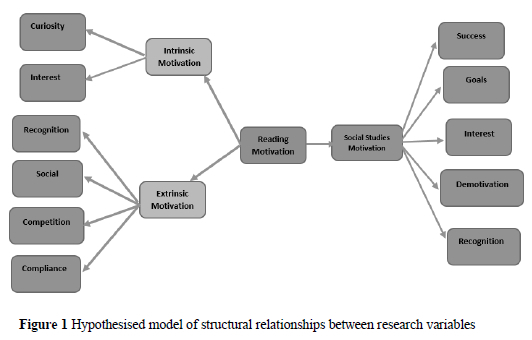
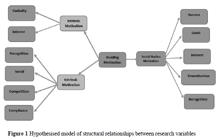
According to the self-determination theory, individuals believe that stronger external factors determine their behaviour, which affects their intrinsic and extrinsic motivation (Ryan & Deci, 2006). Guthrie and Wigfield (2000) state that reading motivation is complex and influences structures such as students' intrinsic motivation, extrinsic motivation, and social motivation. In this study, structural equation modelling (SEM) was used to determine whether a conceptual relationship existed between the RMS and its sub-dimensions, as well as the SSCMS and its sub-dimensions (see Figure 1). SEM is a statistical method used in quantitative research based on cross-sectional, longitudinal, experimental, or other types of research designs to estimate the magnitude and direction of assumed causal effects (Kline, 2023).
Population and Sample
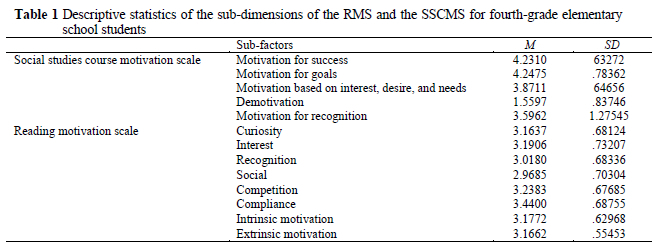
The research population comprised fourth-grade students enrolled in public primary schools in the central area of the Balıkesir province during the 2020-2021 school year. The study sample included 278 fourth-grade elementary school students (148 girls and 130 boys), selected from the population using the simple random sampling technique. The students were 9 to 11 years old (see Table 1).
Data Collection Tools
Reading motivation scale
The RMS, developed by Wigfielt and Guthire (1997), was adopted into Turkish by Yıldız (2010). The scale has a 4-point Likert-type rating structure. The scale consists of intrinsic motivation dimensions on interest (three items) and curiosity (four items); extrinsic motivation dimensions on competition (four items), recognition (three items), social (four items), and compliance (three items). The internal consistency coefficient (α) of the scale was determined as .86. Examples of items in this scale include: "I tell my friends about what I read", "I enjoy long and engaging stories, novels", and "My friends sometimes say I'm a good reader." The test-retest technique applied to determine the consistency of the scale over time resulted in factors having relationships ranging from .65 to .81 (Yıldız, 2010).
Social studies course motivation scale
The SSCMS was developed by Tahiroğlu and Aktepe (2015) to determine the motivation levels of fourth- and fifth-grade students regarding social studies. The construct validity of the scale was determined through factor analysis. The scale consists of five sub-dimensions, 29 items, and a 5-point Likert-type structure. Examples of items in this scale include: "I would like to receive project and performance tasks that will help me succeed in social studies"; "I want to prove to everyone that I can be successful in social studies"; and "I feel very good when I am successful in social studies." The reliability values of the scale are as follows: Motivation for success - 0.71, Motivation for goals - 0.66, Motivation based on interest, desire, and needs - 0.70, Demotivation - 0.64, and Motivation for recognition - 0.57. Cronbach's alpha for the entire scale was 0.83 (Tahiroğlu & Aktepe, 2015).
Analysis of Data
The data were analysed using the Statistical Package for the Social Sciences (SPSS) version 26.0 software. In the study, a two-stage analysis approach was used (Çelik & Yılmaz, 2013), where the measurement results were separately compared with the structural model. In the first stage, the observed variables were correlated with latent variables through one-way paths, and the initial level analysis of the model was conducted. We collected data using the RMS adopted by Yıldız (2010) and the SSCMS developed by Tahiroğlu and Aktepe (2015) to evaluate how students' reading motivation affected their motivation for the social studies course through SEM analysis.
Results
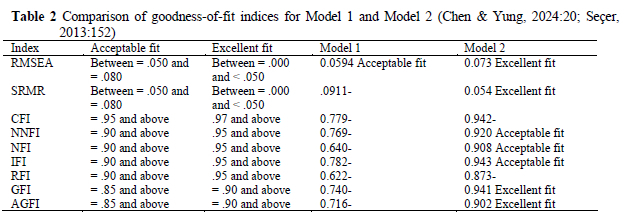
In the initial analysis, the model fit between the sub-dimensions of the SSCMS and the extrinsic and intrinsic motivation categories of the RMS was examined. Upon examination of the findings, we determined that the X2/df value (6556.29/1154 = 5.681) indicated a poor fit. The analysis of the model' s goodness-of-fit indices revealed that the RMSEA (root-mean-square error of approximation) value was 0.0594, indicating that the square root of the average approximation error was acceptable. However, all other goodness-of-fit indices, including RMSE (root mean square error), SRMR (standardised root-mean-square residual), RMR (root mean square residual), CFI (comparative fit index), NNFI (non-normed fit index), NFI (normed fit index), IFI (incremental fit index), RFI (relative fit index), GFI (goodness-of-fit index), and AGFI (adjusted goodness-of-fit index), indicated poor fit.
In the second model, which was constructed based on the idea that intrinsic and extrinsic motivation categories of the RMS influence motivation towards social studies, the analysis revealed that the goodness-of-fit indices were appropriate. However, we observed that the t-value between the intrinsic motivation sub-dimension of the RMS and the SSCMS was not significant. A comparison of the goodness-of-fit indices between Model 1 and Model 2 is provided in Table 2.
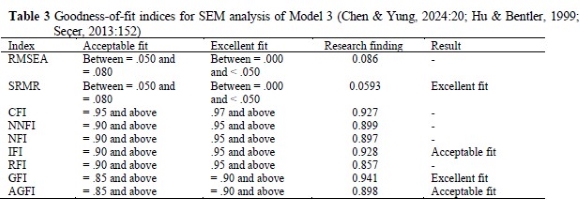
In Model 2, we found that the t-value between the intrinsic motivation category of the RMS and the SSCMS was not significant. Accordingly, Model 3 was developed following the adjustments based on the SEM analysis. In Model 3, the intrinsic motivation category of the RMS was removed, and the fit of the model was re-evaluated using SEM. The goodness-of-fit indices obtained for Model 3 are provided in Table 3 below. The X2/df value for Model 3 was found to be 3.05, indicating an acceptable fit.
When examining the fit indices of Model 3, we found that only the SRMR and GFI values demonstrated excellent fit, while the IFI and AGFI values were deemed acceptable. However, we observed that the other indices of the model were not congruent. Therefore, a decision was made to conduct new modelling.
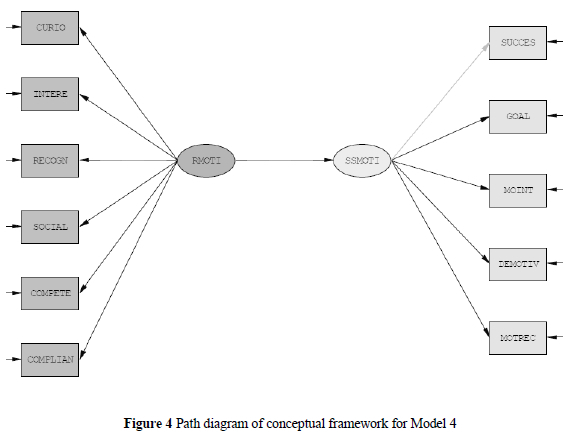
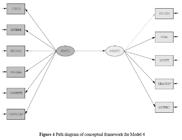
In the final modelling (Model 4), the RMS was analysed under two main categories - intrinsic and extrinsic motivation. Subsequently, the sub-dimensions under these categories were considered together to create a model demonstrating their relationship with motivation towards social studies. This model included the sub-dimensions of interest, curiosity, competition, recognition, social, and compliance from the RMS.
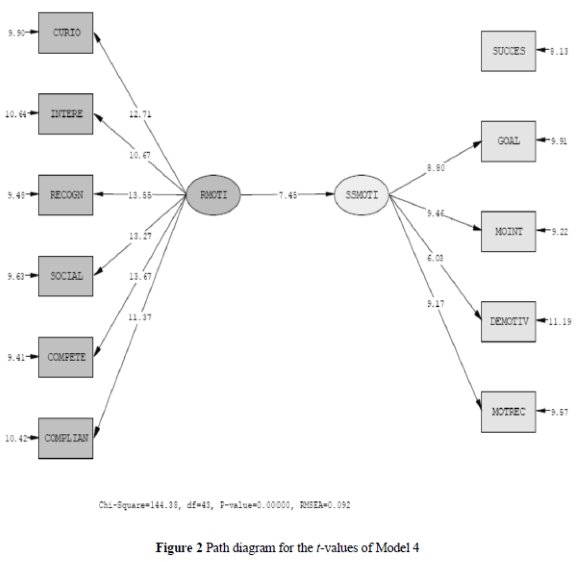
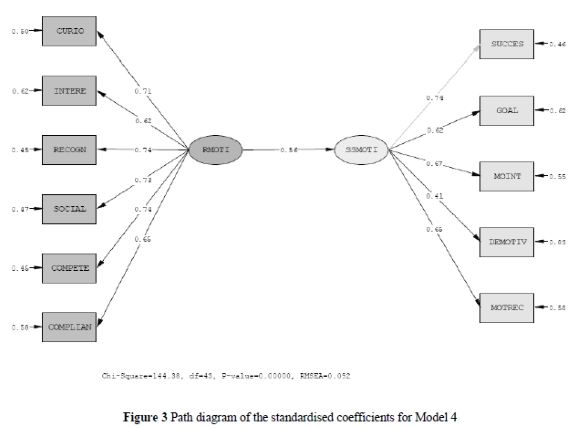
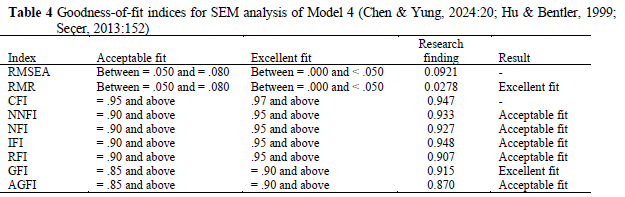
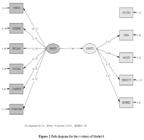
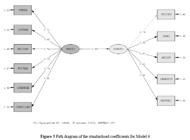
Model 4, developed based on multiple iterations of the SEM analysis, is presented in Figures 2, 3, and 4. Figure 2 illustrates the t-values, Figure 3 provides the standardised solution, and Figure 4 presents the conceptual schema of Model 4, which represent the refined and optimised version of the structural model (see Table 4).
Discussion
In this research, we employed the SEM technique to examine whether a model fit existed between the SSCMS and its sub-dimensions, and the RMS with its extrinsic and intrinsic motivation categories among fourth-grade elementary school students.
The motivation of primary school students in reading is a determining factor that contributes to their success in foreign language, science, social studies, health, mathematics, and arts subjects (Guthrie & Coddington, 2009). Research in which reading motivation is examined in terms of intrinsic and extrinsic motivation categories has highlighted the impact of intrinsic motivation on students' achievements in Turkish, science, social studies, and mathematics (Kanonire, Lubenko & Kuzmina, 2022; Yıldız & Akyol, 2011). However, in the modelling conducted in this study, a significant relationship between the intrinsic motivation category, which includes the interest and curiosity sub-dimensions of the RMS, and the SSCMS could not be identified. Nevertheless, the research revealed a notable correlation between the SSCMS and all facets of the RMS, encompassing both intrinsic and extrinsic motivational categories (interest, curiosity, competition, recognition, social, and compliance), as well as the facets within the extrinsic motivation category (competition, recognition, social, and compliance) only.
The SEM analysis revealed no significant relationship between the intrinsic motivation category of the RMS and the SSCMS. However, a meaningful relationship was found between the extrinsic motivation category of the RMS and the SSCMS. In Model 4, the intrinsic and extrinsic sub-categories of the RMS were not used and only the sub-dimensions of interest, curiosity, competition, recognition, social, and compliance were used to determine the fit between the RMS and the SSCMS, specifically regarding the sub-dimensions motivation for success, motivation for goals, motivation based on interest, desire, and needs, demotivation and motivation for recognition. The SEM analysis indicated a significant relationship between the sub-dimensions of the two scales. Furthermore, Model 4 demonstrated better fit indices compared to the other models. The results of this study indicate that as the levels of the sub-dimensions of reading motivation - interest, curiosity, competition, recognition, social, and compliance -increase among fourth-grade elementary school students, their motivation towards social studies also increases.
This finding suggests that fourth-grade elementary school students with higher levels of extrinsic reading motivation may exhibit higher motivation towards social studies. When the SEM findings obtained from this study were evaluated within the framework of the self-determination theory, we observed that the participating students' motivation towards social studies was largely shaped by external incentives. The self-determination theory posits that fulfilling individuals' basic psychological needs for autonomy, competence, and relatedness is essential for the development of intrinsic motivation (Deci & Ryan, 1985). However, the fact that intrinsic motivation did not show a significant relationship with the course in this study suggests that the students' sense of autonomy and curiosity was not adequately supported during instruction. In contrast, the significant relationships exhibited with extrinsic motivation suggest that the students' needs for competence and relatedness, such as social interaction, recognition, and competition, were more effectively met. In this context, designing learning experiences that support students' autonomy activate their individual interests and promote exploratory learning as a critical requirement for enhancing intrinsic motivation in social studies instruction.
Aarnoutse and Schellings (2003) suggest that in an environment where problem-centred learning integrates with social studies instruction, teaching reading comprehension positively impacted students' reading motivation. Several possible reasons indicate why intrinsic motivation did not show a significant relationship with motivation towards social studies. The aim with the social studies course is for students to develop citizenship awareness, responsibility, cooperation, and social values. These goals are more closely associated with external factors, such as teachers' expectations, grades, recognition, and social approval, rather than with individual interest and curiosity. At the elementary level, intrinsic motivation may not fully translate into academic disciplines; particularly in a course like social studies, which is abstract and value-oriented. Students tend to be motivated by rewards, competition, or teacher guidance. In addition, the fact that the intrinsic dimension of the RMS was measured through interest and curiosity, whereas the SSCMS was based more on external orientation such as achievement, goals, and recognition, may be considered as a methodological factor contributing to the absence of a significant relationship between the two variables.
We could not locate a study in the relevant literature in which the relationship between fourth-grade elementary school students' reading motivation and their motivation towards social studies was addressed. Therefore, the results obtained in this research could not be directly related to existing studies.
However, the literature shows evidence suggesting that reading comprehension is associated with intrinsic and extrinsic motivation for reading (Guthrie & Wigfield, 1999; Schiefele et al., 2016; Stutz, Schaffner & Schiefele, 2016; Taboada, Tonks, Wigfield & Guthrie, 2009). Reading comprehension has a significant impact on reading motivation, the amount of reading, and the development of reading proficiency. We found that internal reading motivation in first-, second-, and third-grade students significantly contributed to the amount of reading and reading comprehension (Stutz et al., 2016). Schiefele and Schaffner (2016) report that intrinsic and extrinsic reading motivation are significantly and positively correlated with the amount of reading. They found that the amount of reading was more closely associated with intrinsic motivation than extrinsic motivation. Children' s reading motivation was also significantly associated with gains in reading comprehension skills (Kanonire et al., 2022; Toste, Didion, Peng, Filderman & McClelland, 2020). Yamaç and Çeliktürk Sezgin (2018) found that intrinsic motivation had a significant and positive impact on reading comprehension, while extrinsic motivation had a positive and significant effect on reading fluency. Barber and Buehl (2013) found that perceptions of fostering criticism and independent thinking were the most reliable predictors of reading motivation. Chiu, Hong and Hu (2015) determined that the reading motivation of elementary school students had a direct and significant effect on their reading behaviour.
The findings of this study compel teachers to reconsider their motivational strategies in classroom practices. Specifically, that extrinsic motivation dimensions (competition, recognition, social interaction, and compliance) are significantly associated with motivation towards social studies. This requires of teachers to incorporate more group work, project-based learning, and classroom discussions that enhance social interaction into their instructional design. Additionally, making students' achievements visible and acknowledging their efforts emerged as an important factor that enhances motivation levels. In the design of the social studies curriculum, integrating reading skills with social studies content offers an interdisciplinary approach that supports students' reading motivation and their motivation for the course. Therefore, while strategies that activate extrinsic motivation should be prioritised in the instructional process, it is critically important to integrate curiosity-driven and meaningful learning experiences into the social studies programme in the long term to foster students' intrinsic motivation.
The limitations of this research extend beyond the measurement tools employed and the cross-sectional design; cultural and contextual factors that may influence motivation should also be considered. Our study was conducted with students in the central district of the Balıkesir province, therefore does not reflect the socio-economic, cultural, and pedagogical diversity in different regions of Türkiye. In particular, the normative goals of social studies, such as fostering citizenship awareness and social responsibility, may constrain students' individual curiosity and sense of autonomy, thereby grounding their motivation more in external factors (recognition, competition, social approval). From the perspective of the self-determination theory, this suggests that intrinsic motivation is not adequately supported. Consequently, the generalisability of the findings is limited. Studies conducted in different cultural contexts may provide a more comprehensive understanding of how the intrinsic and extrinsic dimensions of motivation are influenced.
Conclusion
In this study, SEM analyses revealed a significant relationship between the sub-dimensions of the RMS - interest, curiosity, competition, recognition, social, and compliance - and students' motivation towards social studies. Moreover, the model fit indices indicate that the relationship between the scores obtained from the RMS and those related to motivation towards social studies was within acceptable levels.
Drawing from the study results, targeted interventions centred around students can effectively bolster motivation for both social studies and reading. SEM offers a promising avenue to assess the compatibility of reading motivation with motivation towards other fourth-grade subjects. Future investigations should focus on strategies for heightening motivation in social studies and reading. Replicating the study with fourth-grade students from different provinces would afford a more comprehensive understanding of how reading motivation influences motivation towards social studies.
This study is constrained by its reliance on the data gathered solely from the students' self-reports and the use of a cross-sectional research design. To further elucidate the correlation between motivation towards social studies and reading motivation, researchers are encouraged to employ a longitudinal methodology in future research. Moreover, the impact of fourth-grade students' reading motivation on their motivation towards social studies remained underexplored in this study.
Data Availability
We used original data, which we entered in the SPSS 26 program. Upon request, this data will be shared with the South African Journal of Education. The data contain no personal information and will not be shared publicly. It was intended solely for this study and will not be reused in other research. All data will be deleted after 5 years. Prior to data collection, official permission was obtained from the Balıkesir Governorship and the Balıkesir Provincial Directorate of National Education. Written consent for the student' participation in the study was acquired from the students' parents through a parental consent form. The surveys and consent forms used in this research are stored in the researcher's office in the Department of Primary Education, Faculty of Education, Çanakkale Onsekiz Mart University, Türkiye.
Authors' Contributions
The corresponding author drafted the entire manuscript and implemented all revisions requested by the reviewers. In addition, he covered the payment of the page fees. The second author obtained the ethical approval from the Graduate School of Çanakkale Onsekiz Mart University and secured the official research permission from the Governorship of Balıkesir and the Provincial Directorate of National Education of Balıkesir. Furthermore, he entered all research data into the SPSS program and covered the costs related to the statistical analyses and the translation of the manuscript into English.
Conflict of Interest
The authors declare no potential conflict of interest.
Notesi. Published under a Creative Commons Attribution Licence.
References
-
Aarnoutse C & Schellings G 2003. Learning reading strategies by triggering reading motivation. Educational Studies, 29(4):387-109. https://doi.org/10.1080/0305569032000159688
» https://doi.org/10.1080/0305569032000159688 -
Barber AT & Buehl MM 2013. Relations among Grade 4 students' perceptions of autonomy, engagement in science, and reading motivation. The Journal of Experimental Education, 81(1):22-43. https://doi.org/10.1080/00220973.2011.630045
» https://doi.org/10.1080/00220973.2011.630045 - Barr R, Barth JL & Shermis SS 1978. The nature of the social studies. Palm Springs, CA: ETC Publications.
-
Becker M, McElvany N & Kortenbruck M 2010. Intrinsic and extrinsic reading motivation as predictors of reading literacy: A longitudinal study. Journal of Educational Psychology, 102(4):773-785. https://doi.org/10.1037/a0020084
» https://doi.org/10.1037/a0020084 -
Britt J & Howe M 2014. Developing a vision for the common core classroom: What does elementary social studies look like? The Social Studies, 105(3):158-163. https://doi.org/10.1080/00377996.2013.866930
» https://doi.org/10.1080/00377996.2013.866930 - Brophy J, Alleman J & Halvorsen AL 2016. Powerful social studies for elementary students (4th ed). Belmont, CA: Cengage Learning.
- Cambourne B & Kilarr G 2020. Helping teachers reframe reading as meaning making. In KF Whitemore & R Meyer (eds). Reclaiming literacies as meaning making: Manifestations of values, identities, relationships, and knowledge. New York, NY: Routledge.
-
Cantrell SC, Rintamaa M, Anderman EM & Anderman LH 2018. Rural adolescents' reading motivation, achievement and behavior across transition to high school. The Journal of Educational Research, 111(4):417-428. https://doi.org/10.1080/00220671.2017.1284737
» https://doi.org/10.1080/00220671.2017.1284737 -
Cartwright KB, Marshall TR & Wray E 2016. A longitudinal study of the role of reading motivation in primary students' reading comprehension: Implications for a less simple view of reading. Reading Psychology, 37(1):55-91. https://doi.org/10.1080/02702711.2014.991481
» https://doi.org/10.1080/02702711.2014.991481 - Çelik HE & Yılmaz V 2013. LISREL 9.1 ile yapısal eşitlik modellemesi: Temel kavramlar-uygulamalar-programlama [Structural equation modeling with LISREL 9.1: Basic concepts, applications, and programming]. Ankara, Türkiye: Anı Yayıncılık.
- Chapin JR & Messick RG 1989. Elementary social studies: A practical guide (2nd ed). New York, NY: Longman.
- Chen DG & Yung YF 2024. Structural equation modeling using R/SAS: A step-by-step approach with real data analysis. New York, NY: Routledge.
-
Chiu SI, Hong FY & Hu HY 2015. The effects of family cultural capital and reading motivation on reading behaviour in elementary school students. School Psychology International, 36(1):3-17. https://doi.org/10.1177/0143034314528488
» https://doi.org/10.1177/0143034314528488 -
Conradi K, Jang BG & McKenna MC 2014. Motivation terminology in reading research: A conceptual review. Educational Psychology Review, 26:127-164. https://doi.org/10.1007/s10648-013-9245-z
» https://doi.org/10.1007/s10648-013-9245-z - Creswell JW 2012. Educational research: Planning, conducting, and evaluating quantitative and qualitative research (4th ed). Boston, MA: Pearson.
- Deci EL & Ryan RM 1985. Intrinsic motivation and self-determination in human behavior. New York, NY: Plenum.
- Evans RW 2004. The social studies wars: What should we teach the children? New York, NY: Teachers College Press.
-
Hu LT & Bentler PM 1999. Cutoff criteria for fit indexes in covariance structure analysis: Conventional criteria versus new alternatives. Structural Equation Modeling: A Multidisciplinary Journal, 6(1):1-55. https://doi.org/10.1080/10705519909540118
» https://doi.org/10.1080/10705519909540118 - Hunkins FP, Jeter J & Maxey PF 1982. Social studies in the elementary school. Columbus, OH: Charles E. Merrill Publishing.
-
Gambrell LB 2011. Seven rules of engagement: What's most important to know about motivation to read. The Reading Teacher, 65(3):172-178. https://doi.org/10.1002/TRTR.01024
» https://doi.org/10.1002/TRTR.01024 -
Guthrie JT & Coddington CS 2009. Reading motivation. In KR Wentzel & A Wigfield (eds). Handbook of motivation at school. New York, NY: Routledge. https://doi.org/10.4324/9780203879498
» https://doi.org/10.4324/9780203879498 -
Guthrie JT & Wigfield A 1999. How motivation fits into a science of reading. Scientific Studies of Reading, 3(3):199-205. https://doi.org/10.1207/s1532799xssr0303_1
» https://doi.org/10.1207/s1532799xssr0303_1 - Guthrie JT & Wigfield A 2000. Engagement and motivation in reading. In ML Kamil, PB Mosenthal, PD Pearson & R Barr (eds). Handbook of reading research (Vol. III). New York, NY: Routledge.
-
Jang BG, Conradi K, McKenna MC & Jones JS 2015. Motivation: Approaching an elusive concept through the factors that shape it. The Reading Teacher, 69(2):239-247. https://doi.org/10.1002/trtr.1365
» https://doi.org/10.1002/trtr.1365 -
Kambara H 2021. Exploring Japanese fourth graders' motivation to read: A mixed-method study. Literacy Research and Instruction, 60(2):180-197. https://doi.org/10.1080/19388071.2020.1806416
» https://doi.org/10.1080/19388071.2020.1806416 -
Kanonire T, Lubenko J & Kuzmina Y 2022. The effects of intrinsic and extrinsic reading motivation on reading performance in elementary school. Journal of Research in Childhood Education, 36(1):1-13. https://doi.org/10.1080/02568543.2020.1822961
» https://doi.org/10.1080/02568543.2020.1822961 -
Klapwijk NM 2012. Reading strategy instruction and teacher change: Implications for teacher training. South African Journal of Education, 32(2):191-204. https://doi.org/10.15700/saje.v32n2a618
» https://doi.org/10.15700/saje.v32n2a618 -
Klapwijk NM 2015. EMC2 = comprehension: A reading strategy instruction framework for all teachers. South African Journal of Education, 35(1):Art. # 994, 10 pages. https://doi.org/10.15700/201503062348
» https://doi.org/10.15700/201503062348 - Kline RB 2023. Structural equation modeling in neuropsychology research. In GG Brown, B Crosson, KY Haaland & TZ King (eds). APA handbook of neuropsychology (Vol. 2). Washington, DC: American Psychological Association.
- Michaelis JU 1963. Social studies for children in a democracy: Recent trends and developments (3rd ed). Englewood Cliffs, NJ: Prentice-Hall.
- Moffatt MP 1955. Social studies instruction: Organizing, teaching, and supervising social studies in secondary schools (2nd ed). New York, NY: Prentice-Hall.
-
National Council for the Social Studies 2009. Powerful and purposeful teaching and learning in the elementary school social studies. Social Studies and the Young Learner, 22(1):31 -33. Available at https://www.socialstudies.org/system/files/publications/articles/yl_220131.pdf. Accessed 25 May 2026.
» https://www.socialstudies.org/system/files/publications/articles/yl_220131.pdf -
Rettig A & Schiefele U 2023. Relations between reading motivation and reading efficiency-evidence from a longitudinal eye-tracking study. Reading Research Quarterly, 58(4):685-709. https://doi.org/10.1002/rrq.502
» https://doi.org/10.1002/rrq.502 -
Ryan RM & Deci EL 2006. Self-regulation and the problem of human autonomy: Does psychology need choice, self-determination, and will? Journal of Personality, 74(6):1557-1586. https://doi.org/10.1111/j.1467-6494.2006.00420.x
» https://doi.org/10.1111/j.1467-6494.2006.00420.x -
Schaffner E, Schiefele U & Ulferts H 2013. Reading amount as a mediator of the effect of intrinsic and extrinsic reading motivation on reading comprehension. Reading Research Quarterly, 48(4):369-385. https://doi.org/10.1002/rrq.52
» https://doi.org/10.1002/rrq.52 -
Schiefele U & Schaffner E 2016. Factorial and construct validity of a new instrument for the assessment of reading motivation. Reading Research Quarterly, 51(2):221-237. https://doi.org/10.1002/rrq.134
» https://doi.org/10.1002/rrq.134 -
Schiefele U, Schaffner E, Möller J & Wigfield A 2012. Dimensions of reading motivation and their relation to reading behavior and competence. Reading Research Quarterly, 47(4):427-463. https://doi.org/10.1002/RRQ.030
» https://doi.org/10.1002/RRQ.030 -
Schiefele U, Stutz F & Schaffner E 2016. Longitudinal relations between reading motivation and reading comprehension in the early elementary grades. Learning and Individual Differences, 51(2016):49-58. https://doi.org/10.1016/j.lindif.2016.08.031
» https://doi.org/10.1016/j.lindif.2016.08.031 - Seçer İ 2013. SPSS ve LISREL ile pratik veri analizi: Analiz ve raporlaştırma [Practical data analysis with SPSS and LISREL: Analysis and reporting] (2nd ed). Ankara, Türkiye: Anı Yayıncılık.
-
Stutz F, Schaffner E & Schiefele U 2016. Relations among reading motivation, reading amount, and reading comprehension in the early elementary grades. Learning and Individual Differences, 45:101-113. https://doi.org/10.1016/j.lindif.2015.11.022
» https://doi.org/10.1016/j.lindif.2015.11.022 -
Taboada A, Tonks SM, Wigfield A & Guthrie JT 2009. Effects of motivational and cognitive variables on reading comprehension. Reading and Writing, 22:85-106. https://doi.org/10.1007/s11145-008-9133-y
» https://doi.org/10.1007/s11145-008-9133-y -
Tahiroğlu M & Aktepe V 2015. 4. ve 5. sınıf sosyal bilgiler dersi motivasyon olçeği formunun geçerlilik ve güvenirlilik calışması [Validity and reliability study on the motivation scale form designed for 4th and 5th grade social studies course]. Turkish Studies, 10(3):907-932. https://doi.org/10.7827/TurkishStudies.7944
» https://doi.org/10.7827/TurkishStudies.7944 -
Toste JR, Didion L, Peng P, Filderman MJ & McClelland AM 2020. A meta-analytic review of the relations between motivation and reading achievement for K-12 students. Review of Educational Research, 90(3):420-156. https://doi.org/10.3102/0034654320919352
» https://doi.org/10.3102/0034654320919352 -
Tsuei M, Huang HW & Cheng SF 2020. The effects of a peer-tutoring strategy on children's e-book reading comprehension. South African Journal of Education, 40(2):Art. #1734, 12 pages. https://doi.org/10.15700/saje.v40n2a1734
» https://doi.org/10.15700/saje.v40n2a1734 -
Urdan T & Schoenfelder E 2006. Classroom effects on student motivation: Goal structures, social relationships, and competence beliefs. Journal of School Psychology, 44(5):331-349. https://doi.org/10.1016/josp.2006.04.003
» https://doi.org/10.1016/josp.2006.04.003 -
Wigfield A & Guthrie JT 1997. Relations of children's motivation for reading to the amount and breadth of their reading. Journal of Educational Psychology, 89(3):420-432. https://doi.org/10.1037/0022-0663.89.3.420
» https://doi.org/10.1037/0022-0663.89.3.420 - Woolever RM & Scott KP 1988. Active learning in social studies: Promoting cognitive and social growth. Glenview, IL: Scott, Foresman.
-
Yamaç A & Çeliktürk Sezgin Z 2018. Relationships among fourth graders' reading anxiety, reading fluency, reading motivation, and reading comprehension. Education and Science, 43(194):225-243. https://doi.org/10.15390/EB.2018.7555
» https://doi.org/10.15390/EB.2018.7555 - Yıldız M 2010. İlköğretim 5. sınıf öğrencilerinin okuduğunu anlama, okuma motivasyonu ve okuma alışkanlıkları arasındaki ilişki [The relationship between 5th graders' reading comprehension, reading motivation and reading habits]. PhD thesis. Ankara, Türkiye: Gazi University.
-
Yıldız M & Akyol H 2011. İlköğretim 5. Sınıf öğrencilerinin okuduğunu anlama, okuma motivasyonu ve okuma alışkanlıkları arasındaki ilişki [The relationship between 5th graders' reading comprehension, reading motivation and reading habits]. Gazi Eğitim Fakültesi Dergisi, 31(3):793-815. Available at https://dergipark.org.tr/en/download/article-file/76969. Accessed 20 April 2005.
» https://dergipark.org.tr/en/download/article-file/76969
Revised: 5 November 2025
Accepted: 3 December 2025
Published: 31 May 2026