Restorative justice: Using community partnerships to foster equitable learning in South Africa
Abstract
With this quantitative study I aspired to explore how restorative justice practices, in collaboration with community partnerships, can foster equitable learning outcomes in schools. In South Africa, where the legacy of apartheid is still entrenched in the education system, restorative justice offers a critical pathway for healing and reconciliation. By engaging with local communities and amplifying learner voices, schools can work towards a more inclusive and equitable learning environment, one that acknowledges the historical and ongoing struggles faced by marginalised groups. Using a survey design, I collected data from 400 high school learners and 100 teachers from 4 schools (2 urban and 2 rural) in South Africa. The findings show that rural schools that use community partnerships and resources are more likely to provide learners with real-world learning experiences that reflect their local context, leading to improved academic achievement and increased learner engagement. The results have implications for educational policy and practice, indicating that schools can play a pivotal role in fostering equitable learning outcomes by engaging with their local communities and adopting restorative justice practices.
community partnerships; curriculum transformation; equitable learning; inclusive policy; restorative justice; social cohesion
Introduction
Restorative justice, a paradigm shift in the approach to conflict resolution and discipline, has been gaining momentum in educational settings world-wide. This approach focuses on repairing harm, rebuilding relationships, and fostering a sense of community, rather than simply punishing misbehaviour (Acosta, Chinman, Ebener, Malone, Phillips & Wilks, 2019). As schools strive to create safe, inclusive, and equitable learning environments, restorative justice offers a promising solution to address the complexities of rural and urban educational contexts.
The traditional punitive approach to discipline, which emphasises suspension, expulsion, and detention, has been shown to disproportionately affect marginalised learners, perpetuating the school-to-prison pipeline. Restorative justice, by contrast, prioritises empathy, liability, and healing, acknowledging that learners are not merely responsible for their actions, but are wrought by the social and economic contexts in which they live. By using community partnerships, schools can tap into a wealth of knowledge, resources, and expertise to back up the implementation of restorative justice practices. Community organisations, local businesses, and social services can collaborate with schools to provide learners with access to counselling, mentoring, and enrichment programmes that address the root causes of misbehaviour. In return, schools can offer community members opportunities for skill-building, volunteer work, and community engagement (Amstutz & Mullet, 2015).
The benefits of restorative justice in education are multifaceted. By focusing on restitution rather than punishment, schools can diminish suspension rates, improve learner-teacher relationships, and create a positive school climate. This, in turn, can lead to increased learner engagement, academic performance, and through-put rates. Moreover, restorative justice practices can assist in dismantling systemic inequities, promoting greater social justice and equality in education (Yang, Anyon, Pauline, Wiley, Cash, Downing, Greer, Kelty, Morgan & Pisciotta, 2018).
In urban schools, the implementation of restorative justice practices and social-emotional learning approaches is associated with curtailed disciplinary incidents, improved teacher-learner relationships, and intensified learner motivation.
Restorative justice offers a powerful framework for promoting equitable learning in rural and urban schools.
Restorative justice in education refers to an approach that focuses on repairing harm, rebuilding relationships, and promoting healing, rather than punishing offenders. The term "restorative" implies a process of restoring something to its original state or repairing damage that has been done.
In this context, what is being "restored" is the sense of community, relationships, and social bonds within the school environment. The aim with restorative justice is to address the harm caused by conflicts, disciplinary incidents, and social injustices, and to promote a positive and inclusive school climate (Cama, 2019).
Restorative action is prompted by the need to respond to conflicts, disciplinary incidents, and social injustices in a way that promotes healing, accountability, and empathy. The targets of restorative justice are the individuals and communities affected by these incidents, including learners, teachers, and the broader school community.
The goals with restorative justice are numerous:
a) Reducing suspension rates and disciplinary incidents
b) Improving learner-teacher relationships
c) Creating a positive and inclusive school climate
d) Promoting social justice and equality in education
e) Fostering academic success and community engagement
Restorative justice is a reaction to traditional punitive approaches to discipline, which often exacerbate conflicts and create further harm. It is in response to systemic inequities and social injustices that exist within the education system, such as disparities in disciplinary action and academic outcomes (Galetti, 2020).
In essence, restorative justice is a response to the harm and damage caused by
a) punitive discipline practices
b) systemic inequities and biases
c) social and emotional conflicts
d) a lack of empathy and understanding
By addressing these issues, the aim with restorative justice is to create a safer, more inclusive, and supportive learning environment that promotes academic success, social justice, and community engagement.
By embracing the principles of restorative justice and forging strong community partnerships, schools can create safe, inclusive, and supportive learning environments that prioritise empathy, accountability, and healing. This approach enables schools to move beyond traditional punitive measures and instead focus on repairing harm, rebuilding relationships, and promoting social justice and equality. By doing so, schools can foster a positive and inclusive school climate, reduce disciplinary incidents, and improve learner-teacher relationships, ultimately leading to increased academic success, community engagement, and a more equitable education system (Cama, 2019:71).
Literature Review
Restorative justice, a paradigm shift in the approach to conflict resolution and discipline, has been gaining traction in educational settings world-wide. Restorative justice focuses on rebuilding and strengthening relationships between learners, teachers, and the broader school community. It encourages empathy, understanding, and respect among individuals, and helps to create a sense of community and belonging.
Restorative justice seeks to examine the harmful impact of a crime and then determines what can be done to repair that harm while holding the person who caused it accountable for such actions. It is about rebuilding relationships. Accountability for the offender means accepting responsibility and acting to repair the harm done (Galetti, 2020).
Restorative justice offers a particularly promising solution to the dilemmas faced in schools. Rural schools face drawbacks due to a lack of funding, materials, or staff. The schools are often situated far from urban centres, which can limit access to services and opportunities. The low number of people living in these areas contributes to fewer learners and potentially less community support, which can intensify the deterrent to delivering quality education. Urban schools, on the other hand, grapple with the consequences of poverty, violence, and social unrest, which can lead to higher rates of dropout, truancy, and behavioural problems (Anyon, Lechuga, Ortega, Downing, Greer & Simmons, 2018).
Studies have shown that community partnerships play a critical role in the successful implementation of restorative justice in rural and urban schools. Reference made to studies in this context generally refers to empirical research in education and youth justice that has examined restorative justice programmes across diverse school settings. An example of such research is a mixed-methods study by Jain, Bassey, Brown and Kalra (2014), in which they examined the implementation of restorative justice practices in urban public schools in the United States of America (USA). The findings show that partnerships with community organisations and families were essential for sustaining restorative practices, improving school climate, and reducing exclusionary discipline. Similarly, Gregory and Fergus (2017) analysed restorative justice initiatives across multiple school districts and concluded that strong collaboration between schools and community partners increased programme fidelity and effectiveness in both urban and non-urban contexts by providing cultural expertise, training support, and shared accountability. These partnerships may hold numerous benefits:
1) Access to resources: Community organisations and partners can provide schools with additional resources, such as funding, personnel, and expertise, to support the implementation of restorative justice practices.
2) Cultural relevance: Community partners can help schools to develop restorative justice practices that are culturally relevant and responsive to the needs of the local community. By using community partnerships, schools can tap into a wealth of knowledge, resources, and expertise to support the implementation of restorative justice practices. Community organisations, local businesses, and social services may collaborate with schools to provide learners with access to counselling, mentoring, and enrichment programmes that address the root causes of misbehaviour (Gregory & Fergus, 2017). Misbehaviour would include:
i. Aggression and violence: Physical or verbal aggression towards peers or teachers, including fighting, bullying, or threats.
ii. Disrespect and defiance: Refusal to follow rules or respect authority, including disobedience, talking back, or disrupting classes.
iii. Substance abuse: Possession, use, or distribution of illicit substances, including drugs or alcohol.
iv. Truancy and absenteeism: Chronic absenteeism or truancy, including skipping classes or failing to attend school.
By amplifying learner voices and engaging with local communities, schools can work towards creating a more inclusive and equitable learning environment (Carter, Skiba, Arredondo & Pollock, 2017). This is particularly critical in South Africa where the legacy of apartheid still shapes the education system, and restorative justice offers a critical means for healing and reconciliation (Gregory & Evans, 2020).
Gregory and Evans (2020) discovered that restorative justice practices lead to a meaningful reduction in suspension rates and improved learner-teacher relationships, in an urban school district in the United Kingdom (UK).
Literature shows that restorative justice presents a promising solution to come to grips with the unique challenges encountered by rural and urban schools. By using community partnerships and prioritising empathy, accountability, and healing, schools can create safe, inclusive, and supportive settings that foster academic success, social justice, and community engagement (Goldys, 2017).
Theoretical Framework
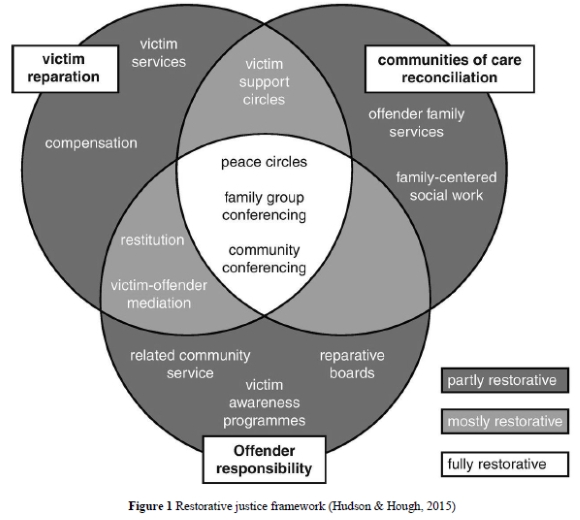
Restorative justice is a philosophical approach that prioritises healing, accountability, and reparation over punishment and retribution (see Figure 1).
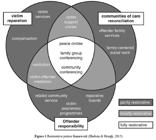
In the education context, restorative justice offers a promising strategy to address systemic inequities, promote inclusive learning environments, and foster positive relationships between schools, communities, and learners (Hudson & Hough, 2015). Figure 1 shows that community partnerships are essential to implementing restorative justice in education, ensuring equitable learning outcomes, and realising social justice.
Theoretical underpinnings
• Social justice: Figure 1 shows that restorative justice is rooted in social justice principles, which highlight the significance of tackling the root grounds of harm and promoting fairness, equality, and human rights. By categorising restorative justice, education systems can work towards creating a more just and equitable society.
• Relational theory: Relational theory indicates that relationships are fundamental to learning and growth. Restorative justice in education fosters positive connections between learners, teachers, and community partners, creating a supportive network that promotes academic success and well-being.
Critical pedagogy as a theoretical framework for restorative justice in education
Critical pedagogy is a theoretical framework that emerged in the 1970s, primarily through the work of Freire, Giroux and McLaren. This framework critiques traditional education systems, which often perpetuate social inequalities, normalise dominant ideologies, and neglect the experiences and voices of marginalised groups (Greer, 2018). Furthermore, the critical pedagogy framework draws on critical pedagogy, which accentuates the need to challenge dominant power structures, promote critical thinking, and empower marginalised groups (Freire, 2017). By centring the voices and experiences of learners and communities, restorative justice in education can assist to dismantle systemic barriers and inequalities. Restorative justice can achieve this aim by providing training and support for teachers and staff to help them better understand and respond to the diverse cultural backgrounds and experiences of their learners.
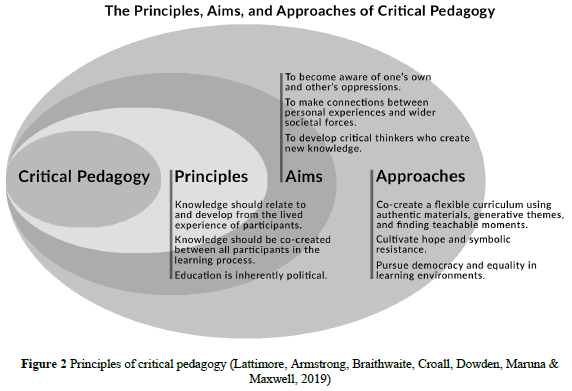
By taking a restorative approach, schools and communities can create a more just, equitable, and supportive environment for all learners, and help to dismantle the systemic barriers and inequalities that have historically perpetuated harm and oppression (see Figure 2).
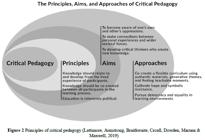
• Critical consciousness: Critical pedagogy desires to develop critical consciousness, empowering learners to recognise and challenge the social, political, and economic structures that shape their lives (Lattimore et al., 2019).
• Critical consciousness pedagogy is based on the idea that learners should be empowered to take an active role in creating positive change in their lives and in their communities. This involves developing a critical awareness of the ways in which power and privilege operate. It also involves learning to challenge and subvert dominant narratives and systems of oppression. In the context of restorative justice, critical consciousness pedagogy is essential for several reasons:
i. Understanding systemic injustices: Critical consciousness pedagogy helps learners to understand the systemic injustices and inequalities that exist within their schools and communities, and to recognise how these injustices can perpetuate harm and violence.
ii. Recognising privilege and oppression: Critical consciousness pedagogy helps learners to recognise their own privilege and oppression, and to understand how these intersecting systems of power and identity shape their experiences and opportunities.
iii. Developing empathy and solidarity: Critical consciousness pedagogy fosters empathy and solidarity among learners, and helps them to develop a sense of responsibility to create positive change in their communities.
iv. Challenging dominant narratives: Critical consciousness pedagogy encourages learners to challenge dominant narratives and systems of oppression, and to develop critical thinking skills that enable them to evaluate information and make informed decisions.
In contrast to traditional "jug mug" or "banking" models of education, where knowledge is deposited into passive learners, critical pedagogy inspires the posing of problems. This approach invites learners to engage with real-world issues, identify key stumbling blocks, and develop solutions that promote social justice and equity.
Critical pedagogy and restorative justice in education
The principles of critical pedagogy are intricately linked with the values and objectives of restorative justice in education. By integrating critical pedagogy into restorative justice initiatives, teachers can do the following:
• Classify and challenge systemic barriers: Critical pedagogy assists teachers and learners to identify and challenge systemic barriers (Shapland, 2016). It also fosters critical consciousness. This incorporates addressing subjects such as racial disparities in discipline, lack of access to resources, and implicit bias in teaching practices.
• Endorse community partnerships: Critical pedagogy stresses the significance of community partnerships and collaboration (Freire, 2017). This approach can help build trust between schools, community organisations, and local authorities, ensuring that restorative justice initiatives respond to local needs and priorities.
• Support transformative learning: Critical pedagogy seeks to transform learners and society. By integrating critical pedagogy into restorative justice initiatives, teachers can back transformative learning experiences that promote personal growth, social awareness, and a commitment to social justice (Van Voorhis, Zehr & Toews, 2018).
Using community partnerships to promote equitable learning through restorative justice is a critical step towards transforming education systems and creating a more just society. By centring the voices and experiences of learners and communities, we can develop education systems that are responsive, inclusive, and committed to social justice. This framework provides a foundation for teachers, policymakers, and community partners to work together towards realising this vision.
Research Design and Methodology
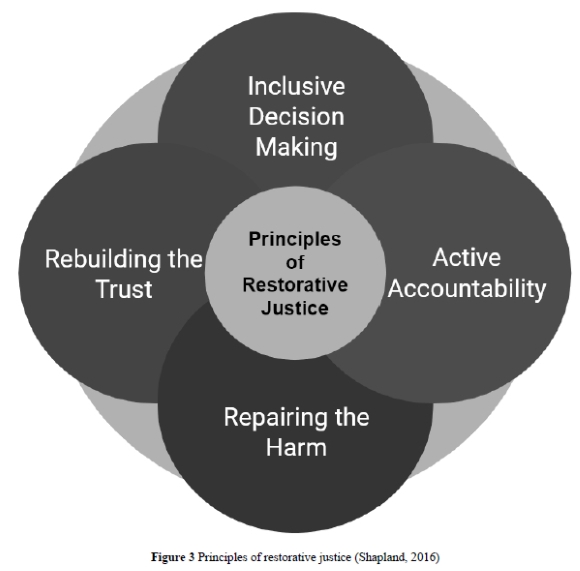
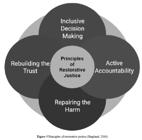
The purpose of this study was to examine how restorative justice practices, in collaboration with community partnerships, can foster equitable learning outcomes in rural and urban high schools (see Figure 3).
The two key research questions explored in the study are the following:
• To what extent can rural schools use community resources and partnerships to provide high school learners with real-world learning experiences, which reflect their local context and promote equitable learning outcomes?
• How can urban schools foster more inclusive and equitable learning environments utilising restorative justice practices and social-emotional learning approaches?
Research Method
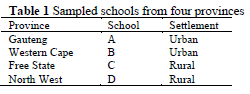
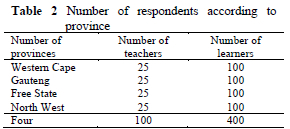
In this study I employed a quantitative research design using the survey method to collect data from South African high school learners and teachers. The survey was used to collect data from a large sample of participants from schools in rural and urban areas. The population of this study consisted of participants from schools in the Western Cape, Gauteng, Free State and North-West provinces of South Africa. The sample consisted of 400 high school learners, 100 from each province and 100 teachers, 25 from each of the four sampled schools (see Table 1).
Table 1 shows that sampling was equitable -two rural and two urban schools from four provinces. The sample size was determined by using a power analysis ensuring that the study has adequate power to detect statistically significant dissimilarities between the rural and urban schools (Rubin & Babbie, 2018). The sampling procedure involved a multi-stage sampling approach. Firstly, four schools were purposefully sampled based on their geographical location and willingness to participate in the study. Secondly, a simple random sampling technique was used to select 400 high school learners from the four schools, ensuring that the sample was representative of the learner population in each school from each of the provinces selected. Thirdly, a simple random sampling technique was used to select 100 teachers from the four schools, ensuring that the sample was representative of the teacher population in each school (see Table 2).
Table 2 shows the number of respondents from each province who participated in the study. Data were collected using a self-administered questionnaire for 400 learners and 100 teachers. The questionnaire consisted of closed-ended questions, Likert-scale items, and open-ended questions. The focus in the learner questionnaire was on their experiences with community partnerships and restorative justice practices, their perceptions of the learning environment, and their academic achievement (Rubin & Babbie, 2018). In the teacher questionnaire the focus was on their perceptions of community partnerships and restorative justice practices, their teaching practices, and their relevant experiences with learner engagement and motivation.
Instrumentation and Analysis The questionnaire was pilot tested with a sample of 40 learners and 20 teachers to ensure its validity and reliability. The questionnaire was validated using content validity, construct validity, and reliability tests. The questionnaire was also reviewed by experts in the field of education to ensure its alignment with the research questions.
Data were analysed using descriptive and inferential statistics. Descriptive statistics was used to describe the demographics of the sample, the prevalence of community partnerships and restorative justice practices, and the mean scores on the dependent variables. Inferential statistics was used to test hypotheses and explore relationships between the independent and dependent variables (Denzin & Lincoln, 2018). Specifically, t-tests were used to compare the mean scores of learners and teachers from rural and urban schools, and correlations were used to explore the relationships between community partnerships, restorative justice practices, and learner outcomes. Data quality was ensured through careful data cleaning and editing, and by checking for missing values and outliers. Data were analysed using the Statistical Package for the Social Sciences (SPSS) software, and results were presented in tables and figures.
The study adhered to the principles of ethical research, ensuring that participants were informed, consent was obtained, and anonymity and confidentiality were maintained at all costs (Rubin & Babbie, 2018). The relevant institutional ethics committee approved the study, and participants were assured that their responses would be kept confidential and used for research purposes only.
The validity and reliability of the study were ensured using a pilot-tested questionnaire, a large sample size, and established statistical methods (Denzin & Lincoln, 2018). Multiple sources of data, including learner and teacher surveys, were used to increase the validity and reliability of the findings.
Results/Findings
Digital Divide and Technology Access The digital divide is viewed as the disparity between individuals who have easy access to digital technology and those who do not. This divide is particularly pronounced between urban and rural areas. In rural schools, limited resources, geographic isolation, and sparse population density exacerbated the challenges of delivering quality education. Learners in these areas often face exclusive barriers, including limited access to technology, healthcare, and social services.
Urban schools may have better technology infrastructure, while rural schools often lacked access to devices, internet connectivity, and electricity. Urban schools often benefit from better infrastructure, including high-speed internet and access to modern technology, while rural schools struggle with limited resources. This concurs with a report by the Federal Communications Commission, which states that approximately 12 million Africans lack access to broadband internet, with a considerable portion inhabiting rural areas (Cama, 2019).
Urban schools, on the other hand, struggle with the consequences of poverty, violence, and social unrest, which also lead to higher drop-out and truancy rates and behavioural problems. Despite these dissimilarities, both rural and urban schools frequently struggle to provide learners with the support they need to succeed.
This disparity affects learners' ability to engage with restorative justice programmes that rely on technology for communication, training, and resource distribution. For example, online platforms used for conflict resolution are often inaccessible to learners in rural regions due to poor internet connectivity.
Access to technology plays a vital part in implementing restorative justice practices effectively. In urban schools, where resources are typically more plentiful, teachers exploit numerous digital tools for training on restorative practices, facilitating virtual meetings with parents and community members, and supporting learners with online resources for conflict resolution.
Conversely, rural schools struggle with obsolete equipment and inadequate training for teachers on how to integrate technology into their restorative justice initiatives. Without passable access to technology, those schools strive to apply effectual restorative practices that enhance collaboration among learners, families, and community associates.
Impact on Restorative Justice Practices The disparities in access to technology openly influenced the efficiency of restorative justice programmes. In urban settings where technology is readily obtainable, schools developed comprehensive support schemes that included online workshops about restorative practices for parents and learners. These programmes fostered a culture of responsibility and empathy among learners.
In contrast, rural schools found it taxing to involve families in restorative procedures due to logistical hurdles such as travel distances or a lack of transportation choices. This disengagement led to a cycle of exclusion where marginalised voices were ignored in the decision-making process on learner discipline.
Using Community Partnerships
To address these disparities and indorse equitable learning environments through restorative justice practices, it was fundamental for urban and rural schools to develop community partnerships. Collaborating with local organisations provided additional resources and support systems essential for fruitful implementation.
• Non-profit organisations. Affiliating with non-profit organisations concentrated on education or youth development assisted in providing training sessions for teachers on restorative practices.
• Technology companies. Collaborating with technology companies eased donations of gadgets that heightened communication between schools and families.
• Community leaders. Involving local leaders assisted in bridging gaps between schools and families by fostering trust and inspiring participation in restorative processes.
By developing these partnerships, schools shaped a more inclusive setting in which diverse viewpoints were valued while safeguarding all learners' equal opportunities to take part in restorative justice initiatives.
The digital divide and access to technology meaningfully swayed the implementation of restorative justice practices in rural and urban school environments. Restorative justice, which accentuates mending harm through inclusive processes that involve all stakeholders, could be improved or stalled by the availability of technological resources.
Budget Allocation and Funding
The success or failure of any project is determined by the available budget. Funding and budget allocation, which varied widely between rural and urban contexts, determined the efficacy of restorative justice practices.
The impact of funding on restorative justice
Funding is essential for the successful implementation of restorative justice programmes in schools. These programmes are needed for the training for staff, development of curricula, and resources for facilitating restorative circles. In urban schools, where budgets may be larger due to higher learner populations and more diverse funding sources, there were more opportunities to allocate funds for restorative practices. Conversely, budget constraints in rural schools limited the possibility to invest in such programmes. This disparity led to inconsistent application of restorative justice principles across numerous school environments.
Budget allocation disparities
The funding models for urban and rural schools vary significantly, impacting how budgets are assigned toward restorative justice initiatives. Urban districts frequently got extra funding from the state and other sources aimed at addressing inequities related with high poverty rates or large populations of marginalised learners. This results in more robust support for social-emotional learning programmes, including restorative justice.
In comparison, rural schools frequently relied on funding, which led to major disparities based on the affluence of the nearby community. Subsequently, rural schools have less flexibility in their budgets to distribute funds toward innovative contacts such as restorative justice.
Long-term sustainability
Sustainable funding is of major importance for the long-term accomplishment of restorative justice plans. Urban schools obtain ongoing funding through grants or partnerships with local non-profit organisations focused on social equity. However, rural schools repeatedly experience stumbling blocks in maintaining steady funding streams on the basis of economic changes having a bearing on property tax revenues.
Implementing community partnerships
Community partnerships are vital for improving the efficiency of restorative justice programmes in urban and rural schools. Schools may collaborate with local agencies such as youth or law enforcement organisations to create a loyal network that underpins the values of restorative justice.
In urban areas, these partnerships are readily accessible due to various organisations focused on social issues. To illustrate, cities habitually have non-profit organisations aimed at youth development that distribute resources or training on restorative practices. Non-profit organisations are youth-focused, community-based organisations that work alongside schools, cities, and local governments. Their goal is to support young people and reduce harm by teaching and supporting restorative practices rather than punitive discipline (like suspensions or expulsions). They offer tools, guidance, or instruction to schools and communities implement restorative practices -methods that emphasise repairing harm and building relationships rather than punishment.
In rural areas, developing these partnerships requires additional energy due to geographic remoteness and fewer organisations. Community leaders may contribute widely to support school initiatives by providing resources or mentorship opportunities.
Enhancing equity through collaboration
By using community partnerships effectively, urban and rural schools foster equitable learning environments through restorative justice practices. Collaborations bridge gaps created by funding disparities and by pooling resources from various stakeholders. This ensures that all learners have access to supportive interventions regardless of their school's financial situation.
However, implementing community partnerships provide opportunities for both settings to augment their restorative approaches by creating collaborative networks that indorse equitable learning experiences for all learners.
Curriculum Relevance in Restorative Justice Curriculum relevance is perceived as the degree to which a curriculum meets the prospects of all relevant stakeholders, comprising managers, curriculum developers, teachers, and learners. A relevant curriculum connects educational content with real-world experiences, guaranteeing that what is learnt becomes meaningful and useful, thus enhancing engagement and motivation. The curriculum may not always be relevant to the local context and may not reflect the diverse cultural upbringing of learners. In the context of education, restorative justice practices can be significantly heightened by guaranteeing curriculum relevance and cultural compassion. This method not only promotes equitable learning but also involves community partnerships to establish a supportive educational setting.
Understanding curriculum relevance
In rural and urban environments, curricula should reveal the diverse backgrounds, experiences, needs and interests of learners. This relevance is achieved in various ways.
• Incorporating local contexts: Educational materials that incorporate examples, case studies, and subjects pertinent to the local community. For instance, rural schools were rooted on local history, while the emphasis in urban schools was on issues like social justice.
• Engaging learners' voices: Involving learners in curriculum design ensures that their viewpoints are considered. This participation nurtures a sense of ownership and accountability over their education and encourages engagement with restorative justice principles.
• Training teachers: Professional development programmes are mainly on cultural competence. These programmes equip teachers with the skills required to manage diverse classrooms effectively.
• Creating inclusive environments: Schools foster an inclusive ambiance where all cultures are celebrated, valued, and respected. This involves multicultural events, representation in school leadership and management, and integrating diverse perspectives into efficient classroom discussions.
Using community partnerships
Community partnerships are fundamental for promoting equitable learning through restorative justice initiatives.
• Collaborating with local organisations: Schools affiliated with local non-profit organisations, businesses, and community leaders to deliver resources for restorative justice programmes. These collaborations provide opportunities for mentorship and workshops on conflict resolution.
• Involving families: Involving families in restorative practices help bridge the gap between home and school environments. Schools host family workshops that educate parents about restorative justice values and inspire them to participate in school activities.
• Building trust within communities: Developing strong relationships with community membership foster trust between schools and families. When communities feel valued and heard by educational institutions, they are more likely to support restorative justice initiatives actively.
Data and Assessment Disparities
Urban schools have better access to data and assessment instruments. Learner achievement is gaged primarily through data and assessment instruments. These tools are more accessible in urban schools, which leads to disparities in how achievement is measured and addressed. The use of technology in classrooms also suggests that digital tools may play a role in tracking and evaluating learners' performances.
This finding is vital as schools endeavour to create equitable learning environments. However, disparities in data and assessment between rural and urban schools affect the implementation of restorative justice practices. Understanding these disparities is crucial for using community partnerships to promote equitable learning.
Assessment disparities
Assessment disparities further confuse the landscape of restorative justice in education. In some instances, assessments used in urban schools were designed with urban contexts in mind. Potential delay is likely to disadvantage rural learners' because they may not relate to the context of such assessments. Standardised tests comprised scenarios that were more relevant to urban life than rural experiences.
Moreover, rural schools often encountered challenges related to the availability of qualified personnel who can administer assessments effectively. The lack of trained staff led to imprecise assessment of learner abilities and needs. Consequently, this misalignment stalled the implementation of restorative justice practices tailored precisely for the unique issues faced by rural learners.
Impact on restorative justice practices
The disparities in data and assessment have profound implications for restorative justice initiatives in both rural and urban settings. In urban schools where resources are plentiful, restorative practices are implemented more efficiently due to better staff training and community involvement. Urban communities habitually have gained partnerships with local organisations that support restorative justice efforts through training programmes and resources.
In contrast, these partnerships are limited in rural schools due to imperfect community engagement opportunities. Teachers in rural schools struggle to implement restorative practices effectively due to a lack of community bonds. Limited collaboration with local organisations that appreciate the specific needs of rural learners may result in the failing of restorative justice initiatives.
Using community partnerships
To tackle these disparities and promote equitable learning through restorative justice, it is imperative for rural and urban schools to use community partnerships vigorously. Community organisations delivered precious resources such as teachers' pedagogy on restorative practices tailored specifically for their contexts. Partnerships with mental health organisations helped to address social-emotional learning needs among learners in both settings.
Workshops that empower teachers with skills for implementing restorative practices efficiently while considering local cultural nuances were offered. Involving families is crucial for nurturing a supportive environment conducive to restorative justice principles. By involving parents and guardians in deliberations about discipline policies and conflict resolution devices, schools created a collaborative atmosphere that improved positive behaviour among learners.
In essence, data and assessment disparities between rural and urban schools significantly affect the implementation of restorative justice initiatives aimed at promoting equitable learning environments. Tackling these disparities requires active engagement with community partners who understand the exclusive challenges faced in these settings.
Learner transportation and accessibility
This finding is crucial in the educational setting. Yet, its operation can be stalled by universal barriers, particularly in rural and urban schools. Two main components that affect the success of restorative justice initiatives were learner transportation and accessibility. These aspects could either ease or hamper learners' ability to participate in restorative practices.
Impact on restorative justice practices
Learner transportation improves access to education by providing safe, effective, and sustainable transport for learners, particularly those walking long distances to school. Learner transportation is a significant obstacle in rural settings. Unreliable transport for learners who live in remote areas make it difficult for them to access school facilities. This leads to feelings of isolation and extrication from their peers, which can negatively impact their social and emotional well-being. Moreover, rural schools' limited resources result in inadequate transportation options, further exacerbating the issue.
While learner transportation in urban schools may seem to be potentially cost-effective, it can result in increased travel times, safety anxiety, and inequitable access to education.
Urban schools experience numerous stumbling blocks related to learner transportation. Traffic congestion, parking limitations, and safety nervousness make it strenuous for learners to reach school safely and on time. This results in increased stress levels, absenteeism, and decreased motivation, ultimately affecting learners' academic achievement.
Accessibility is another critical aspect that affects the implementation of restorative justice in rural and urban schools. In rural areas, learners with disabilities face significant barriers in accessing school facilities, which limits their participation in restorative practices. In urban schools, accessibility issues manifest in various ways, such as inadequate infrastructure to support learners with special educational needs.
Using community partnerships
By collaborating with local organisations, community centres, and businesses, schools may foster equitable learning opportunities in various ways.
• Schools may partner with local transportation services to provide safe and reliable transport options or expand innovative transport solutions, such as car-pooling programmes or bike-to-school initiatives. This should be in line with scholar patrols outlined in the South African National Road Traffic Management Act.
• Schools may establish accessible facilities and programmes for learners with disabilities, ensuring equal opportunities for participation in restorative practices.
• Schools may implement mentorship programmes and foster community engagement and outreach programmes that promote social cohesion and tackle the social and emotional needs and interests of learners.
Discussion
The results or findings of this study are divided into two categories. The first category is based on figures and tables in the theoretical framework and research methodology. The second category portrays results stemming from the aim and objectives of the major and minor research questions. The critical discussion also highlights the impact on restorative justice practices using community partnerships to foster equitable learning.
Digital Divide
The digital divide is presented as a pressing issue that reinforces educational inequities in rural and urban schools. Rural learners often lack consistent access to high-speed internet and modern digital devices due to geographic and economic barriers. This limits their ability to engage in online learning, complete digital assignments, or participate in virtual restorative practices that foster social-emotional growth.
Urban learners may have greater access to infrastructure but disparities still persist. Many low-income families in urban areas rely on shared or outdated devices and may lack digital literacy support at home. These challenges are compounded by systemic inequities that disproportionately affect learners from previously disadvantaged groups and those in under-resourced neighbourhoods.
It is argued that restorative justice frameworks can help address these gaps by promoting community-centred solutions. Partnering with local businesses, libraries, and tech organisations can provide learners with devices, internet access, and training. More importantly, these partnerships ensure that technological access is not just about equipment, but about meaningful inclusion in the digital learning environment. By viewing technology access as a justice issue, schools may foster more equitable and restorative learning spaces that empower all learners to fully participate, connect, and thrive.
Budget
Budget allocations for restorative justice in urban and rural schools must address distinct community needs while promoting equity through strong local partnerships. In urban schools, funding can support upscaling of existing restorative justice programmes, peer mediation initiatives, and collaborations with local non-profit organisations and mental health agencies. These partnerships allow schools to address systemic inequities and reduce overreliance on punitive discipline, which disproportionately affect learners.
In rural schools, however, budget constraints and limited access to community resources pose significant challenges. Funding should be prioritised for building foundational restorative practices, training educators, and developing local partnerships - even if that means collaborating with regional or virtual organisations. Since rural areas may lack nearby mental health services or justice reform groups, schools may allocate funds to telehealth services and community-based liaison to fill those gaps.
Urban and rural schools benefit from re-allocating funds away from exclusionary discipline policies - such as suspensions and law enforcement contracts towards restorative programming. By investing in community partnerships and tailoring funding to local contexts, schools may create inclusive environments that address learner needs holistically. Restorative justice, backed by equitable budgeting, helps foster meaningful learning experiences and stronger school-community relationships across diverse settings.
Curriculum Relevance
Restorative justice, when applied through community partnerships, can significantly enhance curriculum relevance in schools. The unique cultural, economic, and social realities that learners face in rural areas are often overlooked in curricula. Restorative practices - centred on inclusion, empathy, and local voice - enable educators to partner with community elders, local businesses, and families to align learning with lived experiences. This makes education more meaningful and culturally responsive, increasing engagement and retention.
In urban settings, where learners may grapple with systemic inequities, restorative justice fosters trust and healing within diverse, often marginalised populations. Community partnerships with local organisations, mental health providers, and cultural institutions can embed real-world relevance into lessons, helping learners see their identities reflected in what they learn. These connections not only address behavioural issues constructively but also promote social-emotional learning and civic responsibility.
Ultimately, integrating restorative justice through community collaboration bridges the gap between standardised curricula and learners' realities. Whether in rural or urban contexts, it transforms schools into inclusive ecosystems where every learner feels seen, valued, and connected. By doing so, education becomes a tool not only for academic growth but also for community empowerment and equity.
Data and Assessment Disparities
The findings of this study highlight the stark disparities in data and assessment between rural and urban schools. Rural schools often encounter limited access to updated technology, data infrastructure, and comprehensive assessment tools, making it difficult to gather meaningful data on learner outcomes. In contrast, urban schools, while more likely to have access to such resources, may still struggle with biased data that reflect systemic inequities rather than learner potential.
The study indicates how restorative justice frameworks may help bridge these gaps by centring learner voices and community contexts in both data collection and interpretation. In rural areas, where relationships and community identity play a significant role, partnerships with local organisations can support alternative assessment strategies that reflect learners' lived experiences. Urban settings, too, benefit from collaborative models that incorporate families, educators, and learners in shaping data-informed interventions. These partnerships promote trust and ensure that data are not used punitively but rather as a tool for growth and equity.
Ultimately, it is debated that equitable learning requires shifting from one-size-fits-all assessment towards inclusive, community-informed practices that reflect the diverse needs of all learners.
Learner Transportation and Accessibility
Learner transportation and accessibility as critical equity issues were addressed in this study. In rural areas, learners often face long commutes on limited bus routes due to geographic isolation and underfunded transportation systems. These barriers can lead to chronic absenteeism, late arrivals, and reduced participation in extracurricular or restorative programmes designed to foster engagement and community connection.
Urban learners, while typically living closer to schools, may encounter different accessibility challenges, such as navigating unsafe neighbourhoods, unreliable public transport, or school choice policies that require travel across districts. These factors disproportionately affect learners from marginalised communities and can hinder consistent access to educational opportunities and support systems.
The study stresses the role of restorative justice and community partnerships in addressing these disparities. In both contexts, collaboration with local organisations, transit authorities, and families can help design more responsive transportation strategies. For example, community-led shuttle services, school buses, or safe passage programmes may improve accessibility. By involving stakeholders in problem-solving, schools move toward a more inclusive model that recognises transportation as a foundational element of educational equity, ensuring that all learners may engage fully in restorative practices and academic life.
The following recommendations would enhance the practical utility of the study.
Teachers' training in restorative practices
Training teachers in restorative practices improves classroom dynamics by enabling teachers to address conflict constructively, leading to fewer suspensions and higher learner engagement. It fosters relational trust by encouraging empathy and accountability, strengthening teacher-learner relationships, and supports equity goals by reducing reliance on punitive disciplinary systems that disproportionately impact marginalised learners.
Developing community-school partnership frameworks
Strengthening community and school collaboration increases stakeholder buy-in by involving families and local organisations, which helps to ensure that recommendations are supported and sustained over time. These partnerships enhance sharing of resources by providing access to mentorship, funding, and cultural enrichment that schools may not be able to offer alone, while also grounding interventions in lived realities by aligning initiatives with the needs, values, and experiences of the local community.
Integrating local knowledge into curricula
Integrating local knowledge into curricula promotes cultural relevance by allowing learners to see their identities reflected in their learning, which increases motivation and achievement. It preserves indigenous and community wisdom by valuing non-Western ways of knowing, enriching the curriculum, and supports place-based learning by connecting academic content to local history, ecology, and social issues, making learning more meaningful and tangible (Wachholz, 2020).
Conclusion
With this study I aspired to explore how restorative justice practices, in collaboration with community partnerships, can foster equitable learning outcomes in rural and urban high schools. The findings of this research underscore the position of contextualised and inclusive learning styles that prioritise social justice and equity. In rural schools, community partnerships and resources provide learners with real-world learning experiences that reflect their local context, leading to improved academic achievement and increased learner engagement. In contrast, urban schools gain from the implementation of restorative justice practices and social-emotional learning approaches, which are related with reduced disciplinary incidents, improved teacher-learner relationships, and increased learner motivation. The implications of this study are far-reaching, signifying that schools can play a pivotal role in fostering equitable learning outcomes by engaging with their local communities and adopting restorative justice practices. This necessitates a shift away from punitive and exclusionary discipline policies towards more inclusive and supportive approaches that prioritise the well-being and achievement of all learners. In conclusion, the study findings have considerable implications for educational policy and practice, highlighting the demand for policies that promote community engagement, social justice, and equity in education for all.
Notesi. Published under a Creative Commons Attribution Licence.
References
-
Acosta J, Chinman M, Ebener P, Malone PS, Phillips A & Wilks A 2019. Evaluation of a whole-school change intervention: Findings from a two-year cluster-randomized trial of the restorative practices intervention. Journal of Youth and Adolescence, 48(5):876-890. https://doi.org/10.1007/s10964-019-01013-2
» https://doi.org/10.1007/s10964-019-01013-2 - Amstutz LS & Mullet JH 2015. The little book of restorative discipline for schools: Teaching responsibility; creating caring climates. New York, NY: Good Books.
-
Anyon Y, Lechuga C, Ortega D, Downing B, Greer E & Simmons J 2018. An exploration of the relationships between student racial background and the school sub-contexts of office discipline referrals: A critical race theory analysis. Race Ethnicity and Education, 21(3):390-406. https://doi.org/10.1080/13613324.2017.1328594
» https://doi.org/10.1080/13613324.2017.1328594 -
Cama PG 2019. Restorative injustice: A study of failed implementation of restorative practices at an urban high school. PhD dissertation. Denver, CO: University of Denver. Available at https://digitalcommons.du.edu/cgi/viewcontent.cgi?article=2545 & context=etd. Accessed 31 December 2025.
» https://digitalcommons.du.edu/cgi/viewcontent.cgi?article=2545 & context=etd -
Carter PL, Skiba R, Arredondo MI & Pollock M 2017. You can't fix what you don't look at: Acknowledging race in addressing racial discipline disparities. Urban Education, 52(2):207-235. https://doi.org/10.1177/0042085916660350
» https://doi.org/10.1177/0042085916660350 - Denzin NK & Lincoln YS (eds.) 2018. The Sage handbook of qualitative research (5th ed). Thousand Oaks, CA: Sage.
- Freire P 2017. Pedagogy of the oppressed. Penguin modern classics. London, England: Penguin Classics.
-
Galetti S 2020. From zero-tolerance to Restorative Justice: Implementing restorative justice in a high school system. PhD dissertation. Phoenix, AZ: Arizona State University. Available at https://www.proquest.com/docview/2409102352?porigsite=gscholar & fromopenview=true & sourcetype=Dissertations%20 & %20Theses. Accessed 31 December 2025.
» https://www.proquest.com/docview/2409102352?porigsite=gscholar & fromopenview=true & sourcetype=Dissertations%20 & %20Theses -
Goldys PH 2017. Restorative practices: From candy and punishment to celebrations and problem-solving circles. Journal of Character Education, 12(1):75-80. https://doi.org/10.1108/JCE-08-2017-0007
» https://doi.org/10.1108/JCE-08-2017-0007 -
Greer LS 2018. Firm but fair: Authoritative school climate as a predictor of restorative justice readiness. PhD dissertation. San Bernardino, CA: California State University, San Bernardino. Available at https://scholarworks.lib.csusb.edu/cgi/viewcontent.cgi?article=1721 & context=etd. Accessed 31 December 2025.
» https://scholarworks.lib.csusb.edu/cgi/viewcontent.cgi?article=1721 & context=etd -
Gregory A & Evans KR 2020. The starts and stumbles of Restorative Justice in Education: Where do we go from here? Boulder, CO: National Education Policy Center. Available at https://files.eric.ed.gov/fulltext/ED605800.pdf. Accessed 31 December 2025.
» https://files.eric.ed.gov/fulltext/ED605800.pdf - Gregory A & Fergus E 2017. Social and emotional learning and equity in school discipline. The Future of Children, 27(1):117-136.
- Hudson B & Hough M 2015. Restorative justice: A critical introduction. Abingdon, England: Routledge.
-
Jain S, Bassey H, Brown MA & Kalra P 2014. Restorative justice in Oakland schools: Implementation and impacts. Oakland, CA: Oakland Unified School District. Available at https://nycourts.gov/ip/justiceforchildren/PDF/RestorativePracticeConf/P4-Davis-RJ_OUSD_Implementation.pdf. Accessed 31 December 2025.
» https://nycourts.gov/ip/justiceforchildren/PDF/RestorativePracticeConf/P4-Davis-RJ_OUSD_Implementation.pdf - Lattimore PK, Armstrong D, Braithwaite J, Croall H, Dowden C, Maruna S & Maxwell G 2019. The effectiveness of restorative justice interventions in reducing adult recidivism: A systematic review. Howard Journal of Criminal Justice, 58(3):237-265.
- Rubin A & Babbie E 2018. Research methods for social work (9th ed). Boston, MA: Cengage Learning.
-
Shapland J 2016. Forgiveness and restorative justice: Is it necessary? Is it helpful? Oxford Journal of Law and Religion, 5(1):94-112. https://doi.org/10.1093/ojlr/rwv038
» https://doi.org/10.1093/ojlr/rwv038 - Van Voorhis P, Zehr H & Toews O 2018. Restorative justice for all: Theory and practice. New York, NY: Guilford Publications.
- Wachholz S 2020. Peace making criminology. Abingdon, England: Routledge.
-
Yang YL, Anyon Y, Pauline M, Wiley KE, Cash D, Downing BJ, Greer E, Kelty E, Morgan TL & Pisciotta L 2018. "We have to educate every single student, not just the ones that look like us": Support service providers' beliefs about the root causes of the school-to-prison pipeline for youth of color. Equity & Excellence in Education, 51(3-4):316-331. https://doi.org/10.1080/10665684.2018.1539358
» https://doi.org/10.1080/10665684.2018.1539358
Revised: 20 December 2025
Accepted: 29 December 2025
Published: 31 December 2025