Virtual and augmented reality in art and art education in Türkiye: A trend analysis
Abstract
With the research reported on here, we aimed to determine the general trends regarding virtual and augmented reality in studies conducted in the field of art and art education in Türkiye. A search was conducted in the DergiPark Akademik database between 29 July and 16 August 2024. Considering the specified inclusion and exclusion criteria, 38 preliminary studies were identified and the titles and abstracts of these studies were examined. Thirty-one studies published between 2007 and 2024 were found to meet the criteria and were evaluated within the scope of the research. A review form prepared in Microsoft (MS) Excel was used as a data collection tool. The studies were analysed using the descriptive analysis method, and the findings were presented using graphs in line with the research questions. The results indicate that virtual reality (VR), especially non-immersive VR, has attracted more attention than augmented reality (AR) in art and art education in Türkiye. The first study was conducted in 2007, after which the studies gained momentum in 2018, with the highest interest seen in 2021 and 2022. Descriptive methods were used as scientific research method in most studies and accordingly, most of the studies did not include data collection tools and data analysis methods. Only 2 studies were conducted in the field of art education and most studies were conducted in the discipline of digital art.
AR; art; art education; augmented reality; trend analysis; virtual reality; VR
Introduction
The increasing integration of digital technology into daily life has reshaped user experiences, making it essential for the field of education to follow these innovations closely. Virtual reality (VR), which offers computer-generated simulated environments (Wu, X 2023), and augmented reality (AR), which merges real and virtual elements simultaneously (Lampropoulos, Keramopoulos, Diamantaras & Evangelidis, 2022), have attracted growing attention in art and art education. This interest is largely driven by the multimodal, multisensory learning experiences that this technology provides, as well as the documented contributions to learning, memory, and creative and social skills development (Papanastasiou, Drigas, Skianis, Lytras & Papanastasiou, 2019).
While studies in various fields highlight the potential of immersive technology - such as the use of head-mounted VR and AR devices in medical education (Xu, Mangina & Campbell, 2021), the growing adoption of VR and AR in educational contexts demonstrating their interdisciplinary applications (Zhao, Ren & Cheah, 2023), and AR-enhanced learning supported by interactive and collaborative experiences alongside discussions of technological, pedagogical, and practical considerations for future use (Zulfiqar, Raza, Khan, Arif, Alvi & Alam 2023) - research specifically focused on arts programmes is scarce in the Turkish context. This scarcity may be attributed to faculty members' knowledge, skills, or interest in these technologies (Seçkin Kapucu & Yildirim, 2019; Yetik, Akyüz & Bardakçi, 2020).
Global analyses indicate increasing scholarly interest in integrating VR into higher education arts curricula, as well as the emergence of new research directions (González-Zamar & Abad-Segura, 2020). Therefore, although VR and AR technology offers significant opportunities to enhance student engagement and learning, there is a clear need for more applied and experimental research in the context of art and art education.
Although Seçkin Kapucu and Yildirim (2019) analysed VR and AR studies in Türkiye between 2010 and 2018, no trend analysis specific to art and art education was identified. Conducting such an analysis was expected to generate foundational insight that may guide the effective pedagogical and curricular integration of immersive technology. Accordingly, in this study we aimed to determine overall trends in Türkiye regarding VR and AR research in art and art education and to inform future work in the field. The study was guided by the following research questions:
• What are the conditions for including VR and/or AR technology?
• What is the distribution according to types of VR technology?
• What is the distribution across years?
• What is the distribution of scientific research methods?
• What is the distribution of data collection tools?
• What is the distribution of data analysis methods?
• What is the distribution of art disciplines?
Literature Review
Virtual reality
Virtual reality technology offers users immersive experiences within three-dimensional, interactive digital environments enriched with visual and auditory simulations, enabling diverse sensory and emotional engagement (Villena-Taranilla, Tirado-Olivares, Cózar-Gutiérrez & González-Calero, 2022:2). Immersion - central to VR - refers to the perception of physical presence in a non-physical world (Lampropoulos & Kinshuk, 2024). This perceptual conviction arises when the simulated environment appears "original" and "real", leading users to feel genuinely present within it (Freina & Ott, 2015:133-134). Such immersion typically requires head-mounted display devices, and in some cases, gloves or monitoring systems.
VR is commonly categorised as desktop VR (D-VR) and immersive VR (I-VR) (Hamilton, McKechnie, Edgerton & Wilson, 2021; Lee, Wong & Fung, 2010). D-VR, considered non-immersive, does not use a headset; instead, users interact with virtual environments through devices such as keyboards, mouses, joysticks, or touchscreens (Chen, CJ 2009; Lee et al., 2010). In contrast, I-VR employs head-mounted display devices providing 360° visuals, auditory input via headphones, and increasingly advanced controllers to create a stronger sense of presence (Freina & Ott, 2015).
VR technology offers several educational advantages: enabling interaction with otherwise inaccessible objects and events, ensuring safety by eliminating real-world risks, increasing engagement and motivation through game-based learning (Freina & Ott, 2015), accelerating learning (Rojas-Sánchez, Palos-Sánchez & Folgado-Fernández, 2023), and supporting the visualisation of abstract concepts, collaborative virtual interaction, and the development of multiple perspectives (Chen, CJ 2009).
Augmented reality
AR technology constitutes a form of virtual environment that supplements rather than replaces reality by integrating virtual images with real-world settings (Azuma, 1997). The technology merges virtual and physical elements by enriching real-world objects and spaces with layered digital information (He, Wu & Li, 2018; Ke & Hsu, 2015; Klopfer & Sheldon, 2010), thereby maintaining users' sense of presence in the real world (Ma & Choi, 2007).
Research on the educational use of AR demonstrates that this technology enhances student engagement, makes learning processes more appealing and effective, and increases motivation (Bacca, Baldiris, Fabregat, Graf & Kinshuk, 2014; Di Serio, Ibáñez & Kloos, 2013; Huang, Chen & Chou, 2016). Studies also indicate that AR can support skills acquisition, improve cognitive and psychomotor performance (Wu, HK, Lee, Chang & Liang, 2013), foster research skills (Sotiriou & Bogner, 2008), encourage discovery-based learning (Yuen, Yaoyuneyong & Johnson, 2011), provide more concrete learning experiences (Antonioli, Blake & Sparks, 2014), enhance student interaction (Dunleavy, Dede & Mitchell, 2009), and promote long-term retention (Challenor & Ma, 2019).
Theoretical/Conceptual Framework Integrating developments in VR and AR technology into learning environments enables students to assume more active roles in the learning processes (Tekedere & Göker, 2016). Literature reviews indicate that VR and AR have been applied across diverse fields, including pre-school education (Baçaran, Nacar, Nacar, Tüfekçi & Vural, 2022; Koç, 2021), special education (Alqarni, Jdaitawi & Hamadneh, 2025; Demirtas & Yalçin, 2022), primary and secondary education (Batdi, Anil & Tunç, 2022; Yünkül, 2022), science education (Kayalar & Baran, 2021), foreign language learning (Akçayir & Akçayir, 2016), accounting education (Koşan, 2014), general education (Akkus, Güzel & Özhan, 2021), sports education (imamoglu, Erbas & Dikmen, 2022), mathematics and geometry (Çetintav & Yilmaz, 2022), health (Hosgör, 2022), military training (içten & Bal, 2021), tourism (Timur & Köz, 2022), advertising (Karsu Cesur, 2022), marketing (Aytekin, P, Yakin & Çelik, 2020), fashion (Yildiz & Kozbekçi Ayranpinar, 2021), and museum studies (Aytekin, H & Koçak, 2020).
The educational relevance of VR and AR lies in the capacity to create customised learning environments, simulate real-life interaction, and accelerate learning processes by saving time (Beck, 2019). Cabero and Barroso (2016) emphasise that effectively integrating AR into educational practice requires research on AR methodology, the development of multidisciplinary materials, and the training of educators in didactic competencies. Likewise, Lege and Bonner (2020) note that AR has evolved from an emerging technology into a mainstream tool, stressing the need for educators to remain informed about technological developments and to recognise AR as applicable across disciplines rather than exclusively within technology-related fields.
Despite VR and AR research in certain art-related subfields such as fashion and museum studies, the broader field of art - particularly art education - remains underexplored. Although teachers from Türkiye and South Africa have occasionally associated VR with art metaphor (Kocasaraç & Mlotshwa, 2024), studies in art education are generally limited. Accordingly, with this research we aimed to describe the current state of VR and AR integration in art and art education and to trace the evolution of scholarly interest in the field. To this end, a systematic review was conducted to identify existing gaps and provide evidence from the literature.
Methodology
In this qualitative study we employed a trend analysis - a type of literature review in which a transparent and reproducible method was based on predefined inclusion and exclusion criteria to produce robust, evidence-based insight (Gough, Oliver & Thomas, 2017; Hemingway & Brereton, 2009). It may also be referred to as a systematic review in which quantitative, qualitative, or mixed data are synthesised, which is particularly valuable when rapid access to reliable evidence is needed. It contributes to the field by summarising existing perspectives and research outcomes while identifying gaps for future inquiry (Serhan & Yahaya, 2022). Therefore, this method is highly beneficial for both research and decision-making on policy (University College London, 2025).
Trends can be determined by examining what people are publicly saying about issues within the field, identifying where professionals are being placed, and examining the nature of their work (Ely, Foley, Freeman & Scheel, 1992:7). A review of a selected body of literature can likewise serve this purpose, as it provides comprehensive coverage of current ideas and developments in the field, thereby establishing its present state and indicating potential future directions (Ely et al., 1992:7). Essentially, this approach follows the general principles of content analysis, employing a group of trained coders who make independent judgments about the literature under review (Ely et al., 1992:7).
In this study, a literature-based approach was employed, and the process is outlined below.
Procedure
The primary search in this study was limited to the DergiPark Academic database and the Web of Science (WOS), with scanning conducted between 29 July and 16 August 2024. DergiPark, developed by TÜBÍTAK ULAKBÍM to support the production of scientific knowledge and open-access dissemination in Türkiye, hosts nationally indexed journals and aims to enhance their international visibility (Aslan, 2019). Since the review focused solely on this platform, the number of eligible studies may be lower than ideal, as DergiPark does not include internationally published research. To address this limitation, we also searched the WOS - a widely respected database containing reputable scientific and social science journals (Hung & Zhang, 2012), restricted by country (Turkey/Türkiye) and topic.
Search terms, including "virtual reality", "augmented reality", and "art education" in Turkish and English and searches were applied to published abstracts and keywords. The DergiPark search revealed studies dating back to 2007, yielding 38 candidate publications from 2007 to 2024. Inclusion criteria required that studies addressed the use of VR or AR in art or art education, were conducted in Türkiye, employed qualitative, quantitative, or mixed methods, were reviews or compilations, and were accessible in full text. Seven studies were excluded for not meeting these criteria, including works from Spain and Macedonia, a translated study, three out-of-field studies, and one with an inaccessible full text. The WOS search produced three studies, but one was outside the scope of the study and two were conducted in Northern Cyprus, resulting in their exclusion. Ultimately, 31 studies were included in the review.
Data Collection
The data were recorded in a review form developed by us using Microsoft (MS) Excel. The form included columns for year of publication, research methodology, methods of data collection and analysis, relevant art and art education disciplines, frequency of the use of VR and/or AR technology, and the type of VR technology employed.
Data Analysis
Descriptive analysis was employed to examine the data, and the identified trends were illustrated through graphs corresponding to the study themes. Such analysis facilitated the identification of topic-related trends and provided guidance for future research (Lune & Berg, 2017; Yildirim & §ims.ek, 2018). The 31 studies were independently coded by two researchers over a period of 2 weeks, whereafter the results were compared. Inter-coder reliability, using Cohen's Kappa, was calculated as 0.67, indicating a substantial level of agreement (Landis & Koch, 1977).
Findings
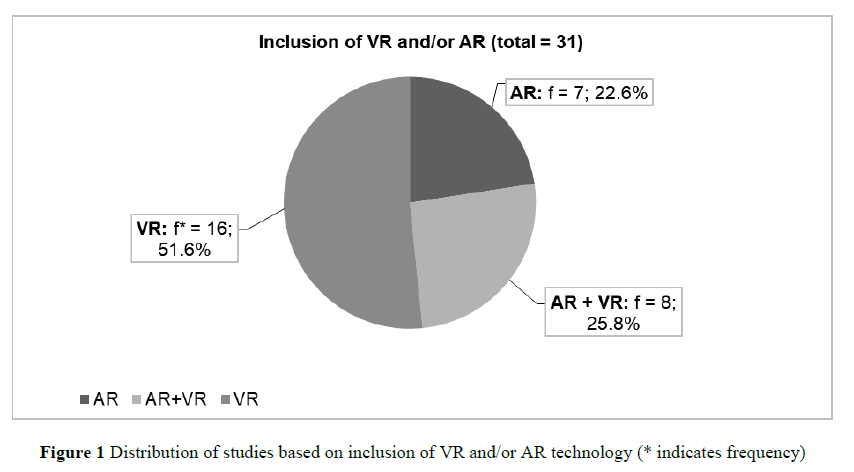
The inclusion of VR and/or AR technology in the 31 studies is presented in Figure 1.
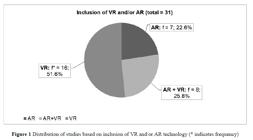
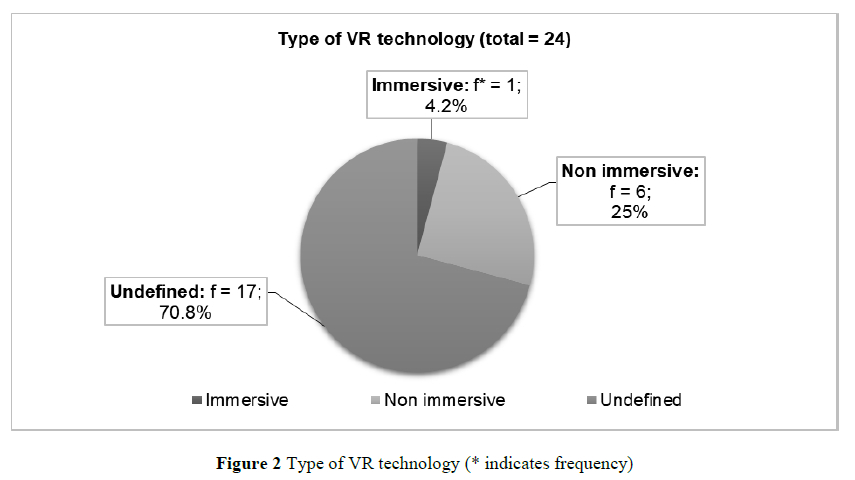
As presented in Figure 1, of the 31 studies, 16 (approximately 52%) incorporated VR, seven (approximately 23%) incorporated AR, and eight (approximately 26%) included both. Twenty-four of the 31 studies included VR technology; however, no explanation was found regarding the specific type of VR technology addressed in these studies. However, based on the reviews, we grouped them as I-VR, non-immersive VR, and undefined. The findings are presented in Figure 2.
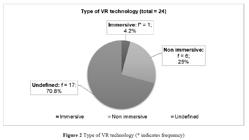
As shown in Figure 2, we observed that the 17 studies grouped as undefined for VR technology were generally studies that introduced and explained applications or concepts. In the six studies that were determined to be non-immersive, VR applications that could be experienced without using any headset or VR glasses were mentioned and application examples were introduced. One study that we categorised as immersive focused on the topic of dance in a digital environment.
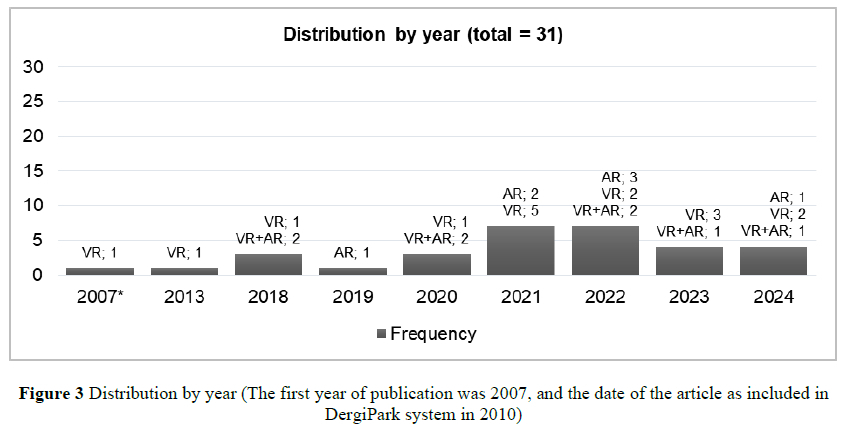
The distribution of 31 studies by year is presented in Figure 3.
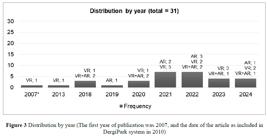
As shown in Figure 3, the first study on VR in the field of art and art education in Türkiye was published in 2007, while studies on AR started to appear in 2018 and thereafter. No studies were found for the periods between 2007 and 2013 and between 2013 and 2018. More studies in the field were published in 2018, but interest declined in 2019, started to rise again in 2020, and peaked in 2021 and 2022, with a slight decrease in 2023 and 2024, although the number of studies was slightly above the average of the 14-year period.
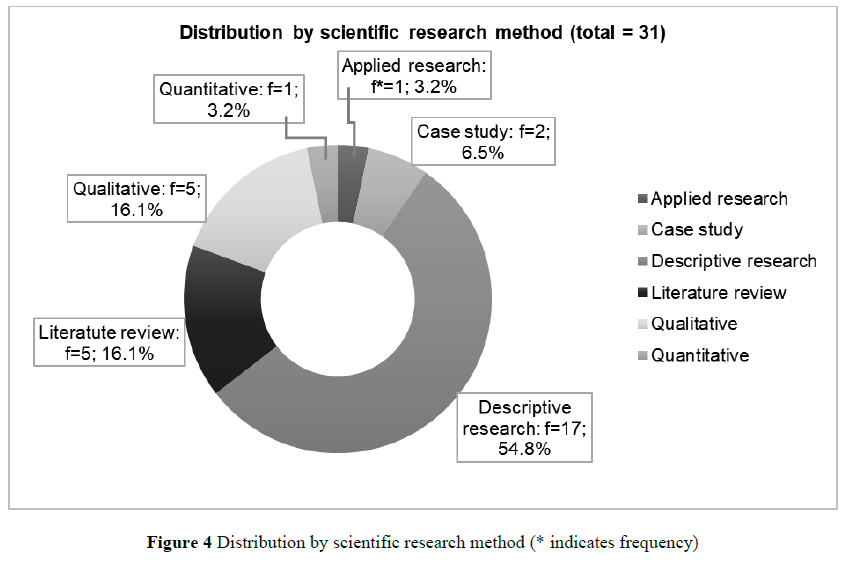
We observed that 16 of 31 studies did not specify the scientific research method used. However, we concluded that 15 of the 16 studies were conducted using a descriptive method, while one study was conducted using an applied research method. This situation indicates some shortcomings in the appropriate and consistent presentation of scientific research methods in the studies in the field of art and art education included in this review. The distribution of studies according to scientific research methods is presented in Figure 4.
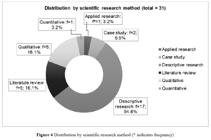
Figure 4 shows that studies in the field were mostly produced using the descriptive method (17) (Lin, 1976:146). We determined that quantitative research (1) and applied research (1) were the least popular methods. Methods such as the descriptive method, case studies and literature reviews are regarded as qualitative research in the education discipline.
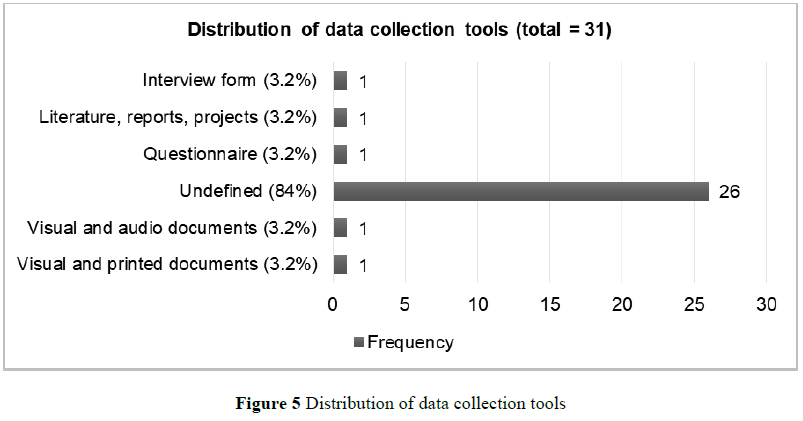
The distribution of the data collection tools in the 31 studies is presented in Figure 5.
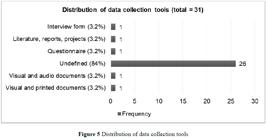
As shown in Figure 5, the study conducted using quantitative research used a questionnaire while the qualitative research studies employed various documents such as audiovisual materials, visual-textual documents, interview forms, and literature-reports-projects. However, we observed that in some studies stated to have used qualitative methods, and in the 26 studies for which no method was specified, no data collection tools were mentioned. We may thus say that this situation is related to the deficiencies in the appropriate and consistent writing of scientific research methods.
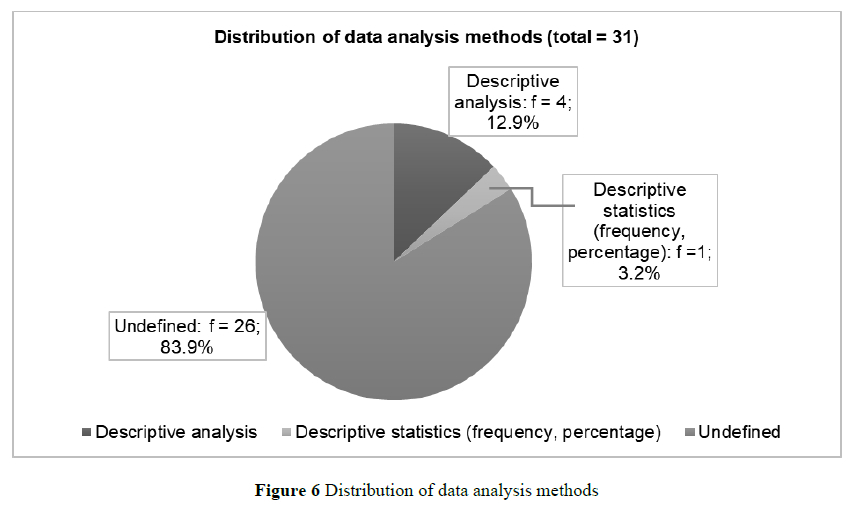
The distribution of data analysis methods of 31 studies is presented in Figure 6.
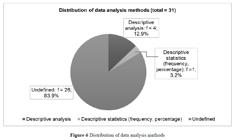
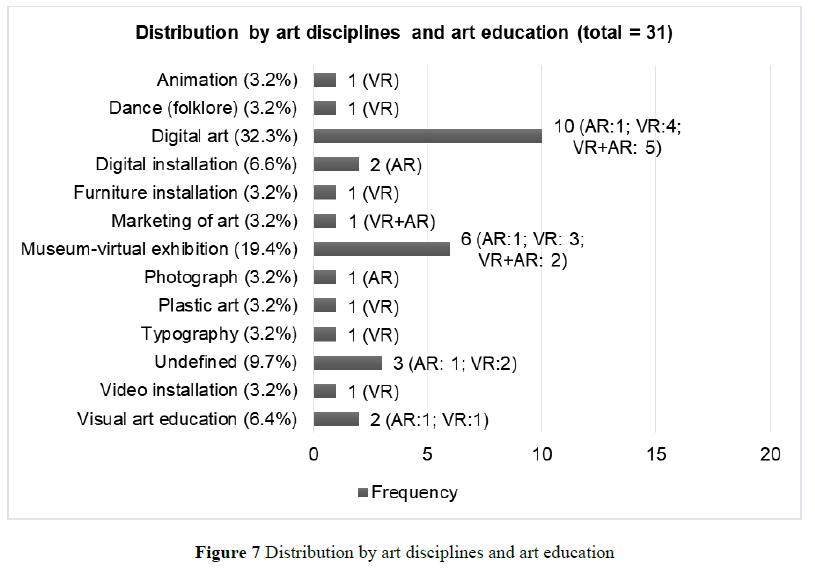
As shown in Figure 6, based on the findings shown in Figures 4 and 5, 26 studies did not specify the data analysis method used. We observed that four of the five studies in which the data analysis methods were specified, descriptive analysis was used while descriptive statistics (frequency, percentage) was used in one study. The distribution of 31 studies according to art disciplines and art education is presented in Figure 7.
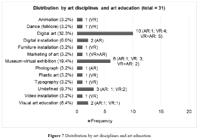
As shown in Figure 7, VR and AR technology was mostly applied in digital art (10) and virtual museum exhibitions (6). We determined that one of the studies on digital art included AR, four included VR, and five included VR+AR technology. In three of the studies, no reference was made to art forms; instead, these studies provided theoretical explanations of VR and AR technology in the context of art. In the field of art education, only two studies were found, of which both were related to visual arts education - one included AR and the other included VR technology.
Discussion
With this review we examined the general trends of VR and AR research in art and art education in Türkiye, revealing a strong focus on art forms such as digital art and museum or virtual exhibitions, with VR technology being predominant. Only two studies specifically addressed art education (AR:1, VR:1), highlighting a notable scarcity of research in this subfield. The findings align with Freina and Ott (2015) who observe that VR applications are common in adult education, particularly in virtual art museums, but are limited for younger learners.
Similarly, Kavanagh, Luxton-Reilly, Wuensche and Plimmer (2017) identified few studies on VR use in art-related subjects and museum contexts, suggesting that while VR is more commonly applied in museum settings, its use in formal art education remains limited.
In contrast, research on AR in education has predominantly focused on special education, storytelling, three-dimensional (3D) printing, mobile applications, higher education, and game-based learning (Avila-Garzon, Bacca-Acosta, Kinshuk, Duarte & Betancourt, 2021; Seçkin Kapucu & Yildinm, 2019). Despite its potential to enhance learning experiences through access to museum and gallery collections (Gong, Wang & Xia, 2022), AR research in art education in Türkiye is still emerging, indicating the need for more experimental studies.
Analysis of the 31 studies reviewed shows that VR technology was employed in over half of the studies (16), while VR and AR technology was employed in an additional 25% (8). The earliest study on this topic was published in 2007, while roughly 70% of the studies were conducted after 2020, suggesting increasing scholarly interest. However, compared to global trends - where the use of AR in education began emerging as early as 1996 and expanded significantly after 2010 (Garzón, 2021) - research in Türkiye lags by approximately a decade.
The delay in integrating the technology into educational environments can be explained by factors such as infrastructural deficiencies, insufficient needs assessments, and the absence of effective technology planning (Keles. & Turan Güntepe, 2018). Academics' reluctance to adapt to technology (Rienties, Brouwer & Lygo-Baker, 2013), along with their limited knowledge, skills, and experience regarding educational technology, further reinforces this situation (Bakioglu & Karsantik, 2015; Weber, 2013). Moreover, the need for practical training and experiential processes to develop the required competencies adds to the complexity of the integration process (Bakioglu & Karsantik, 2015; Drouin, Vartanian & Birk, 2014; Perlman, Christner, Ross & Lypson, 2014; Weber, 2013). Another factor is the decline in digital competency among instructors as their professional experience and age increase, placing them within a generation more distant from digital environments (Baran, Taşlibeyaz & Kayalar, 2023). Additionally, the insufficient ability of pre-service teachers -future educators and academics - to use technology for educational purposes (Aksogan & Bulut Özek, 2020), as well as the fact that art education is one of the fields with the lowest sense of competency in the use of technology (Tatli & Akbulut, 2017), further supports this conclusion.
Methodologically, most studies were qualitative, with only one quantitative and one applied research study. This result is consistent with the result of Seçkin Kapucu and Yildirim (2019). This may be due to a limited readiness or experience in conducting skills-based or experimental VR/AR research in art education (Hiçyilmaz, 2024; Karadavut & Kalyoncu, 2025) or the lack of technological infrastructure and equipment in many educational institutions (Mazlum, 2024; Sari, 2020). However, revealing the ways that this technology is used in practice, the needs of students and teachers, and possible solutions can provide more concrete and functional data to the field (Mao & Ling, 2025; Ruan, 2022). Therefore, it can be said that a greater need exists for studies that provide more concrete outputs to support educational processes in Türkiye.
The analysis of data collection methods in the reviewed studies indicates a clear preference for qualitative approaches. While one study employed a survey within a quantitative framework, qualitative studies predominantly use visual, auditory, and written documents alongside interviews. This pattern aligns with other research, such as Bacca et al. (2014), P Chen, Liu, Cheng and Huang (2017) and Seçkin Kapucu and Yildirim (2019). The findings suggest that, although a variety of data collection techniques are in use, document analysis and interviews remain the most prevalent approaches, reflecting the field's current methodological orientation and possibly the nature of research questions being explored.
Data analysis was mostly descriptive, with one study using descriptive statistics (frequency and percentage). However, in almost half of the studies the data analysis method was not specified, highlighting deficiencies in reporting and methodological rigour within the field. This result agrees with that found in research by Seçkin Kapucu and Yildirim (2019).
Overall, while VR and AR research in Türkiye's art and art education context is increasing, significant gaps remain. To provide more concrete, actionable insight for educators and students, future studies should focus on experimental designs, integration strategies, and practical applications. Thus, a more concrete map can be reached for determining policies regarding the integration of VR and AR applications into art education and updating educational curricula.
Conclusion
The aim of the study was to examine general trends in research on AR and VR technology in the field of art and art education in Türkiye. Using a systematic review approach, 31 studies meeting the inclusion and exclusion criteria were analysed from the DergiPark Academic database, and the identified trends were presented through descriptive analysis with graphics.
The findings indicate that VR, particularly non-immersive VR, has received more attention than AR. The first study emerged in 2007, with research activity gaining momentum in 2018 and peaking in 2021 and 2022. Most studies employed descriptive methodologies, with many lacking explicit information on data collection tools and analysis methods. Research was concentrated on digital art, while only two studies specifically addressed art education.
For future research, we recommend that the database searches are widened and that the underlying reasons for the scarcity of quantitative and applied studies in art education are investigated. Contributing factors may include limited awareness, readiness, experience, hardware infrastructure, materials, and appropriate content. Targeted training and professional development for academics could enhance readiness and facilitate the integration of VR and AR technology in art education. Additionally, there is a need to emphasise experimental and applied research to provide more concrete, actionable insight for the field.
No artificial intelligence tools were used in the conduct of the research, data analysis, preparation, or writing of the article. Google Translate was used to translate the article into English, and the English version was sent to a professional team for proofreading.
Authors' Contributions
Both authors contributed equally to the literature review, methodological design, and development of selection criteria, with NGA specifically involved in article selection. Both authors participated equally in data analysis and reviewed the final manuscript.
Notesi . This study was previously presented in abstract form at EDUCONGRESS 2024, Türkiye, 18 to 21 September 2024.
Acknowledgement
Given the study's research methodology, ethical approval was not required.
References
-
Akçayir M & Akçayir G 2016. Üniversite öğrencilerinin yabancı dil eğitiminde artırılmış gerçeklik teknolojisi kullanımına yönelik görüşleri [University students' opinions about use of augmented reality in foreign language teaching]. Erzincan Üniversitesi Egitim Fakiiltesi Dergisi, 18(2):1169-1186. https://doi.org/10.17556/jef.86406
» https://doi.org/10.17556/jef.86406 -
Akkuş I, Güzel Y & Özhan U 2021. Content analysis of international publications on augmented reality in education: 2011-2019 period. SDU International Journal of Educational Studies, 8(1):36-50. https://doi.org/10.33710/sduijes.774044
» https://doi.org/10.33710/sduijes.774044 -
Aksoğan M & Bulut Özek M 2020. Öğretmen adaylarinin teknoloji yeterlilikleri ile teknolojiye bakiş açisi arasindaki iliçki [The relationship between pre-service teachers' technology competencies and technology perspectives]. Gümüşhane University Journal of Social Sciences, 11(2):301-311. https://doi.org/10.36362/gumus.661961
» https://doi.org/10.36362/gumus.661961 -
Alqarni T, Jdaitawi M & Hamadneh B 2025. The effectiveness of augmented reality application among students with special needs. South AfricanJournal of Education, 45(2):Art. #2195, 7 pages. https://doi.org/10.15700/saje.v45n2a2195
» https://doi.org/10.15700/saje.v45n2a2195 -
Antonioli M, Blake C & Sparks K 2014. Augmented reality applications in education. The Journal of Technology Studies, 40(2):96-107. https://doi.org/10.21061/jots.v40i2.a4
» https://doi.org/10.21061/jots.v40i2.a4 -
Aslan A 2019. DergiPark akademik [DergiPark academic]. Acta Medica Alanya, 3(3):205-206. https://doi.org/10.30565/medalanya.632462
» https://doi.org/10.30565/medalanya.632462 -
Avila-Garzon C, Bacca-Acosta J, Kinshuk, Duarte J & Betancourt J 2021. Augmented reality in education: An overview of twenty-five years of research. Contemporary Educational Technology, 13(3):ep302. https://doi.org/10.30935/cedtech/10865
» https://doi.org/10.30935/cedtech/10865 -
Aytekin H & Koçak N 2020. Augmented reality applications in museums: The case of Sakip Sabanci Museum. Dokuz Eylul University Journal of the Faculty of Business, 21(2):255-274. https://doi.org/10.24889/ifede.839762
» https://doi.org/10.24889/ifede.839762 -
Aytekin P, Yakin V & Çelik BH 2020. Artırılmış gerçeklik teknolojisinin pazarlamadaki yeri [Augmented reality technology in marketing]. AJIT-e: Academic Journal of Information Technology, 10(39):87-117. https://doi.org/10.5824/ajit-e.2019A004
» https://doi.org/10.5824/ajit-e.2019A004 -
Azuma RT 1997. A survey of augmented reality. In Presence: Teleoperators and Virtual Environments, 6(4):355-385. https://doi.org/10.1162/pres.1997.6A355
» https://doi.org/10.1162/pres.1997.6A355 - Bacca J, Baldiris S, Fabregat R, Graf S & Kinshuk 2014. Augmented reality trends in education: A systematic review of research and applications. Educational Technology & Society, 17(4):133-149.
-
Bakioğlu A & Karsantik I 2015. Eğitim bilimleri bölümü öğretim elemanlarının bilişim teknolojisi kullanım becerilerinin geliştirilmesi [Developing information technology skills of academic staff at the department of educational sciences]. Marmara Üniversitesi Atatürk Egitim Fakiiltesi Egitim Bilimleri Dergisi, 42:207-222. https://doi.org/10.15285/ebd.34757
» https://doi.org/10.15285/ebd.34757 -
Baran G, Taşlibeyaz E & Kayalar MT 2023.Öğretim elemanlarının teknoloji öz yeterlik düzeylerine göre teknoloji ve uzaktan öğretim ihtiyaçlarının belirlenmesi [Determination of technology and distance learning needs of academicians according to the technology self-efficiency]. Journal of University Research, 6(3):279-291. https://doi.org/10.32329/uad.1264747
» https://doi.org/10.32329/uad.1264747 -
Başaran M, Nacar E, Nacar G, Tüfekci H & Vural ÖF 2022. Artırılmış Gerçeklik (AG) uygulamalarının okul öncesi dönemde uygulanabilirliğine ilişkin öğretmen görüşleri [Teacher opinions on the applicability of Augmented Reality (AR) applications in pre-school period]. Mehmet Akif Ersoy University Journal of Education Faculty, 62:135-157. https://doi.org/10.21764/maeuefd.917745
» https://doi.org/10.21764/maeuefd.917745 -
Batdi V, Anil Ö & Tunç A 2022.İlköğretim ikinci kademede artırılmış gerçeklik uygulamalarının etkililiğinin karma-meta yöntemi ile analizi[Investigation into the effectiveness of augmented reality applications in primary education second level through mixed-meta method]. Savunma Bilimleri Dergisi, 1(41):73-96. https://doi.org/10.17134/khosbd.1100642
» https://doi.org/10.17134/khosbd.1100642 -
Beck D 2019. Special issue: Augmented and virtual reality in education: Immersive learning research. Journal of Educational Computing Research, 57(7):1619-1625. https://doi.org/10.1177/0735633119854035
» https://doi.org/10.1177/0735633119854035 -
Cabero J & Barroso J 2016. The educational possibilities of Augmented Reality. New Approaches in Educational Research, 5(1):44-50. https://doi.org/10.7821/naer.2016.1.140
» https://doi.org/10.7821/naer.2016.1.140 -
Çetintav G & Yilmaz R 2022. Matematik ve geometri eğitimi alanında artırılmış gerçeklik ile ilgili yayınlanmış makalelerin sistematik olarak incelenmesi [A systematic analysis of published articles on augmented reality in the field of mathematics and geometry education]. Karaelmas Egitim Bilimleri Dergisi, 10(1):47-61. Available at https://dergipark.org.tr/en/download/article-file/2267443. Accessed 22 May 2024.
» https://dergipark.org.tr/en/download/article-file/2267443 -
Challenor J & Ma M 2019. A review of augmented reality applications for history education and heritage visualisation [Special issue]. Multimodal Technologies and Interaction, 3(2):39. https://doi.org/10.3390/mti3020039
» https://doi.org/10.3390/mti3020039 -
Chen CJ 2009. Theoretical bases for using virtual reality in education [Special issue]. Themes in Science and Technology Education, 2(1-2):71 -90. Available at https://files.eric.ed.gov/fulltext/EJ1131320.pdf. Accessed 5 May 2024.
» https://files.eric.ed.gov/fulltext/EJ1131320.pdf -
Chen P, Liu X, Cheng W & Huang R 2017. A review of using augmented reality in education from 2011 to 2016. In E Popescu, Kinshuk, MK Khribi, R Huang, M Jemni, NS Chen & DG Sampson (eds). Innovations in smart learning: Lecture notes in educational technology. Singapore: Springer. https://doi.org/10.1007/978-981-10-2419-1_2
» https://doi.org/10.1007/978-981-10-2419-1_2 -
Demirtaş E & Yalçin H 2022. 2018-2022 Yılları arasında özel gereksinimli bireylere yönelik artırılmış ve sanal gerçeklik teknolojilerini içeren çalışmaların incelenmesi: Sistematik derleme [Investigation of studies containing augmented and virtual reality technologies for special needs prices between 2018-2022: A systematic review]. Turkish Special Education Journal: International, 4(1):75-103. Available athttps://dergipark.org.tr/en/download/article-file/2789485. Accessed 15 April 2024.
» https://dergipark.org.tr/en/download/article-file/2789485 -
Di Serio Á, Ibáñez MB & Kloos CD 2013. Impact of an augmented reality system on students' motivation for a visual art course. Computers & Education, 68:586-596. https://doi.org/10.1016/j.compedu.2012.03.002
» https://doi.org/10.1016/j.compedu.2012.03.002 -
Drouin M, Vartanian LR & Birk S 2014. A community of practice model for introducing mobile tablets to university faculty. Innovative Higher Education, 39(3):231-245. https://doi.org/10.1007/s10755-013-9270-3
» https://doi.org/10.1007/s10755-013-9270-3 -
Dunleavy M, Dede C & Mitchell R 2009. Affordances and limitations of immersive participatory augmented reality simulations for teaching and learning. Journal of Science Education and Technology, 18(1):7-22. https://doi.org/10.1007/s10956-008-9119-1
» https://doi.org/10.1007/s10956-008-9119-1 -
Ely DP, Foley A, Freeman W & Scheel N 1992. Trends in educational technology. Syracuse, NY: ERIC Clearinghouse on Information Resources, Syracuse University. Available at https://files.eric.ed.gov/fulltext/ED346850.pdf. Accessed 29 August 2026.
» https://files.eric.ed.gov/fulltext/ED346850.pdf -
Freina L & Ott M 2015. A literature review on immersive virtual reality in education: State of the art and perspectives. Proceedings of the 11th International Conference eLearning and Software for Education, 1:133-141. https://doi.org/10.12753/2066-026X-15-020
» https://doi.org/10.12753/2066-026X-15-020 -
Garzón J 2021. An overview of twenty-five years of augmented reality in education [Special issue]. Multimodal Technologies and Interaction, 5(7):37. https://doi.org/10.3390/mti5070037
» https://doi.org/10.3390/mti5070037 -
Gong Z, Wang R & Xia G 2022. Augmented reality (AR) as a tool for engaging museum experience: A case study on Chinese art pieces. Digital, 2(1):33-45. https://doi.org/10.3390/digital2010002
» https://doi.org/10.3390/digital2010002 -
González-Zamar MD & Abad-Segura E 2020. Implications of virtual reality in arts education: Research analysis in the context of higher education [Special issue]. Education Sciences, 10(9):225.https://doi.org/10.3390/educsci10090225
» https://doi.org/10.3390/educsci10090225 - Gough D, Oliver S & Thomas J 2017. An introduction to systematic reviews (2nd ed). London, England: Sage.
-
Hamilton D, McKechnie J, Edgerton E & Wilson C 2021. Immersive virtual reality as a pedagogical tool in education: A systematic literature review of quantitative learning outcomes and experimental design. Journal of Computers in Education, 8(1):1- 32. https://doi.org/10.1007/s40692-020-00169-2
» https://doi.org/10.1007/s40692-020-00169-2 -
He Z, Wu L & Li X 2018. When art meets tech: The role of augmented reality in enhancing museum experiences and purchase intentions. Tourism Management, 68:127-139. https://doi.org/10.1016/j.tourman.2018.03.003
» https://doi.org/10.1016/j.tourman.2018.03.003 -
Hemingway P & Brereton N 2009. What is a systematic review? Available at https://familymedicine.med.wayne.edu/mph/project/what_is_a_systematic_review.pdf. Accessed 19 October 2024.
» https://familymedicine.med.wayne.edu/mph/project/what_is_a_systematic_review.pdf -
Hiçyilmaz Y 2024. Uzaktan Eğitimle Gerçekleştirilen Öğrenme Faaliyetlerinin Görsel Sanatlar öğretmen adaylarının Teknolojik Pedagojik Alan Bilgisi öz-yeterlik düzeylerine etkisi [ [The impact of remote learning activities on Visual Arts teacher candidates' technological pedagogical content knowledge self-efficacy levels]. Uluslararasıİletişim ve Sanat Dergisi, 5(11):98-110. https://doi.org/10.29228/iletisimvesanat.75166
» https://doi.org/10.29228/iletisimvesanat.75166 -
Hosgör H 2022. Saglik alaninda sanal gerçekligin kullanimi: Türkiye ve Dünyadan örnekler [The use of virtual reality in the healthcare field: Examples from Turkey and the world]. Fenerbahçe University Journal of Health Sciences, 2(3):647-660. https://doi.org/10.56061/fbujohs.1151900
» https://doi.org/10.56061/fbujohs.1151900 -
Huang TC, Chen CC & Chou YW 2016. Animating eco- education: To see, feel, and discover in an augmented reality-based experiential learning environment. Computers & Education, 96:72-82. https://doi.org/10.1016/j.compedu.2016.02.008
» https://doi.org/10.1016/j.compedu.2016.02.008 -
Hung JL & Zhang K 2012. Examining mobile learning trends 2003-2008: A categorical meta-trend analysis using text mining techniques. Journal of Computing in Higher Education, 24(1):1 -17. https://doi.org/10.1007/s12528-011-9044-9
» https://doi.org/10.1007/s12528-011-9044-9 -
Içten B & Bal G 2021. Askerî alanda artırılmış ve sanal gerçeklik araçlar: Sistemler, zorluklar ve çözümler [Augmented and virtual reality tools in the military field: Systems, challenges and solutions]. Savunma Bilimleri Dergisi, 2(40):169-199. https://doi.org/10.17134/khosbd.1001198
» https://doi.org/10.17134/khosbd.1001198 -
İmamoğlu M, Erbaş Ç & Dikmen CH 2022. Trend analysis of augmented reality studies in sports science. Kastamonu Education Journal, 30(3):502-511. https://doi.org/10.24106/kefdergi.739231
» https://doi.org/10.24106/kefdergi.739231 -
Karadavut AÖ & Kalyoncu R 2025. Görsel sanatlar ögretmenleri ve adaylarinin teknolojik pedagojik içerik bilgisi özyeterlikleri ile teknopedagojik egitim yeterlilikleri arasindaki iliski [The relationship between visual arts teachers' and candidates' technological pedagogical content knowledge self-efficacy and technopedagogical education competencies]. Uluslararasi Sosyal Bilimler ve Egitim Dergisi - USBED, 7(12): 1-24. https://doi.org/10.5281/zenodo.14633928
» https://doi.org/10.5281/zenodo.14633928 -
Karşu Cesur D 2022. To be real, or not to be real, that is the question: A content analysis of augmented reality articles in advertising and marketing journals from 2017 to 2021. Media and Culture, 2(1):66-86. Available at https://dergipark.org.tr/en/pub/medkul/issue/70767/1118676. Accessed 18 August 2024.
» https://dergipark.org.tr/en/pub/medkul/issue/70767/1118676 -
Kavanagh S, Luxton-Reilly A, Wuensche B & Plimmer B 2017. A systematic review of Virtual Reality in education. Themes in Science & Technology Education, 10(2):85-119. Available at https://files.eric.ed.gov/fulltext/EJ1165633.pdf. Accessed 16 June 2024.
» https://files.eric.ed.gov/fulltext/EJ1165633.pdf -
Kayalar MT & Baran G 2021. Fen bilimleri egitiminde artirilmis gerçeklige iliskin çalismalarin analizi [Analysis of studies on augmented reality in science education]. Caucasian Journal of Science, 8(2):123-138. https://doi.org/10.48138/cjo.1002840
» https://doi.org/10.48138/cjo.1002840 -
Ke F & Hsu YC 2015. Mobile augmented-reality artifact creation as a component of mobile computer- supported collaborative learning. The Internet and Higher Education, 26:33-41.= https://doi.org/10.1016/j.iheduc.2015.04.003
» https://doi.org/10.1016/j.iheduc.2015.04.003 -
Keleş E & Turan Güntepe E 2018. Egitim fakültesi ögretim elemanlarinin teknolojiyi ögrenme - ögretme sürecine entegrasyonu [Technological integration into learning - teaching process of the instructors in the faculty of education]. Sakarya University Journal of Education, 8(3):142-157. https://doi.org/10.19126/suje.419719
» https://doi.org/10.19126/suje.419719 -
Klopfer E & Sheldon J 2010. Augmenting your own reality: Student authoring of science-based augmented reality games [Special issue]. New Directions for Youth Development, 128:85-94. https://doi.org/10.1002/yd.378
» https://doi.org/10.1002/yd.378 -
Koç S 2021 .Okul öncesi dönemde artmlmis, gerçeklik teknolojisi kullaniminin incelenmesi [An investigation into the use of augmented reality technology in the preschool period]. Tasarim Enformatigi, 2(2):59-64. Available at https://dergipark.org.tr/tr/pub/te/issue/66501/675481. Accessed 2 May 2024.
» https://dergipark.org.tr/tr/pub/te/issue/66501/675481 -
Kocasaraç H & Mlotshwa HF 2024. Comparison of virtual reality perceptions of teachers working in Türkiye and South Africa. South African Journal of Education, 44(3):Art. #2390, 10 pages. https://doi.org/10.15700/saje.v44n3a2390
» https://doi.org/10.15700/saje.v44n3a2390 -
Koşan L 2014. Muhasebe egitiminde artmlmis, gerçeklik uygulamalari [Augmented reality applications in accounting education]. Çukurova Üniversitesi Iktisadi ve Idari Bilimler Fakültesi Dergisi, 18(2):37-47. Available at https://dergipark.org.tr/en/download/article-file/46589. Accessed 12 August 2024.
» https://dergipark.org.tr/en/download/article-file/46589 -
Lampropoulos G, Keramopoulos E, Diamantaras K & Evangelidis G 2022. Augmented reality and gamification in education: A systematic literature review of research, applications, and empirical studies [Special issue]. Applied Sciences, 12(13):6809. https://doi.org/10.3390/app12136809
» https://doi.org/10.3390/app12136809 -
Lampropoulos G & Kinshuk 2024. Virtual reality and gamification in education: A systematic review. Educational Technology Research and Development, 72:1691-1785. https://doi.org/10.1007/s11423-024-10351-3
» https://doi.org/10.1007/s11423-024-10351-3 -
Landis JR & Koch GG 1977. The measurement of observer agreement for categorical data. Biometrics, 33(1):159-174. https://doi.org/10.2307/2529310
» https://doi.org/10.2307/2529310 -
Lee EAL, Wong KW & Fung CC 2010. How does desktop virtual reality enhance learning outcomes? A structural equation modeling approach. Computers & Education, 55(4):1424-1442. https://doi.org/10.1016/j.compedu.2010.06.006
» https://doi.org/10.1016/j.compedu.2010.06.006 -
Lege R & Bonner E 2020. Virtual reality in education: The promise, progress, and challenge. The JALT CALL Journal, 16(3):167-180. https://doi.org/10.29140/jaltcall.v16n3.388
» https://doi.org/10.29140/jaltcall.v16n3.388 - Lin N 1976. Foundations of social research. New York, NY: McGraw-Hill.
-
Lune H & Berg BL 2017. Qualitative research methods for the social sciences (9th ed). Essex, England: Pearson. Available at http://law.gtu.ge/wp-content/uploads/2017/02/Berg-B.-Lune-H.-2012.-Qualitative-Research-Methods-for-the-Social-Sciences.pdf. Accessed 29 August 2026.
» http://law.gtu.ge/wp-content/uploads/2017/02/Berg-B.-Lune-H.-2012.-Qualitative-Research-Methods-for-the-Social-Sciences.pdf -
Ma JY & Choi JS 2007. The virtuality and reality of augmented reality. Journal of Multimedia, 2(1):32- 37. Available at https://www.researchgate.net/profile/Jong-Soo-Choi-4/publication/42803865_The_Virtuality_and_Reality_of_Augmented_Reality/links/544849510cf2f14fb81422c9/The-Virtuality-and-Reality-of-Augmented-Reality.pdf. Accessed 14 June 2024.
» https://www.researchgate.net/profile/Jong-Soo-Choi-4/publication/42803865_The_Virtuality_and_Reality_of_Augmented_Reality/links/544849510cf2f14fb81422c9/The-Virtuality-and-Reality-of-Augmented-Reality.pdf -
Mao Y & Ling J 2025. Innovative applications of virtual reality in art and design education. Journal ofCases on Information Technology (JCIT), 27(1):1-19. https://doi.org/10.4018/JCIT.382567
» https://doi.org/10.4018/JCIT.382567 -
Mazlum H 2024. Çağdaş sanat eğitiminde dijital teknolojinin rolü [The role of digital technology in contemporary art education]. Uluslararasıİnsan ve Sanat Araştırmaları Dergisi, 9(4):345-358. https://doi.org/10.5281/zenodo.14285500
» https://doi.org/10.5281/zenodo.14285500 -
Papanastasiou G, Drigas A, Skianis C, Lytras M & Papanastasiou E 2019. Virtual and augmented reality effects on K-12, higher and tertiary education students' twenty-first century skills. Virtual Reality, 23:425-436. https://doi.org/10.1007/s10055-018-0363-2
» https://doi.org/10.1007/s10055-018-0363-2 -
Perlman RL, Christner J, Ross PT & Lypson ML 2014. A successful faculty development program for implementing a sociocultural ePortfolio Assessment Tool. Academic Medicine, 89(2):257-262. https://doi.org/10.1097/acm.0000000000000120
» https://doi.org/10.1097/acm.0000000000000120 -
Rienties B, Brouwer N & Lygo-Baker S 2013. The effects of online professional development on higher education teachers' beliefs and intentions towards learning facilitation and technology. Teaching and Teacher Education, 29:122-131. https://doi.org/10.1016/j.tate.2012.09.002
» https://doi.org/10.1016/j.tate.2012.09.002 -
Rojas-Sánchez MA, Palos-Sánchez PR & Folgado- Fernández JA 2023. Systematic literature review and bibliometric analysis on virtual reality and education. Education and Information Technologies, 28:155-192. https://doi.org/10.1007/s10639-022-11167-5
» https://doi.org/10.1007/s10639-022-11167-5 -
Ruan Y 2022. Application of immersive virtual reality interactive technology in art design teaching [Special issue]. Computational Intelligence and Neuroscience, 2022:1 -12. https://doi.org/10.1155/2022/5987191
» https://doi.org/10.1155/2022/5987191 -
Sari HI 2020. Evde kal döneminde uzaktan eğitim: Ölçme ve değerlendirmeyi neden karantinaya almamalıyız? [Distance education in lockdown period: Why we should not quarantine measurement and evaluation?] Uluslararası Eğitim Araştırmacıları Dergisi, 3(1):121-128. Available at https://dergipark.org.tr/en/download/article-file/1181932. Accessed 14 November 2025.
» https://dergipark.org.tr/en/download/article-file/1181932 -
Seçkin Kapucu M & Yildirim I 2019. Türkiye'de sanal ve artirilmis gerçeklik üzerine egitimde yapilan çalismalara iliskin metodolojik bir inceleme [Methodological review of the studies performed on virtual reality and augmented reality in education in Turkey]. Akademik Bakış Uluslararası Hakemli Sosyal Bilimler Dergisi,, 73:26-46. Available at https://dergipark.org.tr/tr/download/article-file/1179553. Accessed 2 April 2024.
» https://dergipark.org.tr/tr/download/article-file/1179553 -
Serhan SAL & Yahaya N 2022. A systematic review and trend analysis of personal learning environments research. International Journal of Information and Education Technology, 12(1):43-53. https://doi.org/10.18178/ijiet.2022.12.1.1585
» https://doi.org/10.18178/ijiet.2022.12.1.1585 -
Sotiriou S & Bogner FX 2008. Visualizing the invisible: Augmented reality as an innovative science education scheme. Advanced Science Letters, 1(1):114-122. https://doi.org/10.1166/asl.2008.012
» https://doi.org/10.1166/asl.2008.012 -
Tatli Z & Akbulut HI 2017. Öğretmen adaylarının alanda teknoloji kullanımına yönelik yeterlilikleri [Teacher candidates technology using competence in the field]. Ege Egitim Dergisi, 18(1):31-55. https://doi.org/10.12984/egeefd.328375
» https://doi.org/10.12984/egeefd.328375 -
Tekedere H & Göker H 2016. Examining the effectiveness of augmented reality applications in education: A meta-analysis. International Journal of Environmental & Science Education, 11(16):9469-9481. Available at http://www.ijese.net/makale_indir/IJESE_1181_article_580e70f0e079f.pdf. Accessed 4 April 2024.
» http://www.ijese.net/makale_indir/IJESE_1181_article_580e70f0e079f.pdf -
Timur B & Köz EN 2022. Turizmde sanal gerçeklik ve artirilmis gerçeklik çalismalari üzerine sistematik bir literatür taramasi [A systematic literature review on virtual reality and augmented reality studies in tourism]. Turizm Akademik Dergisi, 9(1):233-251. Available at https://dergipark.org.tr/en/download/article-file/1991591. Accessed 14 May 2024.
» https://dergipark.org.tr/en/download/article-file/1991591 -
University College London 2025. Systematic reviews. Available at https://library-guides.ucl.ac.uk/systematic-reviews/what. Accessed 25 November 2025.
» https://library-guides.ucl.ac.uk/systematic-reviews/what -
Villena-Taranilla R, Tirado-Olivares S, Cózar-Gutiérrez R & González-Calero JA 2022. Effects of virtual reality on learning outcomes in K-6 education: A meta-analysis. Educational Research Review, 35:100434.https://doi.org/10.1016/j.edurev.2022.100434
» https://doi.org/10.1016/j.edurev.2022.100434 -
Weber EK 2013. An analysis of faculty development levels of use outcomes at one higher education institution. Ed.S. thesis. Dayton, OH: University of Dayton. Available at https://ecommons.udayton.edu/graduate_theses/624 . Accessed 25 November 2025.
» at https://ecommons.udayton.edu/graduate_theses/624 -
Wu HK, Lee SWY, Chang HY & Liang JC 2013. Current status, opportunities and challenges of augmented reality in education. Computers & Education, 62:41-49. https://doi.org/10.1016/j.compedu.2012.10.024
» https://doi.org/10.1016/j.compedu.2012.10.024 -
Wu X 2023. A review of virtual reality technology. In M istanbullu (ed). Proceedings of the 2023 International Conference on Machine Learning and Automation. Oxford, England: Ewa Publishing. https://doi.org/10.54254/2755-2721/38/20230521
» https://doi.org/10.54254/2755-2721/38/20230521 -
Xu X, Mangina E & Campbell AG 2021. HMD-based virtual and augmented reality in medical education: A systematic review. Frontiers in Virtual Reality, 2:692103. https://doi.org/10.3389/frvir.2021.692103
» https://doi.org/10.3389/frvir.2021.692103 -
Yetik S, Akyüz HI & Bardakci S 2020. Awareness and utilization of emergence technologies of education faculty members. Erzincan Üniversitesi Egitim Fakültesi Dergisi, 22(1): 164-192. https://doi.org/10.17556/erziefd.615126
» https://doi.org/10.17556/erziefd.615126 - Yildirim A & Simsek H 2018. Sosyal bilimlerde nitel araştır- ma yöntemleri [Qualitative research methods in the social sciences]. Ankara, Türkiye: Seçkin.
-
Yildiz G & Kozbekçi Ayranpinar S 2021. Moda sektöründe artirilmis gerçeklik ve sanal gerçeklik [Augmented reality and virtual reality in the fashion industry]. yedi: Sanat, Tasarim ve Bilim Dergisi, 25:1-15. https://doi.org/10.17484/yedi.731854
» https://doi.org/10.17484/yedi.731854 -
Yuen SCY, Yaoyuneyong G & Johnson E 2011. Augmented reality: An overview and five directions for AR in education. Journal of Educational Technology Development and Exchange, 4(1):119-140. https://doi.org/10.18785/jetde.0401.10
» https://doi.org/10.18785/jetde.0401.10 -
Yünkül E 2022. Using virtual reality in primary education: A systematic review. Journal of Education, Theory and Practical Research, 8(2):177-193. https://doi.org/10.38089/ekuad.2022.11
» https://doi.org/10.38089/ekuad.2022.11 -
Zhao X, Ren Y & Cheah KSL 2023. Leading virtual reality (VR) and augmented reality (AR) in education: Bibliometric and content analysis from the Web of Science (2018-2022). Sage Open, 13(3):1-23. https://doi.org/10.1177/21582440231190821
» https://doi.org/10.1177/21582440231190821 -
Zulfiqar F, Raza R, Khan MO, Arif M, Alvi A & Alam T 2023. Augmented reality and its applications in education: A systematic survey. IEEE Access, 11:143250-143271. https://doi.org/10.1109/ACCESS.2023.3331218
» https://doi.org/10.1109/ACCESS.2023.3331218
Revised: 5 November 2025
Accepted: 17 March 2026
Published: 31 August 2026