Implementation of verbal and written feedback classroom practices by teachers
Abstract
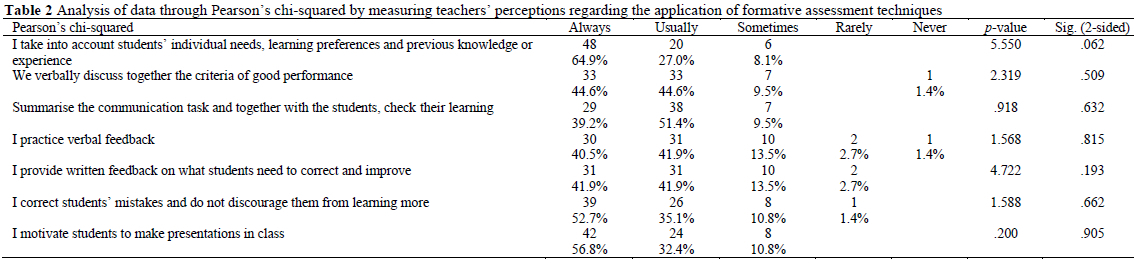
Teachers use feedback to modify student thinking or behaviour to improve their learning. In order for students to achieve better, teachers must use different strategies and ways of teaching. In this article we reflect on the practical application and impact that written and verbal feedback have on learners. Through the research reported on here we aimed to contribute to reflection about different concrete feedback models that are helpful to teachers and students. Seventy-four teachers of the curriculum area, society and environment (civic education, geography and history), in urban schools (n = 39) and rural schools (n = 35) from 10 lower secondary schools answered the questionnaire. The results show that teachers provide students with written and oral feedback and that there is no significant difference in the application by teachers in urban and rural schools, nor among teachers who teach subjects in the curriculum area, society and environment. We recommend that teachers receive continuous training on how to use formative assessment techniques.
curriculum area society and environment; formative assessment; urban and rural schools; verbal feedback; written feedback