Bibliometric analysis of computational thinking research trends in science education from 2013 to 2022
Abstract
Computational thinking (CT) has increasingly been recognised as a fundamental competency in 21st-century education. In response to the growing significance of CT, with this study we aimed to systematically review the development of research on CT in science education by employing bibliometric analysis to examine 337 research papers using VOSviewer and Bibliometrix as analytical tools. The focus was on the topic of CT within the Scopus database from 2013 to 2022. The descriptive data analysis showed a noticeable increase in the significance of CT as a research area within science education in the past 10 years. Co-occurrence knowledge maps revealed 4 principal research themes and their development trajectories. Content analysis indicated that problem-solving and the CT domain were the most examined variables in the articles. We found that technology applications were the most preferred types of learning as academic achievement is highly influenced by CT practices.
computational thinking; research; science; secondary data
Introduction
In modern-day education, computational thinking (CT) is gaining more recognition as its importance has become even more relevant among learners in elementary education. CT among school children can start with coding to enhance their thinking skills and prepare them for solving complex problems that are computer-adapted. However, every student or researcher in academia needs CT skills to adapt in today's teaching, learning, or research.
The concept of CT, initially introduced by Papert (1980) known as Papert's CT and further developed by Wing in 2006 and 2008 has gained significant prominence in the field of education (Ogegbo & Ramnarain, 2022; Rich, Yadav & Larimore, 2020; Yadav, Hong & Stephenson, 2016; Yadav, Krist, Good & Caeli, 2018). It is now widely recognised as a foundational idea in computer science, closely linked to programming and coding (Rich et al., 2020; Sun, Hu, Yang, Zhou & Wang, 2021; Sung, Ahn & Black, 2017), and has become a crucial skill in today' s information and digitalisation age (Çoban & Korkmaz, 2021; Kert, Erkoç & Yeni, 2020; Tarigan, WPL, Sipahutar & Harahap, 2023). Due to its paramount importance, there is growing consensus that CT should be fostered from primary education onward (Ehsan, Rehmat & Cardella, 2021).
Several studies have sought to provide broadly applicable definitions of computational thinking (CT) as well as effective methods for improving CT education (Sun et al., 2021; Tang, Chou & Tsai, 2020; Wei, Lin, Meng, Tan, Kong & Kinshuk, 2021). Similarly, researchers have also investigated the links between CT and other characteristics such as creativity and innovation (Israel-Fishelson, Hershkovitz, Eguíluz, Garaizar & Guenaga, 2021; Kong, 2019; Manfra, Hammond & Coven, 2022; Sneider, Stephenson, Schafer & Flick, 2014). Furthermore, there have been investigations into methods for evaluating CT (Rich et al., 2020; Tang et al., 2020), and educators' training in CT ability (Li, McNary & Boyd, 2023; Yadav et al., 2016). However, it is not the concern of this article - the importance of integrating CT even in child education is discussed here.
CT has expanded its influence beyond the realm of computer science, making its mark in various disciplines including life sciences, basic science, the intersection of sciences and arts, social sciences and physics by incorporating CT into the science (Sun et al., 2021; Sung et al., 2017). Researchers have placed increasing emphasis on the importance of integrating CT into educational curricula as a fundamental aspect of 21st-century literacy. This emphasis spans from early childhood education to higher education (Barr & Stephenson, 2011; Voogt, Fisser, Good, Mishra & Yadav, 2015) and involves cognitive processes.
These processes encompass defining a problem and articulating its solutions in a manner that enables effective execution by a computer, whether it is operated by a human or functions autonomously (Wing, 2008). The integration of various CT tools into CT activities within the science classroom has become a crucial topic of discussion (Bers, Flannery, Kazakoff & Sullivan, 2014; Hooshyar, Malva, Yang, Pedaste, Wang & Lim, 2021). The development of CT skills is closely linked to the enhancement of scientific process skills, a core element of inquiry-based learning.
Additionally, empirical studies have examined the influence of emotional factors, such as motivation and self-efficacy to identify the intrinsic elements that impact CT education (Tarigan, CU & Tarigan, 2022). The continued growth of CT in the digital age has led to consensus that educators should integrate it into educational curricula starting from primary education onward. Bibliometric studies can provide insight into the growing body of literature on CT, mapping trends, identifying keywords, and emphasising its expanding role in 21st-century literacy and its critical contribution across various academic fields. This research also highlights the importance of monitoring how CT is evolving across disciplines and how it influences educational outcomes globally.
Since 2006, there has been a notable increase in publications related to CT, as observed in the study conducted by Tekdal (2021). Numerous review studies on CT trends have been published in recent years, but none have specifically focused on CT in science education. Therefore, there was a pressing need for a research paper that could identify and dissect the evolving trends and developments in CT in science education research. Such a study would be both timely and critical, as it would offer a comprehensive overview of the current research landscape and serve as a valuable guide for shaping future research efforts in the field of CT.
Furthermore, CT is recognised as a core skill necessary for accessing job opportunities and achieving success. However, comprehensive bibliometric analyses of CT in the context of science education research are still limited. These analyses involve measuring and assessing scientific literature to uncover trends, explore applications, and evaluate achievements within this specific research domain. The majority of existing research in this area has focused on specific aspects of CT, such as programming in education, the use of digital tools to develop CT in elementary schools, methodologies for evaluating CT, and the role of CT in higher education.
In this study we examined 337 documents sourced from primary collections within the Scopus database since 2013. Our goal was to conduct a bibliographic analysis of CT and provide an international viewpoint on the changing scientific production in the field of education. The findings reveal numerous significant discoveries, including the awareness that CT is a critical skill for students to master, enabling them to effectively solve complex problems in and out of the classroom.
With this study we aimed to describe the bibliometric review analysis of CT research in science education published from January 2013 to December 2022. We provide insight into the global landscape of CT research in the field of science education, highlighting growth, geographical distribution, and key research trends. With this review we aimed to uncover novel insight and present the state of the art in CT theory trends within the context of science education. The research questions (RQs) for this study are based on the following framework:
RQ-1. What are the current trends in publications regarding CT in science education research?
RQ-2. Who are the most active authors and countries involved in CT research in science education, and what is the pattern of collaboration among them?
RQ-3. What are the most studied topics and affiliations related to CT in science education?
RQ-4. What are the main publishers, keywords, and terms for CT in science education?
These questions are designed to map the scholarly landscape of CT in science education by identifying influential contributors, dominant themes, and patterns of collaboration across regions and institutions. Using the RQs we aimed to provide a comprehensive overview of CT research in science education, shedding light on trends, authors, publications, and themes that shape the field. This information can be valuable for researchers, educators, and policymakers, guiding future developments and advancements at the intersection of CT and science education.
Methodology
Bibliometric reviews use secondary data from published sources, including journal articles, books, and conference papers. This data are already publicly available and does not involve interaction with individuals. As a result, we did not require ethical approval because we focused on analysing existing literature rather than direct engagement with live subjects. We used various bibliometric techniques in the analysis, including citation analysis, co-citation analysis, and co-occurrence analysis. The procedure for selecting articles and analysing the trends in this study is described in the following section.
The Process for Selecting Articles for Analysis
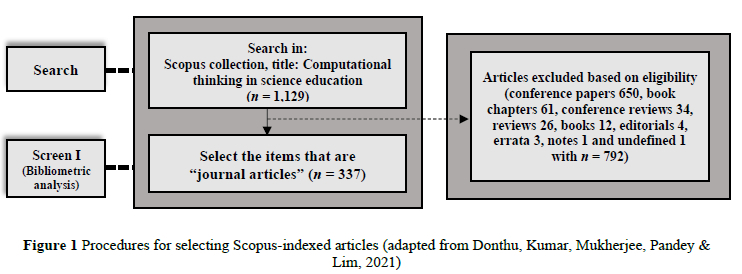
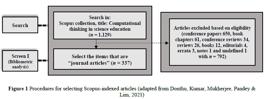
Published articles on CT in science education from 2013 to 2022 were retrieved from Scopus indexes. The search was limited to this frame, focusing on articles available in English and classified as "journal articles" to maintain consistent quality. The advanced search function was used, using keywords such as "computational thinking in science education", "science education", "science", and "education." We reviewed each article based on specified inclusion and exclusion criteria. The article selection process for this study is detailed in Figure 1.
Article Selection Process for Bibliometric Analysis
The data source chosen for this study was the Scopus collection, a reputable database comprising high-quality published research from key international journals. Figure 1 illustrates the article selection process and its methods. In the initial search, we identified a total of 1,129 papers with titles containing keywords related to computational thinking in science education. These papers had been published between 1 January 2013 and 31 December 2022. In the subsequent screening stage, further exclusions were made, particularly for papers in concise formats. Finally, 337 full-length journal articles written in English were included for analysis in the study.
Data Analysis
The data trends and their relevant interrelationships were analysed and visualised using VOSviewer and the Bibliometrics R Studio. These maps serve as graphical representations of the relationships between knowledge fields, documents, or authors. The timeline view function of Bibliometrics R Studio was used to conduct a progression analysis for specific themes. This analysis provides insight into the evolution of CT within the field of science education research over time. We primarily employed citation analysis and clustering mapping to visualise citations of influential research conducted by various researchers, institutions, and countries/regions. By examining citation patterns across different groups, we aimed to identify key contributors and their roles in specific topics or areas of research (Park & Shea, 2020).
Results of the Study
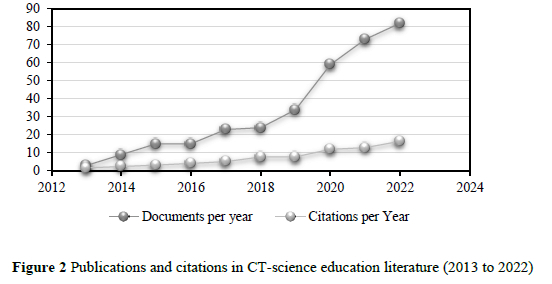
Computational Trends in Literature Between 1 January 2013 and 31 December 2022, a total of 337 articles addressing CT in science education were published, garnering a combined total of 567 citations. Figure 2 illustrates the distribution of these papers and references over time, showing a steady rise in the number of publications and citations related to CT in science education research from 2019 to 2022.
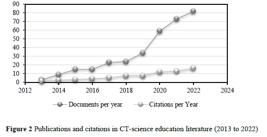
A noticeable upward trajectory has been evident since 2015, with a particularly rapid surge in interest starting from 2019. Since 2019, there has been a constant increasing trend in both publications and citations in the subject of CT in scientific education research.
The Most Prolific Authors and Countries Actively
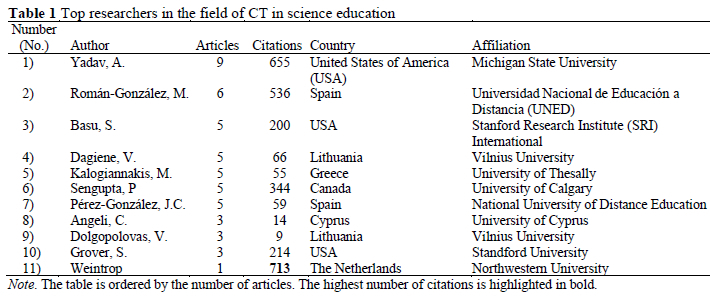
Involved in CT within the Context of Science Education and the Collaboration Patterns The study encompassed a total of 337 articles authored by 1,076 individuals hailing from 52 different countries worldwide (see Appendix A). Among these authors, 33 individuals produced single-authored articles. On average, each article had two or three co-authors, indicating a prevalent trend of collaborative contributions in this research domain. Table 1 lists the most outstanding writers, ranked by the number of publications to which they have contributed.
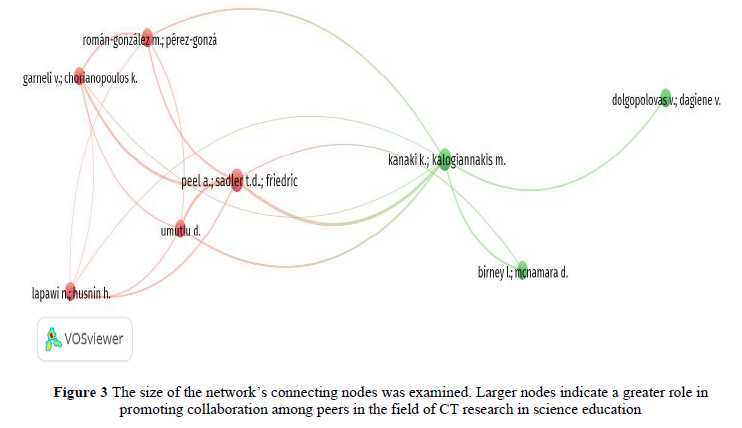
Notably, Weintrop stands out as the top author with numerous citations (one article with 713 citations), followed by Yadav (nine articles with 655 citations), Román-González (six articles with 536 citations), Sengupta (five articles with 344 citations), Basu (five articles with 200 citations), and Dagiene (five articles with 66 citations). Co-authorship analysis was also carried out in order to identify markers of scientific collaboration among authors in CT study. Yadav from the United States of America was the most active author who has written nine articles with 655 citations. Figure 3 presents the top 10 authors who have been at the forefront of research in CT within the context of science education.
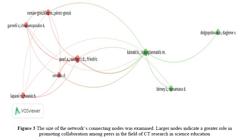
The findings of the investigation show that authors who collaborate on CT research in scientific education can be divided into two separate groups. When the size of the network's connecting nodes was examined, it became clear that each network cluster was led by a notable researcher who enabled connections with other researchers. Sadler and Roman-Gonzalez were associated with the red cluster, while Kalogiannakis and Dolgopolovas were linked to the green cluster.
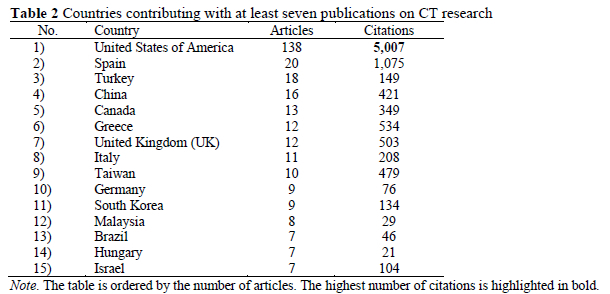
In other words, these researchers have been the most prolific in terms of co-authored articles and have played a pivotal role in promoting collaboration among their peers in the field of CT research in science education. Researchers from 52 nations around the world have actively contributed to CT research, demonstrating the international involvement in this field of study. Table 2 lists the top 15 countries that have made significant contributions to CT research, each with at least seven publications.
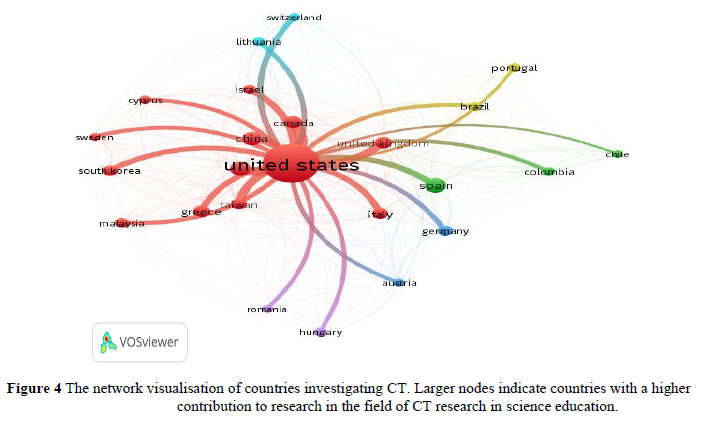
Another co-authorship study was conducted with a focus on countries, to create a network map that illustrates scientific cooperation among different nations. The resulting network map highlights the USA as a central figure in CT research in scientific education. With a total link strength of 22, the USA is also shown to be the most active collaborator with other countries in this field.
However, it is worth noting that the strength of collaboration varied depending on the countries' cluster affiliations as presented in Figure 4. For instance:
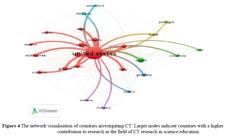
• The green cluster includes Spain, Colombia, and Chile.
• The blue cluster comprises Lithuania, Switzerland, Germany, and Austria.
• The purple cluster is dominated by Romania and Hungary.
• The red cluster demonstrates cooperation among European, South American, and Asian countries.
• In contrast, Brazil and Portugal, in the yellow cluster, appear to be separated from the other clusters, showing a lack of collaboration.
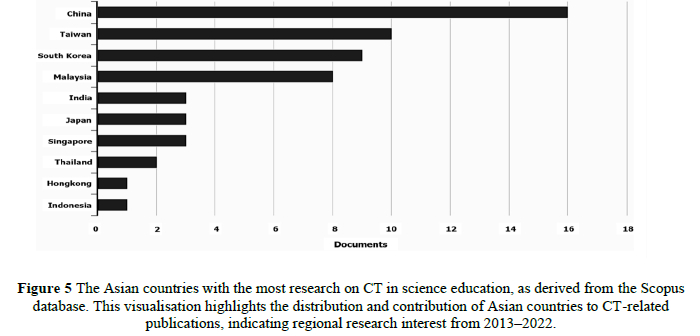
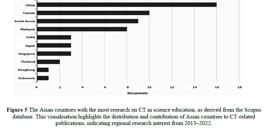
Figure 5 shows that China is the country that has conducted extensive research on CT in science education.
The Most Researched Subject and Affiliation
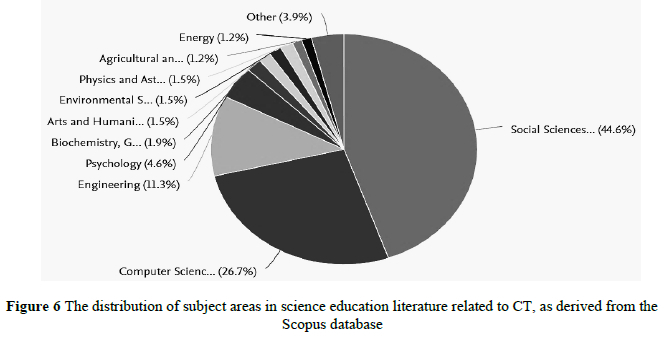
The distribution of subject/course areas for the papers in the Scopus database related to CT in science education is illustrated in Figure 6. A significant portion of the research falls within the field of social sciences (44.6%), followed by computer science (26.7%) and engineering (11.3%). It is evident that CT research in science education spans a broad spectrum of scientific subjects and attracts researchers from diverse disciplines.
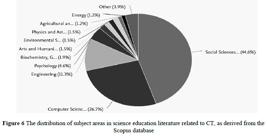
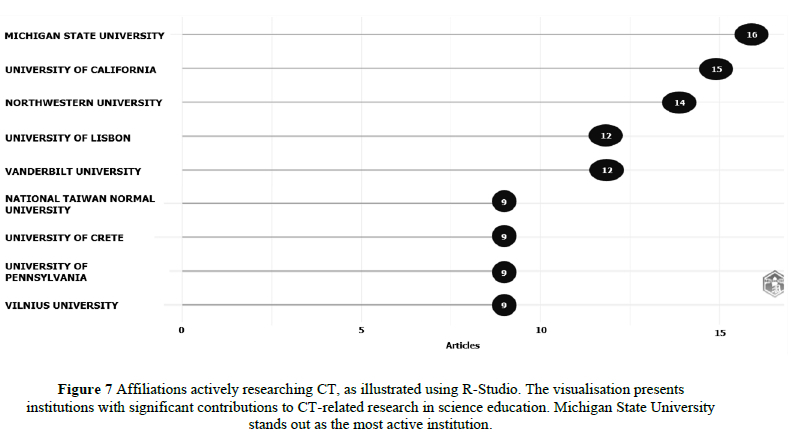
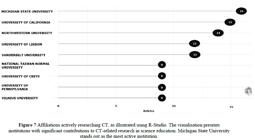
Figure 7 presents a list of institutions that have made significant contributions to the growth of research in CT in scientific education, each with a minimum of nine articles. The number of publications in the field was used to rank these institutions. These institutions have had a notable impact on the research environment in this field, showcasing their dedication and expertise in CT research within scientific education.
The Most Significant Publishers, Keywords and Terms
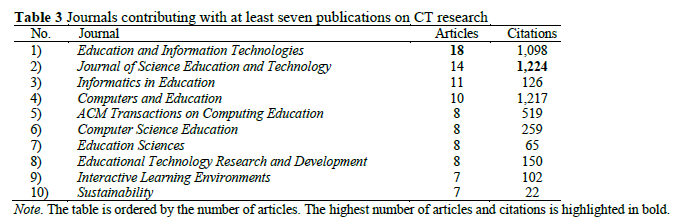
A total of 337 articles on CT in scientific education research were published in 174 journals. Table 3 lists the top 10 journals ranked by the number of articles published. Overall, CT research has been published in a wide range of journals on topics such as science, computer science, mathematics, informatics, educational technology and engineering. This wide range of articles demonstrates that CT in science education is of interest to researchers in a variety of fields.
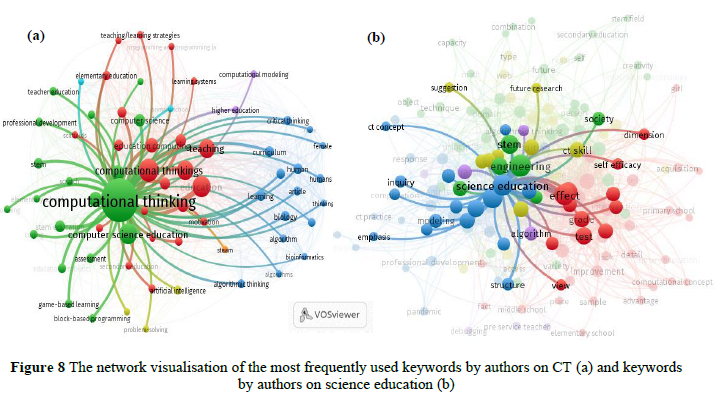
Figure 8 shows a network map displaying the distribution of 33 frequently used keywords related to CT and 18 frequently used keywords related to science education. The size of the nodes in this map shows the frequency of the occurrence of keywords, while the curved links connecting them indicate the frequency of the occurrence of "keyword."
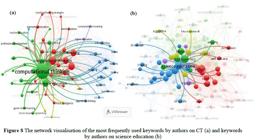
It is noteworthy that "computer science education" and "problem-solving" are closely linked and positioned near each other on the map (Figure 8), highlighting their close relationship and significance within the context of CT research in science education.
Figure 9 provides insight into the most frequently used author keywords within the CT research field. The keywords with the highest frequency of use include "computational thinking" (276 occurrences), "education" (52 occurrences), "computer science education" (49 occurrences), "students" (44 occurrences), "teaching" (41 occurrences), "curriculum" (31 occurrences), "science education" (27 occurrences), "education computing" (26 occurrences), "learning" (13 occurrences), "computation theory" (13 occurrences), and "biology" (11 occurrences). Additionally, the strength of the links between keywords reveals important associations. For example, the keywords "computer science education" and "problem-solving" exhibit a strong link strength of 141 and 94, respectively.
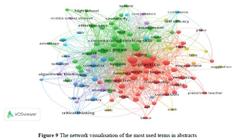
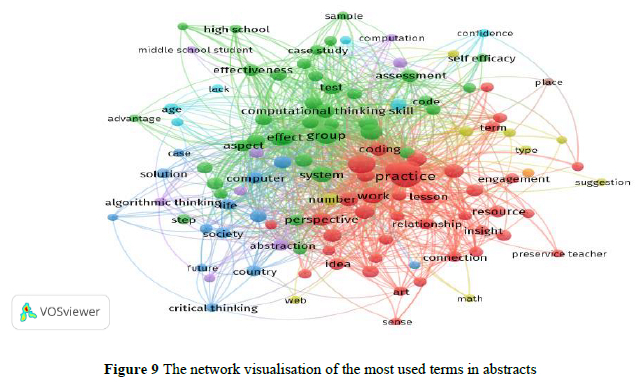
The abstract section of this study serves as a representation of the overall core of the topic. The terminology used in abstracts of the collected documents might provide valuable insight into primary issues and research purposes in the field of CT. Consequently, an examination of term frequencies in abstracts may assist in identifying the overarching themes that are prominent in CT research. To uncover these overarching themes, an analysis, "generate a textual map" was chosen from the VOSviewer menu. This analysis entailed extracting data from bibliographic database files, with a particular focus on the abstracts and the use of binary counting. Moreover, a minimum occurrence threshold of 10 was established, resulting in the identification of the 117 most significant terms. The resulting map, which illustrates the predominant themes in CT research based on the most frequently employed terms in article abstracts, is displayed in Figure 9.
The size of the nodes in Figure 9 correlates with the occurrence frequency of the terms in the abstracts. Larger nodes imply phrases with higher occurrence rates, whereas closer nodes suggest a stronger level of relatedness. Furthermore, the thickness of the connecting curved lines shows the degree of co-occurrence on the same page. Different colours are used to categorize terms into clusters. This analysis reveals that the terms from the abstracts could be categorised into three distinct clusters. The blue cluster encompasses 30 terms, the red cluster comprises 31 terms, the green cluster includes 30 terms, and the yellow cluster encompasses 26 terms. The frequency with which terms appear in the abstracts were "practice" (87 occurrences), "engineering" (58 occurrences), "group" (57 occurrences), "integration" (47 occurrences), and "work" (42 occurrences), in that order. As represented in abstracts, these terms provide insights into the primary themes and popular issues in CT research.
The findings emphasise that a substantial volume of experimental research has been conducted to evaluate skills related to CT. Many of these studies relied on traditional assessment tools, such as tests and scales, to measure CT-related skills. To deepen our understanding of students' CT proficiency, there is an opportunity for additional research that incorporates qualitative data gathered through methods like interviews, surveys, or focus groups. This qualitative data may offer more profound insight into the development of CT skills. Additionally, the analysis indicates that experimental studies, particularly those examining cause-and-effect relationships, primarily focus on the integration of technology within classroom learning. Although technology undoubtedly plays a significant role in CT education, there may be potential for exploring alternative instructional strategies and pedagogical approaches in future research.
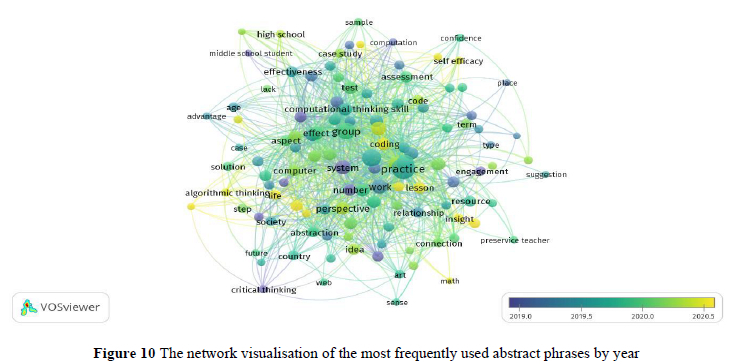
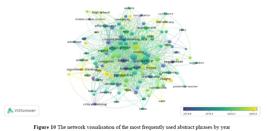
The resulting map (Figure 10) reveals that several terms, such as "abstraction", "practice", "algorithmic thinking", "computation", "critical thinking", and "perspective", were frequently used in discussions related to the definition of CT and CT skills. These terms hold a central position in defining and understanding the fundamental concepts of CT skills. Research on CT skills encompasses a broad spectrum of topics. This includes investigations into the development of CT skills, as demonstrated in the work of Palts and Pedaste (2020). The analysis of terms associated with CT in abstracts is actively discussed in the field of CT in science education (Kalelioglu, Gülbahar & Kukul, 2016). Researchers have used various terms like "CT ideas", "CT topics", "CT practices", and "CT competencies" instead of referring to them as CT skills. An overlay visualisation analysis carried out on the distribution of terms in abstracts over the years indicates that research areas connected to CT have remained consistently active. However, recent studies seem to give more prominence to empirical investigations, as shown by the concentration of terms like "self-efficacy", "life", "coding", and "lesson" in the yellowish portion of the map (Figure 10). This shift towards empirical research signifies the ongoing transformation of research trends in CT in science education.
Discussion
The current trends in publications on CT in science education research show a clear focus on CT as a problem-solving method. The majority of studies emphasise CT as a strategy for scientific problem-solving, aligning with findings from En, Karpudewan and Zaharudin (2021), Kert, Kalelioglu and Gülbahar (2019), and Yadav et al. (2016). These studies demonstrate that CT is most often linked to integrated education, where knowledge and communication skills are enhanced through computational processes. Peel, Sadler and Friedrichsen (2019) conducted a study in college biology that emphasised integrative activities by comparing the natural selection process using specific computer programs that focused on assessing algorithmic competency. Wang, Shen and Chao (2022) presented another compelling method for integrating informatics concepts across a broad range of science, technology, engineering, and mathematics (STEM) subjects. Furthermore, the research highlights a growing trend towards integrating CT with various scientific disciplines, particularly through the use of tools like physical computing, which have become more prevalent in science education compared to other disciplines like mathematics. Research also suggests that CT's role in science education extends to developing students' scientific problem-solving skills, with various programme development studies exploring new curricula and teaching methods centred around CT.
The most active authors in CT research in science education are those who have contributed significantly to the conceptualisation and development of CT integration in curricula. Research by Lamb, Vallett, Akmal and Baldwin (2014), Pevzner and Shamir (2009) and others has played a pivotal role in advancing CT as a key educational tool. In terms of geographic involvement, countries such as the USA, UK, and various European nations have lead the charge in CT research within science education. Collaboration patterns indicate a strong international network where researchers from different countries often collaborate on developing integrated education programmes and curricula. Notably, the collaboration between educators in computer science and science disciplines is highlighted, as interdisciplinary approaches have proven effective in bridging the gap between the two fields and also advancing CT in educational settings.
The most studied topics in CT research within science education include the integration of CT into various scientific subjects such as biology, chemistry, and physics. Topics such as problem-solving skills, spatial reasoning, and algorithmic thinking are frequently explored, with significant emphasis placed on the use of digital tools to enhance these skills. Institutions focusing on both computer science and science education are often at the forefront of these studies, with universities and research centres being key players in exploring the impact of CT integration. Notably, high schools and colleges are increasingly becoming centres of CT-related empirical studies, particularly those exploring how students' thinking evolves when they apply CT in science learning activities. Educators and science curricula link CT to integrated education, with knowledge and communication skills being enhanced as students participate in this computational process and produce computational products (Sengupta, Kinnebrew, Basu, Biswas & Clark, 2013; Wang et al., 2022). Spatial reasoning in science education is frequently used to help students imagine rotations, such as understanding molecular structures in chemistry or rotational dynamics in physics. Dickes, Kamarainen, Metcalf, Gün-Yildiz, Brennan, Grotzer and Dede (2019) discovered an exploitable link between these abilities and CT, with positive correlations demonstrated in studies with secondary students. Similarly, in a study at a high school using a biology unit it was found that students benefited when CT activities were directly integrated into subject lessons (Garneli & Chorianopoulos, 2018, 2019). The learning analytics tools revealed how students' thinking evolved when they incorporated computer science.
The main publishers of CT research in science education are prominent educational publishers and academic journals that focus on the intersection of technology and education. Key journals in this field include the Journal of Science Education and Technology, Computers & Education, and Education and Information Technologies. The most frequently used keywords in CT research publications were "computational thinking", "problem-solving", "integration", "STEM education", "physical computing", and "algorithmic thinking. " Common terms linked to CT in science education were "scientific problem-solving", "digital competencies", "spatial reasoning", and "interdisciplinary education." These keywords reflect the growing recognition of the importance of CT in enhancing students' problem-solving abilities and scientific inquiry skills, particularly in STEM fields.
Conclusion and Limitation
In this study we analysed a dataset of 337 journal articles indexed in the Scopus database. The primary goal was to understand the current state of science research, identify future trends, and assess the growth of CT in science education. We thoroughly examined the development trends, common characteristics, collaborative networks, and current focal points within the realm of CT in science education. The analysis of current trends in CT research within science education reveal a strong emphasis on CT as a core strategy for developing students' problem-solving, algorithmic, and spatial reasoning skills. Integration across science disciplines, especially biology, chemistry, and physics increasingly supported through digital tools and physical computing, reinforces the role of CT in fostering scientific inquiry and interdisciplinary learning.
Michigan State University and researchers such as Yadav have emerged as key contributors, with the USA leading in publication volume. Collaboration across institutions and disciplines, particularly between computer science and science education, underscores the global momentum behind CT integration. Frequently explored themes and keywords such as "STEM education", "physical computing", and "scientific problem-solving", highlight the growing impact of CT on shaping effective, future-oriented science curricula. The primary limitation concerns the dataset, which was restricted to publications indexed in the Scopus database, potentially excluding relevant articles not covered by this source. Additionally, we focused solely on published articles.
Data Availability
Data supporting the findings and conclusions are available upon request from the corresponding author.
Authors' Contributions
All authors made substantial contributions to the study and agree with the results and conclusions.
Declaration of Interest
No conflict of interest is declared by the authors.
Notesi. Published under a Creative Commons Attribution Licence.
Acknowledgements
The authors would like to express their sincere gratitude to all parties who have provided inspiration, encouragement, and support throughout the completion of this study.
References
-
Barr V & Stephenson C 2011. Bringing computational thinking to K-12: What is involved and what is the role of the computer science education community? ACM Inroads, 2(1):48-54. https://doi.org/10.1145/1929887.1929905
» https://doi.org/10.1145/1929887.1929905 -
Bers MU, Flannery L, Kazakoff ER & Sullivan A 2014. Computational thinking and tinkering: Exploration of an early childhood robotics curriculum. Computers & Education, 72:145-157. https://doi.org/10.1016/j.compedu.2013.10.020
» https://doi.org/10.1016/j.compedu.2013.10.020 -
Çoban E & Korkmaz Ö 2021. An alternative approach for measuring computational thinking: Performance-based platform. Thinking Skills and Creativity, 42:100929. https://doi.org/10.1016/j.tsc.2021.100929
» https://doi.org/10.1016/j.tsc.2021.100929 -
Dickes AC, Kamarainen A, Metcalf SJ, Gün-Yildiz S, Brennan K, Grotzer T & Dede C 2019. Scaffolding ecosystems science practice by blending immersive environments and computational modeling. British Journal of Educational Technology, 50(5):2181-2202. https://doi.org/10.1111/bjet.12806
» https://doi.org/10.1111/bjet.12806 -
Donthu N, Kumar S, Mukherjee D, Pandey N & Lim WM 2021. How to conduct a bibliometric analysis: An overview and guidelines. Journal of Business Research, 133:285-296. https://doi.org/10.1016/j.jbusres.2021.04.070
» https://doi.org/10.1016/j.jbusres.2021.04.070 -
Ehsan H, Rehmat AP & Cardella ME 2021. Computational thinking embedded in engineering design: Capturing computational thinking of children in an informal engineering design activity. International Journal of Technology and Design Education, 31(3):441-464. https://doi.org/10.1007/s10798-020-09562-5
» https://doi.org/10.1007/s10798-020-09562-5 -
En LK, Karpudewan M & Zaharudin R 2021. Computational thinking in STEM education among matriculation science students. Asia Pacific Journal of Educators and Education, 36(1): 177194. https://doi.org/10.21315/apjee2021.36.1.10
» https://doi.org/10.21315/apjee2021.36.1.10 -
Garneli V & Chorianopoulos K 2018. Programming video games and simulations in science education: Exploring computational thinking through code analysis. Interactive Learning Environments, 26(3):386-401. https://doi.org/10.1080/10494820.2017.1337036
» https://doi.org/10.1080/10494820.2017.1337036 -
Garneli V & Chorianopoulos K 2019. The effects of video game making within science content on student computational thinking skills and performance. Interactive Technology and Smart Education, 16(4):301-318. https://doi.org/10.1108/ITSE-11-2018-0097
» https://doi.org/10.1108/ITSE-11-2018-0097 -
Hooshyar D, Malva L, Yang Y, Pedaste M, Wang M & Lim H 2021. An adaptive educational computer game: Effects on students' knowledge and learning attitude in computational thinking. Computers in Human Behavior, 114:106575. https://doi.org/10.1016/j.chb.2020.106575
» https://doi.org/10.1016/j.chb.2020.106575 -
Israel-Fishelson R, Hershkovitz A, Eguíluz A, Garaizar P & Guenaga M 2021. The associations between computational thinking and creativity: The role of personal characteristics. Journal of Educational Computing Research, 58(8):1415-1447. https://doi.org/10.1177/0735633120940954
» https://doi.org/10.1177/0735633120940954 -
Kalelioglu F, Gülbahar Y & Kukul V 2016. A framework for computational thinking based on a systematic research review. Baltic Journal of Modern Computing, 4(3):583-596. Available at https://www.bjmc.lu.lv/fileadmin/user_upload/lu_portal/projekti/bjmc/Contents/4_3_15_Kalelioglu.pdf. Accessed 22 November 2023.
» https://www.bjmc.lu.lv/fileadmin/user_upload/lu_portal/projekti/bjmc/Contents/4_3_15_Kalelioglu.pdf -
Kert SB, Erkoç MF & Yeni S 2020. The effect of robotics on six graders' academic achievement, computational thinking skills and conceptual knowledge levels. Thinking Skills and Creativity, 38:100714. https://doi.org/10.1016/j.tsc.2020.100714
» https://doi.org/10.1016/j.tsc.2020.100714 -
Kert SB, Kalelioglu F & Gülbahar Y 2019. A holistic approach for computer science education in secondary schools. Informatics in Education, 18(1):131-150. https://doi.org/10.15388/infedu.2019.06
» https://doi.org/10.15388/infedu.2019.06 -
Kong SC 2019. Components and methods of evaluating Computational Thinking for fostering creative problem-solvers in senior primary school education. In SC Kong & H Abelson (eds). Computational Thinking Education. Singapore: Springer. https://doi.org/10.1007/978-981-13-6528-7_8
» https://doi.org/10.1007/978-981-13-6528-7_8 -
Lamb RL, Vallett DB, Akmal T & Baldwin K 2014. A computational modeling of student cognitive processes in science education. Computers & Education, 79:116-125. https://doi.org/10.1016/j.compedu.2014.07.014
» https://doi.org/10.1016/j.compedu.2014.07.014 -
Li Q, McNary SW & Boyd T 2023. Assessment of computational thinking: A study of preservice teachers' knowledge and beliefs. Athens Journal of Sciences, 10(2):65-82. https://doi.org/10.30958/ajs.10-2-1
» https://doi.org/10.30958/ajs.10-2-1 -
Manfra MM, Hammond TC & Coven RM 2022. Assessing computational thinking in the social studies. Theory & Research in Social Education, 50(2):255-296. https://doi.org/10.1080/00933104.2021.2003276
» https://doi.org/10.1080/00933104.2021.2003276 -
Ogegbo AA & Ramnarain U 2022. A systematic review of computational thinking in science classrooms. Studies in Science Education, 58(2):203-230. https://doi.org/10.1080/03057267.2021.1963580
» https://doi.org/10.1080/03057267.2021.1963580 -
Palts T & Pedaste M 2020. A model for developing computational thinking skills. Informatics in Education, 19(1):113-128. https://doi.org/10.15388/infedu.2020.06
» https://doi.org/10.15388/infedu.2020.06 - Papert S 1980. Mindstorms: Children, computers, and powerful ideas. New York, NY: Basic Books.
-
Park H & Shea P 2020. A review of ten-year research through co-citation analysis: Online learning, distance learning, and blended learning. Online Learning Journal, 24(2):225-244. https://doi.org/10.24059/olj.v24i2.2001
» https://doi.org/10.24059/olj.v24i2.2001 -
Peel A, Sadler TD & Friedrichsen P 2019. Learning natural selection through computational thinking: Unplugged design of algorithmic explanations. Journal of Research in Science Teaching, 56(7):983-1007. https://doi.org/10.1002/tea.21545
» https://doi.org/10.1002/tea.21545 -
Pevzner P & Shamir R 2009. Computing has changed biology-biology education must catch up. Science, 325(5940):541-542. https://doi.org/10.1126/science.1173876
» https://doi.org/10.1126/science.1173876 -
Rich KM, Yadav A & Larimore RA 2020. Teacher implementation profiles for integrating computational thinking into elementary mathematics and science instruction. Education and Information Technologies, 25(4):3161 -3188. https://doi.org/10.1007/s10639-020-10115-5
» https://doi.org/10.1007/s10639-020-10115-5 -
Sengupta P, Kinnebrew JS, Basu S, Biswas G & Clark D 2013. Integrating computational thinking with K-12 science education using agent-based computation: A theoretical framework. Education and Information Technologies, 18(2):351 -380. https://doi.org/10.1007/s10639-012-9240-x
» https://doi.org/10.1007/s10639-012-9240-x -
Sneider C, Stephenson C, Schafer B & Flick L 2014. Teacher's toolkit: Exploring the Science framework and NGSS: Computational thinking in the Science classroom. Science Scope, 38(3):10-15. https://doi.org/10.2505/4/ss14_038_03_10
» https://doi.org/10.2505/4/ss14_038_03_10 -
Sun L, Hu L, Yang W, Zhou D & Wang X 2021. STEM learning attitude predicts computational thinking skills among primary school students. Journal of Computer Assisted Learning, 37(2):346-358. https://doi.org/10.1111/jcal.12493
» https://doi.org/10.1111/jcal.12493 -
Sung W, Ahn J & Black JB 2017. Introducing computational thinking to young learners: Practicing computational perspectives through embodiment in mathematics education. Technology, Knowledge and Learning, 22(3):443-463. https://doi.org/10.1007/s10758-017-9328-x
» https://doi.org/10.1007/s10758-017-9328-x -
Tang KY, Chou TL & Tsai CC 2020. A content analysis of computational thinking research: An international publication trends and research typology. The Asia-Pacific Education Researcher, 29(1):9-19. https://doi.org/10.1007/s40299-019-00442-8
» https://doi.org/10.1007/s40299-019-00442-8 -
Tarigan CU & Tarigan WPL 2022. The effect of flipped class with project-based learning assisted by Moodle combined with reading, questioning, and answering (RQA) on 4C skills. Bioedukasi: Jurnal Pendidikan Biologi, 15(2):82-91. https://doi.org/10.20961/bioedukasi-uns.v15i2.61296
» https://doi.org/10.20961/bioedukasi-uns.v15i2.61296 -
Tarigan WPL, Sipahutar H & Harahap F 2023. The impact of an interactive digital learning module on students' academic performance and memory retention. Computers and Children, 2(2):em004. https://doi.org/10.29333/cac/13654
» https://doi.org/10.29333/cac/13654 -
Tekdal M 2021. Trends and development in research on computational thinking. Education and Information Technologies, 26(5):6499-6529. https://doi.org/10.1007/s10639-021-10617-w
» https://doi.org/10.1007/s10639-021-10617-w -
Voogt J, Fisser P, Good J, Mishra P & Yadav A 2015. Computational thinking in compulsory education: Towards an agenda for research and practice. Education and Information Technologies, 20(4):715-728. https://doi.org/10.1007/s10639-015-9412-6
» https://doi.org/10.1007/s10639-015-9412-6 -
Wang C, Shen J & Chao J 2022. Integrating computational thinking in STEM education: A literature review. International Journal of Science and Mathematics Education, 20(8): 1949-1972. https://doi.org/10.1007/s10763-021-10227-5
» https://doi.org/10.1007/s10763-021-10227-5 -
Wei X, Lin L, Meng N, Tan W, Kong SC & Kinshuk 2021. The effectiveness of partial pair programming on elementary school students' Computational Thinking skills and self-efficacy. Computers & Education, 160:104023. https://doi.org/10.1016/j.compedu.2020.104023
» https://doi.org/10.1016/j.compedu.2020.104023 -
Wing JM 2006. Computational thinking. Communications of the ACM, 49(3):33-35. https://doi.org/10.1145/1118178.1118215
» https://doi.org/10.1145/1118178.1118215 -
Wing JM 2008. Computational thinking and thinking about computing. Philosophical Transactions of the Royal Society A: Mathematical, Physical and Engineering Sciences, 366(1881):3717-3725. https://doi.org/10.1098/rsta.2008.0118
» https://doi.org/10.1098/rsta.2008.0118 -
Yadav A, Hong H & Stephenson C 2016. Computational thinking for all: Pedagogical approaches to embedding 21st century problem solving in K-12 classrooms. TechTrends, 60(6):565-568. https://doi.org/10.1007/s11528-016-0087-7
» https://doi.org/10.1007/s11528-016-0087-7 -
Yadav A, Krist C, Good J & Caeli EN 2018. Computational thinking in elementary classrooms: Measuring teacher understanding of computational ideas for teaching science. Computer Science Education, 28(4):371-400. https://doi.org/10.1080/08993408.2018.1560550
» https://doi.org/10.1080/08993408.2018.1560550
Revised: 22 March 2025
Accepted: 26 June 2025
Published: 31 December 2025