The outcome of newborns born through grade 3 meconium-stained amniotic fluid in a regional hospital in Durban, KwaZulu-Natal
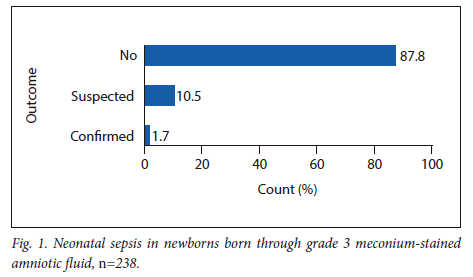
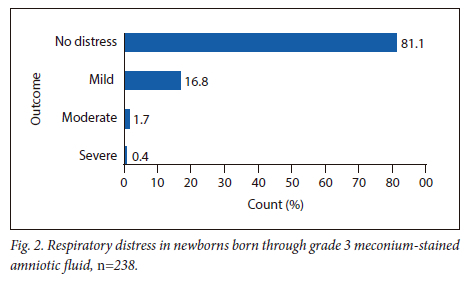
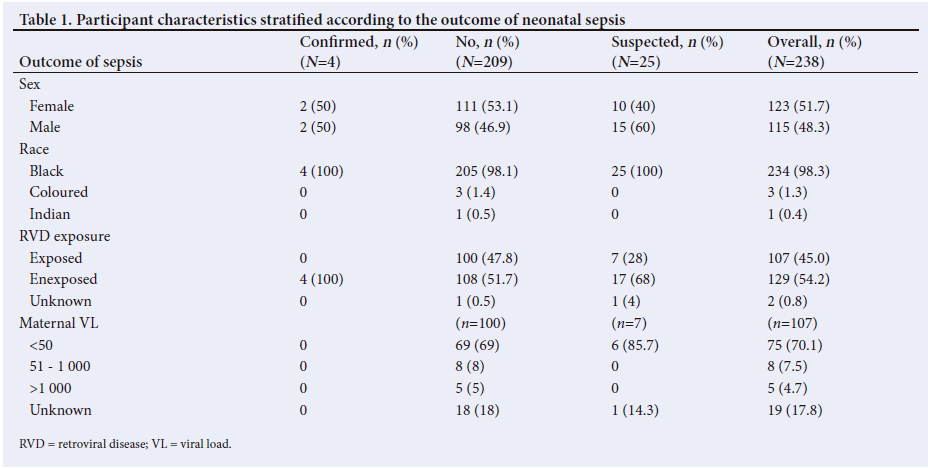
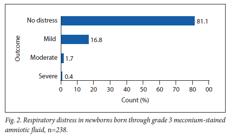
BACKGROUND. Meconium-stained amniotic fluid (MSAF) may reflect normal fetal gut maturation or may indicate fetal compromise. Protocols on the management of newborns with grade 3 MSAF exposure who do not require immediate resuscitation at birth, are required. OBJECTIVES. To determine the outcomes of newborns born through grade 3 MSAF. METHODS. A retrospective chart review was conducted at King Edward VIII Hospital (KEH) in Durban, KwaZulu-Natal (KZN), South Africa (SA) from 1 January to 31 December 2018. Data were collected from 238 newborns born through grade 3 MSAF to determine the incidence of neonatal sepsis, respiratory complications and neurological complications associated with grade 3 MSAF exposure. Descriptive statistics were used. RESULT. Neonatal sepsis was suspected in 10.5% of the grade 3 MSAF-exposed newborns and confirmed in 1.7% of the cases. Respiratory distress occurred in 18.9% of newborns, with 9.2% requiring supplementary oxygen. Neurological complications occurred in 2.9% of grade 3 MSAF- exposed newborns and 2.2% of newborns complicated with seizures CONCLUSION. There was a low rate of neonatal sepsis, respiratory distress, neurological complications and perinatal asphyxia in newborns exposed to grade 3 MSAF. Neonates who are stable at birth can be observed in the postnatal ward for a short period after birth before discharge.
South African Journal of Child Health
 Thumbnail
 Thumbnail