An audit of the management of oesophageal stricture in children in Durban, KwaZulu-Natal Province, South Africa
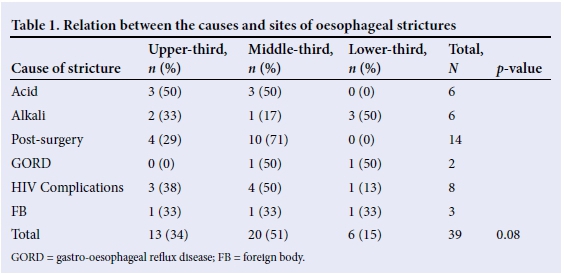
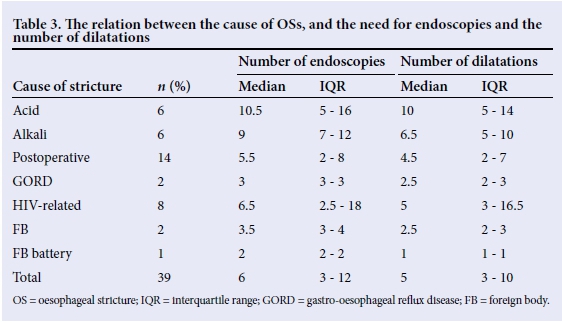
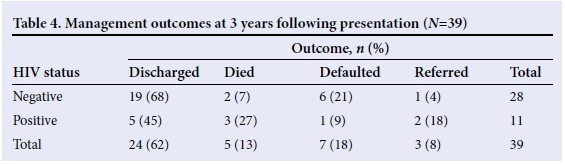
OBJECTIVE. To determine the outcome of the endoscopic management of oesophageal strictures (OSs) of varying aetiology in children in a tertiary centre. METHODS. A retrospective chart review was conducted of all children aged <14 years at department of paediatric surgery who underwent endoscopic dilatation of OSs at Inkosi Albert Luthuli Central Hospital in Durban, KwaZulu-Natal Province, South Africa, between July 2002 to December 2010. Management status at 3 years after presentation was used to define outcome. RESULTS. A total of 39 patients aged between 1 month and 13 years were reviewed, and 18 (46%) were males. Thirty-six (92.3%) were black South Africans, and 11 (28%) were HIV-infected. Among the types of strictures, postoperative (35%) and corrosive (30.8%) OSs were more prevalent than HIV-related (20.5%) OSs. The mean number of dilatations needed per patient was 7.3, and those patients with corrosive OSs needed more dilatation sessions (median (interquartile range)) than others (10 (5 - 14) v. 6.5 (5 - 10)). Out of 287 attempted dilatations, oesophageal perforations occurred in 8 (2.8%) cases. Mitomycin C was applied topically in 4 (10.3%) patients, with excellent results. A good response to endoscopic treatment was seen in 27 (69%) cases. The worst outcome was noted in HIV-infected patients. CONCLUSION. Endoscopic treatment of OSs in children yields good results and has a low rate of treatable complications. Patients should be treated on an individual basis, even if they have strictures of the same aetiology.
South African Journal of Child Health