Stunting factors in children aged 0 - 59 months in the Manzini Region of Eswatini: A cross-sectional analysis
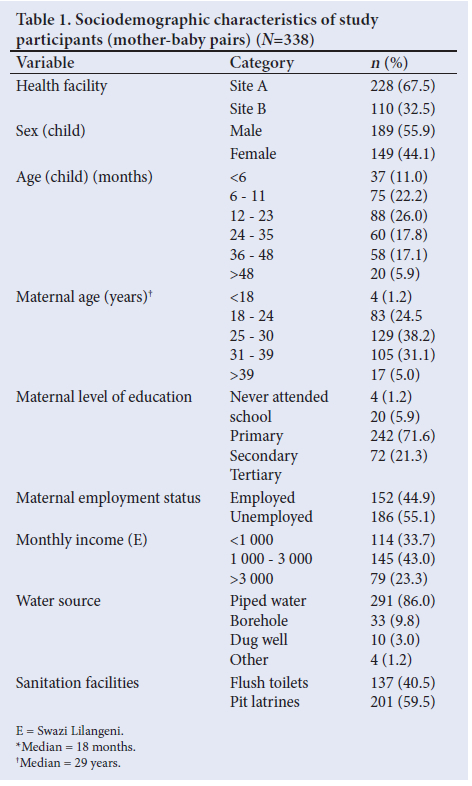
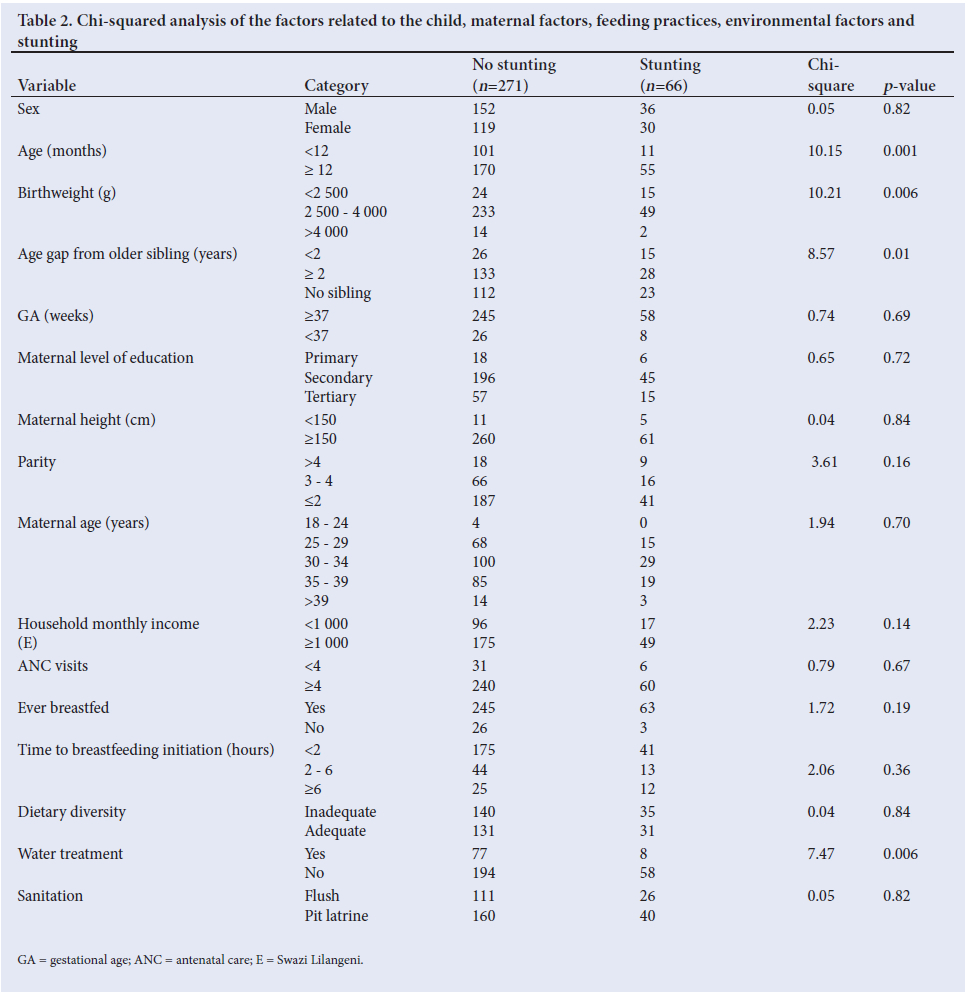
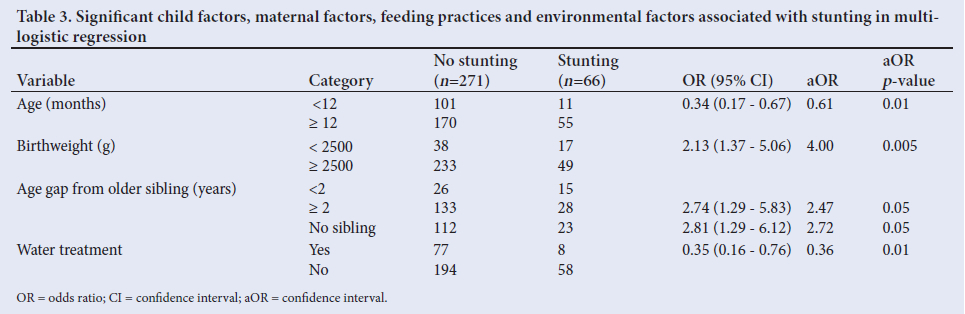
BACKGROUND. Stunting early in life can result in severe, irreversible physical and cognitive damage. Although stunting rates have declined in Eswatini, an upward trend was noted in the Manzini region in 2020. OBJECTIVES. To investigate factors associated with stunting in the Manzini region, Eswatini. METHODS. A cross-sectional study design was used. Convenience sampling was done at two child welfare clinics, and data were collected from mother-child pairs using a questionnaire and a checklist for anthropometric measurements. A multivariable logistic regression model estimated factors associated with stunting, reporting adjusted odds ratio (aOR) significant at p<0.05. RESULTS. Of 338 mother-baby pairs, the median (interquartile rane) age of the mothers was 29 (25 - 34) years and 18 (10 - 34) months for the children. Approximately a fifth of the children (n=66; 19.6%; 95% CI 15.5 - 24.3) were stunted. On multivariate analysis, predictors of stunting were children with a birthweight of less than 2 500 g (aOR 4.00; 95% CI 0.137 - 5.060; p=0.005, child age of >12 months (aOR 0.61; 95% CI 0.17 - 0.67 (p=0.01)) and an age gap of less than 2 years with the older sibling (OR 2.47; CI 1.29 - 6.12 (p=0.05)). Those who consumed treated water (aOR 0.36; 95% CI 0.16 - 0.76 (p=0.010)) also had significantly lower odds of stunting. CONCLUSION. Although the prevalence of stunting is lower than previously reported, it remains high. Low birthweight, age over 12 months, age gap of less than 2 years with older siblings and drinking untreated water were associated with stunting in Manzini. These findings highlight the need to prioritise child nutrition support, particularly for at-risk children and improving access to clean water in the region.
Stunting; children under 5; feeding practices; environment