Effect of prophylactic phenobarbital on seizures, encephalopathy and mortality in neonates with perinatal asphyxia
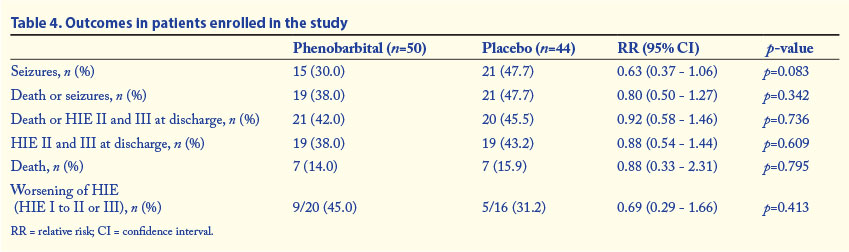
BACKGROUND: Seizures after an asphyxial insult may result in brain damage in neonates. Prophylactic phenobarbital may reduce seizures. OBJECTIVE: To determine the effect of prophylactic phenobarbital on seizures, death and neurological outcome at hospital discharge. METHODS: Neonates with base deficit >16 mmol/l and Apgar score at 5 minutes <7 or requiring resuscitation for >5 minutes at the time of birth were randomised to prophylactic phenobarbital 40 mg/kg (n=50) or placebo (controls) (n=44) within the first 6 hours of life. They were monitored for clinical seizures, hypoxic ischaemic encephalopathy (HIE) and mortality. RESULTS: Seizures developed in 30.0% of the phenobarbital group as opposed to 47.7% of the control group (relative risk 0.63; 95% confidence interval -0.37 - 1.06; p=0.083). The proportions of patients who had died and/or had HIE II or III at time of discharge from hospital were similar in the two groups (42.0% v. 45.5%). There were no differences in mortality between the two groups (14.0% v. 15.9%). CONCLUSION: In infants with asphyxia, prophylactic phenobarbital does not reduce the incidence of seizures, HIE and mortality.
South African Journal of Child Health