The clinical profile and outcome of children with West syndrome in KwaZulu-Natal Province, South Africa: A 10-year retrospective review
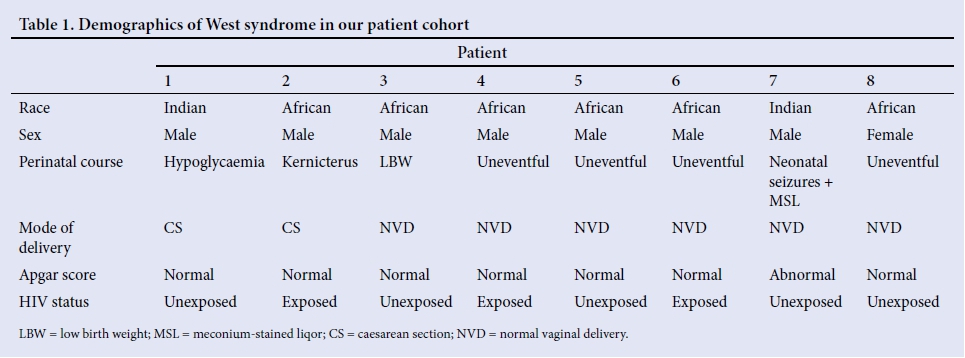
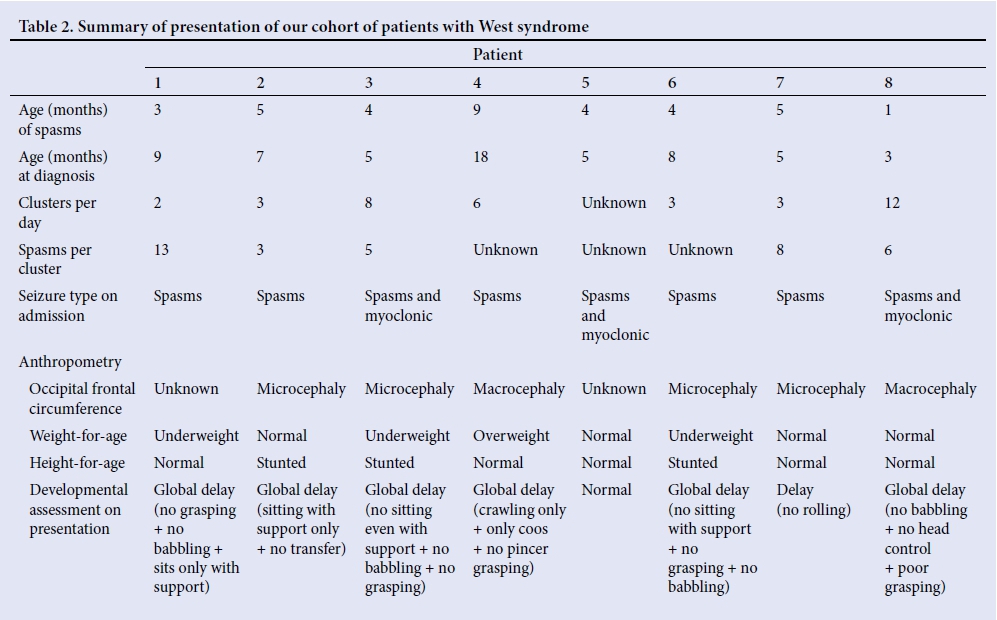
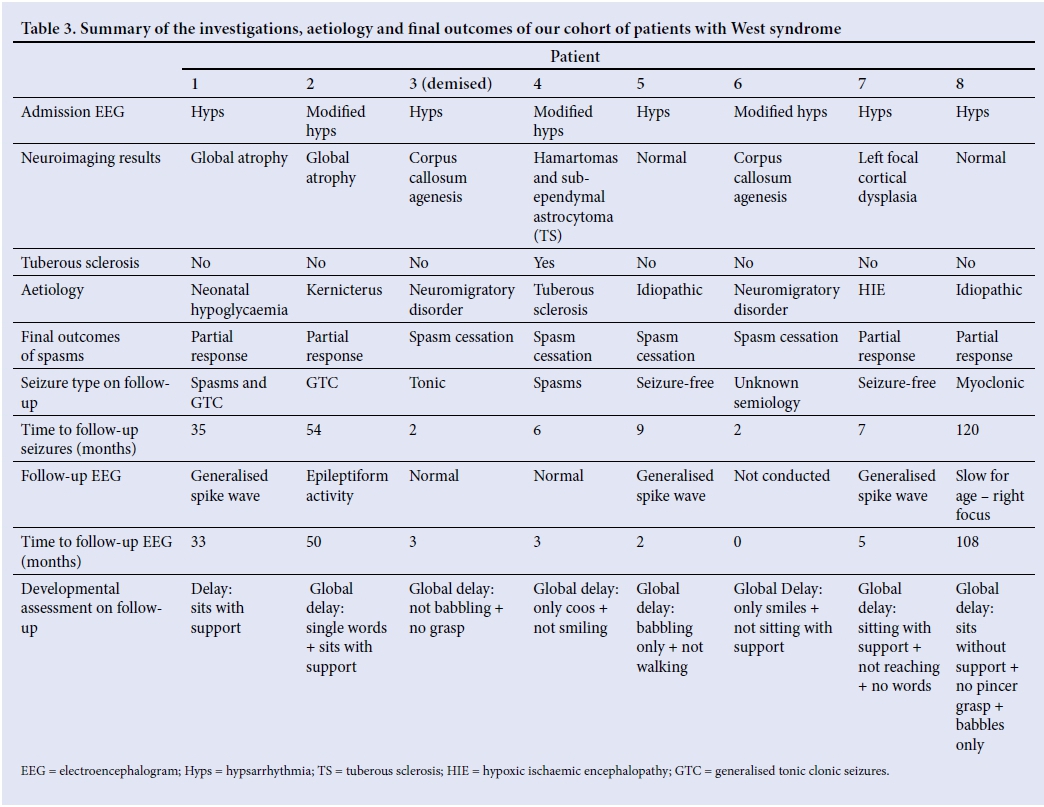
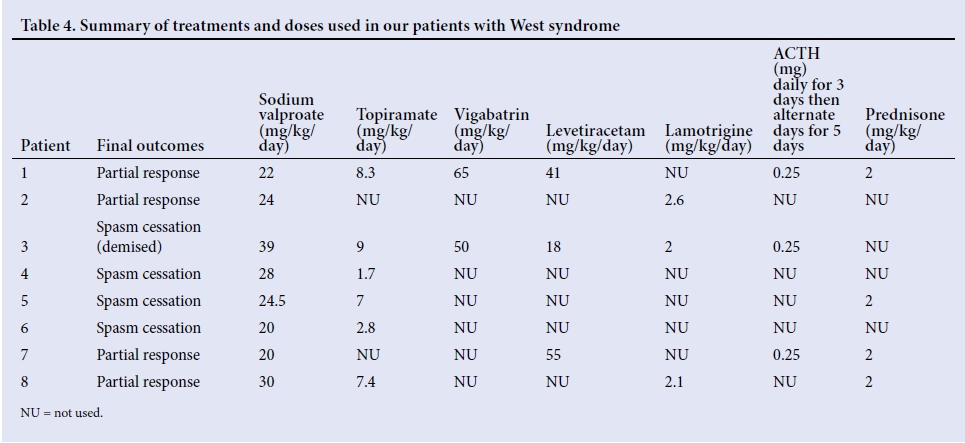
BACKGROUND. West syndrome (WS) is a rare epileptic encephalopathy of infancy. There is currently no research on the incidence or prevalence of WS in Africa. METHODS. We aimed to describe the outcome of children with WS at a quaternary-level hospital in KwaZulu-Natal, South Africa (SA). This was a retrospective chart review conducted on patients diagnosed with WS over a 10-year period. Eight children (males, n=7; African, n=6; Asian, n=2) identified with WS out of 2 206 admitted with epilepsy. The median age (range) at diagnosis was 7.5 (1 - 9) months. The average time between onset of epileptic spasms and diagnosis was 3.1 months. RESULTS. Six patients had abnormal neuroimaging (atrophy (n=2); corpus callosum agenesis (n=2); tuberous sclerosis (n=1); focal dysplasia (n=1)). Drug management included sodium valproate (n=8), topiramate (n=7) and levetiracetam (n=3). Subsequent definitive treatment was intramuscular adrenocorticotrophic hormone (n=3), vigabatrin (n=2) and oral prednisone (n=4). Four (50%) patients had complete seizure remission (neuromigratory disorder (n=2); tuberous sclerosis (n=1); and idiopathic (n=1)) and 4 had partial remission (neonatal complications (n=3); idiopathic (n=1)). DISCUSSION. Most of our patients had symptomatic WS, with 50% remission on treatment. Outcomes were poorer in our study when compared with those in published data. CONCLUSION. Further collaborative studies are still needed to evaluate the true impact and prevalence of WS in SA.
South African Journal of Child Health