Internipple measurements in Indian neonates
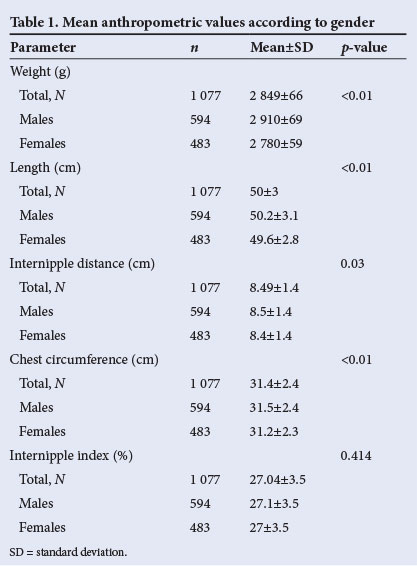
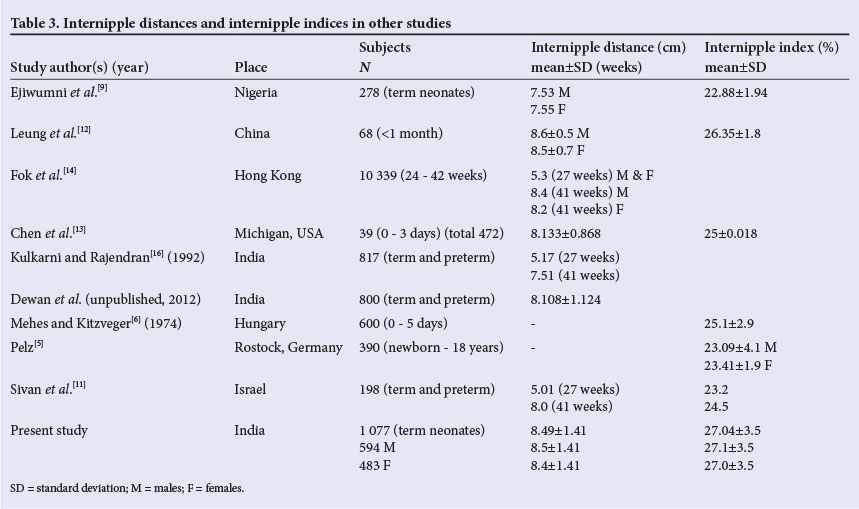
BACKGROUND: Anthropometric parameters such as the distance between the nipples and the internipple index are important signs of some genetic disorders. Indian data on these measurements are scarce. OBJECTIVES: To determine internipple distance and the internipple index and their correlation with gender, birth weight, length, chest circumference and gestational age in term Indian newborns. METHODS: Internipple distance was measured and the internipple index was calculated in 1 077 full-term newborn infants of both genders within 72 hours of birth at a tertiary care hospital in North India. The chest circumference was measured and the internipple index was calculated. Values for male and female infants were compared and correlated with weight, length, chest circumference and gestational age. RESULTS: The mean internipple distance (± standard deviation) was 8.5±1.4 cm and the mean internipple index was 27.04±3.5% in male and female infants taken together. The 3rd and 97th percentile values for internipple distances were 7.3 cm and 9.5 cm, respectively. Male infants had a larger mean internipple distance than females (p=0.03), but the two groups had a similar mean internipple index. Weight, length, chest circumference and gestation had a positive correlation with internipple distance and internipple index in both genders (p<0.05). CONCLUSION: The mean internipple distance at birth in term Indian infants was 8.5 cm. Nipples can be considered widely spaced if >9.5 cm apart (>97th percentile) and narrowly spaced if <7.3 cm apart (<3rd percentile). Internipple distance tended to be significantly greater in male neonates than in females.
South African Journal of Child Health