SKINNY - Skin thickness and needles in the young
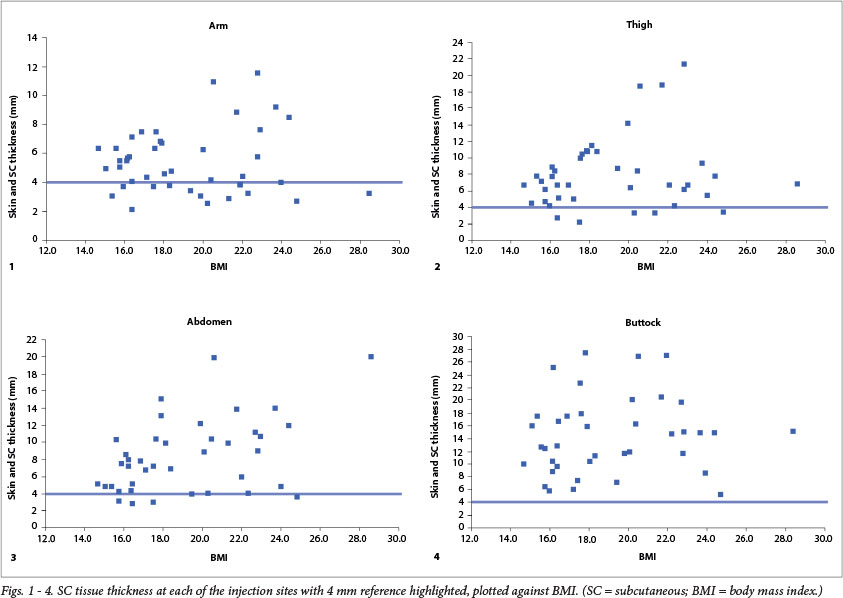
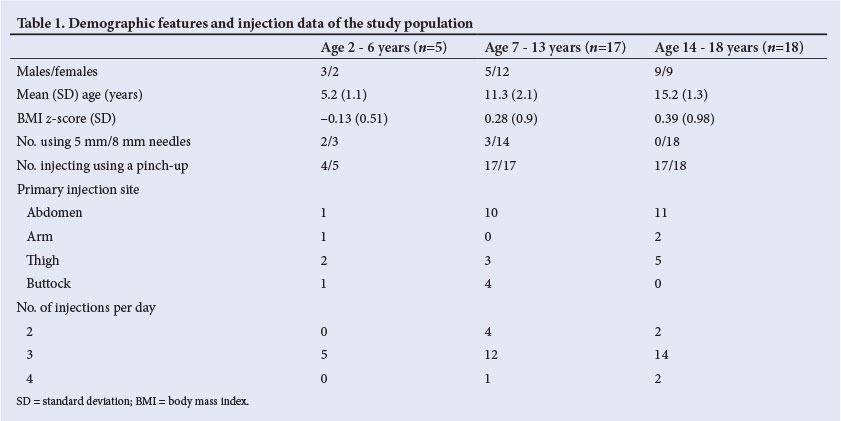
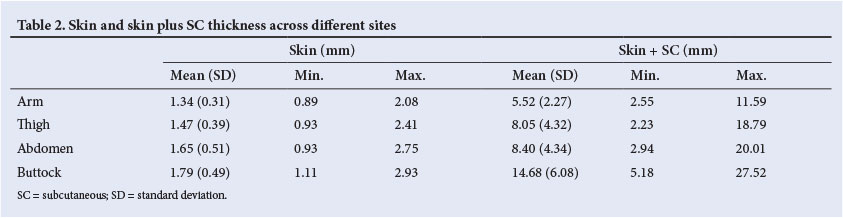
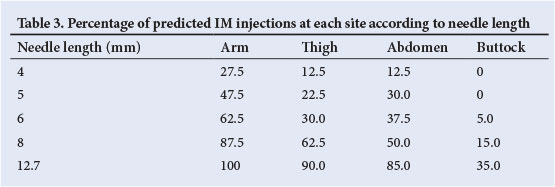
ABSTRACT BACKGROUND: Intensive diabetes management requires the use of multiple daily injections. Inappropriate insulin injection technique, inadvertent intramuscular (IM) injections, needle phobia and insulin omission negatively affect glucose control. OBJECTIVES: To document skin and skin plus subcutaneous skin thickness using high resolution ultrasound (US) in a group of children and adolescents with type 1 diabetes. In addition, injection technique, needle re-use and injection site analysis was performed. METHODS: Commonly recommended injection sites were examined using high-resolution US. Patient characteristics such as age, body mass index, frequency of injections and favoured sites were analysed. RESULTS: A total of 40 paediatric and adolescent children aged 4 years 3 months to 18 years were examined. The maximum skin thickness at any site was 2.93 mm. A high rate of IM injection was predicted with the standard 8 mm needle and was reduced but not eliminated with the use of the shortest available 4 mm needle. As the subcutaneous skin thickness increased across injection sites in the following order: arm, thigh, abdomen and buttocks, the risk of IM injection declined. CONCLUSION: Choice of needle length, injection site and injection technique are important considerations in diabetes management in the paediatric population and are likely to affect quality of glycaemic control. Shorter needles are more acceptable and reduce the risk of IM injections.
South African Journal of Child Health
 Thumbnail