Growth assessment of children and adolescents with type 1 diabetes mellitus at Steve Biko Academic Hospital in Pretoria, South Africa: A cross-sectional study of factors contributing to stunting
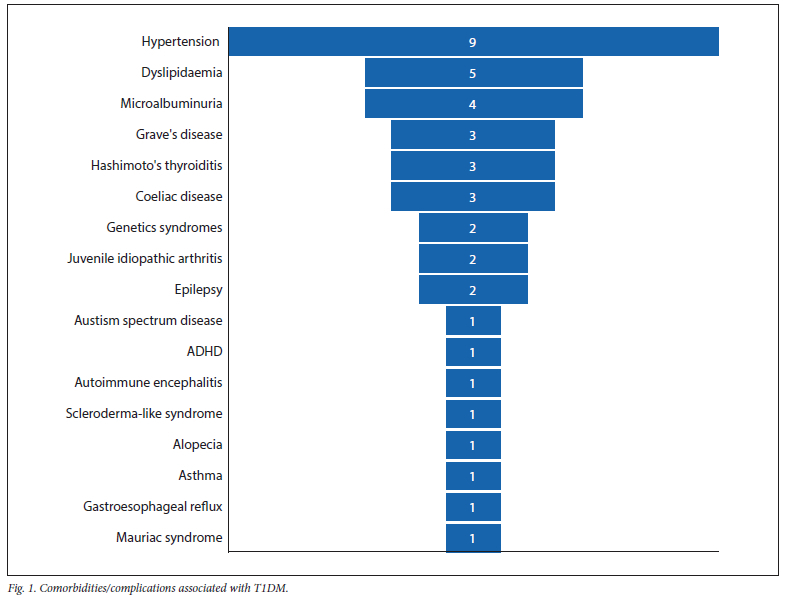
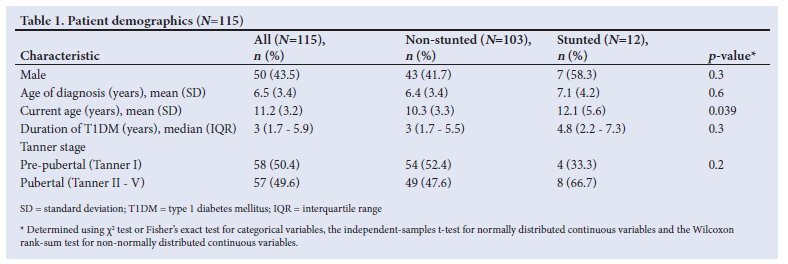
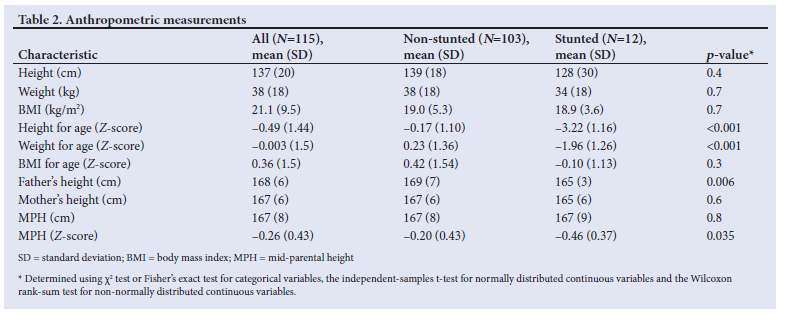
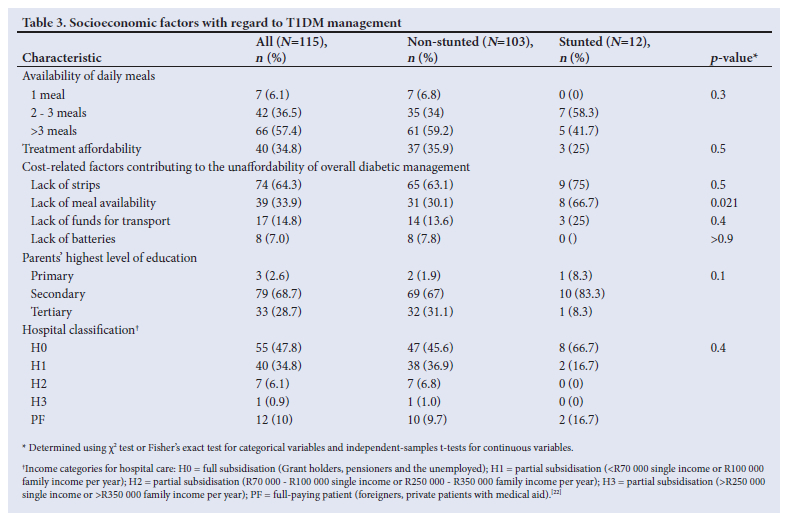
BACKGROUND: The continuous rise in the prevalence of type 1 diabetes mellitus (T1DM) places pressure on countries to increase the resources needed to manage patients adequately. Studies have documented an association between poor glycaemic control and stunting, which poses a significant health concern. Minimal data are available on the prevalence of stunting in T1DM in South Africa. OBJECTIVE: To establish the prevalence of stunting in a population of paediatric T1DM patients and determine contributing factors. METHODS: A descriptive, cross-sectional study was conducted at the Paediatric Diabetes Clinic of the Steve Biko Academic Hospital, Pretoria. Data were collected from patient files, a questionnaire and the National Health Laboratory Service database. Stunting was defined as height-for-age Z-score (HAZ)<-2. RESULTS: Of the 169 recruited patients, 115 were included (56.5% female). The prevalence of stunting was 10.4%. The median haemoglobin A1c (HbA1c) was 11.8%. Stunting was significantly associated with poor glycaemic control (p=0.008), older age (p=0.039), presence of comorbidities (p=0.026), underweight (p=<0.001) and food insecurity (p=0.021). Genetic factors were also associated with stunting, specifically lower paternal height (p=0.006) and decreased mid-parental height Z-score (p=0.035). CONCLUSION: Stunting in children and adolescents with T1DM was associated with poor glycaemic control, nutritional and socioeconomic factors, comorbidities, older age and genetic factors. The results point to a multifactorial contribution to impaired growth. To promote growth in children with T1DM, a multidisciplinary approach is essential, with a focus on optimising glycaemic control, addressing nutritional status and food insecurity, managing comorbidities and monitoring growth against genetic potential regularly.
Type 1 diabetes mellitus; stunting; growth; glycaemic control; genetic growth potential
 Thumbnail