Clinical features and lung function in HIV-infected children with chronic lung disease
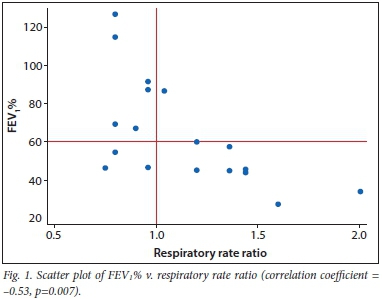
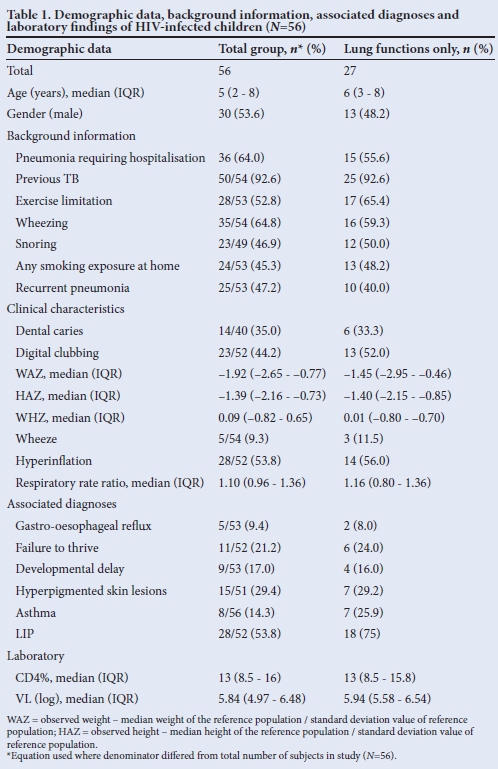
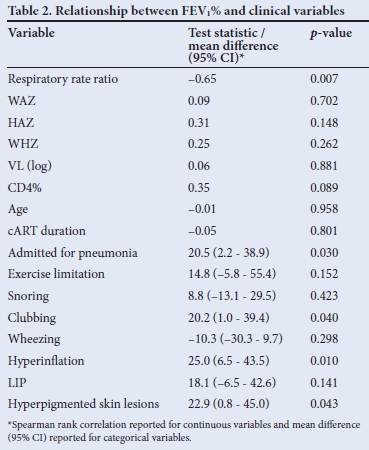
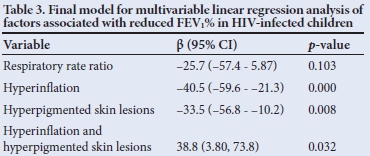
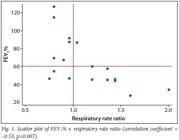
BACKGROUND: Although chronic lung disease (CLD) is commonly seen in children with advanced HIV disease, it is poorly studied. OBJECTIVES: To report on the clinical manifestations and lung function tests in children with advanced HIV disease at a tertiary care centre, and determine clinical predictors of poor lung function. METHODS: We undertook a cross-sectional study of children with advanced HIV disease in whom CLD was suspected. We undertook clinical evaluation and lung function tests, accompanied by a retrospective chart review. RESULTS: In 56 children identified, the median age was 5 (interquartile range (IQR) 2 - 8) years with equal gender ratio. The majority (93%) had been previously treated for tuberculosis and/or pneumonia (71%). The most common CLD identified was lymphocytic interstitial pneumonitis (54%). The median nadir CD4 percentage was 13% (IQR 8.5 - 16%) and the median highest reported viral load was log5.8 (IQR log5.0 - log6.5). The median duration of antiretroviral therapy was 9.8 (IQR 1.1 - 19.5) months. Lung function tests were performed in 27 (48%) children. The median forced expiratory volume in 1 second (FEV1) was 60% (IQR 45.3 - 86.3%) predicted. Previous hospitalisation, respiratory rate, digital clubbing, chest hyperinflation and hyperpigmented skin lesions were associated with a decreased FEV1 in a univariate relationship. In a multiple linear regression analysis, hyperinflation, increased respiratory rate and hyperpigmented skin lesions were associated with poor lung function (percentage FEV1. CONCLUSION: We identified useful clinical signs predictive of poor lung function in HIV-infected children with CLD, especially in resource-limited settings.
South African Journal of Child Health
 Thumbnail