Impact of the COVID-19 pandemic on neonatal services and outcomes in a tertiary hospital in Tshwane, South Africa
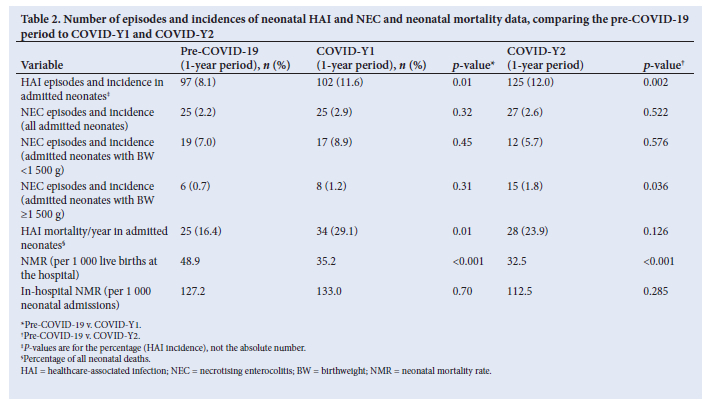
BACKGROUND. The COVID-19 pandemic's collateral damage has severely impacted global child health services. This study investigates its effects on neonatal services and outcomes at a tertiary hospital in Tshwane, South Africa. OBJECTIVE. The main aim was to assess if decreased breastfeeding, coupled with increased infant formula use owing to COVID-19-related visitation disruptions, was associated with higher incidences of healthcare-associated infections (HAI) and necrotising enterocolitis (NEC) in the hospital's neonatal unit. METHODS. As part of the Tshwane Maternal-Child COVID-19 study, we collected relevant data from three periods: pre-COVID-19, COVID-year-1 (COVID-Y1) and COVID-year-2 (COVID-Y2). RESULTS. Exclusive breastfeeding at discharge decreased from 72.9% pre-COVID-19 to 47.0% during COVID-19. Preterm formula purchases rose by 37.5% in COVID-Y1 and 25.0% in COVID-Y2, and term formula purchases increased by 77.8% in COVID-Y1. HAI incidence increased in both COVID-Y1 and COVID-Y2 compared with pre-COVID-19 (11.6% v. 8.1% and 12.0% v. 8.1%). NEC incidence significantly increased in COVID-Y2 for infants >1 500 g (1.8% v. 0.7%). CONCLUSION. This study underscores the indirect consequences of COVID-19 parental visitation restrictions, leading to infringements of breastfeeding rights and coinciding with increased HAI and NEC incidences in the hospital's neonatal unit.
Breast feeding; COVID-19; healthcare-associated infections; necrotising enterocolitis; neonatal outcomes