A comparison of clinician and caregiver assessment of functioning in patients attending a child and adolescent mental health clinic in Nigeria
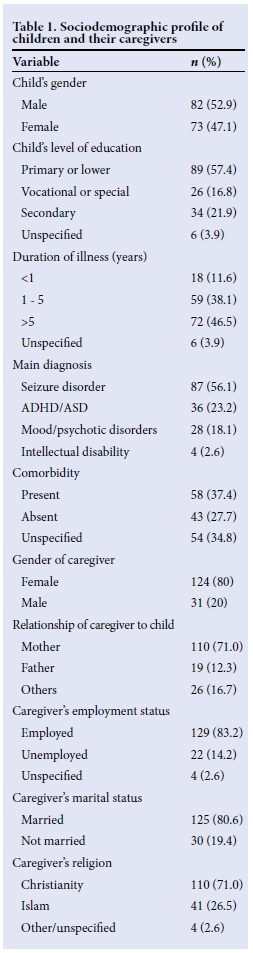
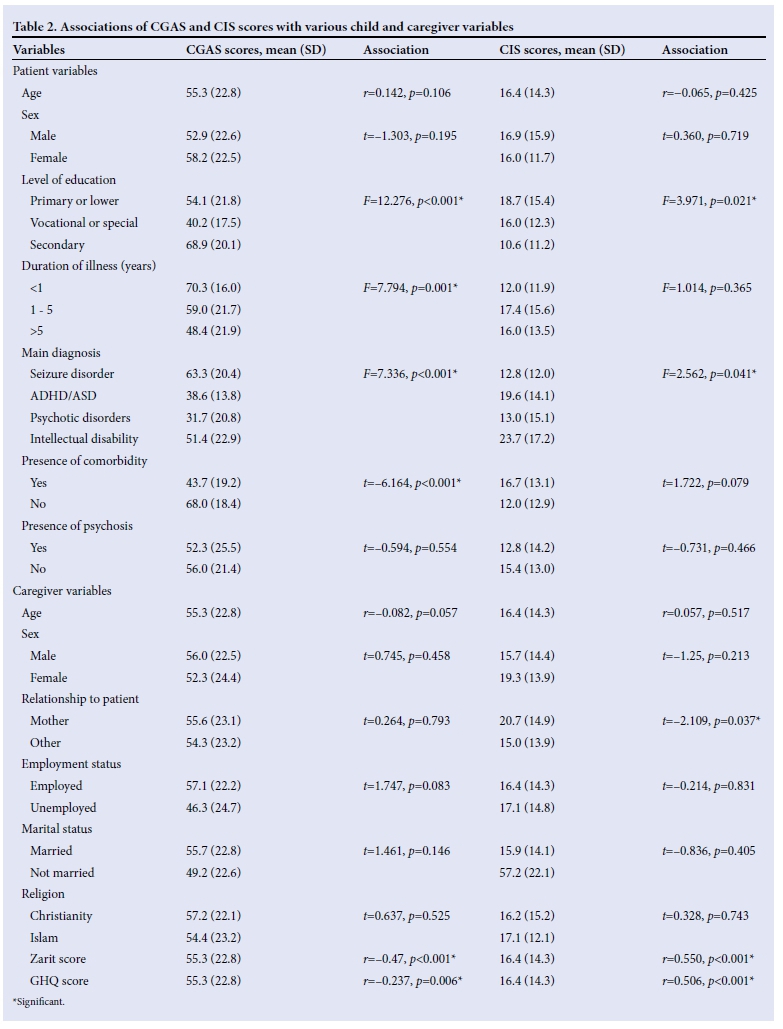
OBJECTIVE: To compare clinician and caregiver assessments of functioning and impairment among children attending a specialist mental health facility. METHODS: Caregivers of patients attending the Harvey Road Child and Adolescent Centre (N=155) were consecutively recruited over a 1-month period. The caregivers were requested to fill in a sociodemographic questionnaire, the Columbia Impairment Scale (CIS), the 12-item version of the General Health Questionnaire (GHQ-12) and the Zarit Burden Interview. Scoring on the Children's Global Assessment Scale (CGAS) was done by clinicians. RESULTS: The mean (standard deviation (SD)) age of patients and caregivers was 12.3 (4.9) years and 41.5 (8.9), respectively. Mean (SD) scores on the CGAS and CIS were 55.3 (22.8) and 16.4 (14.3), respectively, while mean scores on the Zarit Burden Interview and the GHQ were 27.9 (17.2) and 2.5 (2.6), respectively. Poorer clinician-rated functioning was associated with lower educational level of the child, a main diagnosis other than seizure disorder, longer duration of illness, and presence of comorbidity. Worse caregiver rating of impairment was equally associated with lower child education, and main diagnosis other than seizure disorder. Both CGAS and CIS scores showed significant correlation with Zarit and GHQ scores. Finally, a significant correlation was found between CGAS and CIS scores (r=-0.388, p<0.001). CONCLUSION: Children attending specialist neuropsychiatric services have functional impairment which may be associated with lower child education, and which is linked with increased caregiver burden and psychiatric morbidity.
Short Reports • S. Afr. j. child health 10
(1)
• • https://doi.org/10.7196/sajch.2016.v10i1.966 copy