Hypoglycaemia in children aged 1 month to 17 years admitted to the children's emergency room of Nnamdi Azikiwe University Teaching Hospital, Nnewi, Nigeria
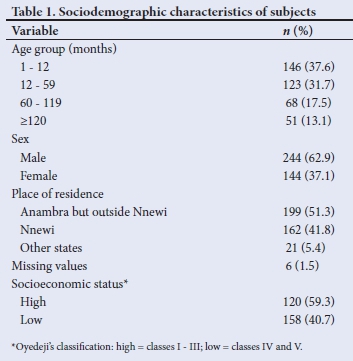
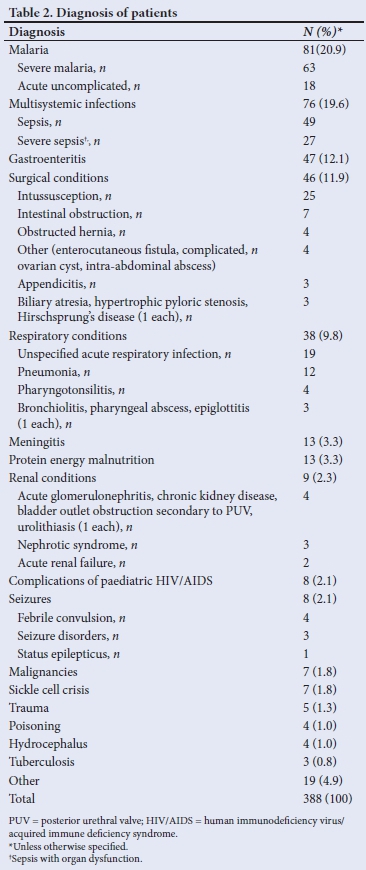
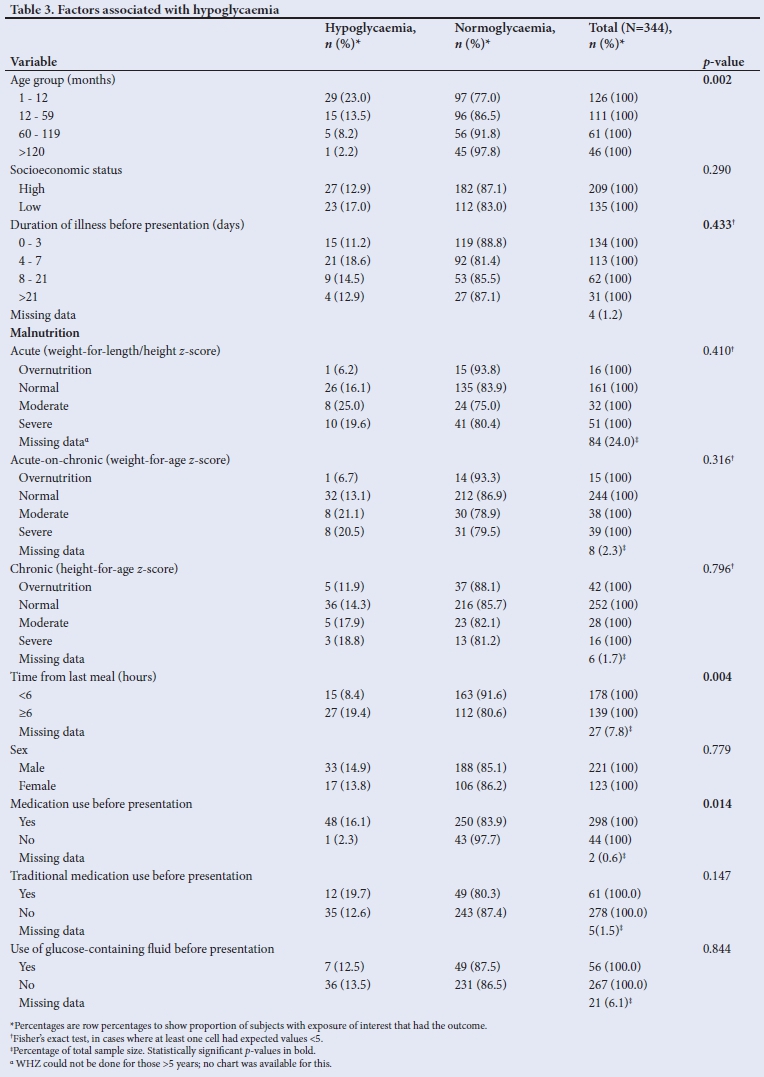
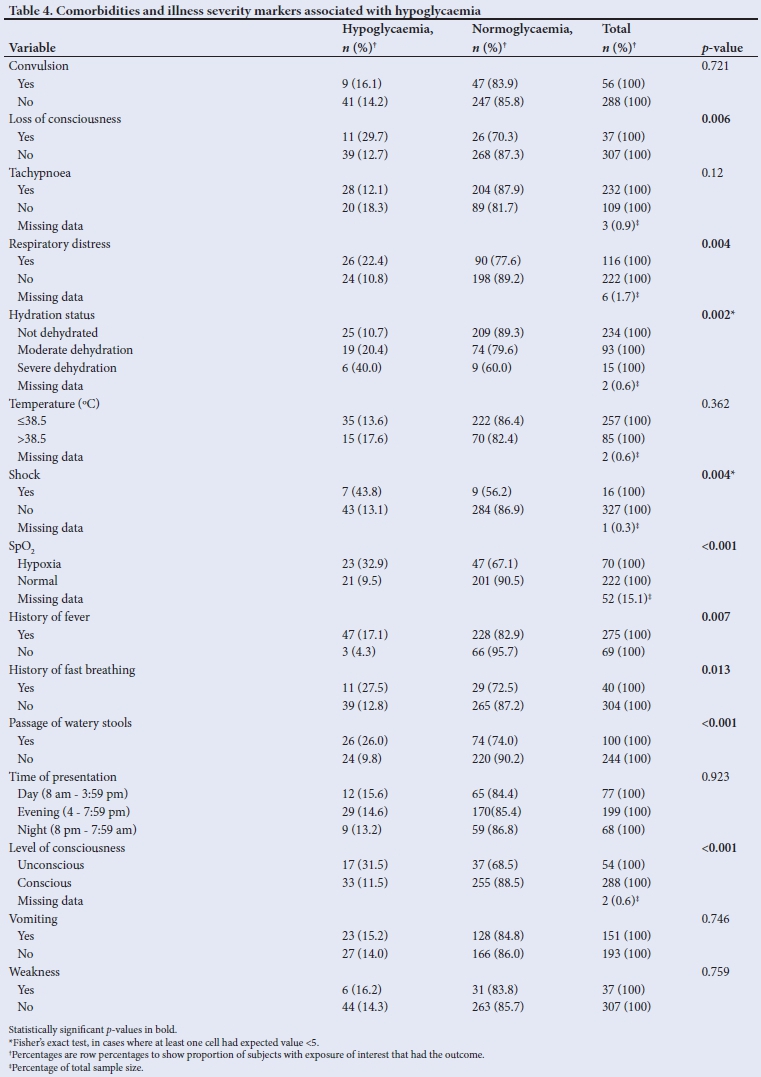
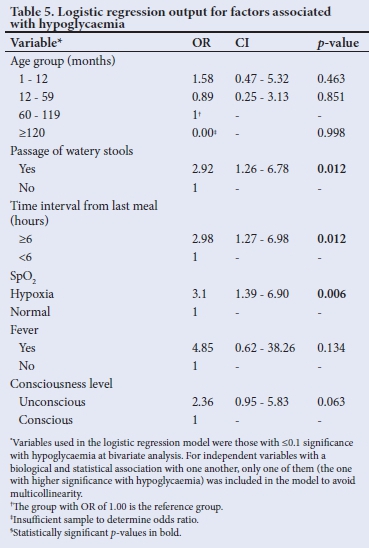
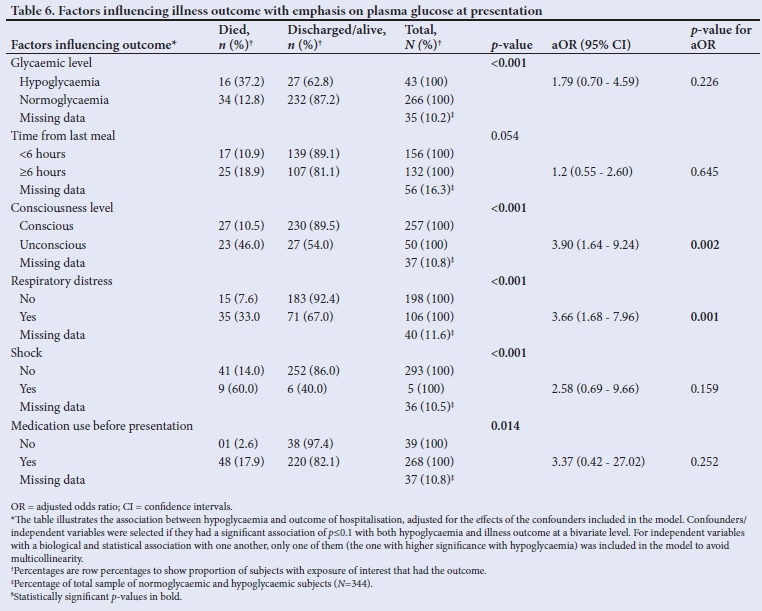
BACKGROUND: Hypoglycaemia is a common presenting feature of illness among children admitted with various conditions into the paediatric emergency roomOBJECTIVE: To determine the prevalence of hypoglycaemia among children admitted into a Nigerian teaching hospital, identify some of its associated factors and assess its relationship to patient outcomeMETHODS: In this cross-sectional study, 388 children were consecutively recruited. Their sociodemographic characteristics, clinical features and management outcome were obtained. Plasma glucose was measured using the glucose oxidase method and classified as hypoglycaemia (<3.4 mmol/L), low glycaemia (3.4 - <4.4 mmol/L) , normoglycaemia (4.4 - 7.7 mmol/L) and hyperglycaemia (>7.8 mmol/LRESULTS: Hypoglycaemia occurred in 50 (12.9%) subjects, while 55 (14.2%) had low glycaemia. At bivariate analysis, hypoglycaemia was associated with age (p=0.012), >6 hours from the last meal (p=0.004), medication use before presentation (p=0.014) and some markers of illness severity such as loss of consciousness (p<0.001), respiratory distress (p=0.004), dehydration (p=0.002), shock (p=0.004), and hypoxia (p=0.001). After logistic regression, a time > 6 hours from last meal (adjusted odds ratio (aOR) 2.98; 95% confidence interval (CI) 1.27 - 6.98), hypoxia (aOR 3.10; 95% CI 1.39 - 6.90), and passage of watery stools (aOR 2.92; 95% CI 1.26 - 6.78) were associated with hypoglycaemia. Hypoglycaemic subjects were 2.9 times more likely to die than normoglycaemic ones (p<0.001) but this association was lost at multivariable analysisCONCLUSION: Hypoglycaemia complicates common childhood illnesses and may be associated with poorer outcomes. Plasma glucose measurement and subsequent appropriate action should be core parts of the immediate management of ill children
South African Journal of Child Health