An audit of infants presenting with cholestatic jaundice at a secondary hospital in Johannesburg, South Africa
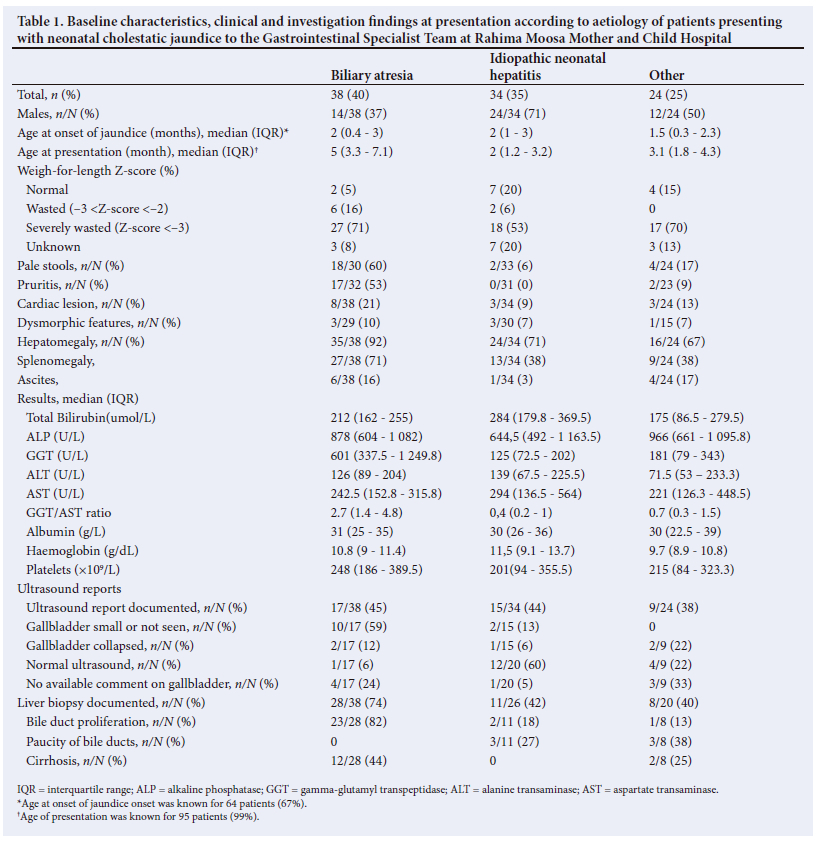
BACKGROUND. Neonatal cholestatic jaundice is a common paediatric condition with a paucity of recent local data and a notable absence of locally influenced diagnostic algorithms. OBJECTIVES. To describe the causes of cholestatic jaundice, investigations conducted and patient outcomes. METHODS. This was a retrospective file review of 96 patients presenting to the Specialist Clinic at Rahima Moosa Mother and Child Hospital in Johannesburg between 1 January 2014 and 31 December 2020. Clinical features, serum biochemistry at presentation, diagnostic investigations (haematological, radiological and histological), diagnosis and outcome were analysed during data collection. RESULTS. Ninety-six patients were included in the study. The median age of jaundice onset was at 2 months, while the median age of presentation was 3.3 months. Causes of jaundice fell into three main categories: 38 had biliary atresia (BA); 24 had another specific diagnosis; and 34 remained without an underlying diagnosis (idiopathic neonatal hepatitis). An overall mortality rate of 26% was noted at a median (interquartile range) age of 13 (5 - 24) months and it was highest in the BA group (n= 14; 56%). CONCLUSION. The evaluation of neonatal jaundice requires a wide differential and expeditious referral to optimise outcomes and avoid complications. Many patients remained undiagnosed, and the overall prognosis was poor. The authors recommend the development of a locally relevant diagnostic protocol to minimise delays in the identification, diagnosis and treatment of neonatal jaundice.
South African Journal of Child Health