Necrotising enterocolitis in infants with in-utero SARS-CoV-2 exposure in Tshwane, South Africa
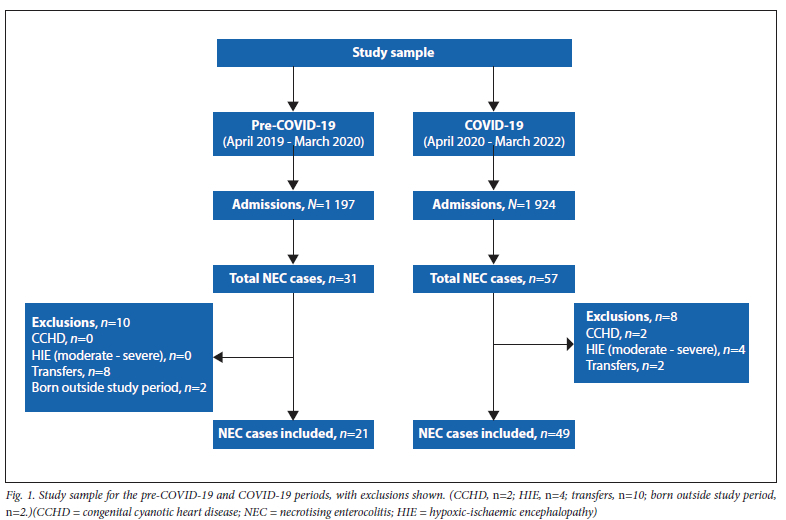
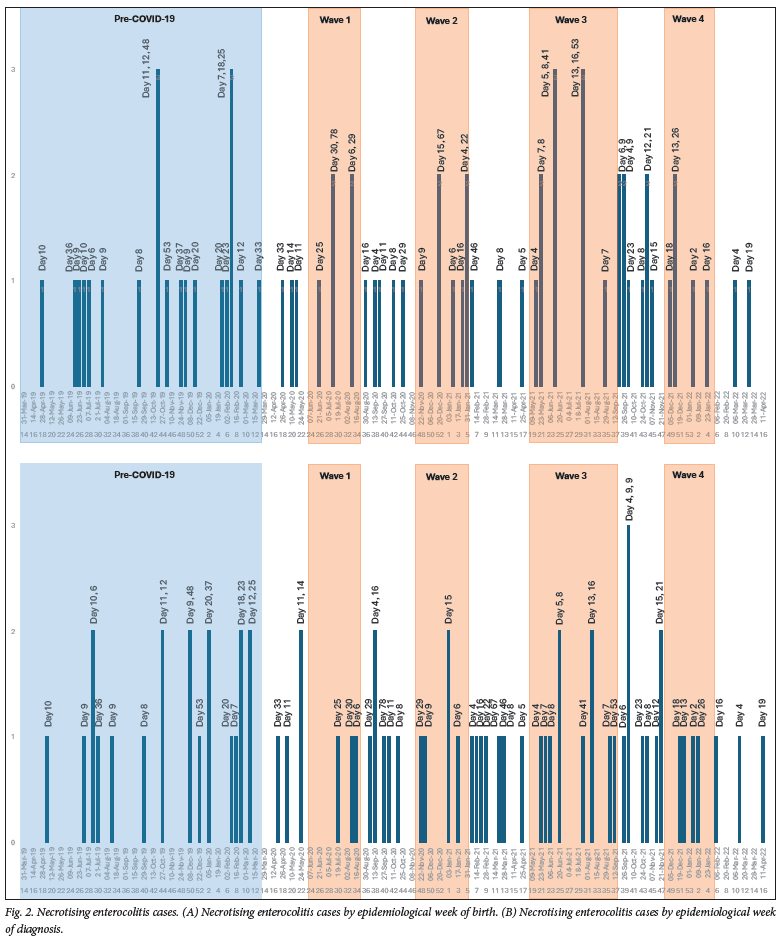
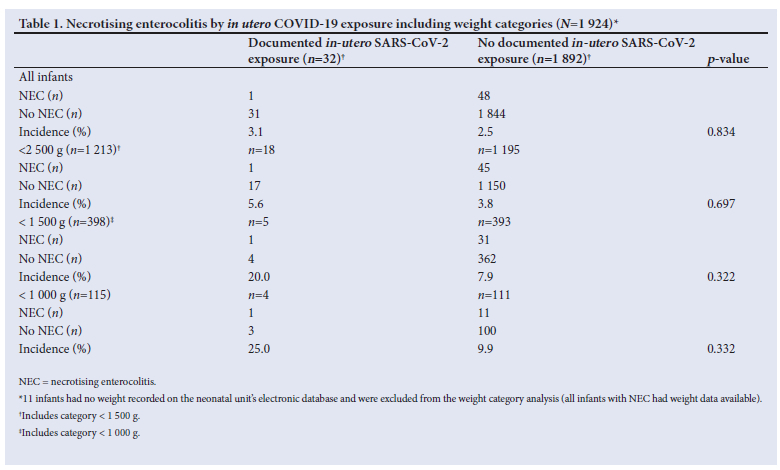
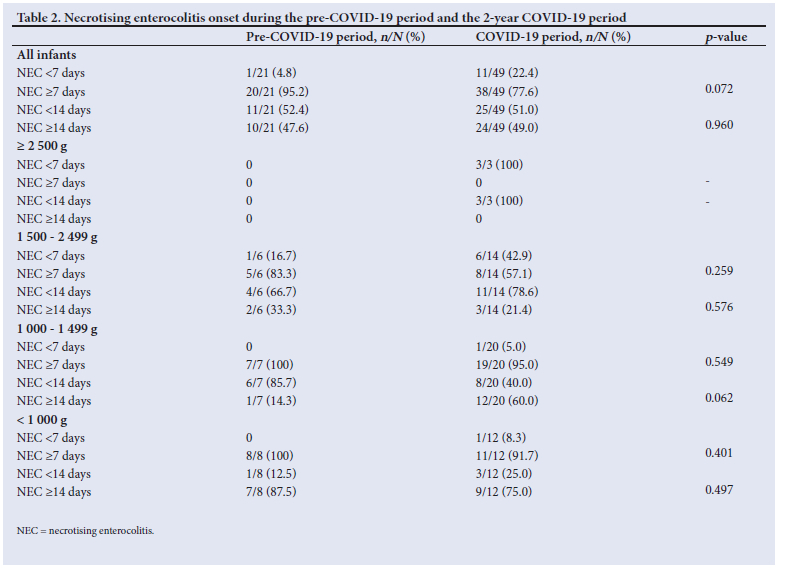
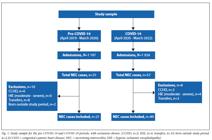
BACKGROUND: Literature suggests an association between in-utero SARS-CoV-2 exposure and necrotising enterocolitis (NEC). OBJECTIVE: To determine whether admitted infants exposed to SARS-CoV-2 in utero had a higher NEC incidence than unexposed infants; and to describe the overall incidence of NEC during the COVID-19 pandemic to explore potential associations. METHODS: The evaluation period included 1-year pre-COVID-19 (April 2019 - March 2020) and a 2-year COVID-19 period (April 2020 - March 2022). An electronic database was used to identify infants and to collect routine data. Additional databases were used to identify mothers with COVID-19 and SARS-CoV-2-exposed neonates. RESULTS: All infants exposed to SARS-CoV-2 in utero tested negative for COVID-19 before admission, indicating no vertical transmissions. Among 32 SARS-CoV-2-exposed infants, one developed NEC (incidence 3.1%), compared with 2.5% in unexposed infants (p=0.834). NEC incidence was similar across periods (1.8% v. 2.5%; p=0.147). The median day of life of NEC diagnosis was 12 days for both periods. The sex distribution of infants with NEC was similar during both periods. CONCLUSION: While this study did not demonstrate a statistically significant increase in NEC incidence during the COVID-19 pandemic, a potential association cannot be excluded, owing to the potential pathophysiological mechanisms that support this hypothesis.
COVID-19; NEC; necrotising enterocolitis
 Thumbnail
 Thumbnail