The association between urinary albumin-creatinine ratio and mortality in children with sepsis
BACKGROUND. In paediatric populations, sepsis is a major cause of admission to the paediatric intensive care unit (PICU). Microalbuminuria, as measured by the urinary albumin-to-creatinine ratio (ACR), significantly contributes to mortality rates among children with sepsis. OBJECTIVE. This study aims to investigate the association between urinary ACR and mortality in paediatric patients with sepsis. METHODS. We conducted a prospective cohort study in the PICU of Prof. Dr. RD Kandou General Hospital in Manado, Indonesia, from March to October 2024. Paediatric sepsis was assessed using the Phoenix Score. RESULTS. A total of 60 patients were enrolled in the study, with a median age of 108 months (IQR 48 - 168 months). Urinary ACR was significantly associated with ventilator use (p=0.035). The severity of sepsis showed a strong and significant correlation with urinary ACR (r=0.561; p<0.001). The median (interquartile range) urinary ACR in deceased patients was 100.78 (44.84 - 1669.82) mg/g, compared with 30.72 (10.33 - 92.48) mg/g in survivors (p=0.023). The optimal urinary ACR cut-off value for predicting mortality was 38.75, with a sensitivity of 84.6% and specificity of 61.7% (AUC=0.71; p=0.023). Urinary ACR was significantly associated with ventilator use (OR (95% CI) 2.35 (1.15 - 4.79); p=0.019), sepsis severity (OR (95% CI) 0.30 (0.08 - 0.52), p=0.007), and patient mortality (OR (95% CI) 2.32 (1.15 - 4.68); p=0.018). CONCLUSION. Elevated urinary ACR was associated with increased mortality risk in children with sepsis.
Phoenix score; sepsis; urinary albumin-creatinine ratio
The association between urinary albumin-creatinine ratio and mortality in children with sepsis
N H RampenganI; E R MatheosII; A UmbohIII; V UmbohII
IDoctor of Philosophy); Department of Pediatrics, Faculty of Medicine, Sam Ratulangi University, Manado, Indonesia
IIDoctor of Medicine); Department of Pediatrics, Faculty of Medicine, Sam Ratulangi University, Manado, Indonesia
IIIProfessor); Department of Pediatrics, Faculty of Medicine, Sam Ratulangi University, Manado, Indonesia
BACKGROUND. In paediatric populations, sepsis is a major cause of admission to the paediatric intensive care unit (PICU). Microalbuminuria, as measured by the urinary albumin-to-creatinine ratio (ACR), significantly contributes to mortality rates among children with sepsis.
OBJECTIVE. This study aims to investigate the association between urinary ACR and mortality in paediatric patients with sepsis.
METHODS. We conducted a prospective cohort study in the PICU of Prof. Dr. RD Kandou General Hospital in Manado, Indonesia, from March to October 2024. Paediatric sepsis was assessed using the Phoenix Score.
RESULTS. A total of 60 patients were enrolled in the study, with a median age of 108 months (IQR 48 - 168 months). Urinary ACR was significantly associated with ventilator use (p=0.035). The severity of sepsis showed a strong and significant correlation with urinary ACR (r=0.561; p<0.001). The median (interquartile range) urinary ACR in deceased patients was 100.78 (44.84 - 1669.82) mg/g, compared with 30.72 (10.33 - 92.48) mg/g in survivors (p=0.023). The optimal urinary ACR cut-off value for predicting mortality was 38.75, with a sensitivity of 84.6% and specificity of 61.7% (AUC=0.71; p=0.023). Urinary ACR was significantly associated with ventilator use (OR (95% CI) 2.35 (1.15 - 4.79); p=0.019), sepsis severity (OR (95% CI) 0.30 (0.08 - 0.52), p=0.007), and patient mortality (OR (95% CI) 2.32 (1.15 - 4.68); p=0.018).
CONCLUSION. Elevated urinary ACR was associated with increased mortality risk in children with sepsis.
Keywords: Phoenix score; sepsis; urinary albumin-creatinine ratio.
Sepsis is defined as organ dysfunction caused by a dysregulated immune response to infection and remains a leading cause of morbidity and mortality in critically ill children.[1] In Indonesia, respiratory tract infections account for the majority of sepsis cases, with the highest incidence observed among neonates and infants under one year of age compared with older children aged 1 - 18 years. Severe paediatric sepsis remains a significant indication for admission to the paediatric intensive care unit (PICU).[2] One systemic manifestation commonly encountered in critically ill children is microalbuminuria, which has been reported in ~78.8% of patients admitted to the PICU.[3] The presence of microalbuminuria has been associated with postoperative pulmonary complications, severity of trauma and systemic inflammatory conditions such as ischaemia-reperfusion injury, pancreatitis, meningitis, anaphylactic shock and inflammatory bowel disease.[4]
Microalbuminuria occurs due to endothelial membrane dysfunction and increased capillary permeability induced by inflammatory responses in critically ill patients, resulting in urinary albumin excretion. In this context, the urinary albumin-to-creatinine ratio (ACR) has become a widely used marker due to its simplicity, practicality, and non-invasive nature.[5] Originally used as a predictor of kidney and cardiovascular diseases, ACR has expanded in utility as a biomarker of systemic inflammation and as a prognostic indicator for mortality and treatment response in PICU settings. Given the clinical importance of predicting patient outcomes in intensive care, the ACR provides a feasible and reliable tool to guide clinical decision-making in paediatric critical care.[6]
Several studies have demonstrated the prognostic utility of ACR. Sachdev et al.[7] reported that ACR had a sensitivity of 86.2% and a negative predictive value of 91.7% in predicting adverse outcomes among patients in the PICU. ACR values exceeding 102 mg/g were significantly associated with increased mortality during the first 24 hours of hospitalisation. Recent studies have consistently demonstrated considerably higher ACR levels in non-survivors compared with survivors, underscoring the prognostic relevance of this finding.[3,6]
Furthermore, ACR correlates with clinical severity in paediatric sepsis. Sachdev et al.[7] (2020) observed a progressive increase in ACR in parallel with worsening sepsis severity and microcirculatory dysfunction.[7] Other studies have found that elevated ACR levels are significantly associated with the need for inotropic support, mechanical ventilation, and a prolonged hospital and PICU length of stay.[8] ACR has also demonstrated a good correlation with established scoring systems, such as the Paediatric Risk of Mortality (PRISM) and the Paediatric Logistic Organ Dysfunction (PELOD) scores, which are widely used to stratify risk and assess the severity of organ dysfunction in critically ill children.[7]
In Indonesia, studies investigating the prognostic value of urinary ACR in predicting morbidity and mortality among critically ill paediatric patients admitted to the paediatric intensive care unit (PICU) are still limited. Given its potential as a simple, non-invasive prognostic marker, further research is warranted to explore the association between ACR and clinical outcomes in paediatric sepsis. Such studies are essential to support clinical decision-making and improve the prognosis and management of children with sepsis in intensive care settings. This study aims to investigate the association between urinary ACR and mortality in paediatric patients with sepsis.
Methods
Study design
This investigation was conducted as a prospective cohort study in the Paediatric Intensive Care Unit (PICU) of Prof. Dr. RD Kandou Central Hospital, Manado, Indonesia, between March 2024 and October 2024. The study was approved by the Research Ethics
Committee of RD Kandou Hospital (ref. no. 222/EC/KEPK-KANDOU/XI/2024). The investigator was obliged to adhere to all relevant regulations and to report the research findings in compliance with established procedures. Written informed consent was obtained from each patient's parent or legal guardian prior to enrollment.
Population and sample
The study population included all paediatric patients aged 0 - 18 years who were admitted to the Paediatric Intensive Care Unit (PICU) with a diagnosis of sepsis. Sepsis was defined according to the 2022 Paediatric Sepsis Definition proposed by the Paediatric Sepsis Definition Taskforce, which emphasises suspected infection plus age-specific organ dysfunction as quantified by a Paediatric Sequential Organ Failure Assessment (pSOFA) score increase of >2 points from baseline.[9] This updated definition was selected to align with current international consensus and to enhance clinical specificity in paediatric populations. In addition to meeting sepsis criteria, patients were required to have a Phoenix Sepsis Score >2 at admission. The Phoenix Sepsis Score is a validated prognostic tool used in paediatric critical care to stratify sepsis severity and predict in-hospital mortality, incorporating parameters such as respiratory status, perfusion, neurological status, and laboratory markers.'101 Exclusion criteria were as follows: (i) documented history of pre-existing chronic kidney disease, including nephrotic syndrome or structural kidney abnormalities; (ii) anuria on admission, which precludes urinary biomarker measurement; and (iii) incomplete or missing medical records relevant to the study parameters.
The sample size was calculated based on the method described by Sachdev et al.[7] (2020), which employs the formula for estimating a continuous diagnostic accuracy parameter (AUC) with specified precision. We assumed an anticipated area under the receiver operating characteristic (ROC) curve (AUC) of 0.75 for urinary albumin-to-creatinine ratio (ACR) in predicting in-hospital mortality among septic children, with a two-tailed α of 0.05 (Z=1.96) and a margin of error (precision) of 0.1.[7] Based on these assumptions, the minimum required sample size was calculated to be 59.7, which was rounded up to 60 patients to ensure adequate statistical power and accommodate potential data attrition.
Variables and data
The primary independent variable was urinary ACR, which was measured in mg/g and analysed both as a continuous parameter and dichotomised at the microalbuminuria cut-off (>30 mg/g). The dependent variable was in-hospital mortality (yes/no). Covariates included age, sex, baseline comorbidities, and the four subscores of the Phoenix Score (respiratory, cardiovascular, coagulation and neurological). Operational definitions and measurement methods were specified in the study protocol to ensure consistency and reproducibility.
Laboratory methods
Demographic and clinical data were recorded using a standardised case report form by trained research personnel. Sepsis severity at admission was assessed using the Phoenix Sepsis Score, a validated clinical tool that incorporates neurological status, respiratory support, inotropic use, and select laboratory parameters to stratify mortality risk in paediatric sepsis patients.[10] Urine sample collection was performed non-invasively within 24 hours of PICU admission using random urine samples. This approach was selected to ensure feasibility in critically ill patients and to reflect clinically relevant early biomarker levels. Urine albumin and creatinine concentrations were analysed in the hospital's central laboratory using immunoturbidimetric assays performed on a Roche Cobas c502 automated chemistry analyser (Roche Diagnostics, Germany). The analyser was calibrated monthly using manufacturer-provided standards and quality control procedures were performed according to Clinical and Laboratory Standards Institute (CLSI) guidelines. The intra-assay coefficient of variation (CV) was <5% and the inter-assay CV was <7% for both albumin and creatinine measurements. The assay had a lower detection limit of 0.1 mg/dL, and precision was maintained throughout the study period via routine internal validation and external proficiency testing. To ensure data accuracy and integrity, all variables were entered via double data entry and verified through routine cross-checks and monthly internal audits by an independent data quality team.
Statistical analysis
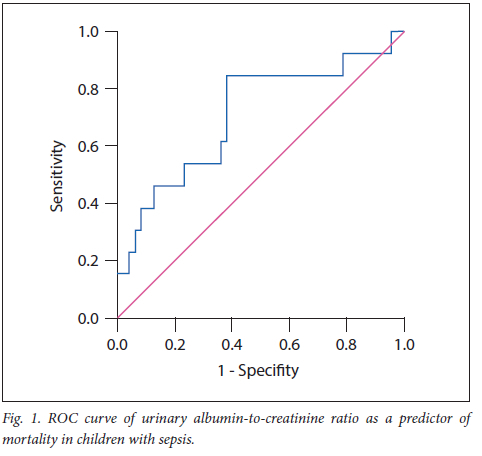
Continuous variables were summarised as mean ± standard deviation or median with interquartile range, depending on normality assessed via the Shapiro-Wilk test. Categorical variables were presented as frequencies and percentages. To examine the association between urinary ACR and in-hospital mortality, we used binary logistic regression analysis, reporting odds ratios (ORs) with 95% confidence interval (CI). In the multivariate models, ACR was analysed both as a continuous variable (per unit increase in mg/g) and as a categorical variable based on an optimal threshold derived from ROC analysis, to evaluate its predictive robustness. The ROC curve was used to assess the discriminative performance of ACR, reporting AUC, sensitivity, and specificity at the optimal cut-off point determined by the Youden Index. All statistical analyses were performed using SPSS Statistics version 26.0 (IBM Corp., USA), and a two-sided p-value <0.05 was considered statistically significant.
Results
Respondent characteristics
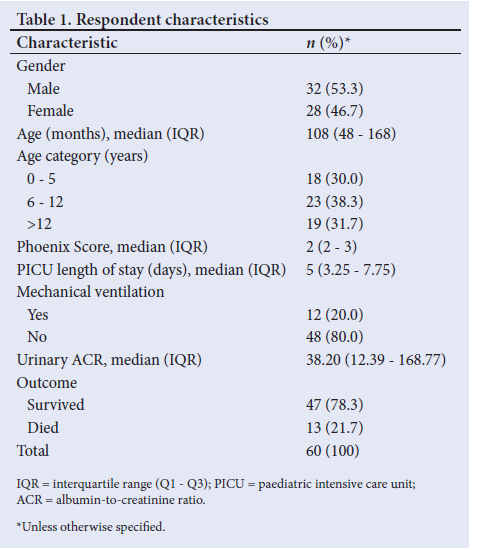
A total of 60 children with sepsis were enrolled. Thirty-two (53.3%) were male and 28 (46.7%) were female. The median (interquartile range (IQR)) age was 108 months (48 - 168); 18 children (30.0%) were aged 0 to 5 years, 23 (38.3%) were 6 to 12 years, and 19 (31.7%) were older than 12 years. The median (IQR) Phoenix Score was 2 (2 - 3), with 38 children (63.3%) classified as mild sepsis (score 0 - 2), 10 (16.7%) as moderate sepsis (score 3 - 5), and 12 (20.0%) as severe sepsis (score 6 - 10). The median length of PICU stay was 5.0 days (IQR 3.25 - 7.75). Mechanical ventilation was required in 12 cases (20.0%). The overall median urinary albumin-creatinine ratio (ACR) was 38.20 mg/g (IQR 12.39 - 168.77).
Forty-seven patients (78.3%) survived, whereas 13 (21.7%) died. All characteristics data are displayed in Table 1.
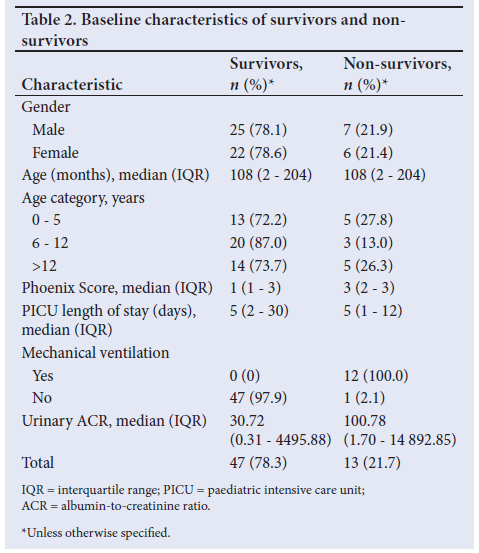
Table 2 compares baseline characteristics between survivors and non-survivors. The distribution of gender and age was comparable between the two groups, with no significant differences observed in median age or age categories, suggesting that these demographic factors may not play a significant role in determining mortality in this cohort. However, clinical severity indicators showed notable contrasts. The median Phoenix Score was higher among non-survivors compared with survivors, indicating that greater illness severity at admission was associated with increased risk of death. Moreover, all non-survivors (100%) required mechanical ventilation, whereas none of the survivors did, highlighting the strong association between respiratory failure and poor outcomes. Although the median length of PICU stay was identical in both groups (5 days), the range was narrower in non-survivors (1 - 12 days), suggesting that mortality tended to occur earlier in the course of critical illness. Notably, urinary ACR was markedly elevated in non-survivors (median ACR 100.78 mg/g) compared with survivors (median ACR 30.72 mg/g), with a substantially wider interquartile range, supporting its potential role as a prognostic biomarker for mortality in paediatric sepsis. These findings underscore the importance of illness severity scores, the need for mechanical ventilation, and early kidney injury indicators such as ACR in risk stratification for critically ill children with sepsis.
Association between urinary ACR and clinical outcomes
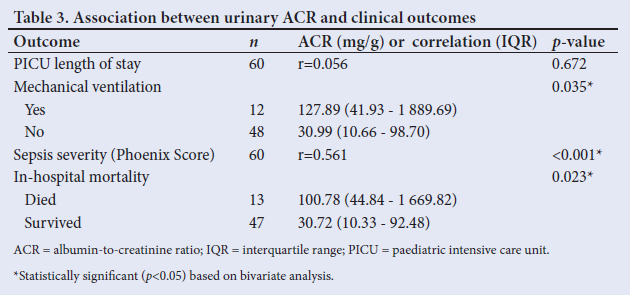
There was no significant correlation between urinary ACR and PICU length of stay (Spearman's ρ=0.056; p=0.672). Children who required mechanical ventilation exhibited a higher median (IQR) ACR (127.89 (41.93 - 1889.69)) compared with those who did not (30.99 mg/g; (10.66 - 98.70)), and this difference was statistically significant (p=0.035). A strong positive correlation was observed between urinary ACR and Phoenix Score (Spearman's ρ=0.561; p<0.001), indicating that elevated ACR levels were associated with greater sepsis severity. Similarly, the median (IQR) ACR was significantly higher in non-survivors (100.78 (44.84 - 1 669.82) mg/g) than in survivors (30.72 (10.33 - 92.48) mg/g; p=0.023). All analyses were displayed in Table 3.
Urinary ACR cut-off as predictor of mortality
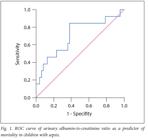
Receiver operating characteristic analysis yielded an area under the curve of 0.71 (p=0.023), reflecting moderate discriminative ability of urinary ACR for predicting in-hospital death. The optimal cut-off value was determined to be 38.75 mg/g, which achieved a sensitivity of 84.6% and specificity of 61.7% (Fig. 1).
Multivariate analysis
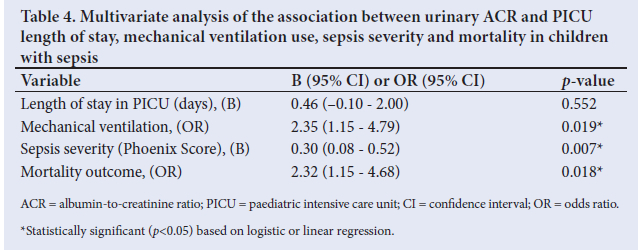
In adjusted models, urinary ACR was not significantly associated with length of stay (B=0.46; 95% CI -0.10 - 2.00; p=0.552). However, a one-unit increase in ACR was associated with 2.35-fold higher odds of requiring mechanical ventilation (OR 2.35; 95% CI 1.15 - 4.79; p=0.019) and was significantly associated with a higher Phoenix score (B=0.30; 95% CI 0.08 - 0.52; p=0.007). Elevated ACR also independently predicted mortality (OR 2.32; 95% CI 1.15 - 4.68; p=0.018). Multivariate analysis is shown in Table 4.
Discussion
This study shows urinary ACR is associated with mechanical ventilation, severity and mortality in children with sepsis. In the present study, increased ACR was associated with a longer duration of mechanical ventilation in children with sepsis. The use of mechanical ventilators, particularly those lasting more than 48 hours, was more common in patients with high ACR. Higher ACR at the time of PICU admission was associated with a greater need for mechanical ventilation.[8] Another study found that higher ACR values at the time of ICU admission were significantly correlated with the need for prolonged mechanical ventilation.[12] Sachdev et al.[7] also reported that patients with ACR >102 were more likely to require longer ventilation and had worse overall outcomes compared with patients with lower ACR. It suggests that ACR may be a useful early indicator for predicting the need for mechanical ventilation in paediatric patients with sepsis.
This study also showed that higher ACR values in children with sepsis were associated with the severity of sepsis. This finding aligns with previous studies, which have found that higher ACR levels are associated with more severe sepsis, such as severe sepsis, septic shock, and multiple organ dysfunction syndrome (MODS). The higher the ACR score, the more severe the organ dysfunction experienced by the patient.[11] Higher ACR values were observed in children with Phoenix scores indicating higher severity, reflecting endothelial damage and increased capillary permeability.[7]
In this study, urine ACR can be used as a predictor of death in children with sepsis, with an optimal cut-off value of 38.20, with a sensitivity of 84.6% and a specificity of 61.7%, and an area under the curve (AUC) of 0.71. It was in line with a previous study by Basu et al.[12] on 94 patients treated in the PICU, with 30 of them experiencing sepsis, which showed that microalbuminuria, defined as ACR >30 mg/g measured in the first 24 hours of PICU admission, was strongly associated with poor outcomes, including death. Children with high ACR in the first 24 hours of care were more likely to die than children with lower ACR. A decrease in ACR from the time of admission to 24 hours post admission was also associated with improved clinical conditions and decreased risk of death. The study also reported that the 24-hour ACR value was found to have a sensitivity of 85% and a specificity of 68% in predicting death in the PICU, with the optimal cut-off value for ACR to predict death being 99.6 mg/g.[12] The results of this study may have a lower threshold value due to differences in the patient population analysed. In the present study, all subjects were patients diagnosed with sepsis, as defined by blood culture results. Thus, the level of endothelial dysfunction and increased capillary permeability that causes microalbuminuria was more prominent and directly relevant in predicting mortality. With a population consisting entirely of septic patients, a lower threshold value may be more sensitive in detecting mortality risk. However, the study conducted by Basu et al.[12] analysed all patients treated in the PICU, including those without sepsis, which may have caused greater variability in microalbuminuria levels.
The mechanism of urinary ACR in influencing the need for mechanical ventilation, severity, and mortality in children with sepsis is closely related to vascular endothelial dysfunction and organ damage, especially the kidney and lung. In sepsis, an excessive inflammatory response causes damage to the vascular endothelium, which increases capillary permeability so that albumin leaks into the urine and causes albuminuria. This increase in ACR reflects the presence of kidney dysfunction or acute kidney injury (AKI), which often occurs in sepsis patients.[13,14] This kidney damage contributes to excess fluid that can worsen lung function and trigger acute respiratory distress syndrome (ARDS). This condition certainly increases the need for mechanical ventilation because the lungs are unable to supply enough oxygen to the body.[15,16] In addition, children with sepsis and high ACR are at higher risk of developing septic shock and multiorgan dysfunction, which worsen their condition and increase the risk of mortality. In this condition, the kidneys and lungs are the two most affected organs, and failure of these organs often requires mechanical ventilation intervention to support patient survival.[13,14]
The present study showed that urinary ACR was not associated with length of stay in paediatric sepsis patients. Previous studies have shown that increased ACR is associated with longer PICU length of stay. A study noted that children with sepsis who had high ACR or patients with sepsis who had more severe microalbuminuria also had longer PICU stays compared with non-septic patients.[12] In India, Sachdev et al.[7] showed that although higher ACR was found in patients undergoing long-term mechanical ventilation, statistical analysis did not show any significant difference in total length of stay in the PICU between groups with low and high ACR at admission, 12 hours and 24 hours after admission. A study[11] of 102 critically ill paediatric patients showed that there was no significant difference in total length of stay in the PICU between groups of patients with low and high ACR. ACR often does not accurately reflect the clinical outcomes of sepsis patients because many other factors are more influential, such as the inflammatory response and the presence of comorbidities in the patient.[17] These differences in findings, particularly regarding the lack of association between urinary ACR and length of stay observed in our study, may be attributed to several factors. These include differences in study populations (e.g. baseline illness severity, comorbidity profiles), variations in inclusion and exclusion criteria (such as the exclusion of patients with chronic kidney disease in our study), and methodological differences in how ACR was measured and analysed (e.g. timing of sample collection, use of spot v. timed urine samples, or whether ACR was analysed as a continuous or categorical variable). Additionally, the relatively small sample size and single-centre design may have limited our ability to detect more subtle associations. These discrepancies underscore the need for larger multi-center studies with standardised methodologies to validate the prognostic value of ACR in paediatric sepsis.
Elevations in urinary ACR observed in paediatric sepsis differ mechanistically and clinically from those seen in primary kidney diseases. In sepsis, increased ACR typically results from acute endothelial injury, systemic inflammation and increased capillary permeability rather than structural glomerular damage, which underlies persistent albuminuria in conditions such as diabetic nephropathy or immune-mediated glomerulonephritis. This distinction is important because albuminuria in sepsis is often transient and haemodynamically mediated, whereas in primary kidney diseases, it reflects chronic pathological changes in the glomerular filtration barrier.[18]
Despite its transient nature in some cases, recent evidence has shown that sepsis-associated acute kidney injury (SA-AKI), especially when accompanied by elevated ACR, may have long-term consequences. Even in the absence of overt AKI, elevated ACR may indicate subclinical kidney injury and has been associated with increased risk of chronic kidney disease (CKD) in both adults and children.[19] Paediatric cohort studies report that up to 10% of children with SA-AKI progress to CKD within three years post-discharge.[20] Therefore, ACR elevation during sepsis should not be dismissed as benign, but rather seen as a potential marker of renal vulnerability.
These findings highlight the need for structured post-discharge nephrological follow-up in paediatric sepsis survivors, especially those with elevated ACR or SA-AKI. Longitudinal monitoring of ACR and estimated glomerular filtration rate (eGFR) may help identify patients at risk for progressive renal decline[21]Future studies should explore whether early interventions such as fluid optimisation, nephrotoxin stewardship, or early referral to nephrology can modify the trajectory toward CKD in this vulnerable population.
Study strengths and limitations
The advantages of this study are that it focuses on a specific population, namely children with sepsis treated in the PICU, which provides relevant and detailed insights regarding the relationship between ACR and clinical outcomes in this group. In addition, this study also evaluated various clinical variables, such as ventilator use, sepsis severity, and mortality, which can provide a comprehensive picture of the role of ACR in the management of paediatric sepsis patients. The results of urine ACR analysis as a predictor of mortality are also an advantage, with high sensitivity (84.6%), indicating that ACR can be an effective tool for predicting mortality.
Our study has several limitations that should be acknowledged. First, it was conducted at a single tertiary care centre, which may limit the generalisability of the findings to other settings with different patient populations or clinical practices. Second, the sample size was relatively small, which may reduce the statistical power and affect the external validity of the results. Third, urinary ACR was measured only once within the first 24 hours of PICU admission and thus may not capture the dynamic changes in kidney function or inflammatory burden throughout sepsis. Repeated measurements could provide a more accurate assessment of ACR's prognostic utility during treatment and recovery. Fourth, although patients with known CKD were excluded, residual confounders related to undiagnosed renal dysfunction, variations in fluid resuscitation status, or baseline hydration levels may still influence ACR values and clinical outcomes. In addition, other potentially influential factors such as nutritional status, comorbid conditions, and heterogeneity in therapeutic interventions (e.g. vasopressor use and renal replacement therapy) were not analysed in depth, which may also affect the interpretation of the findings. Future studies with larger, multi-centre cohorts and serial biomarker measurements are warranted to validate and expand on these findings.
Conclusion
ACR was significantly associated with mortality, disease severity, and the need for mechanical ventilation in paediatric sepsis patients. However, it was not correlated with the length of stay in the PICU. ACR demonstrated potential as a prognostic marker, with an optimal cut-off value of 38.20 mg/g, yielding a sensitivity of 84.6%, specificity of 61.7%, and an AUC of 0.71. Clinically, ACR should be utilised more broadly for early screening in intensive care settings due to its rapid, simple, and non-invasive nature, which facilitates prompt clinical decision-making and might assist in monitoring therapeutic responses. Future research should involve serial ACR measurements during PICU admission and explore additional influencing factors such as nutritional status, comorbidities, and treatment variations to enhance its predictive value.
Declaration. None.
Acknowledgements. None.
Author contributions. Study conception and design: ERM, NHR; data collection: ERM; analysis and interpretation of results: ERM, AU; draft manuscript preparation: ERM, NHR, AU, VU. All authors reviewed the results and approved the final version of the article.
Funding. None.
Conflicts of interest. None.
References
-
1. Schlapbach LJ, Watson RS, Sorce LR, et al. International consensus criteria for pediatric sepsis and septic shock. JaMA 2024;331(8):665-674. https://doi.org/10.1001/jama.2024.0179
» https://doi.org/10.1001/jama.2024.0179 -
2. Pudjiadi AH, Putri ND, Wijaya S, et al. Pediatric sepsis profile in a tertiary- care hospital in Indonesia: A 4-year retrospective study. J TropPediatr 2023;69(5):fmad029. https://doi.org/10.1093/tropej/fmad029
» https://doi.org/10.1093/tropej/fmad029 -
3. Tariq S, Mateen M, Ashraf M. Microalbuminuria as a predictor of patient outcome in pediatric intensive care unit. Int J Contemp Pediatr 2022;9(8):18203. https://doi.org/10.18203/2349-3291.ijcp20221856
» https://doi.org/10.18203/2349-3291.ijcp20221856 - 4. Nawal CL, Barasara S, Chejara RS, et al. Microalbuminuria as an indicator of sepsis and to predict mortality in patients admitted to intensive care unit. J Assoc Physicians India 2022;70(3):11-12.
-
5. Saglam CE, Cosar A. Significance of microalbuminuria levels indicating sepsis in critical care and relationshipwith other biomarkers. J Crit Care 2024;81(June 2024):154617. https://doi.org/10.1016/j.jcrc.2024.154617
» https://doi.org/10.1016/j.jcrc.2024.154617 -
6. Nismath S, Rao SS, Baliga BS, et al. Comparison of urine albumin creatinine ratio with the Pediatric Index of Mortality 2 Score for prediction of pediatric intensive care unit outcomes. Ir J Med Sci 2021;190(4):1481-1485. https://doi.org/10.1007/s11845-021-02755-4
» https://doi.org/10.1007/s11845-021-02755-4 -
7. Sachdev A, Raheja K, Gupta N, et al. Association of urinary albumin: creatinine ratio with outcome of children with sepsis. Indian J Crit Care Med 2020;24(6):465-472. https://doi.org/10.5005/jp-journals-10071-23463.
» https://doi.org/10.5005/jp-journals-10071-23463 -
8. Karam NA, Abdelhamid SS, Ismail WI, et al. Assessment of urine albumin creatinine ratio in renal injury in septic children and its relation to outcome. Egypt J Hosp Med 2023;90(2):2802-2807. https://doi.org/10.21608/ejhm.2023.288363
» https://doi.org/10.21608/ejhm.2023.288363 -
9. Weiss SL, Peters MJ, Alhazzani W, et al. Surviving Sepsis campaign international guidelines for the management of septic shock and sepsis-associated organ dysfunction in children. Pediatr Crit Care Med 2020;21(2):e52-e106. https://doi.org/10.1097/PCC.0000000000002198
» https://doi.org/10.1097/PCC.0000000000002198 -
10. Sanchez-Pinto LN, Bennett TD, De Witt PE, et al. Development and validation of the Phoenix criteria for pediatric sepsis and septic shock. JAMA 2024;331(8):675-686. https://doi.org/10.1001/jama.2024.0196
» https://doi.org/10.1001/jama.2024.0196 -
11. Anil AB, Anil M, Yildiz M, et al. The importance of microalbuminuria in predicting patient outcome in a PICU. Pediatr Crit Care Med 2014;15(5):e220-e225. https://doi.org/10.1097/PCC.0000000000000113
» https://doi.org/10.1097/PCC.0000000000000113 -
12. Basu S, Chaudhuri S, Bhattacharyya M, et al. Microalbuminuria: An inexpensive, non-invasive bedside tool to predict outcomes in critically ill patients. Indian J Clin Biochem 2010;25(2):146-152. https://doi.org/10.1007/s12291-010-0027-9
» https://doi.org/10.1007/s12291-010-0027-9 -
13. Rusmawatiningtyas D, Rahmawati A, Makrufardi F, et al. Factors associated with mortality of pediatric sepsis patients at the pediatric intensive care unit in a low-resource setting. BMC Pediatr 2021;21(1):471. https://doi.org/10.1186/s12887-021-02945-0
» https://doi.org/10.1186/s12887-021-02945-0 -
14. Liu J, Xie H, Ye Z, et al. Rates, predictors, and mortality of sepsis-associated acute kidney injury: A systematic review and meta-analysis. BMC Nephrol 2020;21(1):318. https://doi.org/10.1186/s12882-020-01974-8
» https://doi.org/10.1186/s12882-020-01974-8 -
15. Leow EH, Wong JJ-M, Mok YH, et al. Fluid overload in children with pediatric acute respiratory distress syndrome: A retrospective cohort study. Pediatr Pulmonol 2022;57(1):300-307. https://doi.org/10.1002/ppul.25720
» https://doi.org/10.1002/ppul.25720 -
16. Abdelaziz TA, Karam NA, Ismail WI, et al. Lactate dynamics in paediatric patients with severe sepsis: Insights from a prospective cohort study. BMC Pediatr 2024;24(1):345. https://doi.org/10.1186/s12887-024-04809-9
» https://doi.org/10.1186/s12887-024-04809-9 -
17. Morin L, Hall M, de Souza D, et al. The current and future state of pediatric sepsis definitions: An international survey. Pediatrics 2022;149(6):e2021052565. https://doi.org/10.1542/peds.2021-052565
» https://doi.org/10.1542/peds.2021-052565 -
18. Pais T, Jorge S, Lopes JA. Acute kidney injury in sepsis. Int J Mol Sci 2024;25(11):5924. https://doi.org/10.3390/ijms25115924.
» https://doi.org/10.3390/ijms25115924 -
19. Kellum JA, Romagnani P, Ashuntantang G, et al. Acute kidney injury. Nat Rev Dis Prim 2021;7(1):52. https://doi.org/10.1038/s41572-021-00284-z
» https://doi.org/10.1038/s41572-021-00284-z -
20. Kari JA, Alhasan KA, Shalaby MA, et al. Outcome of pediatric acute kidney injury: A multicenter prospective cohort study. Pediatr Nephrol 2018;33(2):335-340. https://doi.org/10.1007/s00467-017-3786-1
» https://doi.org/10.1007/s00467-017-3786-1 -
21. Patel M, Gbadegesin RA. Update on prognosis driven classification of pediatric AKI. Front Pediatr 2022;10:1039024. https://doi.org/10.3389/fped.2022.1039024
» https://doi.org/10.3389/fped.2022.1039024

Accepted 30 June 2025