Guided play as a pedagogical tool for the early grades
Abstract
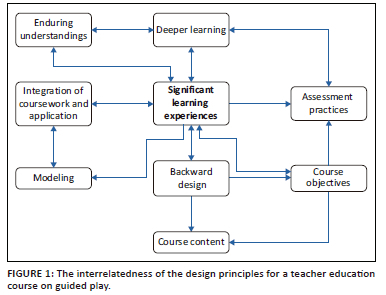
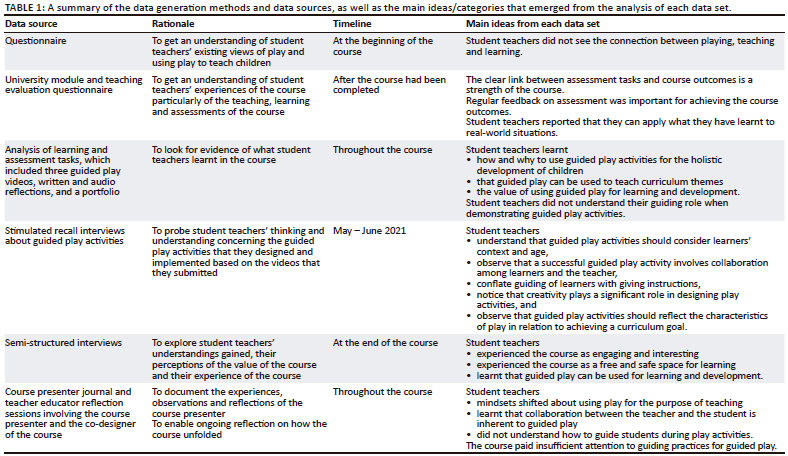
BACKGROUND: Research has shown the benefits of play for children's learning and development. Play can also be harnessed for pursuing pre-determined learning goals related to school curricula through 'guided' play AIM: The research inquired into the implementation of a pre-service teacher education course on play as pedagogy to evaluate and refine the course's design principles SETTING: The study was conducted at the University of Johannesburg, involving pre-service teachers within the Bachelor of Education in the foundation phase of schooling METHODS: The research formed part of a broader design-based research study. The data were collected via questionnaires, interviews, analysis of students' work and a research journal. A combination of inductive and deductive data analysis was used RESULTS: The way in which the course was designed and implemented was successful in helping students develop a basic understanding of guided play, although there were gaps in their understanding of their guiding role; student teachers learnt that creativity could be developed through play CONCLUSION: In general, the design principles served the course and its implementation well because students learnt much about guided play. However, a major gap was the insufficient focus on guiding practices. Such practices should receive considerable attention in a pre-service teacher education course on guided play. A stronger focus on the interconnectedness of play and creativity in a course on guided play for pre-service teachers will be beneficial CONTRIBUTION: The research on teacher preparation for using play-based teaching and learning is limited. This study contributes to addressing this gap
guided play; playful learning; pre-service teacher education; creativity; play
 Thumbnail