Student perspectives of simulated learning to improve their dysphagia management
Abstract
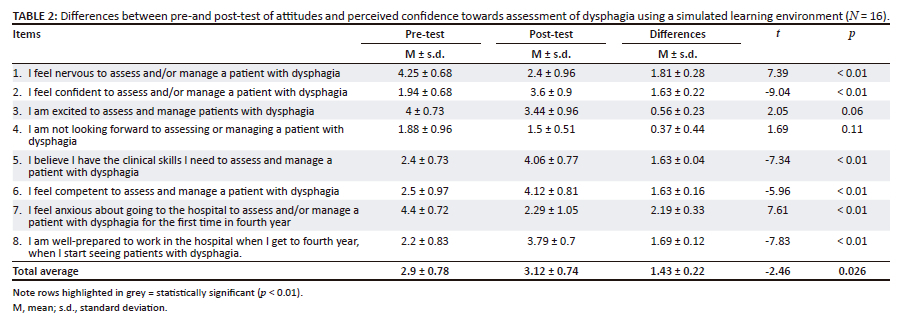
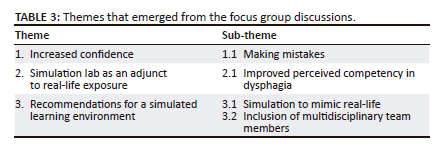
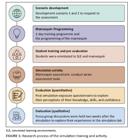
BACKGROUND: The use of simulation to enhance knowledge translation and bridge the theoretical-clinical gap to enhance clinical training and competency in health professions has received mixed reviews in the literature. OBJECTIVES: This research examined student perspectives of a simulation laboratory in speech therapy to improve students' clinical competency when working with adults with communication and dysphagia impairments. METHOD: An exploratory descriptive pilot study was conducted in 2022 with 16 third-year speech-language therapy students. This mixed-methods study involved students completing purposefully developed pre-and post-surveys to explore their experiences with simulated teaching and learning and their perceptions of confidence. Data were analysed using an independent t-test. Following the surveys, the students participated in a focus group discussion about their simulation experience, and data were analysed using thematic analysis. RESULTS: Student ratings of clinical skills improved from pre to post-simulation significantly overall and across six out of the eight items. The focus group revealed insights into students' experiences, highlighting increased confidence, the benefits of making mistakes in a safe environment and improved preparedness to work with dysphagia in patients CONCLUSION: While simulation serves as a valuable tool in enhancing clinical skills and building confidence, it must be used as an adjunct to real-life exposure and not as a replacement. CONTRIBUTION: The integration of both simulated and real-life experiences is essential to provide a comprehensive and practical learning environment for students.
simulation learning; clinical skills; soft skills; self-reflection; undergraduate education
 Thumbnail