Making sense of the outcome of a rehabilitation implementation trial in the intensive care unit: Mixed methods
BACKGROUND: Evidence for implementation of evidence-based protocols (EBPs) in resource-constrained intensive care units (ICUs) is sparse OBJECTIVES: To evaluate a tailored best-practice multifaceted strategy for implementation of a validated physiotherapy EBP for the management of surgical ICU (SICU) patients. Also, to explore the physiotherapists' perceptions regarding the implementation process and factors affecting protocol adherence, guided by the Consolidated Framework for Implementation Research METHODS: A type 2 hybrid implementation study design was applied, including all adult patients admitted over 16 months to two (control and experimental) SICUs in Western Cape Province, South Africa. The physiotherapists eligible to participate in the qualitative study (N=17) were those who participated in the implementation process and worked in the experimental SICU. The Therapeutic Index Scoring System-28 (TISS-28) and four process of care indicators (POCIs) were the primary and secondary outcomes, respectively, both analysed in Stata version 15. Thematic content analysis of textual data generated physiotherapists' perceptions of the implementation process RESULTS: The intervention strategy did not result in protocol adherence, with no significant difference (p>0.05) in TISS-28 and POCI outcomes during and after implementation in the experimental unit and all phases of the control. Physiotherapists (71%; n=12/17) perceived that the process affected their thinking and clinical decision-making, but not the organisation of physiotherapy services, except for a more multidisciplinary approach to care in the experimental unit. Organisational factors (time constraints, workload/flow barriers) affected adherence, explaining the lack of practice change CONCLUSION: The importance of organisational change and support of the physiotherapy departments providing services to ICUs while also addressing the healthcare needs of a diverse group of hospitalised patients is highlighted
Evidence-based practice; implementation; intensive care; multifaceted strategy; physiotherapy protocol; process of care; resource-constrained setting; TISS-28
Making sense of the outcome of a rehabilitation implementation trial in the intensive care unit: Mixed methods
F KarachiI; J J MaritzII; T M EsterhuizenIII; R GossehnkIV, V; S D HanekomVI
IMSc (Physiotherapy), PhD; Department of Physiotherapy, Faculty of Community and Health Sciences, University of the Western Cape, Cape Town, South Africa
IIMSc (Physiotherapy); Division of Physiotherapy, Department of Health and Rehabilitation Sciences, Faculty of Medicine and Health Sciences, Stellenbosch University, Cape Town, South Africa
IIIMSc (Epidemiology and Bio statistics); Division of Epidemiology and Biostatistics, Department of Global Health, Stellenbosch University, Cape Town, South Africa
IVPhD (Physical Therapy); Division of Physiotherapy, Department of Health and Rehabilitation Sciences, Faculty of Medicine and Health Sciences, Stellenbosch University, Cape Town, South Africa
VPhD (Physical Therapy); Department of Rehabilitation Sciences, KU Leuven, Belgium
VIMSc (Physiotherapy), PhD; Division of Physiotherapy, Department of Health and Rehabilitation Sciences, Faculty of Medicine and Health Sciences, Stellenbosch University, Cape Town, South Africa
BACKGROUND: Evidence for implementation of evidence-based protocols (EBPs) in resource-constrained intensive care units (ICUs) is sparse
OBJECTIVES: To evaluate a tailored best-practice multifaceted strategy for implementation of a validated physiotherapy EBP for the management of surgical ICU (SICU) patients. Also, to explore the physiotherapists' perceptions regarding the implementation process and factors affecting protocol adherence, guided by the Consolidated Framework for Implementation Research
METHODS: A type 2 hybrid implementation study design was applied, including all adult patients admitted over 16 months to two (control and experimental) SICUs in Western Cape Province, South Africa. The physiotherapists eligible to participate in the qualitative study (N=17) were those who participated in the implementation process and worked in the experimental SICU. The Therapeutic Index Scoring System-28 (TISS-28) and four process of care indicators (POCIs) were the primary and secondary outcomes, respectively, both analysed in Stata version 15. Thematic content analysis of textual data generated physiotherapists' perceptions of the implementation process
RESULTS: The intervention strategy did not result in protocol adherence, with no significant difference (p>0.05) in TISS-28 and POCI outcomes during and after implementation in the experimental unit and all phases of the control. Physiotherapists (71%; n=12/17) perceived that the process affected their thinking and clinical decision-making, but not the organisation of physiotherapy services, except for a more multidisciplinary approach to care in the experimental unit. Organisational factors (time constraints, workload/flow barriers) affected adherence, explaining the lack of practice change
CONCLUSION: The importance of organisational change and support of the physiotherapy departments providing services to ICUs while also addressing the healthcare needs of a diverse group of hospitalised patients is highlighted
Keywords: Evidence-based practice, implementation, intensive care, multifaceted strategy, physiotherapy protocol, process of care, resource-constrained setting, TISS-28.
Uptake of and adherence to evidence-based early mobility protocols or guidelines are still low in the intensive care unit (ICU) setting.[1-3] Failure to implement such protocols results in poor or worse healthcare outcomes, as 30 - 40% of patients still do not receive the recommended care.[3-9] Despite evidence of the benefit and safety of early mobility in the ICU, several point prevalence studies still indicate poor uptake.[4-8]
A few exploratory studies, most with qualitative or mixed study designs, have used the Consolidated Framework for Implementation Research (CFIR) to determine barriers to and facilitators of intervention
implementation in the ICU.[10-12] The CFIR is a pragmatic meta-theoretical framework that allows for 'real world' implementation, guiding and facilitating effective application of evidence-based protocols (EBPs).[13] The CFIR allows for the identification of barriers before and after implementation, guiding the selection and tailoring of strategies used for implementation within the contextual and organisational framework that could affect implementation.[13] It has five domains, namely process, characteristics of the EBP to be implemented, inner setting (structural characteristics) and outer setting (needs and resources), and
characteristics of the individuals (healthcare professionals and managers or organisations) involved in the implementation process.[13-14] A review of ICU implementation studies using the CFIR[15] identified only one study exploring the barriers to early exercise/mobility interventions in the ICU.[12] The authors reported increased workload and lack of time and co-ordination of intervention activities as barriers to implementation of early mobility and post-extubation interventions.[12]
A recent review of evidence for quality improvement interventions for adult critical care in low- and middle-income countries (LMICs) published since 2000 suggested that multifaceted implementation approaches including a combination of more than one implementation intervention strategy are most effective in translating evidence to practice, with significant improvement in care processes and patient outcomes, and reduced costs.[1] Tailored multifaceted implementation strategies have also been reported to facilitate the effective uptake of EBPs into clinical practice in settings outside the ICU,[16-18] with few studies exploring these strategies in the ICU.[11,19-21] Tailored multifaceted implementation strategies address the barriers to and facilitators of an EBP implementation targeted to healthcare professionals (population), ICUs (setting), organisations (community), or the wider sociopolitical context.[22] Tailored implementation strategies could therefore potentially promote the reach, adoption and fidelity of EBPs across populations and settings by tailoring multifaceted implementation strategies to the needs of diverse contexts.[22] The utilisation of tailored/targeted multifaceted implementation strategies during an implementation process in LMIC ICUs is still in its infancy.[1] It is therefore unclear what works when implementing physiotherapy-related EBPs in the ICU.[1-3,5,9] The present study, which aimed to describe and understand the effectiveness of a tailored best-practice multifaceted implementation strategy in terms of nursing workload and process of care (POC) outcomes in a surgical ICU (SICU) before, during and after implementation guided by the CFIR, with no intervention in a control unit, is therefore timely.
This study utilised a validated evidence-based physiotherapy protocol for the management of SICU patients that had been implemented previously in the same unit using dedicated physiotherapists appointed for the research.[23] The authors reported that compared with usual care in the unit, the evidence-based physiotherapy service that was delivered improved POC outcomes (early physiotherapy intervention after ICU admission, early mobility, and early physiotherapy after extubation).[23] These improvements resulted in reduced time spent on routine nursing activities such as care of drains, mechanical ventilation, supplementary ventilatory support, care of artificial airways, intravenous replacement of large fluid losses and left atrium monitoring, translating into cost savings of EUR3 334.85 over the 6-week protocol-care period in the ICU, based on a 1.99 mean difference in the unit's Therapeutic Index Scoring-28 (TISS-28) score.[23]
Cost of care in the ICU is dependent on the type of care patients receive, and ICU costs take up more than '3% of total hospital costs.[24] Improving the efficiency of health services in this setting is therefore of key importance for healthcare funders.[24] How a holistic evidence-based physiotherapy service affects the functioning of the ICU and the cost related to such service is of relevance, especially in resource-limited LMIC ICUs. The present study therefore included nursing workload as measured by the TISS-28 as a proxy for cost.[23] A reduction in time spent on routine nursing activities as measured by the TISS-28 in the experimental unit if the protocol (processes of care) was implemented by the physiotherapists working in the ICU would provide a measure of effectiveness of the implementation intervention. A qualitative enquiry allowed for in-depth understanding of the process of implementation.
Methods
Study design
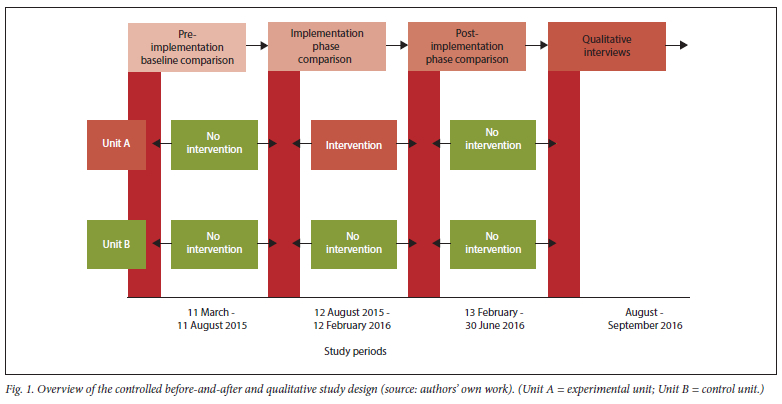
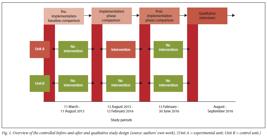
A type 2 hybrid implementation study design using a pragmatic controlled before-and-after (CBA) trial[25] was applied to determine the effectiveness of the implementation process based on the CFIR. In addition, a qualitative interpretive descriptive design was used to explore the physiotherapists' perceptions of the implementation and sustainability of the protocol[26] (Fig. 1).
Setting
The study setting was two adult level ' public sector SICUs based in central university-affiliated hospitals in South Africa (SA). The physiotherapy department in the experimental unit hospital formed the setting for the qualitative study. The implementation intervention was
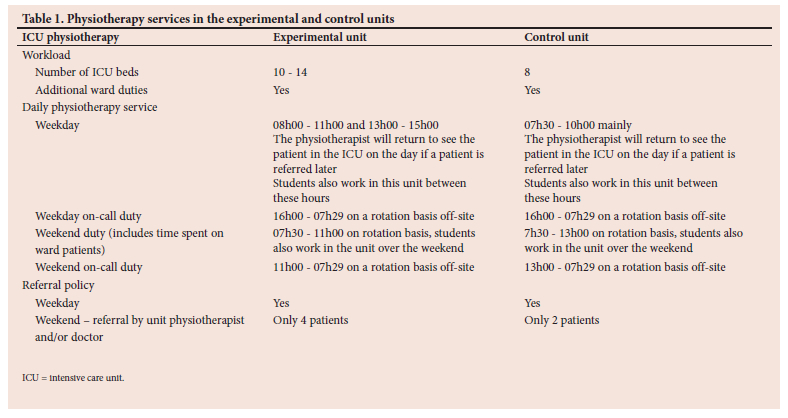
purposefully allocated to this unit to prevent potential contamination from a previous trial[9,23] in which the protocol[9,23] was piloted using research appointed physiotherapists who were exclusively allocated to implement the protocol in this unit.[9,23] The second unit was the control unit. Daily physiotherapy services, bed capacity and referral guidelines differed between the units (Table 1).
Participants
The CBA trial included all adult (>18 years) patients admitted to the two SICUs between 11 March 2015 and 30 June 2016. There were 17 physiotherapists, of whom one, who also had ward duties, provided service to the experimental unit daily for certain hours on a quarterly rotational basis, with the rest providing service on a rotational basis over weekends and on call to this unit during the week and/or weekends (Table 1). All 17 physiotherapists employed at the time of data collection (August - September 2016) at the experimental unit hospital and who worked in the unit and were involved in the implementation process were eligible for and invited to participate in the qualitative study. Nurses were not eligible to participate, as they were not targeted in the implementation process and would not be aware of their standard routine activities being monitored. They would not be aware of changes (time spent) in these activities due to protocol implementation by the physiotherapists and would not be able to provide information on the implementation intervention and process, which was targeted only to the physiotherapists in this unit.
Intervention
A best-practice tailored multifaceted implementation strategy[25] consisted of paper and electronic versions of an educational handbook on the protocol, four 2-hour workshops (workshop series) introducing the protocol, reminders (pocket cards and experimental unit and physiotherapy department posters), and four 1-hour grand rounds/bedside teaching sessions delivered to groups of four to five physiotherapists. The protocol,[9,23] which included three clinical algorithms (pulmonary rehabilitation, abdominal surgery, and rehabilitation of the awake, sedated and deconditioned patient) to facilitate and guide clinical reasoning during patient management, was implemented over a 6-month period during the implementation phase, with no intervention in the control unit.
Outcomes
Primary outcome. TISS-28, identified in a pilot trial,[23] was measured daily over a 24-hour nursing shift and only included patients who were in the unit for >24 hours. The TISS-28 consists of a 28-item list of nursing activities, is used to determine nursing workload, is a proxy for cost in the ICU, and is sensitive to detect a change in the physiotherapy service (POC) provided.[23] One TISS-28 point is equivalent to 10.8 minutes of work and ranges between EUR35 and EUR39.9. The TISS-28 unit day score was calculated daily for each patient remaining in the unit for the duration of a TISS-28 unit day. A TISS-28 unit day was defined as the 24-hour period between 07h00 and 06h59 the following day. Based on the pilot trial results,[23] this study was statistically powered (80%) to detect a two-point difference in the daily TISS-28 unit day score (p=0.05). Therefore, 140 patients with TISS-28 unit day scores were needed per time period.
Secondary outcomes. POC indicators (POCIs), identified in a pilot trial,[23] measured intervention effectiveness in changing practice. Three physiotherapy POCIs analysed were time (hours to event) from ICU admission to: (i) first physiotherapy contact (POCI 1); (ii) first mobilisation of the patient into a chair by the physiotherapist (POCI 2); and (iii) time from extubation to post-extubation physiotherapy intervention (POCI 3). In addition, time from unit admission to being mobilised into a chair by nursing staff was analysed (POCI 4). Early mobilisation and rehabilitation is a joint effort of ICU nurses and physiotherapists.[27] Changes in activity of physiotherapists or nurses could affect the time spent on early mobilisation and the POC outcomes that motivated the inclusion of POCI 4. Safety outcomes were predefined adverse events including unplanned extubation, lines dislodged, haemodynamic and/or pulmonary instability, and falls. Implementation fidelity was individual physiotherapists' exposure (attendance) to each of the implementation strategies. Textual data were obtained from the qualitative interviews.
Data collection instruments
A standardised data capturing sheet was used to capture TISS-28 items and patient sociodemographic, clinical and POC data (quantitative),[25] and a semi-structured interview guide developed by author JJM based on the trial implementation process guided by the CFIR was used to obtain the qualitative data.[26] The semi-structured interview guide included questions based on the constructs of the CFIR domains and explored the perceptions of the implementation process reported by the physiotherapists involved in it. It furthermore explored the physiotherapists' perceptions of the protocol, the inner setting, including structural characteristics of the organisation and the ICU, and the outer setting, including needs and resources for protocol implementation, and their adherence to the protocol in the real-life setting.[26]
Data collection
Trained research assistants blinded to the experimental unit collected the quantitative data from ICU charts, patient medical folders and the clinical database in both units over 16 months. An independent physiotherapist (JJM) not affiliated to the physiotherapy department conducted face-to-face individual semi-structured audiotaped interviews of varying length (25 - 60 minutes). JJM confirmed and summarised data throughout the interviews to verify understanding of the qualitative data.
Data analysis
Trial data were statistically analysed by a biostatistician (author TME) using Stata version 15 (StataCorp, USA), blinded to group allocation throughout the analysis. Demographic and clinical data were analysed using the Mann-Whitney U-test, Kruskal-Wallis independent samples t-test and Pearson χ2a priori. A crude analysis (Kruskal-Wallis without adjustment, pairwise comparison and Bonferroni adjustment) of the time to POC (event) and Pearson χ2[25] Interviews were transcribed verbatim by independent professionals and analysed thematically using both deductive (predetermined codes based on the CFIR domains) and inductive (for identifying unexpected insights in the data) approaches.[26] A systematic process was used to summarise and categorise the data, then generate the subcategories, categories and themes[18-20] in collaboration with two of the authors (FK and SDH).[26] The systematic process and deductive analysis were based on the CFIR domains generating predetermined codes. The inductive analysis was used to find new codes and meaningful patterns not identified with the predefined CFIR domains and assisted in discovering unexpected insights and developing deeper meaning and understanding of the phenomena.[28]
Quality criteria
A field diary to reflect (reflexivity) on the study process, to document research decisions, and for bias identification (confirmability), peer examination for credibility and dependability, a dense description of the research methods for dependability and member checking, and a detailed description of the methods and findings for credibility and transferability[26,29] ensured data trustworthiness.
Ethics considerations
The Institutional Research Ethics Committee of Stellenbosch University granted ethics clearance and the research ethics board of each participating hospital granted permission for the trial (ref. no. S13/09/170) and for the qualitative study (ref. no. S16/05/091) to be conducted.
Results
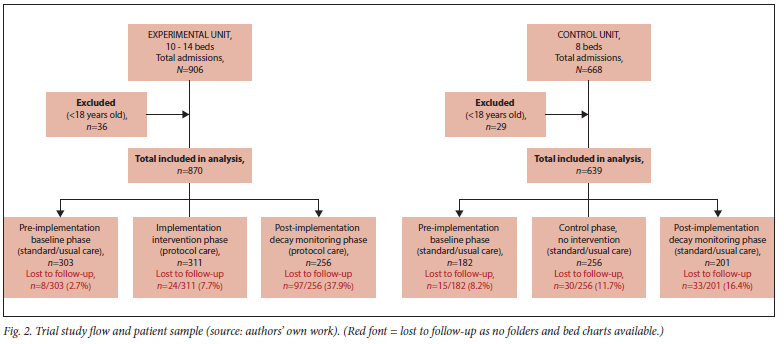
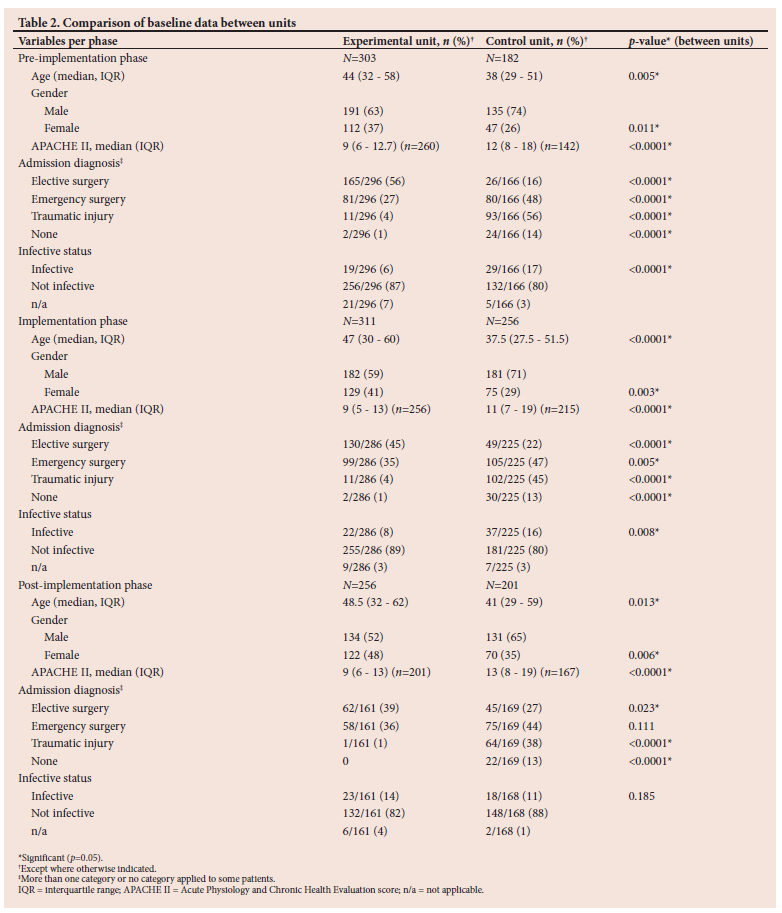
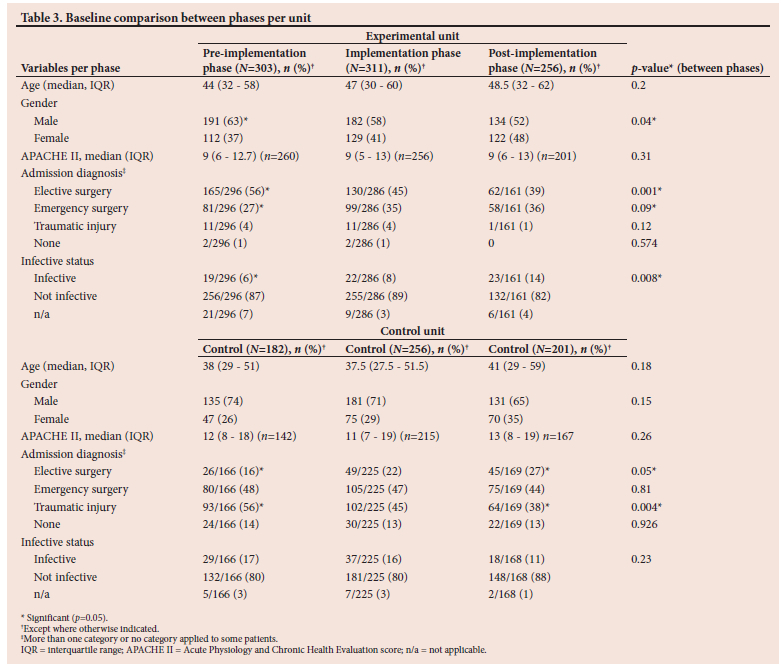
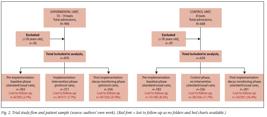
Trial data on 1 509 ICU patient admissions collected over 16 months were analysed (Fig. 2). Baseline data for patients admitted to the two ICUs were significantly different between units (Table 2) and between phases within units (Table 3).
Outcomes
TISS-28. Totals of 3 399 and 1 663 TISS-28 unit day scores were recorded for the experimental and control units, respectively. For every 1-day increase in time, the adjusted TISS-28 score increased by 0.07 units in the experimental unit and decreased by 0.04 units in the control unit over the entire period of measurement. On average, the adjusted TISS-28 scores were 2.58 units (27.3 minutes) higher in the implementation phase than in the pre-implementation phase (p<0.001), and 3.04 units (32.2 minutes) higher after than before implementation (p<0.001) in the experimental unit and in all phases in the control unit.
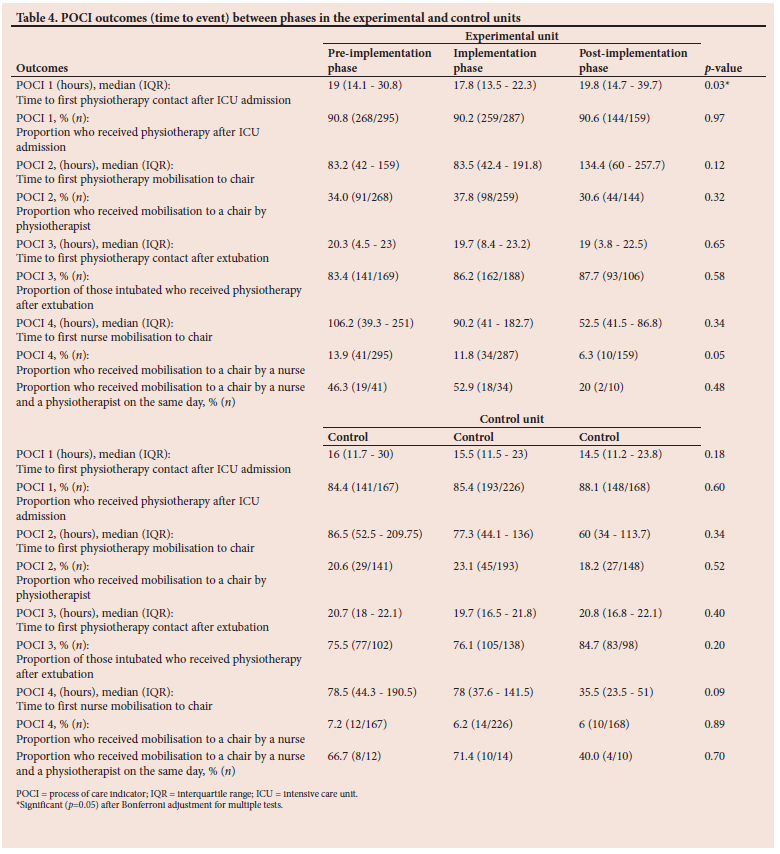
POCIs. The median time to first contact with a physiotherapist after admission (POCI 1) was significantly shorter (17.8 hours) during implementation (p=0.03) than after implementation in the experimental unit (Table 4). Only a third of all patients who were treated by a physiotherapist (34.7%; «=233/671) in the experimental unit were mobilised to a chair (POCI 2), with no impact of the protocol implementation on the proportion of mobilisations to chair (p=0.32) between phases. A smaller proportion of patients were mobilised to a chair by nursing practitioners (POCI 4) during and after protocol implementation compared with before protocol implementation (p=0.05). No differences between phases were observed in the control unit (Table 4). There was no difference between the units in the proportion of patients who received physiotherapy after ICU admission (POCI 1) (p=0.44) and after being extubated (POCI 3) (p=0.12). The majority (>84%) of patients in both units received physiotherapy. Compared with the control unit, a significantly higher proportion of all patients in the experimental unit who received physiotherapy were mobilised to a chair by the physiotherapists (POCI 2) (34.7% («=233/671) v. 21% (n=101/482) in the control unit) (p<0.0001) and by the nurses (POCI 4) (12% (n=85/741) v. 6.4% («=36/561) in the control unit) (p=0.003) (Table 4). There was a higher likelihood of patients in the experimental unit than in the control unit being mobilised to a chair by a nurse (POCI 4) after implementation (adjusted OR 0.5; 95% CI 0.3 - 0.9; p=0.03), and the intervention had no effect on the likelihood of patients receiving POCI 1 - 3 during and post implementation. The probability of patients in the experimental unit experiencing the POCI 1 event earlier was significantly greater (HR 1.2; 95% CI 1.0 - 1.4; p=0.02) during the implementation phase compared with the control unit. The observed increase in the likelihood of experiencing the POCI 1 event earlier was not sustained during the post-implementation phase (HR 1.1; 95% CI 0.9 - 1.3; p=0.37). For patients admitted to the experimental unit following protocol implementation, the likelihood of being mobilised to a chair earlier by a nurse practitioner was significantly greater (HR 2.5; 95% CI 1.4 - 4.3; p=0.001) compared with patients nursed in the control unit.
No adverse events (safety outcome) during physiotherapy mobilisation of patients into a chair were documented in any of the physiotherapy notes for the entire sample of patients mobilised into a chair (n=334) by the physiotherapists in both units.
Implementation fidelity was high. All the physiotherapists in the experimental unit (100%) received the paper-based/electronic handbook and reminders (pocket cards and posters displayed), 81 - 86% attended the four 2-hour workshops, and only 76% attended the 1-hour grand rounds/bedside teaching sessions. Reasons for non-attendance included sick/staff leave, compulsory administrative meetings, and a community service physiotherapist who was no longer with the department at the time of the grand rounds/bedside teaching sessions.
Qualitative findings from the interviews with the physiotherapists
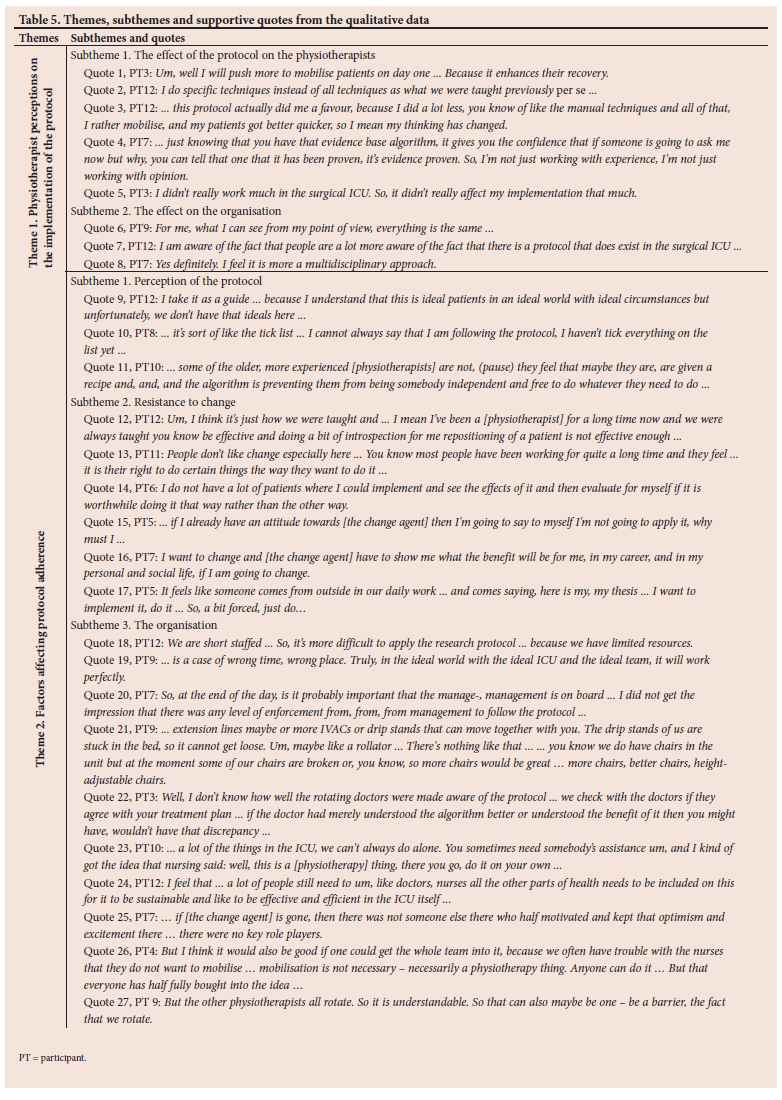
Thirteen of the 17 physiotherapists (76%) attended introductory meetings, and 12 (71%) indicated their willingness to participate in the qualitative study and were interviewed. Their median age was 34 years and their median length of general work experience was 9 years. Two themes, with two and three subthemes, respectively, were identified from the data when exploring the implementation process and its effect on the intervention, supported by verbatim quotes (Table 5). All non-English quotes have been translated into English.
Theme 1. Physiotherapist perceptions on the implementation of the protocol.
Subtheme 1. The effect of the protocol on the physiotherapists: my thinking has changed'
The implementation of the protocol impacted on participants' decisionmaking and practice of physiotherapy. The value of mobilisation as a treatment technique was highlighted. Physiotherapists reported mobilising patients earlier and using higher, functional and more patient-specific treatment techniques compared with before the implementation process. They perceived changes in their clinical reasoning and increased confidence in their decision-making as a result of the protocol implementation. Not all physiotherapists perceived the protocol as affecting their practice. The time physiotherapists spent in the unit affected their perception of the impact of the protocol on their practice (Table 5, quotes 1 - 5).
Subtheme 2. The effect on the organisation:' from my point of view, everything is the same ..'
The perceptions regarding the effect of the implementation of the protocol varied. Reported changes included SICU staff being more aware of the protocol and that there was an improved multidisciplinary approach in the experimental unit (Table 5, quotes 6 - 8).
Theme 2. Factors affecting protocol adherence
Subtheme 1. Perception of the protocol: '1 take it as a guide...'
Participants' perceptions of how to use the protocol affected their attitude and adherence to the protocol (Table 5, quotes 9 - 11).
Subtheme 2. Resistance to change: 'People don't like change especially here
Resistance to change and years of clinical experience affected protocol adherence. When the benefits of following the protocol were not apparent, physiotherapists were resistant to adhering to the protocol. Physiotherapists' perceptions regarding the reasons for the implementation of the protocol affected their adherence to the protocol (Table 5, quotes 12 - 17).
Subtheme 3. The organisation: is a case of wrong time, wrong place
The participants perceived that both the organisation of the physiotherapy department and that of the SICU affected their adherence to the protocol. Factors related to the physiotherapy department that affected protocol adherence included the weekend policy, shortage and workload of physiotherapists, lack of support from management, limited treatment time, and participants being allocated to a particular work area. In the SICU it was perceived that limited resources (equipment), regular turnover of all health disciplines, unavailability of nursing staff to assist with mobilisation, and lack of a team approach and communication between SICU team members affected protocol adherence. Participants perceived that a team approach was necessary for the protocol to be sustainable in the SICU. They reasoned that if all health disciplines involved in the SICU would manage and adhere to the protocol, staff would be in agreement with treatments and have shared responsibilities and mutual goals, which was not the case, as it was perceived that care occurred in silos with each discipline working independently and not as a team in ICU patient care and implementation of EBPs. Furthermore, they felt that if the change agent was no longer available, there were no key role players to continue to motivate use of and adherence to the protocol, and they did not consider themselves as change agents to educate the ICU team (Table 5, quotes 18 - 27).
Discussion
The implementation process had a limited effect on the physiotherapeutic management of patients, and no effect on nursing workload. The process increased the proportion of patients being mobilised to a chair and the likelihood of patients receiving physiotherapy assessment and treatment earlier in the course of their critical illness, and ensured earlier mobilisation to a chair by a nursing practitioner. However, the changes were not sustained after implementation. Implementation studies in LMICs and in ICU settings are sparse,[1] motivating the need to share the findings of this study.
While a rigorous implementation process[25] guided by the CFIR[25] was followed, no sustained change in clinical practice resulted. This finding is not new. Our findings confirm the findings of a review of implementation studies conducted in adult critical care units in LMICs[1] that lack of resources is a barrier to implementation. According to the review, lack of resources and infrastructure impeded implementation, and high staff turnover resulted in loss of continuity of implementation.[1] On the basis of our results, confirmed by the literature, we argue that to be effective in complex environments, implementation needs a different approach. Both contexts in the present study are complex and affected the outcome of the trial. First, the resources available in LMICs are limited, and second, the multidisciplinary nature of an ICU setting needs greater understanding.
Lack of resources has been identified as a barrier to uptake of evidence-based guidelines in multiple studies across a variety of disciplines.[1,9,30-34] Availability of a physiotherapy service in ICUs[9,30,31] coexisting with lack of resources in the units, including equipment, and a high turnover of staff have been reported across a variety of resource-constrained settings,[1,32-34] including SA.[35] These organisational barriers to implementation are not unique to SA and exist in many units and physiotherapy departments internationally.[30-34] Anaesthetists were unable to implement sepsis guidelines effectively in an African ICU owing to a lack of material resources and a severe shortage of health workers.[1,36] In another review of barriers to and facilitators of implementing interventions to improve appropriate antibiotic use in LMIC ICUs, 30 studies reported barriers related to the organisational environment in which interventions were conducted.[37] The review identified that infrastructure constraints and a high turnover of medical staff prevented the successful implementation of antimicrobial stewardship programmes in these ICUs.[37]
The organisational environment speaks to the structural characteristics construct of the inner setting of the CFIR.[13] Our study confirms that structural characteristics of the organisation within which the protocol is implemented, including staff shortages and high staff turnover, lack of ICU team assistance, lack of knowledge and support, workload allocation and rotation in the unit, and lack of equipment, are barriers to implementation. These structural characteristics need to be addressed in order to improve implementation success. Interventions addressing structural and organisational changes in physiotherapy departments and organisation of the ICU are recommended and supported by the current evidence.[1,14,23,36,37]
The complex multidisciplinary nature of the ICU needs to be considered when implementing a discipline-specific protocol. Our implementation initiative focused on a single discipline in a multidisciplinary unit, as there were different physiotherapists in the physiotherapy department providing the service and care in this unit. However, our study data highlight the importance of a unit team approach rather than a discipline-specific approach. The physiotherapists perceived that success in implementation would be possible if there was ICU team consensus on treatment plans, and shared responsibilities and goals for patient care and outcomes. Even if you want to change practice in a single discipline in the multidisciplinary ICU context, you still require support and input from the rest of the team, including team communication.[14,38-41] The physiotherapists perceived that lack of knowledge and support of the ICU team members with regard to the physiotherapy protocol implemented affected the sustainability of the implementation. However, they did not voice in the interviews whether they had attempted to educate the ICU team during and after implementation. Furthermore, they did not seem to perceive themselves as change agents. They seemed reliant on the research change agent, stating there were no key role players to motivate the EBP in the ICU. This perceived lack of key role players to act as change agents for implementation could be deemed a barrier to EBP implementation, adherence and sustainability, and a gap in the evidence to be further explored.
Within the ICU, the discipline-specific workflow must be incorporated into the multidisciplinary team workflow needs of the unit. We propose that the integration of ICU team members should be co-ordinated and compatible with the team activities related to ICU patient care. Reflecting on the process, we conclude that incompatible clinical or service workflow within a multidisciplinary context such as an ICU is a barrier to implementation that needs exploration. Discipline-specific protocols require buy-in and support from the entire ICU team and hospital management to improve the uptake of EBPs in ICUs.
It may be valuable to consider reorganisation of the physiotherapy workflow/services and prioritisation of physiotherapy services and care through organisational change of physiotherapy departments that addresses the incompatible workflow of physiotherapists with the rest of the multidisciplinary ICU team in resource-constrained settings. [1,14] Such a change may result in improved implementation, evidence-based practice, quality of care and ICU patient outcomes. Including a workflow analysis of departments and ICUs in the hospital setting as part of the CFIR may be useful if it is intended to implement new clinical practices in the ICU, which is not a discipline-specific team but an interconnected team of different healthcare disciplines. Workflow compatibility for improved implementation seems possible, and is recommended in resource-constrained ICU settings and supported by current reviews of ICU implementation studies in LMICs.[1,14]
The present study had a few limitations. The differences between the units, where the control unit had a higher burden of disease with more trauma and severely ill patients, which are known barriers to early mobilisation protocols,[42] could be considered a limitation, specifically to early mobilisation out of bed into a chair by the physiotherapist and nurse and possibly affecting this POC outcome. However, the POCIs (time to event) were adjusted for APACHE II (severity of illness), thus eliminating this confounder when evaluating effectiveness of the implementation (early physiotherapy mobilisation into a chair) between the two units. The use of attendance alone was not necessarily the best measure for implementation fidelity. True assessment of implementation fidelity would require checklists, observations and monitoring of the physiotherapists' use of the protocol, requiring additional time and human resources, and was not feasible in this study owing to limited human and financial resources. While future studies could consider more detailed assessment, our limitations highlight the challenges in implementation in resource-constrained LMIC ICUs. In the SA context, physiotherapists working in ICUs across the country are generally young, with minimal ICU work experience.[43] The protocol is a way of screening and assessing SICU patients following a stepwise procedure to guide and facilitate clinical reasoning, and can assist young, less-experienced physiotherapists in evidence-based management of ICU patients.[9,23] The grand rounds/bedside teaching sessions in this study allowed for interactive discussion among the group of physiotherapists who received the implementation intervention, testing their understanding of the use of the protocol on patients in the experimental unit. The qualitative enquiry gave further insight into implementation exposure and protocol adherence, and provided another way to determine and understand the physiotherapists' use of the protocol. Delivering the implementation intervention for uptake and adherence to the EBP to the physiotherapists working in the experimental unit only was noted as an important limitation to this intensive care rehabilitation implementation trial. As previously highlighted, knowledge of and support from the ICU team regarding the protocol could promote its sustainability.
Conclusion
An implementation process using a tailored multifaceted implementation strategy and guidance from the CFIR did not improve uptake of or adherence to an evidence-based physiotherapy protocol in the ICU. The qualitative data highlight the importance of organisational change and support from the physiotherapy departments providing services to ICUs, while also addressing the healthcare needs of a diverse group of hospitalised patients. The study highlights the importance of taking the next step towards implementation in complex environments. Moving forward, a multidimensional approach to implementation of evidence in the ICU is needed. How that process is defined will need thought and rigorous evaluation. The information in this article can inform the new approach to facilitate the uptake of evidence and ensure sustainable change through addressing the structural and organisational aspects of physiotherapy service delivery and care and the inclusion of a multidisciplinary team approach to the implementation of any discipline-specific EBP in the intensive care setting.
Declaration. The research for this study was done in partial fulfilment of the requirements for FK's PhD degree at Stellenbosch University and JJM's MSc (Physiotherapy) degree at Stellenbosch University.
Acknowledgements. The authors thank all who participated in the study.
Author contributions. The authors declare that they all contributed significantly to the preparation of this manuscript and approved the final version of the manuscript for submission.
Data availability. The datasets generated and analysed during the present study are available from the corresponding author (FK) on reasonable request. Any restrictions or additional information regarding data access can be discussed with the corresponding author.
Funding. The authors would like to acknowledge the South African Medical Research Council (Self-Initiated Research (SIR) grant 2014), the National Research Foundation (NRF) Thuthuka (grant no. 87937) and Harry Crossley Foundation (2014) for funding the project.
Conflicts of interest. None.
References
-
1. Wagstaff D, Arfin S, Korver A, et al. Interventions for improving critical care in low- and middle-income countries: A systematic review. Intensive Care Med 2024;50(6):832-848. https://doi.org/10.1007/s00134-024-07377-9 [published correction appears in Intensive Care Med. 2024 Jul;50(7):1210. https://doi.org/10.1007/s00134-024-07496-3].
» https://doi.org/10.1007/s00134-024-07377-9 -
2. Ramalho F, Oliveira A, Machado A, et al. Physiotherapists in intensive care units: Where are we? Pulmonology 2024;30(4):319-323. https://doi.org/10.1016/j.pulmoe.2024.02.004
» https://doi.org/10.1016/j.pulmoe.2024.02.004 -
3. Breimaier HE, Halfens RJ, Lohrmann C. Effectiveness of multifaceted and tailored strategies to implement a fall-prevention guideline into acute care nursing practice: A before-and-after, mixed-method study using a participatory action research approach. BMC Nurs 2015;14:18. https://doi.org/10.1186/s12912-015-0064-2
» https://doi.org/10.1186/s12912-015-0064-2 -
4. Ashkenazy S, Ganz FD, Kuniavsky M, et al. Patient mobilisation in the intensive care unit: Assessing practice behavior - a multi-center point prevalence study. Intensive Crit Care Nurs 2024;80:103510. https://doi.org/10.1016/j.iccn.2023.103510
» https://doi.org/10.1016/j.iccn.2023.103510 -
5. Black C, Sanger H, Battle C, Eden A, Corner E. Feasibility of mobilisation in ICU: A multi-centre point prevalence study of mobility practices in the UK. Crit Care 2023;27(1):217. https://doi.org/10.1186/s13054-023-04508-4
» https://doi.org/10.1186/s13054-023-04508-4 -
6. Landes SJ, McBain SA, Curran GM. An introduction to effectiveness-implementation hybrid designs. Psychiatry Res 2019;280:112513. https://doi.org/10.1016/j.psychres.2019.112513
» https://doi.org/10.1016/j.psychres.2019.112513 -
7. Fontela PC, Lisboa TC, Forgiarini-Júnior LA, Friedman G. Early mobilisation practices of mechanically ventilated patients: A 1-day point-prevalence study in southern Brazil. Clinics (Sao Paulo) 2018;73:e241. https://doi.org/10.6061/clinics/2018/e241
» https://doi.org/10.6061/clinics/2018/e241 -
8. Bernhardsson S, Larsson ME, Eggertsen R, et al. Evaluation of a tailored, multi-component intervention for implementation of evidence-based clinical practice guidelines in primary care physical therapy: A non-randomised controlled trial. BMC Health Serv Res 2014;14:105. https://doi.org/10.1186/1472-6963-14-105
» https://doi.org/10.1186/1472-6963-14-105 -
9. Hanekom S, Louw QA, Coetzee AR. Implementation of a protocol facilitates evidence-based physiotherapy practice in intensive care units. Physiotherapy 2013;99(2):139-145. https://doi.org/10.1016/j.physio.2012.05.005
» https://doi.org/10.1016/j.physio.2012.05.005 -
10. Schol CMA, van Mol MMC, Berger E, Leerentveld C, Gommers DAMPJ, Ista E. Implementation of a digital diary in the intensive care unit; understanding the facilitators and barriers: A qualitative exploration. Aust Crit Care 2024;37(5):672-679. https://doi.org/10.1016/j.aucc.2024.04.002
» https://doi.org/10.1016/j.aucc.2024.04.002 -
11. Verweij L, Oesch S, Naef R. Tailored implementation of the FICUS multicomponent family support intervention in adult intensive care units: Findings from a mixed methods contextual analysis. BMC Health Serv Res 2023;23(1):1339. https://doi.org/10.1186/s12913-023-10285-1
» https://doi.org/10.1186/s12913-023-10285-1 -
12. Balas MC, Burke WJ, Gannon D, et al. Implementing the awakening and breathing coordination, delirium monitoring/management, and early exercise/mobility bundle into everyday care: Opportunities, challenges, and lessons learned for implementing the ICU Pain, Agitation, and Delirium Guidelines. Crit Care Med 2013;41(9 Suppl 1):S116-S127. https://doi.org/10.1097/CCM.0b013e3182a17064
» https://doi.org/10.1097/CCM.0b013e3182a17064 -
13. Damschroder LJ, Reardon CM, Widerquist MAO, Lowery J. The updated Consolidated Framework for Implementation Research based on user feedback. Implement Sci 2022;17(1):75. https://doi.org/10.1186/s13012-022-01245-0
» https://doi.org/10.1186/s13012-022-01245-0 -
14. Silver S, Jones KC, Redmond S, et al. Facilitators and barriers to the implementation of new critical care practices during COVID-19: A multicenter qualitative study using the Consolidated Framework for Implementation Research (CFIR). BMC Health Serv Res 2023;23(1):272. https://doi.org/10.1186/s12913-023-09209-w
» https://doi.org/10.1186/s12913-023-09209-w -
15. Kirk MA, Kelley C, Yankey N, Birken SA, Abadie B, Damschroder L. A systematic review of the use of the Consolidated Framework for Implementation Research. Implement Sci 2016;11:72. https://doi.org/10.1186/s13012-016-0437-z
» https://doi.org/10.1186/s13012-016-0437-z -
16. Fischer F, Lange K, Klose K, Greiner W, Kraemer A. Barriers and strategies in guideline implementation - a scoping review. Healthcare (Basel) 2016;4(3):36. https://doi.org/10.3390/healthcare4030036
» https://doi.org/10.3390/healthcare4030036 -
17. Baker R, Camosso-Stefinovic J, Gillies C, et al. Tailored interventions to address determinants of practice. Cochrane Database Syst Rev 2015, Issue 4. Art. No.: CD005470. https://doi.org/10.1002/14651858.CD005470.pub3
» https://doi.org/10.1002/14651858.CD005470.pub3 -
18. Wensing M, Huntink E, van Lieshout J, et al. Tailored implementation of evidence-based practice for patients with chronic diseases. PLoS ONE 2014;9(7):e101981. https://doi.org/10.1371/Journal.pone.0101981
» https://doi.org/10.1371/Journal.pone.0101981 -
19. Cahill NE, Murch L, Cook D, Heyland DK; Canadian Critical Care Trials Group. Implementing a multifaceted tailored intervention to improve nutrition adequacy in critically ill patients: Results of a multicenter feasibility study. Crit Care 2014;18(3):R96. https://doi.org/10.1186/cc13867
» https://doi.org/10.1186/cc13867 -
20. Cahill NE, Murch L, Cook D, Heyland DK; Canadian Critical Care Trials Group. Improving the provision of enteral nutrition in the intensive care unit: A description of a multifaceted intervention tailored to overcome local barriers. Nutr Clin Pract 2014;29(1):110-117. https://doi.org/10.1177/0884533613516512
» https://doi.org/10.1177/0884533613516512 -
21. Sinuff T, Muscedere J, Cook DJ, et al. Implementation of clinical practice guidelines for ventilator-associated pneumonia: A multicenter prospective study. Crit Care Med 2013;41(1):15-23. https://doi.org/10.1097/CCM.0b013e318265e874
» https://doi.org/10.1097/CCM.0b013e318265e874 -
22. Leeman J, Rohweder C, Lafata JE, et al. A streamlined approach to classifying and tailoring implementation strategies: Recommendations to speed the translation of research to practice. Implement Sci Commun 2024;5(1):65. https://doi.org/10.1186/s43058-024-00606-8
» https://doi.org/10.1186/s43058-024-00606-8 -
23. Hanekom SD, Louw Q, Coetzee A. The way in which a physiotherapy service is structured can improve patient outcome from a surgical intensive care: A controlled clinical trial. Crit Care 2012;16(6):R230. https://doi.org/10.1186/cc11894
» https://doi.org/10.1186/cc11894 -
24. Aung YN, Nur AM, Ismail A, Aljunid SM. Characteristics and outcome of high-cost ICU patients. Clinicoecon Outcomes Res 2019;11:505-513. https://doi.org/10.2147/CEOR.S209108
» https://doi.org/10.2147/CEOR.S209108 -
25. Karachi F, Gosselink R, Hanekom S. Implementation and evaluation of a validated evidence-based physiotherapy protocol in a surgical ICU: A controlled before and after study. PhD (Physiotherapy) dissertation. Cape Town: Stellenbosch University, 2018. https://scholar.sun.ac.za/items/b1d07cc2-c6c9-492a-bd88-59f95223ee1a (accessed 6 January 2025).
» https://scholar.sun.ac.za/items/b1d07cc2-c6c9-492a-bd88-59f95223ee1a -
26. Maritz JJ, Karachi F, Hanekom S. Perception of the implementation process of a physiotherapy protocol in a surgical ICU: The physiotherapists' perspectives. MSc (Physiotherapy) thesis. Cape Town: Stellenbosch University, 2017. https://scholar.sun.ac.za/handle/10019.1/103528 (accessed 6 January 2025).
» https://scholar.sun.ac.za/handle/10019.1/103528 -
27. Balas MC, Pun BT, Pasero C, et al. Common challenges to effective ABCDEF bundle implementation: The ICU Liberation Campaign experience. Crit Care Nurse 2019;39(1):46-60. https://doi.org/10.4037/ccn2019927
» https://doi.org/10.4037/ccn2019927 -
28. Sandström B, Willman A, Svensson B, Borglin G. Perceptions of national guidelines and their (non) implementation in mental healthcare: A deductive and inductive content analysis. Implement Sci 2015;10:43. https://doi.org/10.1186/s13012-015-0234-0
» https://doi.org/10.1186/s13012-015-0234-0 -
29. Ahmed SK. The pillars of trustworthiness in qualitative research. J Med Surg Public Health 2024;2:100051. https://doi.org/10.1016/j.glmedi.2024.100051
» https://doi.org/10.1016/j.glmedi.2024.100051 -
30. Karachi F, Gosselink R, Hanekom S. Public sector physiotherapists' organisation and profile: Implications for intensive care service. S Afr J Physiother 2023;79(1):1803. https://doi.org/10.4102/saJp.v79i1.1803
» https://doi.org/10.4102/saJp.v79i1.1803 -
31. Çakmak A, Ince Dl, Saglam M, et al. Physiotherapy and rehabilitation implementation in intensive care units: A survey study. Turk Thorac J 2019;20(2):114-119. https://doi.org/10.5152/TurkThoracJ.2018.18107
» https://doi.org/10.5152/TurkThoracJ.2018.18107 -
32. Anku EK, Samad LO, Akafity G, Amoo SA, Hill LT. Nutrition support practices in the intensive care unit of a tertiary hospital in Ghana. South Afr J Crit Care 2024;40(1):e1396. https://doi.org/10.7196/SAJCC.2024.v40i1.1396
» https://doi.org/10.7196/SAJCC.2024.v40i1.1396 - 33. Blaauw R. Relevance and application of clinical practice guidelines in different settings. South Afr J Crit Care 2024;40(1):e2155.
-
34. Salvitti S, Repossini E. Perception, experience and knowledge of early physiotherapy in intensive care units of Rome: A survey. Monaldi Arch Chest Dis 2020;90(4):1412. https://doi.org/10.4081/monaldi.2020.1412
» https://doi.org/10.4081/monaldi.2020.1412 -
35. Tadyanemhandu C, van Aswegen H, Ntsiea V. Organisational structures and early mobilisation practices in South African public sector intensive care units - a cross-sectional study. J Eval Clin Pract 2021;27(1):42-52. https://doi.org/10.1111/Jep.13378
» https://doi.org/10.1111/Jep.13378 -
36. Jacob ST, West TE, Banura P. Fitting a square peg into a round hole: Are the current Surviving Sepsis Campaign guidelines feasible for Africa? Crit Care 2011;15(1):117. https://doi.org/10.1186/cc9981
» https://doi.org/10.1186/cc9981 -
37. Wu S, Tannous E, Haldane V, Ellen ME, Wei X. Barriers and facilitators of implementing interventions to improve appropriate antibiotic use in low- and middle-income countries: A systematic review based on the Consolidated Framework for Implementation Research. Implement Sci 2022;17(1):30. https://doi.org/10.1186/s13012-022-01209-4
» https://doi.org/10.1186/s13012-022-01209-4 -
38. Lin FF, Chen Y, Rattray M, et al. Interventions to improve patient admission and discharge practices in adult intensive care units: A systematic review. Intensive Crit Care Nurs 2024;85:103688. https://doi.org/10.1016/J.iccn.2024.103688
» https://doi.org/10.1016/J.iccn.2024.103688 -
39. Plotnikoff KM, Krewulak KD, Hernández L, et al. Patient discharge from intensive care: An updated scoping review to identify tools and practices to inform high-quality care. Crit Care 2021;25(1):438. https://doi.org/10.1186/s13054-021-03857-2
» https://doi.org/10.1186/s13054-021-03857-2 -
40. Tadyanemhandu C, van Aswegen H, Ntsiea V. Barriers and facilitators to implementation of early mobilisation of critically ill patients in Zimbabwean and South African public sector hospitals: A qualitative study. Disabil Rehabil 2022;44(22):6699-6709. https://doi.org/10.1080/09638288.2021.1970827
» https://doi.org/10.1080/09638288.2021.1970827 -
41. Singam A. Mobilizing progress: A comprehensive review of the efficacy of early mobilisation therapy in the intensive care unit. Cureus 2024;16(4):e57595. https://doi.org/10.7759/cureus.57595
» https://doi.org/10.7759/cureus.57595 -
42. Higgins SD, Erdogan M, Coles SJ, Green RS. Early mobilisation of trauma patients admitted to intensive care units: A systematic review and meta-analyses. InJury 2019;50(11):1809-1815. https://doi.org/10.1016/J.inJury.2019.09.007
» https://doi.org/10.1016/J.inJury.2019.09.007 -
43. Karachi F, Gosselink R, Hanekom S. Public sector physiotherapists' organisation and profile: Implications for intensive care service. S Afr J Physiother 2023;79(1):1803. https://doi.org/10.4102/sajp.v79i1.1803
» https://doi.org/10.4102/sajp.v79i1.1803

Accepted 25 February 2025
Contribution of the study
The study provides insights for rehabilitation implementation in resource-constrained intensive care settings. It highlights the importance of taking the next step towards implementation in complex environments and a new approach to facilitating the uptake of evidence and ensuring sustainable change through addressing the structural and organisational aspects of physiotherapy service delivery and care, and the inclusion of a multidisciplinary team approach to the implementation of any discipline-specific evidence-based protocols in the intensive care setting.