Incidence and outcomes of early hyperglycaemia in critically ill patients
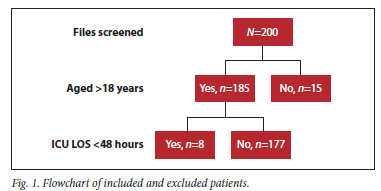
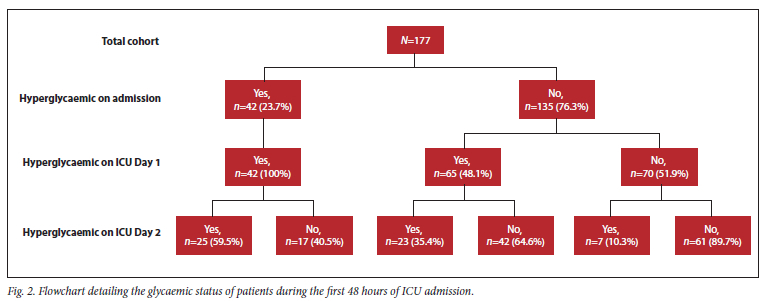
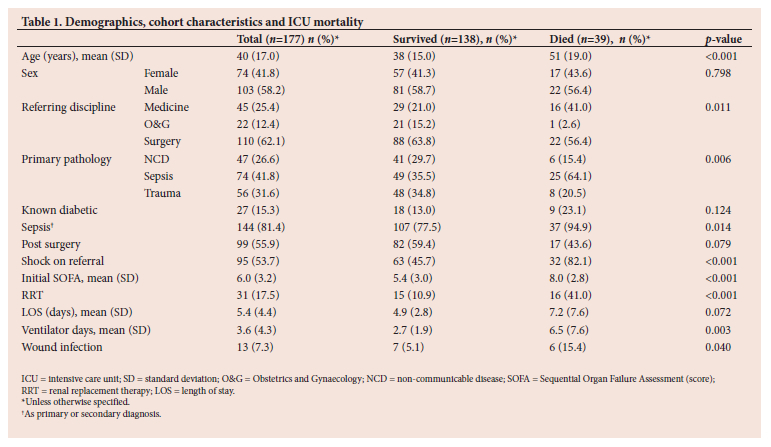
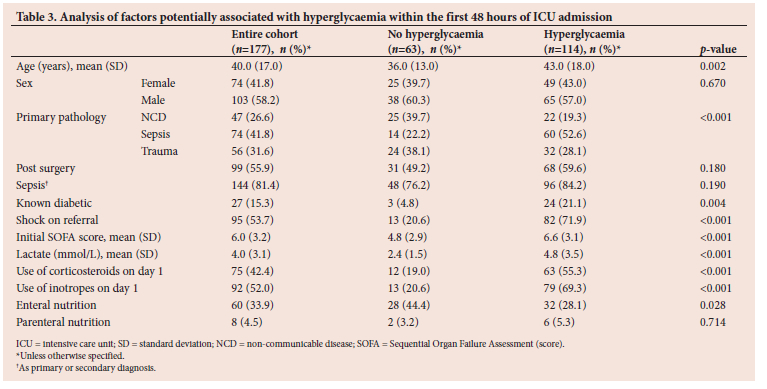
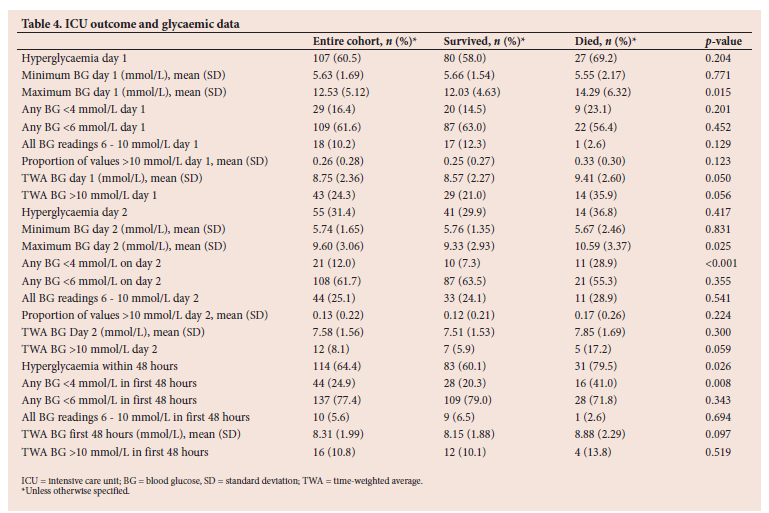
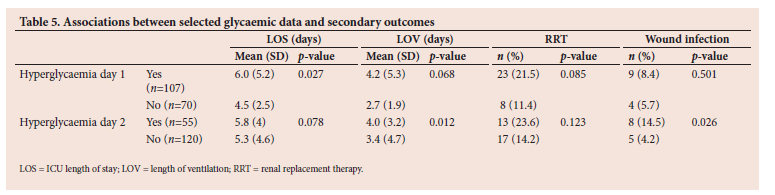
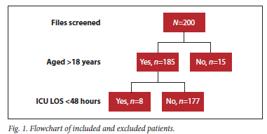
BACKGROUND. Hyperglycaemia is common in hospitalised patients. Acute illness or injury may result in glucose intolerance and insulin resistance leading to hyperglycaemia. There is a lack of data on the incidence and impact of early hyperglycaemia in critically ill patients in South Africa (SA). OBJECTIVES. To determine the incidence of hyperglycaemia within 48 hours of admission to a multidisciplinary SA ICU and to determine if there was any association between blood glucose level and ICU outcomes. METHODS. This was a retrospective observational study of patients admitted to ICU at King Edward VIII Hospital from November 2021 to August 2022. All blood glucose values were recorded within the first 48 hours of admission. The primary outcome was ICU mortality, with secondary outcomes including ICU length of stay (LOS), ventilator days (LOV), renal replacement therapy (RRT) and wound infection. RESULTS. A total of 177 patients were included in the study. Hyperglycaemia with a blood glucose of more than 10 mmol/L within 48 hours of ICU admission occurred more frequently in those who died in ICU (79.5%) v. ICU survivors (60.1%) (p=0.026). Hyperglycaemia was associated with an increase in ICU LOS, LOV and wound infection. No statistically significant relationship was found between hyperglycaemia and RRT. Hypoglycaemia within 48 hours of ICU admission was also associated with an increased ICU mortality. CONCLUSION. Extremes of blood glucose were associated with increased ICU mortality. We recommend a moderate glycaemic control target of 6 - 10 mmol/L in resource-limited settings.
hyperglycaemia; intensive care unit; glycaemic control; critical care; sepsis; shock; diabetes mellitus
 Thumbnail
 Thumbnail