Developing a theory of family care during critical illness
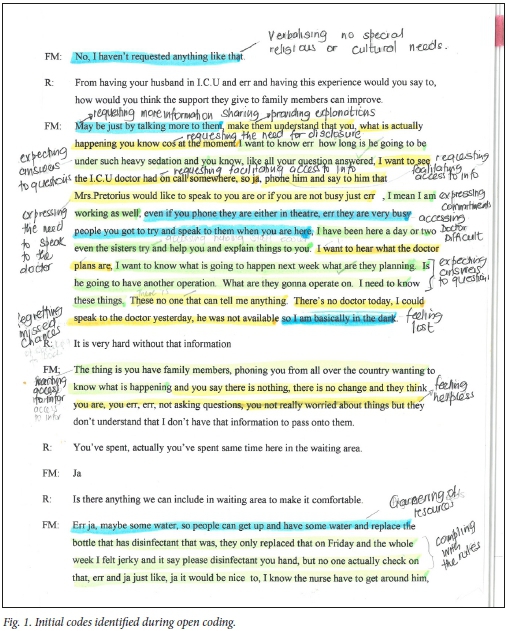
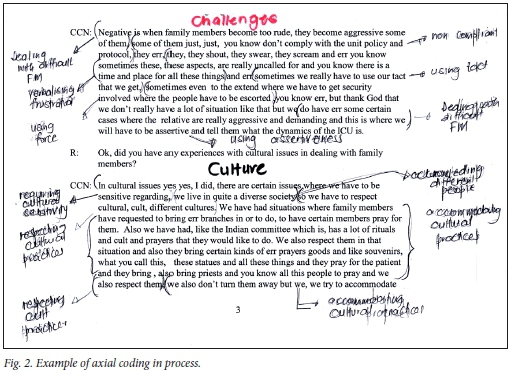
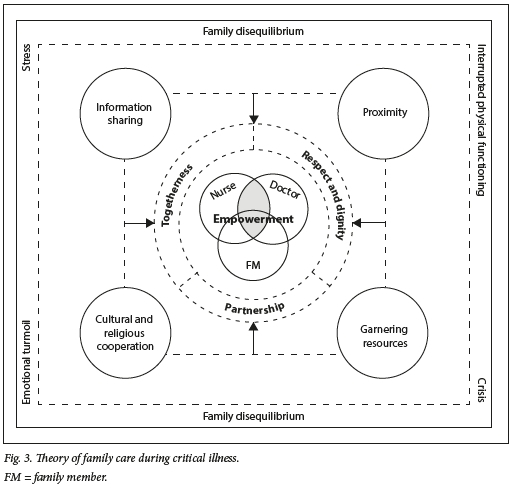
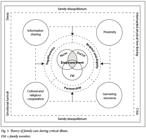
BACKGROUND: The critical illness of a loved one can negatively affect all family members (FMs), leading to the interruption of family functioning and integrity. Hospitalisation is a stressful, unplanned event for both the patient and FMs and is associated with psychological disturbances, emotional distress and altered family roles and functioningOBJECTIVE: To develop a theory of family care in critical care units (CCUs) for the South African settingMETHODS: Grounded theory, based on Strauss and Corbin's school of thought, was used. Audio-recorded in-depth interviews were conducted with 32 participants (9 FMs, 17 critical care nurses and 6 doctors) at a private hospital (3 CCUs) and a state hospital (10 CCUs). Data analysis involved open, axial and selective codingRESULTS: The theory of family care during critical illness was identified. The core concept of the theory is empowerment, informed by the underlying constructs of information sharing, proximity, garnering resources, and cultural and religious cooperationCONCLUSION: The concepts of this theory can equip healthcare professionals in CCUs to provide appropriate family care for meeting the needs of patients' FMs and, in so doing, contribute to families having a more manageable critical care experience during the illness of their loved one
Critical care unit (CCU); family care; family members; grounded theory
 Thumbnail
 Thumbnail
 Thumbnail