Use of intravenous immunoglobulin for the treatment of severe COVID-19 in the Chris Hani Baragwanath Academic Hospital intensive care unit, Johannesburg, South Africa
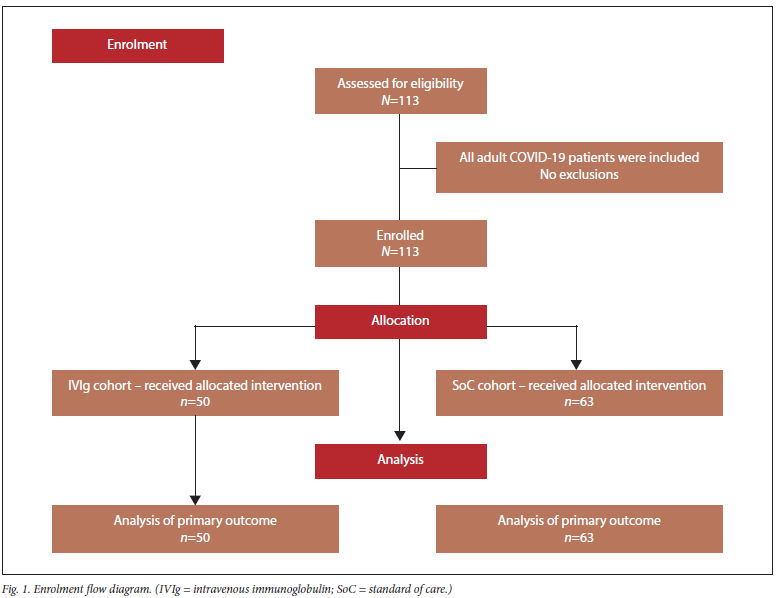
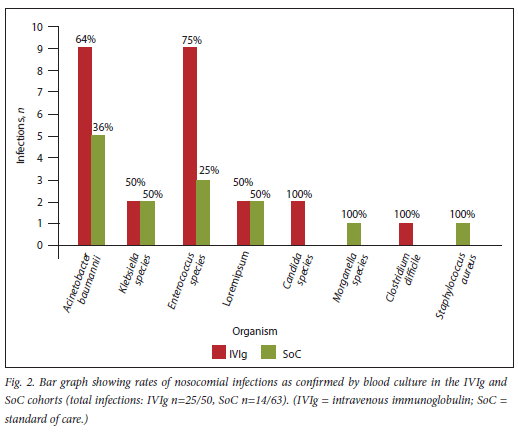
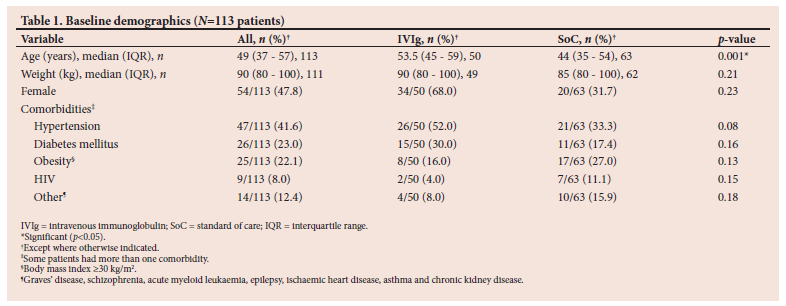
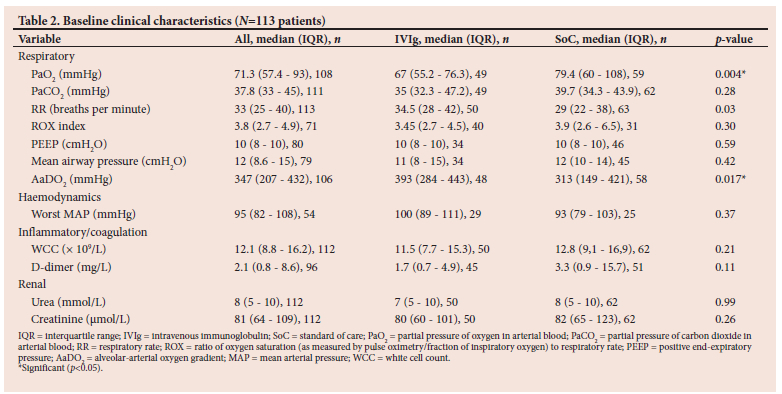
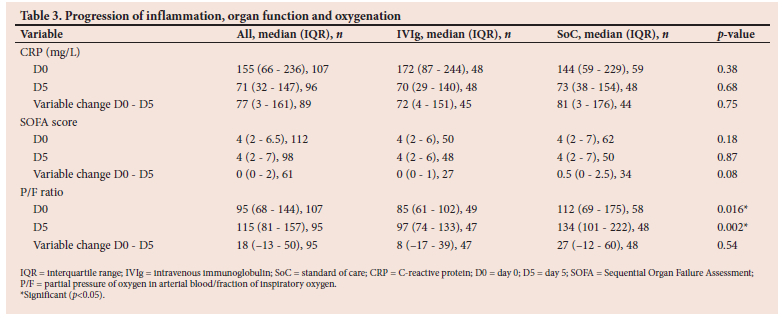
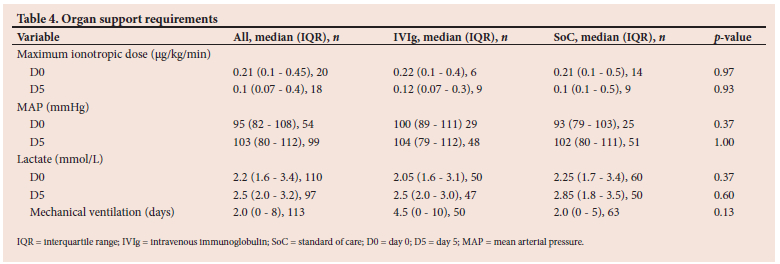
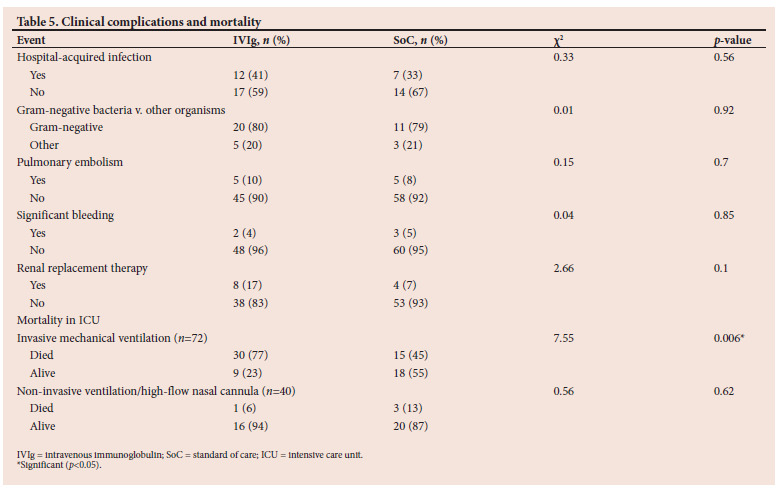
BACKGROUND: COVID-19 infection has a variable clinical presentation, with a small subgroup of patients developing severe disease, requiring intensive care with mechanical ventilation, with an increased mortality rate. South Africa (SA) has experienced multiple waves of this pandemic, spanning the pre-vaccine and vaccine periods. The method and initiation of treatment is a debated topic, changing according to evolving research and the literature. The present study investigated the use of high-dose intravenous immunoglobulin (IVIg) as a salvage therapy after initial medical treatment failure OBJECTIVES: To compare disease progression among critically ill COVID-19 pneumonia patients receiving IVIg therapy with that in patients receiving standard of care (SoC), in respect of inflammation, organ dysfunction and oxygenation METHODS: This was a single-centre, retrospective study of patients admitted to the intensive care unit (ICU) at Chris Hani Baragwanath Academic Hospital, Johannesburg, SA, during the pre-vaccine COVID-19 pandemic. Demographics, inflammatory markers (C-reactive protein (CRP)), organ function (Sequential Organ Failure Assessment (SOFA) score), oxygenation (ratio of partial pressure of oxygen in arterial blood to fraction of inspiratory oxygen (P/F ratio)), overall mortality and complications (nosocomial infections and thromboembolism) were recorded and compared RESULTS: We included 113 eligible patients in the study. The IVIg cohort had a significantly lower initial P/F ratio than the SoC cohort (p=0.01), but the change in P/F ratio was similar (p=0.54). Initial CRP and changes in CRP were similar in the two groups (p=0.38 and p=0.75, respectively), as were initial SOFA score and changes in SOFA score (p=0.18 and p=0.08, respectively) and vasopressor dose on day 0 and day 5 (p=0.97 and p=0.93, respectively). Duration of mechanical ventilation did not differ significantly between the IVIg group and the SoC group (p=0.13). There were no significant differences in measured complications between the two groups. On univariate analysis, the relative risk of death was 1.6 times higher (95% confidence interval (CI) 1.1 - 2.3) in the IVIg group; however, a logistical regression model demonstrated that only a higher P/F ratio (odds ratio (OR) 0.991; 95% CI 0.983 - 0.997) and higher mean airway pressure (OR 1.283; 95% CI 1.026 - 1.604) were significantly associated with ICU mortality CONCLUSION: Use of IVIg in our study was directed at an older population, with significantly worse oxygenation. We found no evidence of adverse effects of immunoglobulin therapy; however, we found no benefit either. Only the P/F ratio and mean airway pressure independently predicted ICU mortality
COVID-19; intravenous immunoglobulin; intensive care unit; Sequential Organ Failure Assessment score; C-reactive protein; P/F ratio; pneumonia; inflammation
 Thumbnail
 Thumbnail