Dysmagnesaemia and outcome in a trauma ICU
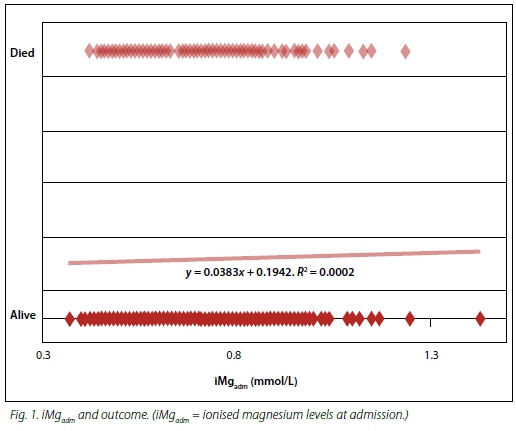
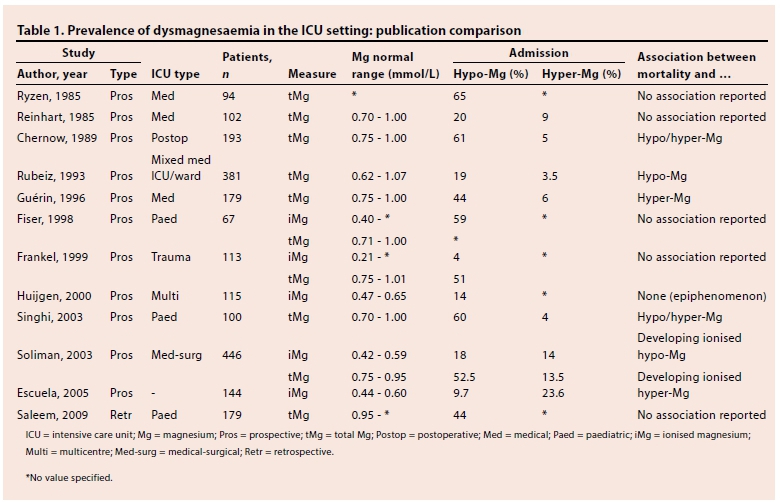
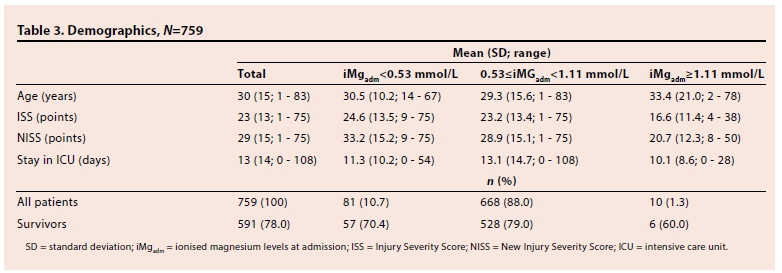
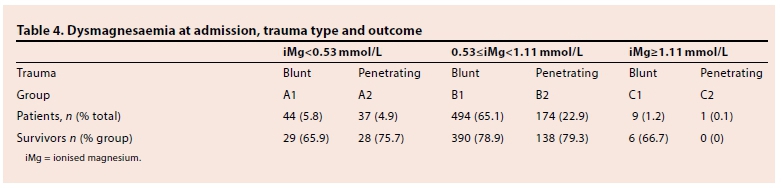
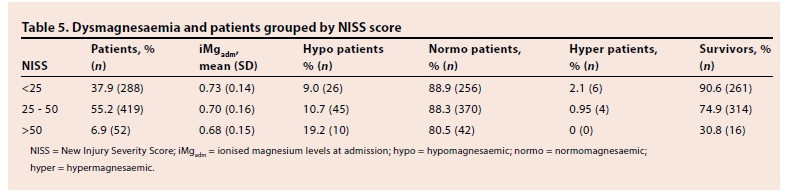
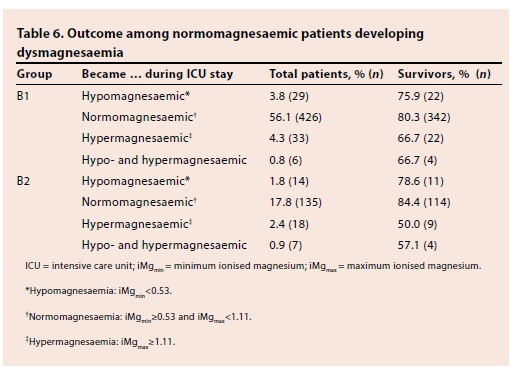
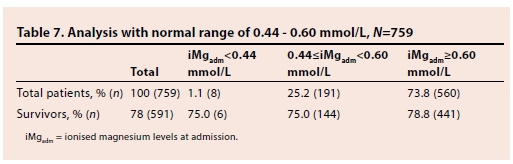
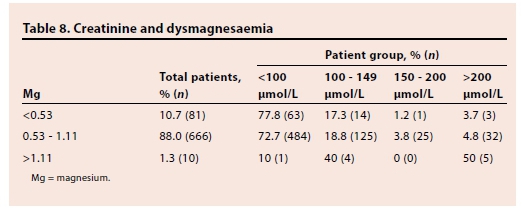
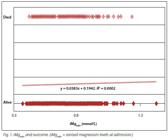
OBJECTIVE: To determine the prevalence of dysmagnesaemia among patients admitted to a trauma intensive care unit (ICU) and to investigate whether dysmagnesaemia at admission correlated with a worse outcome. METHODS: In this retrospective case study of patients admitted to a regional level 1 trauma unit, from April 2007 to November 2010, de-identified patient data were obtained from the local patient database. Patients were divided into three groups (hypomagnesaemic, normomagnesaemic and hypermagnesaemic), which in turn were divided into two subgroups (blunt and penetrating trauma). The mortality between normo- and hypomagnesaemic patients, as well as between the subgroups, was analysed using χ2 tests. The University of KwaZulu-Natal Biomedical Research Ethics Committee approved the study (BE207/09). RESULTS: Of the 759 trauma patients studied, 10.7% were hypomagnesaemic and 1.3% were hypermagnesaemic at admission. No statistically significant difference in mortality was observed between the hypo- and normo-/hypermagnesaemic patients. CONCLUSION: Dysmagnesaemia is common among trauma patients admitted to the ICU, but is not necessarily correlated with a poorer outcome.
Southern African Journal of Critical Care (Online)
 Thumbnail