An investigation into the mobilisation of critically ill patients in a tertiary hospital in South Africa
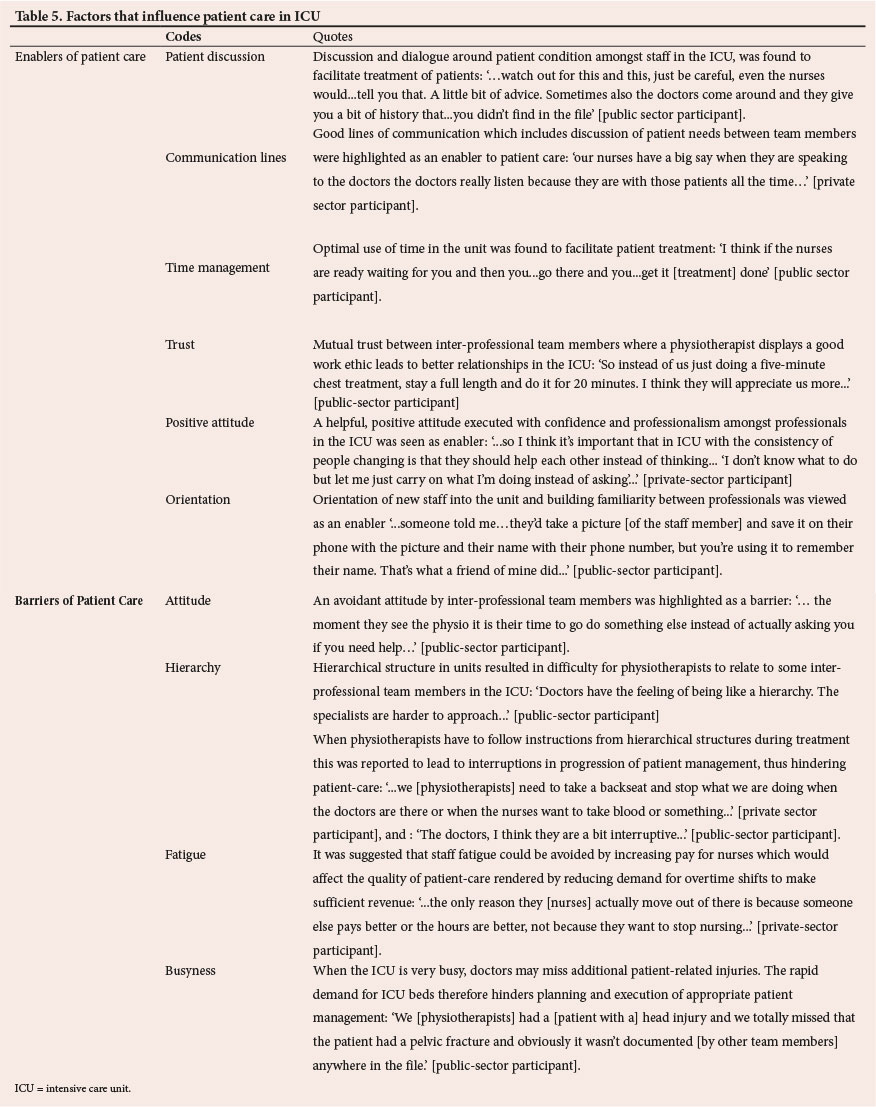
BACKGROUND. Mobilisation of critically ill patients in intensive care units (ICUs) is recognised for its potential to improve patient outcomes. There has been a paradigm shift toward incorporating mobilisation as standard practice in ICUs to mitigate complications associated with immobility. However, implementation remains inconsistent globally, and there is limited evidence regarding practice in South African (SA) ICUs. This study aimed to address this gap by examining mobilisation practices and barriers to mobilisation in a tertiary hospital setting in SA. OBJECTIVES. To describe mobilisation practices and examine staff knowledge of, and barriers to, mobilisation in ICUs at a tertiary hospital in SA. METHODS. An observational cross-sectional study was conducted across four ICUs. Thirty patient folders were reviewed daily over five days to identify mobilisation opportunities. A self-designed review form incorporating safety criteria was used to assess the suitability of these opportunities. In addition, 26 nurses and 16 physiotherapists completed self-administered questionnaires assessing their knowledge of and perceived barriers to mobilisation. RESULTS. The study included 30 patients, with a mean (standard deviation (SD)) length of stay of 15 (15.56) days. Of 107 identified potential mobility events, 77 (72%) were deemed safe for mobilisation. In-bed activities were more common than out-of-bed activities. Staff demonstrated good knowledge of the benefits of mobilisation but scored lower on safety criteria. Key barriers identified by nurses and physiotherapists included staffing shortages (n=19; 73% and n=15; 94%, respectively), excessive sedation (n=18; 69% and n=8; 50%, respectively) and the need for physician orders to mobilise patients (n=15; 58% and n=2; 13%, respectively). CONCLUSION. This study highlights conservative mobilisation practices and significant barriers to mobilisation in ICUs at a tertiary hospital. Targeted educational interventions and organisational changes are necessary to enhance mobilisation practices and improve patient outcomes.
Early mobilisation; barriers; critical illness; knowledge; acute rehabilitation