Implementation strategies to overcome barriers to early mobilisation practices in Zimbabwean and South African public sector ICUs: A Delphi study
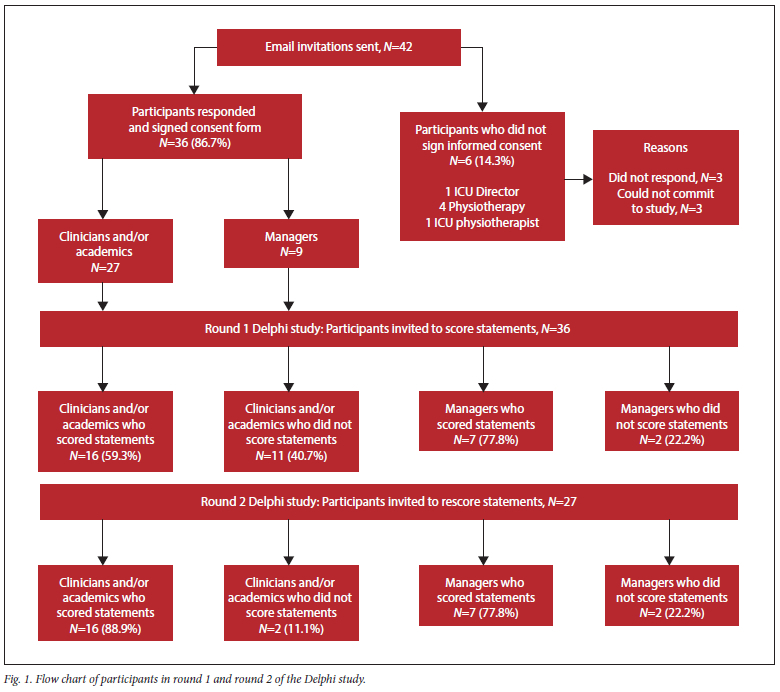
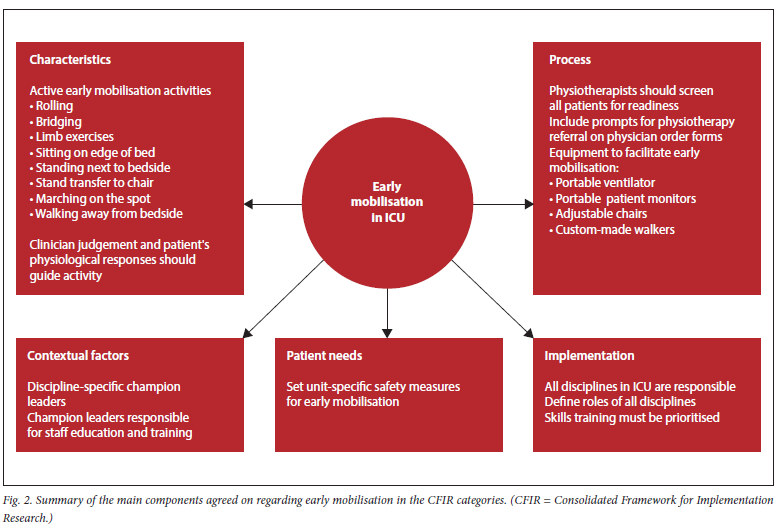
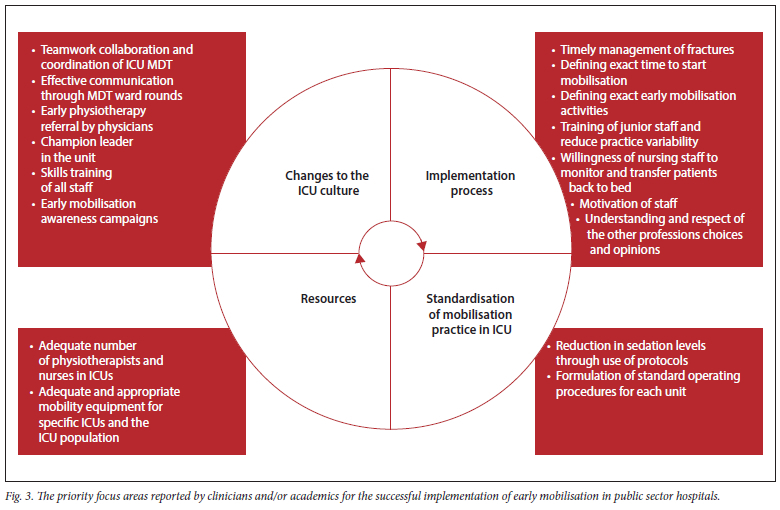
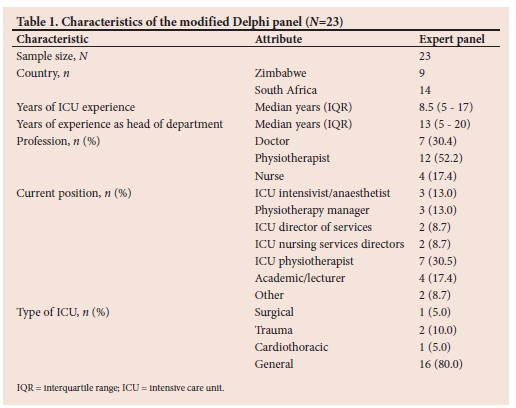
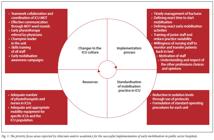
BACKGROUND: Barriers to early mobilisation in healthcare settings encompass various factors, including practical challenges, accountability and the crucial role of leadership OBJECTIVE: To gain consensus from multidisciplinary team members in South African (SA) and Zimbabwean public sector hospitals to formulate implementation strategies addressing identified barriers for early mobilisation METHODS: An online two-round modified Delphi study including 23 experts from SA and Zimbabwe was undertaken. The implementation strategies were aligned with the Consolidated Framework for Implementation Research that outlines five areas impacting implementation RESULTS: The expert panel included intensive care unit (ICU) clinicians, academics and managers, who participated in both Delphi rounds. The median years of ICU experience was 8.5 (range 5 - 17) years, with 16 (80.0%) having a general ICU background. The panel reached consensus on several strategies to standardise early mobilisation practices in ICUs, including defining specific early mobilisation activities, appointing champion leaders, ensuring timely management of fractures, promoting patient admission to specialised units, creating dedicated physiotherapy positions, and providing skills training for staff responsible for implementing early mobilisation activities in ICUs CONCLUSION: The strategies developed represent an important step toward implementation of early mobilisation in routine ICU patient care
Barriers; intensive care unit; expert consensus; early mobilisation; framework for implementation research
 Thumbnail
 Thumbnail
 Thumbnail