A journey of 10 years in analytical method development and environmental monitoring of pharmaceuticals in South African waters
Abstract
Apart from the studies which reported the occurrence of steroid hormones and antibiotics in wastewater treatment plants (WWTPs) back in 2004, 2007 and 2012, the evidence for monitoring of pharmaceuticals in South African water bodies intensified from 2014. Therefore, this study reviewed the analytical methods developed and applied in South Africa for the purpose of monitoring pharmaceuticals and their metabolites in water. At the same time, pharmaceuticals and their metabolites detected in South African waters are reviewed. To date, there is over 100 pharmaceuticals detected in South African waters with most studies focussing on quantitative analysis of non-steroidal anti-inflammatory drugs (NSAID), antibiotics, antiretroviral drugs and carbamazepine. Various sources of pharmaceuticals in the environment are reported, with WWTPs found as the major contributor to their occurrence in South African rivers. Notably, a NSAID, ibuprofen, with concentrations found exceeding 100 μg L-1 in selected WWTPs has also been found at high levels reaching 60 μg L-1 in river water. Mostly, pharmaceuticals detected in wastewater are also reported in corresponding rivers. The present review details pharmaceuticals that should be included in environmental monitoring studies performed in South Africa, while also identifying areas for future research through the research gap analysis.
chromatography; environmental monitoring; pharmaceuticals; sample preparation
INTRODUCTION
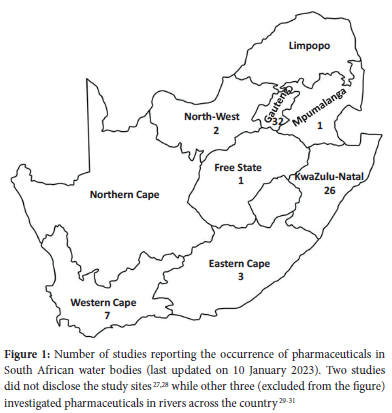
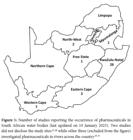
The environmental-based research focussing on the analysis of pharmaceuticals in South Africa became visible when four research articles were published in 2014 which reported the occurrence of selected drugs in South African water systems.1-4 These four research articles provided crucial information into the existing knowledge on pharmaceutical contamination with earlier studies reported the occurrence of steroid hormones 567Figure 1), with most environmental surveys conducted in Gauteng and KwaZulu-Natal provinces.
Besides the occurrence of pharmaceuticals in South African water systems, these compounds have been reported in other environmental sample matrices such as sewage sludge 899-11 Although such plants are not suitable for eating by human beings, they are regarded as food sources for other species. Recent studies conducted in South Africa have discovered the occurrence of pharmaceuticals in estuaries and seawater,12,13 resulting in additional investigations with findings indicating the presence of the same drugs in different marine organisms which include fish and mussels.14,15
Due to the presence of pharmaceuticals in trace amounts in the environment and the complexity of environmental sample matrices, recent South African-based studies have investigated suitable analytical methods for the analysis of pharmaceuticals. Since chromatographic instruments are already known as suitable tools for the identification and quantitation of organics including pharmaceuticals, a great amount of time has been devoted to investigating the sampling and sample preparation tools. In this regard, passive sampling procedures and sample preparation processes which include solid-phase extraction (SPE) and hollow fibre liquid-phase microextraction (HF-LPME) have been finetuned and applied for pharmaceutical analysis.1,3,11
Despite the availability of numerous studies focussing on analytical method development and the occurrence of pharmaceuticals in South African water resources, the available review articles have greatly focussed on highlighting the research findings emanating from Africa as a continent.16-20 However, upon closer navigation into an African perspective, it was discovered that 60% of research studies focussing on monitoring the occurrence of pharmaceuticals in African water bodies were conducted in South Africa.1621,22 There are few review articles that have entirely focussed on the occurrence of pharmaceuticals in South African water systems.23-25 Some of these review articles focussed on selected therapeutic groups of pharmaceuticals,25,26 while also reviewing emerging contaminants in general in a South African context.23
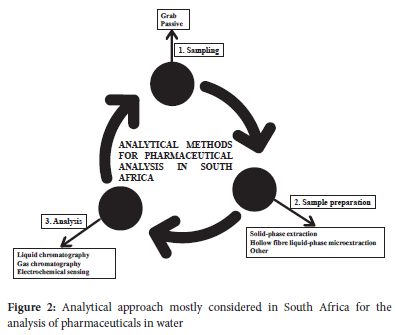
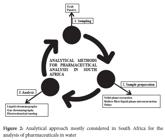
ANALYTICAL METHOD DEVELOPMENTSouth African-based research has immensely focussed on analytical method development for monitoring the occurrence of pharmaceuticals in water. Significant number of investigations have focussed on the development of sampling and sample preparation methods considering the context of South African water matrix and the influx of pharmaceuticals and other contaminants of emerging concern into water bodies. As a result, some environmental monitoring studies performed in South Africa have focussed on the analysis of single drugs in water where the sample preparation methods are finetuned to enhance selectivity,32,33 while other studies explored the multi-drug analysis route.34,35 The present article outlines the importance of these analytical methods while also providing important information on their applicability and drawbacks. In summary, the analytical options mostly considered in South African context are summarized in Figure 2.
Sampling methods
Grab sampling is the most used approach in South Africa for the collection of water samples required for pharmaceutical analysis.
Most research focussing on environmental-based analyses for pharmaceuticals in South Africa involves the development and/ or optimization of sample preparation techniques. Hence, the grab sampling method is viewed as fast and becomes the most vital way of getting an environmental sample into the laboratory for validation of newly established analytical processes. Results attained for the analysis of such samples are sufficient for the validation of analytical methods and provide a snapshot of the existing environmental contamination. Variations in pharmaceutical loads reaching WWTPs during different times of the day were discovered utilizing the grab sampling approach where wastewater samples were collected in the morning, midday and afternoon, and analysed separately.36
To the best of the author's knowledge, the first passive sampling study conducted in South Africa for monitoring the occurrence of selected pharmaceuticals in water was published in 2014.3343737
Sample preparation
Investigations on novel sample preparation procedures for isolation and pre-concentration of pharmaceuticals while eliminating the sample matrix effects have been at the centre of analytical method developments in South Africa. The sample preparation methods implemented and applied in the environmental monitoring of pharmaceuticals in South Africa include but not limited to SPE 38103940,41 and HF-LPME was applied in the extraction and pre-concentration of ionizable pharmaceuticals.10,11
Solid-phase extraction
Both synthetic and commercially available sorbents have been applied in SPE of pharmaceuticals in South African waters.27,41 While SPE is appreciated as the promising sample preparation method for extraction and pre-concentration of pharmaceuticals in environmental samples, its drawbacks are associated with the single usage of commercially available cartridges which tend to generate solid waste and increase the cost of the analysis. To minimize the analysis costs, different SPE sorbents (discussed in this paper) that can be produced in a laboratory setting for the extraction of pharmaceuticals in water have been proposed.27,32
Commercially available solid-phase extraction sorbents
The concept of SPE for organic analytes has been reviewed and many commercially available sorbents and formats are described.42,43 According to the literature, SPE mechanisms in existence include reversed-phase, normal phase, ion exchange, mixed-mode (ion exchange + reversed phase), adsorption and size-exclusion.42 4343354418 and Oasis MAX for simultaneous extraction and pre-concentration ofketoprofen (NSAID) and triclosan (personal care product) in surface water and wastewater.14546
Supelclean™ LC-18 SPE sorbents have been used for neutral analytes.23847,48 Bond Elut Plexa (Stryrene divinyl benzyl) 49501,51 This is important as the pH of the aqueous solution controls the interactions between the sorbent and the analytes due to the chemical characteristics.
Synthetic sorbents
South African-based researchers have explored different synthetic sorbents for SPE of pharmaceuticals in water samples. These adsorbents are considered home-made materials which are designed for applications towards certain groups of chemicals.
Madikizela and co-workers investigated MIPs as promising selective sorbents for the SPE of pharmaceuticals in South African waters.32,33,52 MIPs are described as smart materials that are designed for pre-concentration and enhancing selectivity in the extraction and quantification of organic and inorganic analytes from many complex matrices such as blood, urine and wastewater.5332,33,54,55 Selectivity of MIPs is attained due to molecular recognition which is influenced by the functional groups present in the target molecule, size and shape of the analyte. Therefore, MIPs have been synthesized and applied for selective extraction of various pharmaceuticals which include ketoprofen 3352325641,57 Furthermore, SPE approach where a multi-template MIP was used as the sorbent during the analysis of both river water and wastewater samples was proved to result in a more selective analytical method than when Oasis MAX SPE cartridges were investigated.4140
Carbon-based materials have been prepared and explored as adsorbents in SPE of pharmaceuticals in water samples.27,28,58,59 In this regard, activated carbon has received numerous applications.27,28,59 Modification of activated carbon for extraction of pharmaceuticals has been deemed necessary to enhance the interactions between the adsorbents and compounds with various functional groups. This means the choice of the adsorbent is influenced by the structural and physicochemical properties of the target pharmaceuticals. The choice of alginate and polyvinylpyrrolidone to form composite with activated carbon for extraction of nevirapine and zidovudine was influenced by the expected multifunctional properties for the adsorbent which included hydrophobicity, biocompatibility, biodegradability, the abundance of functional groups and ability to form π-π interaction, hydrogen bonding and electrostatic interactions with the target ARVDs.592760,61 Waste tyre-based adsorbents have been well-investigated in a drive to minimize the abundant solid waste. Such materials have been investigated for the SPE of NSAIDs2858626364 65 66
Hollow fibre liquid-phase microextraction
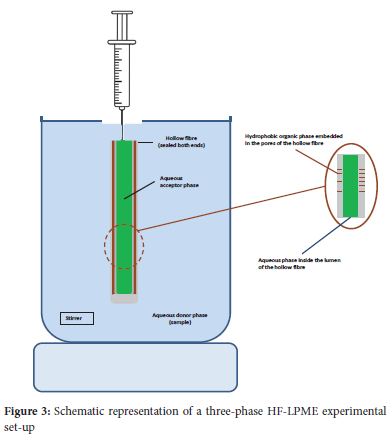
This sample preparation technique was applied for the extraction and preconcentration of selected NSAIDs and antiretroviral drugs in aqueous samples sourced from the provinces of KwaZulu-Natal and Gauteng.10,11 This sample extraction technique is operated in two-phase and three-phase systems67Figure 3) being applicable for ionizable compounds. In a simple experimental set-up displayed in Figure 2, a sample solution (donor phase) is separated from the acceptor phase with supported liquid membrane which consists of a water-immiscible organic solvent embedded in the pores of a hollow fibre.67
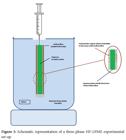
In a three-phase HF-LPME system reported for the extraction of NSAIDs and ARVDs, analytes were transferred from the sample solution by partitioning across a solution of di-(2-ethylhexyl) phosphoric acid in dihexyl ether (4.5% (w/w)) acting as the supported liquid membrane into the lumen of the hollow fibre which housed the acceptor solution.10,11 In this case, the acceptor solutions used for NSAIDs, and ARVDs were sodium hydroxide (pH 10) and hydrochloric acid (pH 0.4), respectively. In this context, NSAIDs and ARVDs were kept neutral in the sample solution (pH 3 for NSAIDs and pH 4 for antiretroviral drugs) and charged in the lumen of the hollow fibre. Due to the nature of the operating conditions with optimum extraction parameters being unique for specific groups of analytes, HL-LPME has limitations when applied to a wide range of compounds with different physicochemical properties. For example, it becomes difficult to simultaneously extract both ARVDs and NSAIDs using this technique. This is because, NSAIDs with pKa values around 4 can only become ionic at high pH values while selected antiretroviral drugs (emtricitabine, tenofovir disoproxil and efavirenz) are charged at highly acidic conditions. Hence, different acceptor solutions are required for HF-LPME of these pharmaceuticals. However, the technique is greatly appreciated for its high enrichment factors which result in sensitive analytical methods.
Other sample preparation methods
With increasing demand for the development of green analytical procedures, a vortex-assisted dispersive liquid-liquid microextraction that utilizes ionic liquid as a green solvent was developed for extraction and preconcentration of fluoroquinolones in water.39-1 while maintaining the preconcentration factor at 10. A different study reported the development of an effective extraction method based on a combination of membrane-assisted solvent extraction and a MIP for the isolation and preconcentration of five pharmaceuticals belonging to different therapeutic classes in water.4068
Chromatographic analysis
Chromatographic instruments are highly successful in the analysis of pharmaceuticals in water. High-performance liquid chromatography with fluorescence and photo diode array or ultraviolet (UV) detectors has been the instrument of choice during the earlier developments of analytical methods for pharmaceutical analysis in the South African environment.1-3 Although these detectors have been valuable tools in the pharmaceutical analysis of water samples, their applications are limited due to poor sensitivity and the inability to provide the structural identity of the detected compound. In this regard, limited research funds and infrastructure in South Africa contributed to restricted access to the most suitable equipment in the form of liquid chromatography equipped with mass spectrometry detector (LC-MS) for pharmaceutical analysis. Hence, active researchers in the field opted in channelling focus and available resources to the development of selective sample preparation methods which ensures the isolation of analyte and pre-concentration prior to chromatographic analysis. In addition, viewing the spectral identity of the analytes during their chromatographic elution in photo diode array detectors served as a qualitative tool.1,38
Recent studies utilized the LC-MS instruments as sensitive equipment with confirmatory tool for structural identity of the analytes in the environmental analysis of pharmaceuticals.11,35.44,69 In several studies, LC-MS was proved to be an efficient equipment for multi-residue analysis.34,35,44,69 It is through this analytical technique that 31 pharmaceuticals from different therapeutic groups were simultaneously detected in river water using quadrupole time-of-flight-mass spectrometry (QToF). In the same context, the occurrence of 52 antibiotics in a semi-urban stream was investigated which resulted in detection of 15 compounds using LC-QToF-MS.6934-1 for ARVDs in surface water was found using a triple quadrupole mass spectrometry system.30 -1 were reported when the analysis was performed with LC-Orbitrap™ MS system.44
Gas chromatography (GC) has been reported as the option for pharmaceutical analysis in cases where there is limited or no access to liquid chromatographic instruments. GC instruments have been used with SPE and disposable PDMS sorptive sampler for analysis of pharmaceuticals in surface water.46,51,68 Limits of detections attained when analyzing a wide range of pharmaceuticals using the SPE-GC-MS system ranged from 0.041 to 1.614 μg L-1. 5151
OCCURRENCE OF PHARMACEUTICALS IN SOUTH AFRICAN WATERSWastewater
Non-steroidal anti-inflammatory drugs and analgesics
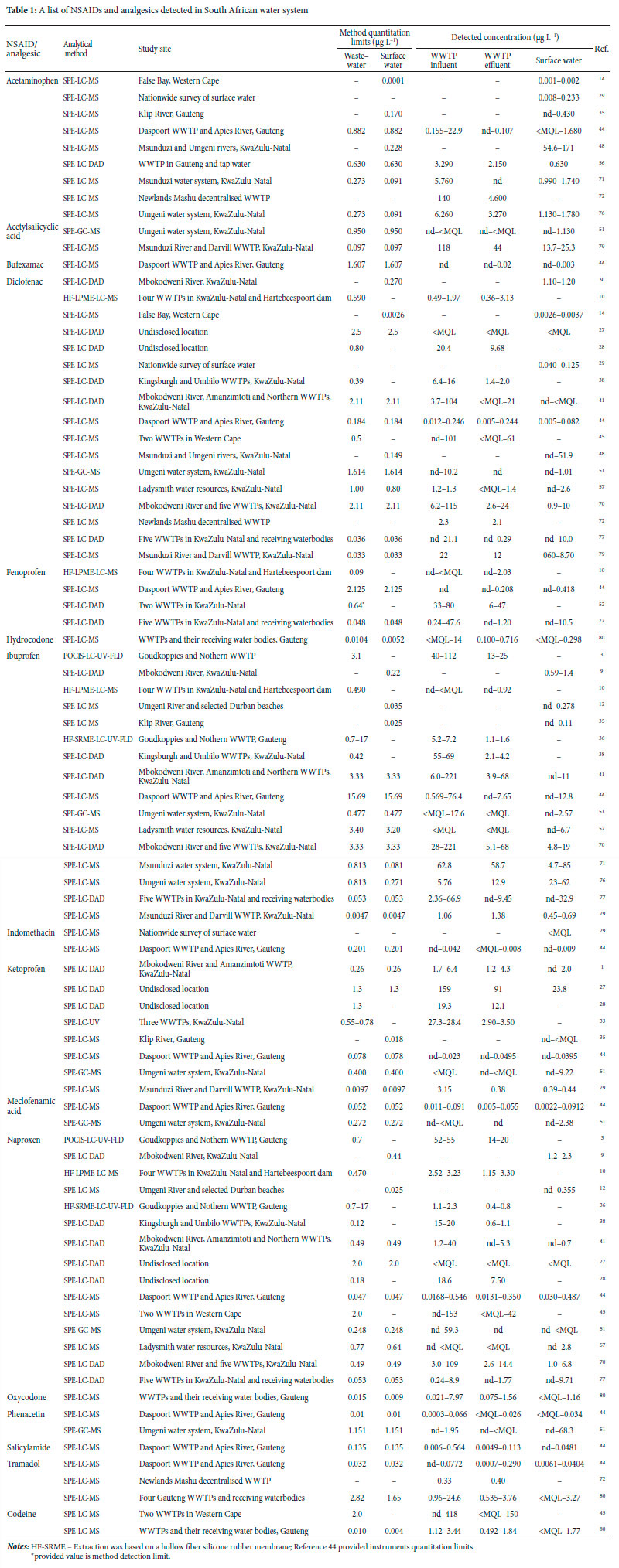
Pharmaceuticals belonging to the therapeutic class of NSAIDs were among the first group of pharmaceuticals monitored in South African waters with their occurrence in wastewater being first reported in 2014.1-3 A recent review reported four NSAIDs (ibuprofen, diclofenac, naproxen and ketoprofen) as the most monitored and detected drugs in South African wastewater.25Table 1. Their presence in wastewater is linked to their accessibility as over the counter medications, high consumption and excretion rates.2525-1. 7025-1 in an undisclosed South African WWTP influent.2741,71 Other NSAIDs and analgesics found in South African wastewaters include aspirin,210,52 paracetamol,56,72 codeine and tramadol.44,72 Low and negative removal of NSAIDs in wastewater during the wastewater treatment process has been reported.52,70,72 With Newlands Mashu decentralised wastewater treatment system recording the removal efficiency of diclofenac at 11% and tramadol at -21%,727374,75 In this case, the limited removal of pharmaceuticals in wastewater was reported to be influenced by several issues which include the degradation of precursors to target analytes, partitioning of pharmaceuticals sorbed into sediments and sludge to the aqueous phase, wastewater influent and effluent samples representing different portions of wastewater due to the samples collected without taking into consideration the hydraulic retention times, smaller analyte levels which have higher uncertainty and analytical error.74
Due to the limited removal during the wastewater treatment process, NSAIDs are constantly detected in the effluents.2,76 In this context, a wide range of concentrations have been reported in South African WWTP effluents. In some cases, NSAIDs were not detected in selected effluents,77367738,70 For example, the maximum concentrations found for naproxen, ibuprofen and diclofenac in Northern WWTP effluent were 4, 10, 15 μg L-1, respectively.7045,78 Hence, innovative wastewater treatment solutions for the complete removal of pharmaceuticals in WWTPs are urgently required. In addition, upgrade of the sewage treatment facilities and assurance that they efficiently work without fail are necessary.
Antibiotics
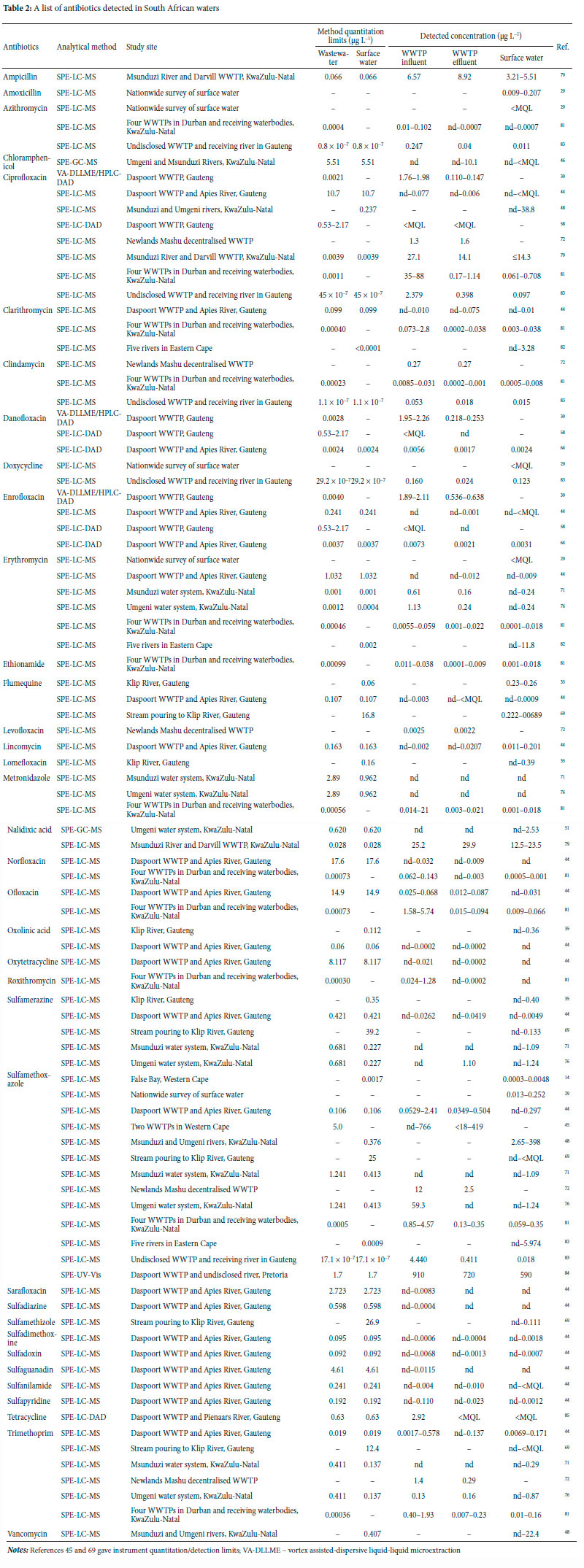
Antibiotics are common pharmaceuticals found in South African wastewaters (Table 2). In 2014, a study investigating the occurrence of antibiotics among other pharmaceuticals was published.2-1 followed by erythromycin and tylosin.2-1 in Darvill WWTP (Pietermaritzburg).7981,82 This highlights a need to investigate the occurrence and effects of this antibiotic in a wide range of South African water bodies. Notably, the most investigated antibiotics with constant detections in wastewater are sulfamethoxazole and ciprofloxacin (Table 2). Similar observations from studies emanating from other African countries have been reported which imply a need to monitor these antibiotics in all water bodies.16
South African WWTPs proved to be unable to completely remove antibiotics in wastewater.2,44 In this regard, Northern WWTP located in Durban showed removal efficiencies in the range of 70-88% for antibiotics with streptomycin having the highest removal percentage and ampicillin having the least.24444 Table 2. These antibiotics should be among the watchlist of chemicals to be routinely monitored in South African water systems.
Antiretroviral drugs
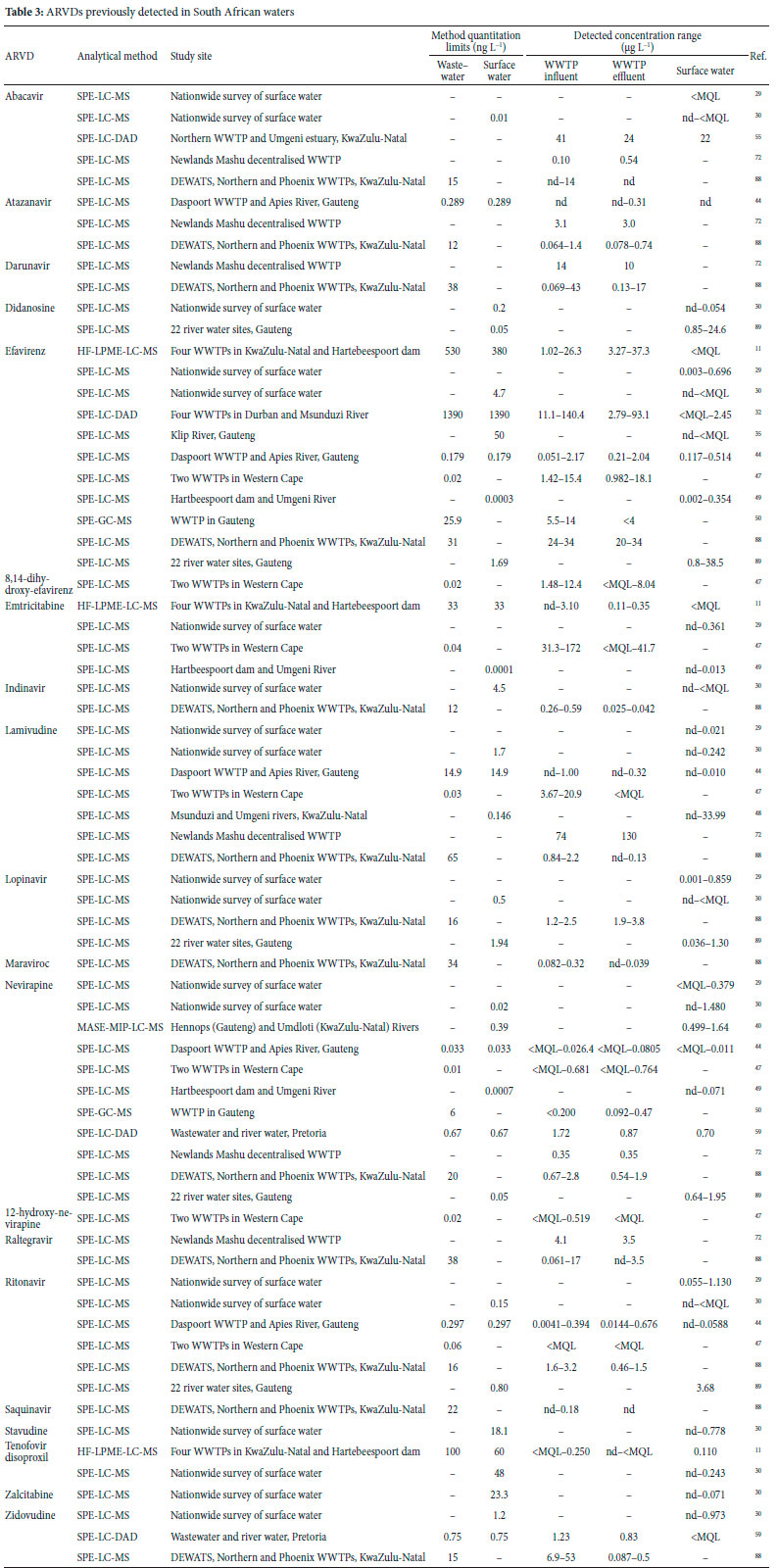
In recent years, this group of pharmaceuticals has been extensively monitored in the African aquatic environment where most of the environmental monitoring data has been gathered in South Africa and Kenya. The availability of analytical data in Africa has been correlated to the extensive consumption of these pharmaceuticals due to the spread of HIV in Africa.86262616,26,86,87 Based on historical detections in South African waters, the ARVDs that can be considered for inclusion in environmental studies conducted in South Africa are given in Table 3. As cited in Table 3, these ARVDs have been previously detected in South African wastewaters and surface waters. Most interestingly, is the detection of the metabolites of these drugs in wastewater 47
Carbamazepine
Carbamazepine is the only anti-convulsant drug that is constantly monitored in South African waters. This could be related to its consumption and excretion rates when compared to other drugs with similar therapeutic properties. This drug has been detected alongside its metabolite, 10,11-dihydro-11-hydroxycarbamazepine, in South African-based WWTPs.45-1, 4664,90 However, a different scenario was presented in the same province indicating high levels of this drug in both influents and effluents of five WWTPs (Northern, Umbilo, Umhlathuzana, Amanzimtoti and Darvill) located in KwaZulu-Natal.77-1
found in Darvill WWTP.77-1 in the effluent. This concentration is comparable with 1.46 μg L-1 found for the same drug in Northern WWTP effluent (Durban, KwaZulu-Natal province).76-1 in influent and 0.91 μg L-1 in effluent) of this drug in Darvill WWTP have also been reported.7144,62 A negative reduction of its concentration in a WWTP in Western Cape was reported.78
Steroid hormones
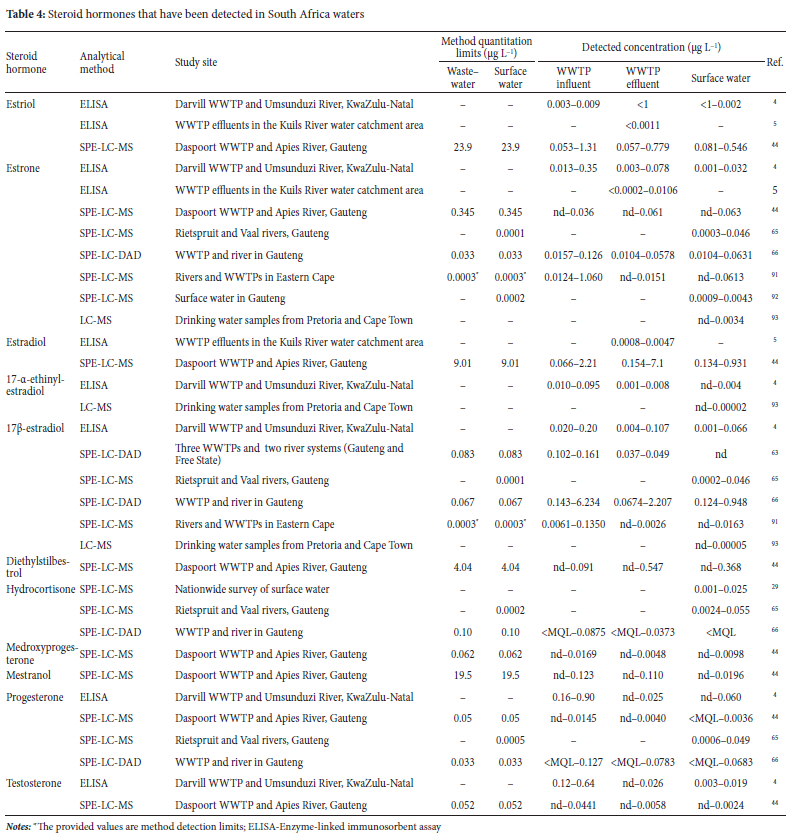
Table 4 indicates that steroid hormones are among the groups of compounds that appear prominently in South African wastewaters and surface waters. This is expected as the discovery of the occurrence of this group of compounds in South African WWTPs was first reported over a decade ago, with estrone, estradiol, and estriol detected in Western Cape.5Table 4). The concentrations of these compounds in wastewater are generally lower than other groups of drugs discussed in this review. In the Eastern Cape province, steroid hormones were detected in environmental samples to a lesser extent when compared to other investigated endocrine disruptive compounds.9144-1. 63 66-1 in wastewater effluent. Like other compounds of different classes, their presence in WWTP effluents demonstrates their discharge into the surface water which could equate to unintended consumption by humans. But, thus far, the South African WWTPs seem to be able to reduce the amounts of these compounds in wastewater with the concentrations in the effluent mostly observed to be lower than in the influent.63,66
Surface water
Non-steroidal anti-inflammatory drugs and analgesics
As easily accessible and commonly used drugs, NSAIDs are among the most investigated pharmaceuticals in South African surface waters (Table 1). As a result, Madikizela and Ncube (2021) recently reviewed the presence of these drugs in the South African aquatic environment with great emphasis on interrogating the available data while also highlighting the gaps for future research.2512,14 Furthermore, recent studies on screening the occurrence of a wide range of pharmaceuticals in Gauteng surface waters found NSAIDs to be among the most detected pharmaceuticals.34,35,44 Madikizela et al (2022) identified 47 pharmaceuticals (with transformation products) out of 92 investigated drugs in Klip River (Gauteng province), with 14 of the detected compounds belonging to NSAIDs and analgesics.35 -1. However, much higher quantities of these pharmaceuticals in South African waters have been reported in recent years. For example, ibuprofen has been detected in surface water with concentrations reaching 62 μg L-1 in Umgeni River and Msunduzi River confluence.76-1 was reported for ketoprofen.27
Although pharmaceuticals belonging to this therapeutic group are constantly detected in South African water systems, some drugs have been recently identified in selected water sources. In this context, Madikizela et al (2022) identified NSAIDs and analgesics (phenacetin, hydromorphone, indomethacin, propyphenazone, phenazone and ketorolac) in Klip River which are not commonly monitored in South African water systems.3544 -1.5157
Antibiotics
As shown in Table 2, the detection of antibiotics in South African surface waters is common. Like other pharmaceuticals, antibiotics found in WWTPs are also detected in surface waters, more especially, the WWTP effluent receiving water bodies. This causes great concern due to the rise of antimicrobial resistance genes and bacteria, which reduce the therapeutic potential against human and nonhuman animal bacterial pathogens.2494-96 that are accessible to humans and animals, thereby increasing the exposure risks. In fact, antibiotic resistance profiles of environmental isolates in a South African river were first discovered two decades ago.96
Sulfamethoxazole and erythromycin appear prominently in South African surface waters (Table 2). In particular, a study that investigated several compounds in surface water from KwaZulu-Natal which included acetaminophen, lamivudine, ciprofloxacin, vancomycin, diclofenac and ivermectin; sulfamethoxazole was the most frequently detected pharmaceutical with highest concentrations.4876-1 in sediments collected from the confluence of Msunduzi and Umgeni Rivers.7644
Antiretroviral drugs
Since 2015, significant number ofstudies have monitored the occurrence of ARVDs in South African surface waters where several drugs have been detected (Table 3). In this case, over 10 ARVDs have been detected in South African surface waters with efavirenz and nevirapine being the most investigated and constantly detected drugs. The maximum concentration of efavirenz recorded in Msunduzi River which is now known as the pollution hotspot in KwaZulu-Natal was 2.45 μg L-1. 32 -1. 1159404044442626 -1. 30-1 for tenofovir, with efavirenz detected with its concentration not exceeding the method quantitation limit of 0.380 μg L-1. 11-1.49
Carbamazepine
Carbamazepine is one of the pharmaceuticals that are constantly detected in South African surface waters.35,40,49 In Apies River (Gauteng province) and several rivers in Eastern Cape, this drug had 100% detection frequency.44,82 In recent years, Khulu et al (2022) detected this pharmaceutical in all the selected sampling sites of the two important South African rivers, Hennops and Umdloti, flowing in the provinces of Gauteng and KwaZulu-Natal, respectively.40-1. This value (0.74 μg L-1) falls within the concentration range of 0.38-1.65 μg L-1 previously detected in Umgeni River flowing in the province of KwaZulu-Natal.76-1. 71-1 found in Umgeni River, with findings indicating that the detected amounts are influenced by seasonal changes.77-1. 3535,37,46,64 This observation could be associated with the transformation of carbamazepine into other compounds as indicated elsewhere.4537,46 This is in exception with the study conducted by Madikizela et al (2022) where two transformation products of carbamazepine, 10-hydroxy-carbamazepine and dihydro-carbamazepine, were detected in Klip River (Gauteng province).3535,76 In addition, the reported detection of this drug in selected South African estuaries (Eastern Cape) serves as an indication of its potential release into the seawaters.9714
Steroid hormones
There are currently not many South African-based studies investigating the occurrence of these compounds in surface water (Table 4). This is a narrative that should change as the presented scientific information point out the occurrence of such compounds in drinking water samples 924,44,91 means their unintentional consumption is likely not to only affect humans, but the wildlife and aquatic organisms are also at risk. Their detection frequency which was found to reach 100% for several steroid hormones in Apies River (Pretoria) 44
Other pharmaceuticals detected in both wastewater and surface water
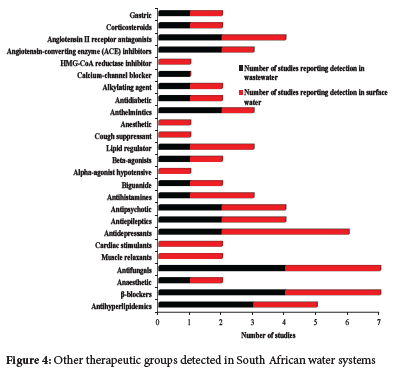
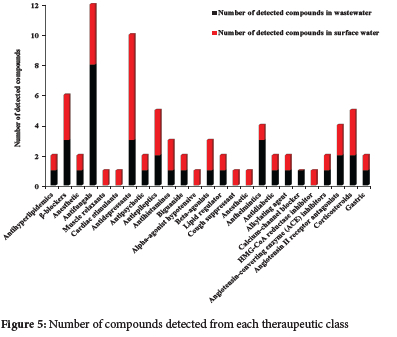
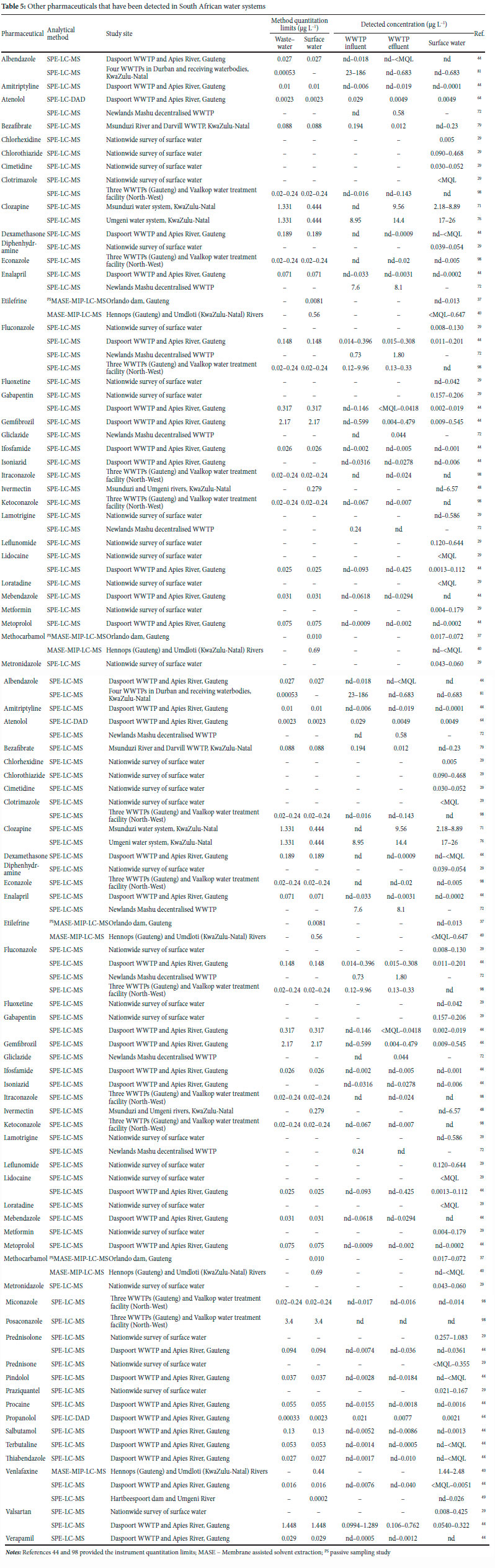
The latest developments in the analytical methods for pharmaceutical analysis in environmental waters have ensured the detectability of a wide range of drugs in water bodies.34,35,44 In South Africa, the detection of many pharmaceuticals in water has been achieved through the application of LC-MS after SPE using a non-selective sorbent in the form of Oasis HLB.34,35,44 This has resulted in the detection of pharmaceuticals that are not routinely analysed in South African waters (Table 5). These detected pharmaceuticals belong to the different therapeutic groups, shown in Figure 4. Figure 5 shows the number of pharmaceuticals belonging from these therapeutic classes detected in wastewater and surface water samples. Notably, a study conducted by Madikizela et al (2022) focussing on suspect screening of pharmaceuticals only investigated the presence of selected pharmaceuticals and their metabolites in river water.353544
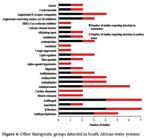
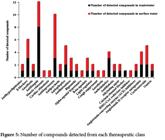
Table 5 shows that the pharmaceuticals that have been randomly detected in South African waters belong to different therapeutic groups. About 7 antidepressants have been detected in surface water which indicates a need to monitor them in wastewater and trace their sources. Among these antidepressants, venlafaxine has been monitored to the large extent. Although our research group has found this pharmaceutical in all the sampling sites along Hennops and Umdloti rivers flowing in Gauteng and KwaZulu-Natal, respectively,40 37-1 in Hennops and Umdloti rivers mostly exceeded those of other investigated pharmaceuticals (nevirapine, carbamazepine, etilefrine and methocarbamol).4034,35,69
Occurrence of pharmaceutical metabolites and transformation products in South African waters
Madikizela and co-workers have recently identified six transformation products of pharmaceuticals which included dementhyl-dextrorphan, dextrorphan, nor-citalopram, 10-hydroxy-carbamazepine, dihydro-carbamazepine and clofibric acid, in Klip River (Gauteng province). These transformation products were reported for the first time in South African waters.354547
TOXIC EFFECTS OF PHARMACEUTICALS FOUND IN SOUTH AFRICAN WATERSStudies on toxic effects caused by the occurrence of pharmaceuticals in the South African environmental remain scanty. This is probably due to the fact that South African researchers are still lagging in identifying and quantifying pharmaceuticals that are present in environmental waters. The occurrence of pharmaceutical-related dugs in South African aquatic bodies was established in the early 2000s, 5
Despite the lack of studies evaluating the toxic effects of pharmaceuticals in water, the recent reviews collated the environmental monitoring data to provide an ecotoxicological risk assessment of selected drugs.23,25 At the same time, the importance of attaining a comprehensive toxicological and risk assessment information of pharmaceuticals present in African waters has been emphasised.992325Vibrio fischeri, algae and Daphnia magna. Madikizela and his co-workers further investigated the ecotoxicological effects of pharmaceuticals detected in Klip River (Johannesburg), with oxolinic acid (with detected maximum concentration of 0.355 μg L-1) showing a high risk of toxicity towards aquatic organisms.3569100Oreochromis mossambicus to nevirapine.101102
OTHER SOUTH AFRICAN-BASED RESEARCH ON PHARMACEUTICAL ANALYSIS
The context of the present paper focussed on the chromatographic-based analytical methods developed for pharmaceuticals analysis in South African aquatic environment. Although this was conceptualized as such, a significant progress has been made on the development of various sensors for the detection of pharmaceuticals and other emerging chemical pollutants in South African waters.103-107 In this context, fluorescence sensors have been developed for various chemicals of emerging concern.103,104 In this case, the occurrence of acetaminophen in tap and river water samples collected in Pretoria was investigated using a thiol-capped core/shell quantum dot sensor.105106 105,106 Due to the high demand to perform a multi-residue investigations, such sensing methods which are already deemed suitable for environmental analysis should be further developed for future applications in the simultaneous analysis of pharmaceuticals in South African waters.
Electrochemical based methods have also been investigated for the monitoring of pharmaceuticals in water.107-109 Thus far, these methods which were developed for the analysis of single drugs in aqueous matrices have shown great potential for their application in environmental monitoring. In recent work, an electrochemical detection of nevirapine in wastewater was investigated using a sensitive analytical approach (with detection limit of 0.0064 ng L-1) which was based on using a banana peel extract functionalised nickel selenide quantum dots in electrochemical sensing.107108,109 This means further research is still required in this study field for the development of sensors for monitoring pharmaceuticals in water bodies.
CONCLUSION AND WAY FORWARD
There seems to be a correlation between the pharmaceuticals found in b oth wastewater effluents and corresponding surface waters. This means that the compounds found in wastewater should also be monitored in nearby surface waters to ensure minimal pollution of drinking water sources. Furthermore, there is a need to monitor pharmaceuticals in rivers flowing into the rural areas where their water plays a crucial role in domestic activities, while it has flown through the urban areas which are reported as pollution hotspots. Importantly, the presented review provided a critical assessment of the available information published on the occurrence of pharmaceuticals in South African waters. With about a decade of ongoing environmental monitoring research, the present paper provided lists of pharmaceuticals that should be regarded as the watchlist in the South African environment. While extensive environmental monitoring of the presented pharmaceuticals is required, the toxic effects of the detected drugs and their removal strategies in waterbodies should be investigated. This is important as some of the pharmaceuticals have been detected in water destined for human consumption.
DECLARATIONThe presented review manuscript emanated from the Raikes Memorial Lecture presented by Professor Lawrence M. Madikizela who is the recipient of the South African Chemical Institute's Raikes Medal for the year 2022. The Memorial Lecture was presented (on 12 January 2023) during the 44th SACI National Convention held in Stellenbosch University, South Africa, from 8 to 13 January 2023.
ORCID IDLawrence Mzukisi Madikizela: https://orcid.org/0000-0001-6096-2701
ACKNOWLEDGEMENTS
All the researchers who have contributed to generating the relevant knowledge in South Africa on the development of analytical methods for the analysis of pharmaceuticals in environmental waters and investigating their environmental occurrence are acknowledged. Several students have been trained by my research team on this research area and their contribution is appreciated. To my collab orators who played a significant role in my success, provided guidance from time-to-time, I salute you. Most of the research work was conducted utilizing the funds sourced from the National Research Foundation of South Africa, with some of the projects still ongoing (Grant numbers: 138004 and 136492). ChromSA which is a division ofthe South African Chemical Institute is acknowledged for the conference (SACI44) funding and many other events they sponsored which showcased the relevant work conducted in South Africa in this research area.
REFERENCES
- 1. Madikizela LM, Muthwa SF, Chimuka L. Determination of triclosan and ketoprofen in river water and wastewater by solid phase extraction and high performance liquid chromatography. S Afr J Chem. 2014;67:143-150.
-
2. Agunbiade FO, Moodley B. Pharmaceuticals as emerging organic contaminants in Umgeni River water system, KwaZulu-Natal, South Africa. Environ Monit Assess. 2014;186(11):7273-7291. https://doi.org/10.1007/s10661-014-3926-z
» https://doi.org/10.1007/s10661-014-3926-z -
3. Amdany R, Chimuka L, Cukrowska E. Determination of naproxen, ibuprofen and triclosan in wastewater using the polar organic chemical integrative sampler (POCIS): A laboratory calibration and field application. Water SA. 2014;40(3):407-414. https://doi.org/10.4314/wsa.v40i3.3
» https://doi.org/10.4314/wsa.v40i3.3 -
4. Manickum T, John W. Occurrence, fate and environmental risk assessment of endocrine disrupting compounds at the wastewater treatment works in Pietermaritzburg (South Africa). Sci Total Environ. 2014;468-469:584-597. https://doi.org/10.1016/j.scitotenv.2013.08.041
» https://doi.org/10.1016/j.scitotenv.2013.08.041 -
5. Swart N, Pool E. Rapid detection of selected steroid hormones from sewage effluents using an ELISA in the Kuils River water catchment area, South Africa. J Immunoassay Immunochem. 2007;28(4):395-408. https://doi.org/10.1080/15321810701603799
» https://doi.org/10.1080/15321810701603799 -
6. Hendricks R, Pool EJ. The effectiveness of sewage treatment processes to remove faecal pathogens and antibiotic residues. J Environ Sci Health Part A. 2012;47(2):289-297. https://doi.org/10.1080/10934529.2012.637432
» https://doi.org/10.1080/10934529.2012.637432 - 7. Osunmakinde MNC, Tshabalala S, Dube S, Nindi MM. Verification and validation of analytical methods for testing the levels of PPHCPs (pharmaceutical & personal health care products) in treated drinking water and sewage. Water Research Commission Technical Report 2013.
-
8. Ademoyegun OT, Okoh OO, Okoh AI. Method validation and investigation of the levels of pharmaceuticals and personal care products in sludge ofwastewater treatment plants and soils of irrigated golf course. Molecules. 2020;25(14):3114. https://doi.org/10.3390/molecules25143114
» https://doi.org/10.3390/molecules25143114 -
9. Sibeko PA, Naicker D, Mdluli PS, Madikizela LM. Naproxen, ibuprofen, and diclofenac residues in river water, sediments and Eichhornia crassipes of Mbokodweni river in South Africa: an initial screening. Environ Forensics. 2019;20(2):129-138. https://doi.org/10.1080/15275922.2019.1597780
» https://doi.org/10.1080/15275922.2019.1597780 -
10. Mlunguza NY, Ncube S, Mahlambi PN, Chimuka L, Madikizela LM. Optimization and application of hollow fiber liquid-phase microextraction and microwave-assisted extraction for the analysis of non-steroidal anti-inflammatory drugs in aqueous and plant samples. Environ Monit Assess. 2020;192(8):557. https://doi.org/10.1007/s10661-020-08527-4
» https://doi.org/10.1007/s10661-020-08527-4 -
11. Mlunguza NY, Ncube S, Mahlambi PN, Chimuka L, Madikizela LM. Determination of selected antiretroviral drugs in wastewater, surface water and aquatic plants using hollow fibre liquid phase microextraction and liquid chromatography - tandem mass spectrometry. J Hazard Mater. 2020;382:121067. https://doi.org/10.1016/j.jhazmat.2019.121067
» https://doi.org/10.1016/j.jhazmat.2019.121067 -
12. Ngubane NP, Naicker D, Ncube S, Chimuka L, Madikizela LM. Determination of naproxen, diclofenac and ibuprofen in Umgeni estuary and seawater: A case of northern Durban in KwaZulu - Natal province of South Africa. Reg Stud Mar Sci. 2019;29:100675. https://doi.org/10.1016/j.rsma.2019.100675
» https://doi.org/10.1016/j.rsma.2019.100675 -
13. Petrik L, Green L, Abegunde AP, Zackon M, Sanusi CY, Barnes J. Desalination and seawater quality at Green Point, Cape Town: A study on the effects of marine sewage outfalls. S Afr J Sci. 2017;114(1/2):1-10. https://doi.org/10.17159/sajs.2018/a0244C
» https://doi.org/10.17159/sajs.2018/a0244C -
14. Ojemaye CY, Petrik L. Pharmaceuticals and personal care products in the marine environment around False Bay, Cape Town, South Africa: Occurrence and risk-assessment study. Environ Toxicol Chem. 2022;41(3):614-634. https://doi.org/10.1002/etc.5053
» https://doi.org/10.1002/etc.5053 -
15. Ojemaye CY, Petrik L. Occurrences, levels and risk assessment studies of emerging pollutants (pharmaceuticals, perfluoroalkyl and endocrine disrupting compounds) in fish samples from Kalk Bay harbour, South Africa. Environ Pollut. 2019;252:562-572. https://doi.org/10.1016/j.envpol.2019.05.091
» https://doi.org/10.1016/j.envpol.2019.05.091 -
16. Madikizela LM, Ncube S, Chimuka L. Analysis, occurrence and removal of pharmaceuticals in African water resources: A current status. J Environ Manage. 2020;253:109741. https://doi.org/10.1016/j.jenvman.2019.109741
» https://doi.org/10.1016/j.jenvman.2019.109741 -
17. K'oreje KO, Okoth M, Van Langenhove H, Demeestere K. Occurrence and treatment of contaminants of emerging concern in the African aquatic environment: literature review and a look ahead. J Environ Manage. 2020;254:109752. https://doi.org/10.1016/j.jenvman.2019.109752
» https://doi.org/10.1016/j.jenvman.2019.109752 -
18. Necibi MC, Dhiba D, El Hajjaji S. Contaminants of emerging concern in African wastewater effluents: Occurrence, impact and removal technologies. Sustainability (Basel). 2021;13(3):1125. https://doi.org/10.3390/su13031125
» https://doi.org/10.3390/su13031125 -
19. Ogunlaja A, Ogunlaja OO, Olukanni OD, Taylor GO, Olorunnisola CG, Dougnon VT, Mousse W, Fatta-Kassinos D, Msagati TAM, Unuabonah EI. Antibiotic resistomes and their chemical residues in aquatic environments in Africa. Environ Pollut. 2022;312:119783. https://doi.org/10.1016/j.envpol.2022.119783
» https://doi.org/10.1016/j.envpol.2022.119783 -
20. Okoye CO, Okeke ES, Okoye KC, Echude D, Andong FA, Chukwudozie KI, Okoye HU, Ezeonyejiaku CD. Occurrence and fate of pharmaceuticals, personal care products (PPCPs) and pesticides in African water systems: A need for timely intervention. Heliyon. 2022;8(3):e09143. https://doi.org/10.1016/j.heliyon.2022.e09143
» https://doi.org/10.1016/j.heliyon.2022.e09143 -
21. Mheidli N, Malli A, Mansour F, Al-hindi M. Occurrence and risk assessment of pharmaceuticals in surface waters of the Middle East and North Africa: A review. Sci Total Environ. 2022;851:158302. https://doi.org/10.1016/j.scitotenv.2022.158302
» https://doi.org/10.1016/j.scitotenv.2022.158302 -
22. Waleng NJ, Nomngongo PN. Occurrence of pharmaceuticals in the environmental waters: african and Asian perspectives. Environ. Chem. Ecotoxicol. 2022;4:50-66. https://doi.org/10.1016/j.enceco.2021.11.002
» https://doi.org/10.1016/j.enceco.2021.11.002 -
23. Gani KM, Hlongwa N, Abunama T, Kumari S, Bux F. Emerging contaminants in South African water environment- a critical review of their occurrence, sources and ecotoxicological risks. Chemosphere. 2021;269:128737. https://doi.org/10.1016/j.chemosphere.2020.128737
» https://doi.org/10.1016/j.chemosphere.2020.128737 -
24. Ngqwala NP, Muchesa P. Occurrence of pharmaceuticals in aquatic environments: A review and potential impacts in South Africa. S Afr J Sci. 2020;116(7/8):1-7. https://doi.org/10.17159/sajs.2020/5730
» https://doi.org/10.17159/sajs.2020/5730 -
25. Madikizela LM, Ncube S. Occurrence and ecotoxicological risk assessment of non-steroidal anti-inflammatory drugs in South African aquatic environment: what is known and the missing information? Chemosphere. 2021;280:130688. https://doi.org/10.1016/j.chemosphere.2021.130688
» https://doi.org/10.1016/j.chemosphere.2021.130688 -
26. Zitha AB, Ncube S, Mketo N, Nyoni H, Madikizela LM. Antiretroviral drugs in water: an African challenge with Kenya and South Africa as hotspots and plausible remediation strategies. Chem. Africa. 2022;5(5):1237-1253. https://doi.org/10.1007/s42250-022-00417-1
» https://doi.org/10.1007/s42250-022-00417-1 -
27. Akawa MN, Mogolodi Dimpe K, Nomngongo PN. Amine - functionalized magnetic activated carbon as an adsorbent for preconcentration and determination of acidic drugs in environmental water samples using HPLC - DAD. Open Chem. 2020;18(1):1218-1229. https://doi.org/10.1515/chem-2020-0162.
» https://doi.org/10.1515/chem-2020-0162 -
28. Akawa MN, Dimpe KM, Nomngongo PN. Ultrasonic assisted magnetic solid phase extraction based on the use of magnetic waste-tyre derived activated carbon modified with methyltrioctylammonium chloride adsorbent for the preconcentration and analysis of non-steroidal anti-inflammatory drugs in wastewater. Arab J Chem. 2021;14(9):103329. https://doi.org/10.1016/j.arabjc.2021.103329
» https://doi.org/10.1016/j.arabjc.2021.103329 -
29. Wood TP, Du Preez C, Steenkamp A, Duvenage C, Rohwer ER. Database-driven screening of South African surface water and the targeted detection of pharmaceuticals using liquid chromatography - High resolution mass spectrometry. Environ Pollut. 2017;230:453-462. https://doi.org/10.1016/j.envpol.2017.06.043
» https://doi.org/10.1016/j.envpol.2017.06.043 -
30. Wood TP, Duvenage CSJ, Rohwer E. The occurrence of anti-retroviral compounds used for HIV treatment in South African surface water. Environ Pollut. 2015;199:235-243. https://doi.org/10.1016/j.envpol.2015.01.030
» https://doi.org/10.1016/j.envpol.2015.01.030 -
31. Odendaal C, Seaman MT, Kemp G, Patterton H, Patterton HG. An LC-MS / MS based survey of contaminants of emerging concern in drinking water in South Africa. S Afr J Sci. 2015;111(9/10): 6. https://doi.org/10.17159/sajs.2015/20140401
» https://doi.org/10.17159/sajs.2015/20140401 -
32. Mtolo SP, Mahlambi PN, Madikizela LM. Synthesis and application of a molecularly imprinted polymer in selective solid-phase extraction of efavirenz from water. Water Sci Technol. 2019;79(2):356-365. https://doi.org/10.2166/wst.2019.054
» https://doi.org/10.2166/wst.2019.054 -
33. Zunngu SS, Madikizela LM, Chimuka L, Mdluli PS. Synthesis and application of a molecularly imprinted polymer in the solid-phase extraction of ketoprofen from wastewater. C R Chim. 2017;20(5):585-591. https://doi.org/10.1016/j.crci.2016.09.006.
» https://doi.org/10.1016/j.crci.2016.09.006 -
34. Rimayi C, Chimuka L, Gravell A, Fones GR, Mills GA. Use of the Chemcatcher * passive sampler and time-of-flight mass spectrometry to screen for emerging pollutants in rivers in Gauteng province of South Africa. Environ Monit Assess. 2019;191(6):388. https://doi.org/10.1007/s10661-019-7515-z
» https://doi.org/10.1007/s10661-019-7515-z -
35. Madikizela LM, Nuapia YB, Chimuka L, Ncube S, Etale A. Target and suspect screening of pharmaceuticals and their transformation products in the Klip River, South Africa, using ultra-high-performance liquid chromatography-mass spectrometry. Environ Toxicol Chem. 2022;41(2):437-447. https://doi.org/10.1002/etc.5265
» https://doi.org/10.1002/etc.5265 -
36. Amdany R, Moya A, Cukrowska E, Chimuka L. Optimization of the temperature for the extraction of pharmaceuticals from wastewater by a hollow fiber silicone membrane. Anal Lett. 2015;48(15):2343-2356. https://doi.org/10.1080/00032719.2015.1033722
» https://doi.org/10.1080/00032719.2015.1033722 -
37. Khulu S, Ncube S, Nuapia Y, Madikizela LM, Mavhunga E, Chimuka L. Development and application of a membrane assisted solvent extraction-molecularly imprinted polymer based passive sampler for monitoring of selected pharmaceuticals in surface water. Water Res. 2022;225:119145. https://doi.org/10.1016/j.watres.2022.119145
» https://doi.org/10.1016/j.watres.2022.119145 -
38. Madikizela LM, Chimuka L. Simultaneous determination of naproxen, ibuprofen and diclofenac in wastewater using solid-phase extraction with high performance liquid chromatography. Water SA. 2017;43(2):264-274. https://doi.org/10.4314/wsa.v43i2.10
» https://doi.org/10.4314/wsa.v43i2.10 -
39. Selahle SK, Nomngongo PN. Determination of fluoroquinolones in the environmental samples using vortex assisted dispersive liquid-liquid microextraction coupled with high performance liquid chromatography. Int J Environ Anal Chem. 2020;100(3):282-294. https://doi.org/10.1080/03067319.2019.1636042
» https://doi.org/10.1080/03067319.2019.1636042 -
40. Khulu S, Ncube S, Nuapia Y, Madikizela LM, Tutu H, Richards H, ndungu K, Mavhunga E, Chimuka L. Multivariate optimization of a two-way technique for extraction of pharmaceuticals in surface water using a combination of membrane assisted solvent extraction and a molecularly imprinted polymer. Chemosphere. 2022;286:131973. https://doi.org/10.1016/j.chemosphere.2021.131973
» https://doi.org/10.1016/j.chemosphere.2021.131973 -
41. Madikizela LM, Chimuka L. Determination of ibuprofen, naproxen and diclofenac in aqueous samples using a multi-template molecularly imprinted polymer as selective adsorbent for solid-phase extraction. J Pharm Biomed Anal. 2016;128:210-215. https://doi.org/10.1016/j.jpba.2016.05.037
» https://doi.org/10.1016/j.jpba.2016.05.037 -
42. Andrade-Eiroa A, Canle M, Leroy-Cancellieri V, Cerdä V. Solid-phase extraction of organic compounds: A critical review (Part I). Trends Analyt Chem. 2016;80:641-654. https://doi.org/10.1016/j.trac.2015.08.015
» https://doi.org/10.1016/j.trac.2015.08.015 -
43. Gilart N, Borrull F, Fontanals N, Marcé RM. Selective materials for solidphase extraction in environmental analysis. Trends Environ. Anal. Chem. 2014;1:e8-e18. https://doi.org/10.1016/j.teac.2013.11.002
» https://doi.org/10.1016/j.teac.2013.11.002 -
44. Mhuka V, Dube S, Nindi MM. Occurrence of pharmaceutical and personal care products (PPCPs) in wastewater and receiving waters in South Africa using LC-Orbitrap TM MS. Emerg Contam. 2020;6:250-258. https://doi.org/10.1016/j.emcon.2020.07.002
» https://doi.org/10.1016/j.emcon.2020.07.002 -
45. Archer E, Volschenk M, Brocker L, Wolfaardt GM. A two-year study of emerging micro-pollutants and drugs of abuse in two Western Cape wastewater treatment works (South Africa). Chemosphere. 2021;285:131460. https://doi.org/10.1016/j.chemosphere.2021.131460
» https://doi.org/10.1016/j.chemosphere.2021.131460 -
46. Gumbi BP, Moodley B, Birungi G, ndungu PG. Risk assessment of personal care products, pharmaceuticals, and stimulants in Mgeni and Msunduzi Rivers, KwaZulu-Natal, South Africa. Front Water. 2022;4:867201. https://doi.org/10.3389/frwa.2022.867201
» https://doi.org/10.3389/frwa.2022.867201 -
47. Mosekiemang TT, Stander MA, de Villiers A. Simultaneous quantification of commonly prescribed antiretroviral drugs and their selected metabolites in aqueous environmental samples by direct injection and solid phase extraction liquid chromatography - tandem mass spectrometry. Chemosphere. 2019;220:983-992. https://doi.org/10.1016/j.chemosphere.2018.12.205
» https://doi.org/10.1016/j.chemosphere.2018.12.205 -
48. Omotola EO, Olatunji OS. Quantification of selected pharmaceutical compounds in water using liquid chromatography-electrospray ionisation mass spectrometry (LC-ESI-MS). Heliyon. 2020;6(12):e05787. https://doi.org/10.1016/j.heliyon.2020.e05787
» https://doi.org/10.1016/j.heliyon.2020.e05787 -
49. Rimayi C, Odusanya D, Weiss JM, De Boer J, Chimuka L. Contaminants of emerging concern in the Hartbeespoort Dam catchment and the uMngeni River estuary 2016 pollution incident, South Africa. Sci Total Environ. 2018;627:1008-1017. https://doi.org/10.1016/j.scitotenv.2018.01.263
» https://doi.org/10.1016/j.scitotenv.2018.01.263 -
50. Schoeman C, Dlamini M, Okonkwo OJ. The impact of a wastewater treatment works in Southern Gauteng, South Africa on efavirenz and nevirapine discharges into the aquatic environment. Emerg Contam. 2017;3(2):95-106. https://doi.org/10.1016/j.emcon.2017.09.001
» https://doi.org/10.1016/j.emcon.2017.09.001 -
51. Gumbi BP, Moodley B, Birungi G, ndungu PG. Detection and quantification of acidic drug residues in South African surface water using gas chromatography-mass spectrometry. Chemosphere. 2017;168:1042-1050. https://doi.org/10.1016/jxhemosphere.2016.10.105
» https://doi.org/10.1016/jxhemosphere.2016.10.105 -
52. Mbhele ZE, Ncube S, Madikizela LM. Synthesis of a molecularly imprinted polymer and its application in selective extraction of fenoprofen from wastewater. Environ Sci Pollut Res Int. 2018;25(36):36724-36735. https://doi.org/10.1007/s11356-018-3602-x
» https://doi.org/10.1007/s11356-018-3602-x -
53. Madikizela LM, Tavengwa NT, Tutu H, Chimuka L. Green aspects in molecular imprinting technology: from design to environmental applications. Trends Environ. Anal. Chem. 2018;17:14-22. https://doi.org/10.1016/j.teac.2018.01.001
» https://doi.org/10.1016/j.teac.2018.01.001 -
54. Madikizela LM, Zunngu SS, Mlunguza NY, Tavengwa NT, Mdluli PS, Chimuka L. Application of molecularly imprinted polymer designed for the selective extraction of ketoprofen from wastewater. Water SA. 2018;44:406-418. https://doi.org/10.4314/wsa.v44i3.08
» https://doi.org/10.4314/wsa.v44i3.08 -
55. Qwane SN, Mdluli PS, Madikizela LM. Synthesis, characterization and application of a molecularly imprinted polymer in selective adsorption of abacavir from polluted water. S Afr J Chem. 2020;73:84-91. https://doi.org/10.17159/0379-4350/2020/v73a13.
» https://doi.org/10.17159/0379-4350/2020/v73a13 -
56. Mpayipheli N, Mpupa A, Nomngongo PN. Vortex-assisted dispersive molecularly imprinted polymer-based solid phase extraction of acetaminophen from water samples prior to HPLC-DAD determination. Separations. 2021;8(10):194. https://doi.org/10.3390/separations8100194
» https://doi.org/10.3390/separations8100194 -
57. Madikizela LM, Mdluli PS, Chimuka L. An initial assessment of naproxen, ibuprofen and diclofenac in Ladysmith water resources in South Africa using molecularly imprinted solid-phase extraction followed by high performance liquid chromatography-photodiode array detection. S Afr J Chem. 2017;70:145-153. https://doi.org/10.17159/0379-4350/2017/v70a21
» https://doi.org/10.17159/0379-4350/2017/v70a21 -
58. Mogolodi Dimpe K, Nomngongo PN. Application of activated carbon-decorated polyacrylonitrile nanofibers as an adsorbent in dispersive solid-phase extraction of fluoroquinolones from wastewater. J Pharm Anal. 2019;9(2):117-126. https://doi.org/10.1016/j.jpha.2019.01.003
» https://doi.org/10.1016/j.jpha.2019.01.003 - 59. Akawa MN, Dimpe KM, Nomngongo PN. An adsorbent composed of alginate, polyvinylpyrrolidone and activated carbon (AC@PVP@ alginate) for ultrasound-assisted dispersive micro-solid phase extraction of nevirapine and zidovudine in environmental water samples. Environ. Nanotechnology. Monit. Manag. 2021;16:100559.
-
60. Madikizela LM, Chimuka L. Synthesis, adsorption and selectivity studies of a polymer imprinted with naproxen, ibuprofen and diclofenac. J Environ Chem Eng. 2016;4(4):4029-4037. https://doi.org/10.1016/j.jece.2016.09.012
» https://doi.org/10.1016/j.jece.2016.09.012 -
61. Madikizela LM, Mdluli PS, Chimuka L. Experimental and theoretical study of molecular interactions between 2-vinyl pyridine and acidic pharmaceuticals used as multi-template molecules in molecularly imprinted polymer. React Funct Polym. 2016;103:33-43. https://doi.org/10.1016/j.reactfunctpolym.2016.03.017
» https://doi.org/10.1016/j.reactfunctpolym.2016.03.017 -
62. Lekota MW, Dimpe KM, Nomngongo PN. MgO-ZnO/carbon nanofiber nanocomposite as an adsorbent for ultrasound-assisted dispersive solidphase microextraction of carbamazepine from wastewater prior to highperformance liquid chromatographic detection. J Anal Sci Technol. 2019;10(1):25. https://doi.org/10.1186/s40543-019-0185-1
» https://doi.org/10.1186/s40543-019-0185-1 -
63. Lekota MW, Mpupa A, Dimpe KM, Nomngongo PN. Preparation of ferric oxide-aluminium oxide carbon nano fiber nanocomposites for ultrasound-assisted dispersive magnetic solid phase extraction of 17-beta estradiol in wastewater. Emerg Contam. 2020;6:162-171. https://doi.org/10.1016/j.emcon.2020.04.001
» https://doi.org/10.1016/j.emcon.2020.04.001 -
64. Mashile GP, Mpupa A, Nomngongo PN. Magnetic mesoporous carbon/ß-cyclodextrin-chitosan nanocomposite for extraction and preconcentration of multi-class emerging contaminant re20sidues in environmental samples. Nanomaterials (Basel). 2021;11(2):540. https://doi.org/10.3390/nano11020540
» https://doi.org/10.3390/nano11020540 -
65. Selahle SK, Mpupa A, Nqombolo A, Nomngongo PN. A nanostructured o-hydroxyazobenzene porous organic polymer as an effective sorbent for the extraction and preconcentration of selected hormones and insecticides in river water. Microchem J. 2022;181:107791. https://doi.org/10.1016/j.microc.2022.107791
» https://doi.org/10.1016/j.microc.2022.107791 -
66. Mpupa A, Nqombolo A, Mizaikoff B, Nomngongo PN. Beta-cyclodextrin-decorated magnetic activated carbon as a sorbent for extraction and enrichment of steroid hormones (estrone, ß-estradiol, hydrocortisone and progesterone) for liquid chromatographic analysis. Molecules. 2021;27(1):248. https://doi.org/10.3390/molecules27010248.
» https://doi.org/10.3390/molecules27010248 -
67. Madikizela LM, Pakade VE, Ncube S, Tutu H, Chimuka L. Application of hollow fibre-liquid phase microextraction technique for isolation and pre-concentration of pharmaceuticals in water. Membranes (Basel). 2020;10(11):311. https://doi.org/10.3390/membranes10110311
» https://doi.org/10.3390/membranes10110311 -
68. Wooding M, Rohwer ER, Naudé Y. Determination of endocrine disrupting chemicals and antiretroviral compounds in surface water: A disposable sorptive sampler with comprehensive gas chromatography - Time-of-flight mass spectrometry and large volume injection with ultra-high performance liquid chromatography-tandem mass spectrometry. J Chromatogr A. 2017;1496:122-132. https://doi.org/10.1016/j.chroma.2017.03.057
» https://doi.org/10.1016/j.chroma.2017.03.057 -
69. Ncube S, Nuapia YB, Chimuka L, Madikizela LM, Etale A. Trace detection and quantitation of antibiotics in a South African stream receiving wastewater effluents and municipal dumpsite leachates. Front Environ Sci. 2021;9:733065. https://doi.org/10.3389/fenvs.2021.733065
» https://doi.org/10.3389/fenvs.2021.733065 -
70. Madikizela LM, Chimuka L. Occurrence of naproxen, ibuprofen, and diclofenac residues in wastewater and river water of KwaZulu-Natal province in South Africa. Environ Monit Assess. 2017;189(7):348. https://doi.org/10.1007/s10661-017-6069-1
» https://doi.org/10.1007/s10661-017-6069-1 -
71. Matongo S, Birungi G, Moodley B, ndungu P. Pharmaceutical residues in water and sediment of Msunduzi River, KwaZulu-Natal, South Africa. Chemosphere. 2015;134:133-140. https://doi.org/10.1016/j.chemosphere.2015.03.093
» https://doi.org/10.1016/j.chemosphere.2015.03.093 -
72. Späth J, Arumugam P, Lindberg RH, Abafe OA, Jansson S, Fick J, Buckley CA. Biochar for the removal of detected micropollutants in South African domestic wastewater: a case study from a demonstration-scale decentralised wastewater treatment system in eThekwini. Water SA. 2021;47:396-416. https://doi.org/10.17159/wsa/2021.v47.i4.3861
» https://doi.org/10.17159/wsa/2021.v47.i4.3861 -
73. Kermia AEB, Fouial-djebbar D, Trari M. Occurrence, fate and removal efficiencies of pharmaceuticals in wastewater treatment plants (WWTPs) discharging in the coastal environment of Algiers. C R Chim. 2016;19(8):963-970. https://doi.org/10.1016/j.crci.2016.05.005
» https://doi.org/10.1016/j.crci.2016.05.005 -
74. Golovko O, Örn S, Sórengárd M, Frieberg K, Nassazzi W, Lai FY, Ahrens L. Occurrence and removal of chemicals of emerging concern in wastewater treatment plants and their impact on receiving water systems. Sci Total Environ. 2021;754:142122. https://doi.org/10.1016/j.scitotenv.2020.142122
» https://doi.org/10.1016/j.scitotenv.2020.142122 -
75. Nieto-Juárez JI, Torres-Palma RA, Botero-Coy AM, Hernandez F. Pharmaceuticals and environmental risk assessment in municipal wastewater treatment plants and rivers from Peru. Environ Int. 2021;155:106674. https://doi.org/10.1016/j.envint.2021.106674
» https://doi.org/10.1016/j.envint.2021.106674 -
76. Matongo S, Birungi G, Moodley B, ndungu P. Occurrence of selected pharmaceuticals in water and sediment of Umgeni River, KwaZulu-Natal, South Africa. Environ Sci Pollut Res Int. 2015;22(13):10298-10308. https://doi.org/10.1007/s11356-015-4217-0
» https://doi.org/10.1007/s11356-015-4217-0 -
77. Hlengwa N, Mahlambi P. SPE-LC-PDA method development and application for the analysis of selected pharmaceuticals in river and wastewater samples from South Africa. Water SA. 2020;46:514-522. https://doi.org/10.17159/wsa/2020.v46.i3.8662
» https://doi.org/10.17159/wsa/2020.v46.i3.8662 -
78. Archer E, Holton E, Fidal J, Kasprzyk-Hordern B, Carstens A, Brocker L, Kjeldsen TR, Wolfaardt GM. Occurrence of contaminants of emerging concern in the Eerste River, South Africa: towards the optimisation of an urban water profiling approach for public- and ecological health risk characterisation. Sci Total Environ. 2023;859:160254. https://doi.org/10.1016/j.scitotenv.2022.160254
» https://doi.org/10.1016/j.scitotenv.2022.160254 -
79. Agunbiade FO, Moodley B. Occurrence and distribution pattern of acidic pharmaceuticals in surface water, wastewater, and sediment of the Msunduzi River, Kwazulu-Natal, South Africa. Environ Toxicol Chem. 2016;35(1):36-46. https://doi.org/10.1002/etc.3144.
» https://doi.org/10.1002/etc.3144 -
80. Kamika I, Azizi S, Muleja AA, Selvarajan R, El-Liethy MA, Mamba BB, Nkambule T. The occurrence of opioid compounds in wastewater treatment plants and their receiving water bodies in Gauteng province, South Africa. Environ Pollut. 2021;290:118048. https://doi.org/10.1016/j.envpol.2021.118048
» https://doi.org/10.1016/j.envpol.2021.118048 -
81. Faleye AC, Adegoke AA, Ramluckan K, Fick J, Bux F, Stenström TA. Concentration and reduction of antibiotic residues in selected wastewater treatment plants and receiving waterbodies in Durban, South Africa. Sci Total Environ. 2019;678:10-20. https://doi.org/10.1016/j.scitotenv.2019.04.410
» https://doi.org/10.1016/j.scitotenv.2019.04.410 -
82. Vumazonke S, Khamanga SM, Ngqwala NP. Detection of pharmaceutical residues in surface waters of the Eastern Cape province. Int J Environ Res Public Health. 2020;17(11):4067. https://doi.org/10.3390/ijerph17114067
» https://doi.org/10.3390/ijerph17114067 -
83. Ekwanzala M, Lehutso R, Kasonga T, Dewar J, Momba M. Environmental dissemination of selected antibiotics from hospital wastewater to the aquatic environment. Antibiotics (Basel). 2020;9(7):431. https://doi.org/10.3390/antibiotics9070431
» https://doi.org/10.3390/antibiotics9070431 -
84. Mogolodi Dimpe K, Mpupa A, Nomngongo PN. Microwave assisted solid phase extraction for separation preconcentration sulfamethoxazole in wastewater using tyre based activated carbon as solid phase material prior to spectrophotometric determination. Spectrochim. Acta Part A Mol. Spectrochim Acta A Mol Biomol Spectrosc. 2018;188:341-348. https://doi.org/10.1016/j.saa.2017.07.039
» https://doi.org/10.1016/j.saa.2017.07.039 -
85. Lefatle MC, Matong JM, Mpupa A, Musonde TS, Waleng NJ, Madikizela LM, Pakade VE, Nomngongo PN. Preparation, characterization, and application of chitosan - kaolin based nanocomposite in magnetic solid phase extraction of tetracycline in aqueous samples. Chem Pap. 2023;77:1601-1618. https://doi.org/10.1007/s11696-022-02577-3
» https://doi.org/10.1007/s11696-022-02577-3 -
86. Ncube S, Madikizela LM, Chimuka L, Nindi MM. Environmental fate and ecotoxicological effects of antiretrovirals: A current global status and future perspectives. Water Res. 2018;145:231-247. https://doi.org/10.1016/j.watres.2018.08.017
» https://doi.org/10.1016/j.watres.2018.08.017 -
87. Madikizela LM, Tavengwa NT, Chimuka L. Status of pharmaceuticals in African water bodies: Occurrence, removal and analytical methods. J Environ Manage. 2017;193:211-220. https://doi.org/10.1016/j.jenvman.2017.02.022
» https://doi.org/10.1016/j.jenvman.2017.02.022 -
88. Abafe OA, Späth J, Fick J, Jansson S, Buckley C, Stark A, Pietruschka B, Martincigh BS. LC-MS/MS determination of antiretroviral drugs in influents and effluents from wastewater treatment plants in KwaZulu-Natal, South Africa. Chemosphere. 2018;200:660-670. https://doi.org/10.1016/j.chemosphere.2018.02.105
» https://doi.org/10.1016/j.chemosphere.2018.02.105 -
89. Horn S, Vogt T, Gerber E, Vogt B,_Bouwman H, Pieters R. HIV-antiretrovirals in river water from Gauteng, South Africa: mixed messages of wastewater inflows as source. Sci Total Environ. 2022;806:150346. https://doi.org/10.1016/j.scitotenv.2021.150346
» https://doi.org/10.1016/j.scitotenv.2021.150346 -
90. Mpayipheli N, Mpupa A, Nomngongo PN. Ultrasound assisted dispersive solid-phase extraction coupled with high-performance liquid chromatography-diode array detector for determination of caffeine and carbamazepine in environmental samples using exfoliated graphite/chitosan hydrogel. Chem Zvesti. 2022;76(11):6985-6996. https://doi.org/10.1007/s11696-022-02328-4
» https://doi.org/10.1007/s11696-022-02328-4 -
91. Farounbi AI, Ngqwala NP. Occurrence of selected endocrine disrupting compounds in the Eastern Cape province of South Africa. Environ Sci Pollut Res Int. 2020;27(14):17268-17279. https://doi.org/10.1007/s11356-020-08082-y
» https://doi.org/10.1007/s11356-020-08082-y -
92. Mnguni S, Schoeman C, Marais S, Cukrowska E, Chimuka L. Determination of oestrogen hormones in raw and treated water samples by reverse phase ultra-fast liquid chromatography mass spectrometry - a case study in Johannesburg South, South Africa. Water SA. 2018;44:111-117. https://doi.org/10.4314/wsa.v44i1.13
» https://doi.org/10.4314/wsa.v44i1.13 -
93. Van Zijl MC, Aneck-Hahn NH, Swart P, Hayward S, Genthe B, De Jager C. Estrogenic activity, chemical levels and health risk assessment of municipal distribution point water from Pretoria and Cape Town, South Africa. Chemosphere. 2017;186:305-313. https://doi.org/10.1016/j.chemosphere.2017.07.130
» https://doi.org/10.1016/j.chemosphere.2017.07.130 -
94. Ateba CN, Tabi NM, Fri J, Bissong MEA, Bezuidenhout CC. Occurrence of antibiotic-resistant bacteria and genes in two drinking water treatment and distribution systems in the north-west province of South Africa. Antibiotics (Basel). 2020;9(11):745. https://doi.org/10.3390/antibiotics9110745
» https://doi.org/10.3390/antibiotics9110745 -
95. Mpondo L, Ebomah KE, Okoh AI. Multidrug-resistant listeria species shows abundance in environmental waters of a key district municipality in South Africa. Int J Environ Res Public Health. 2021;18(2):481. https://doi.org/10.3390/ijerph18020481
» https://doi.org/10.3390/ijerph18020481 -
96. Lin J, Biyela PT, Puckree T. Antibiotic resistance profiles of environmental isolates from Mhlathuze River, KwaZulu-Natal (RSA). Water SA. 2004;30(1):23-28. https://doi.org/10.4314/wsa.v30i1.5022
» https://doi.org/10.4314/wsa.v30i1.5022 -
97. Ohoro CR, Adeniji AO, Semerjian L, Okoh OO, Okoh AI. Occurrence and distribution of pharmaceuticals in surface water and sediment of Buffalo and Sundays River estuaries, South Africa and their ecological risk assessment. Emerg Contam. 2021;7:187-195. https://doi.org/10.1016/j.emcon.2021.09.002
» https://doi.org/10.1016/j.emcon.2021.09.002 -
98. Assress HA, Nyoni H, Mamba BB, Msagati TAM. Occurrence and risk assessment of azole antifungal drugs in water and wastewater. Ecotoxicol Environ Saf. 2020;187:109868. https://doi.org/10.1016/j.ecoenv.2019.109868
» https://doi.org/10.1016/j.ecoenv.2019.109868 -
99. Adeola AO, Forbes PCB. Antiretroviral drugs in African surface waters: Prevalence, analysis, and potential remediation. Environ Toxicol Chem. 2022;41(2):247-262. https://doi.org/10.1002/etc.5127
» https://doi.org/10.1002/etc.5127 -
100. Madikizela LM, Ncube S. Health effects and risks associated with the occurrence of pharmaceuticals and their metabolites in marine organisms and seafood. Sci Total Environ. 2022;837:155780. https://doi.org/10.1016/j.scitotenv.2022.155780
» https://doi.org/10.1016/j.scitotenv.2022.155780 -
101. Nibamureke UMC, Barnhoorn IEJ, Wagenaar GM. Assessing the potential effects of nevirapine in South African surface water on fish growth: A chronic exposure of Oreochromis mossambicus. S Afr J Sci. 2019;115(3/4):2-7. https://doi.org/10.17159/sajs.2019/5516
» https://doi.org/10.17159/sajs.2019/5516 -
102. Robson L, Barnhoorn IEJ, Wagenaar GM. The potential effects of efavirenz on Oreochromis mossambicus after acute exposure. Environ Toxicol Pharmacol. 2017;56:225-232. https://doi.org/10.1016/j.etap.2017.09.017
» https://doi.org/10.1016/j.etap.2017.09.017 - 103. Adegoke O, Dabrowski JM, Montaseri H, Nsibande SA, Petersen F, Forbes PBC. Development of novel fluorescence sensors for the screening of emerging chemical pollutants in water. Water Research Commission Technical Report 2017.
- 104. Montaseri H, Nsibande SA, Forbes PBC. Development of novel fluorescence sensors for the screening of emerging chemical pollutants in water. Water Research Commission Technical Report 2019.
-
105. Montaseri H, Adegoke O, Forbes PBC. Development of a thiol-capped core/shell quantum dot sensor for acetaminophen. S Afr J Chem. 2019;72:108-117. https://doi.org/10.17159/0379-4350/2019/v72a14
» https://doi.org/10.17159/0379-4350/2019/v72a14 -
106. Montaseri H, Forbes PBC. Molecularly imprinted polymer coated quantum dots for fluorescence sensing of acetaminophen. Mater Today Commun. 2018;17:480-492. https://doi.org/10.1016/j.mtcomm.2018.10.007
» https://doi.org/10.1016/j.mtcomm.2018.10.007 -
107. Tito GS, Kuvarega AT, Mamba BB, Feleni U. Electrochemical detection of nevirapine using banana peel extract functionalised nickel selenide quantum dots. Electrocatalysis. 2023;14:393-405. https://doi.org/10.1007/s12678-022-00805-8
» https://doi.org/10.1007/s12678-022-00805-8 -
108. Kantize K, Booysen IN, Mambanda A. Electrochemical sensing of acetaminophen using nanocomposites comprised of cobalt phthalocyanines and multiwalled carbon nanotubes. J Electroanal Chem (Lausanne). 2019;850:113391. https://doi.org/10.1016/j.jelechem.2019.113391
» https://doi.org/10.1016/j.jelechem.2019.113391 -
109. Olowu RA, Arotiba O, Mailu SN, Waryo TT, Baker P, Iwuoha E. Electrochemical aptasensor for endocrine disrupting 17ß-estradiol based on a poly(3,4-ethylenedioxylthiopene)-gold nanocomposite platform. Sensors (Basel). 2010;10(11):9872-9890. https://doi.org/10.3390/s101109872
» https://doi.org/10.3390/s101109872
Revised 05 April 2023
Accepted 13 May 2023