Quantitative Studies of Co(II)-Thymoquinone complex using cyclic voltammetry
Abstract
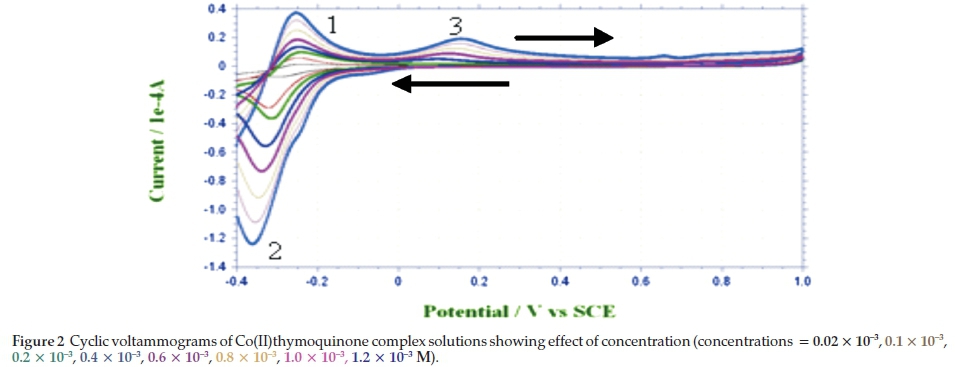
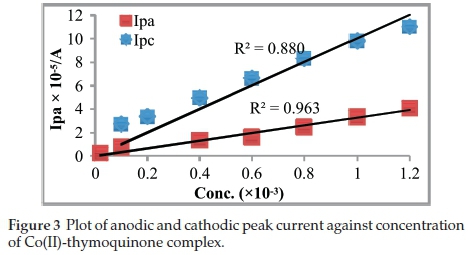
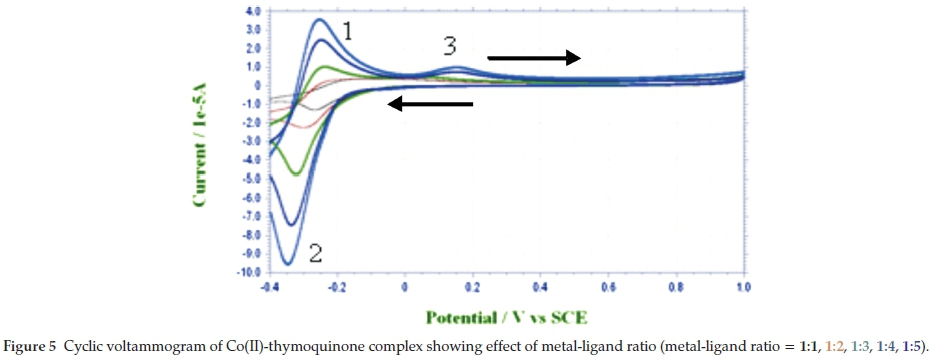
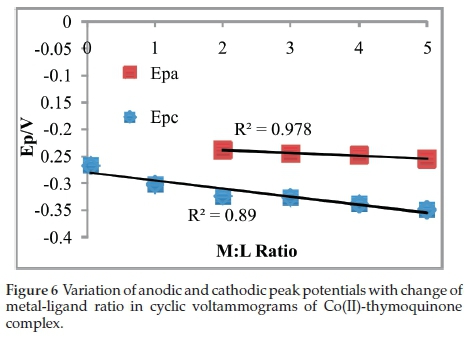
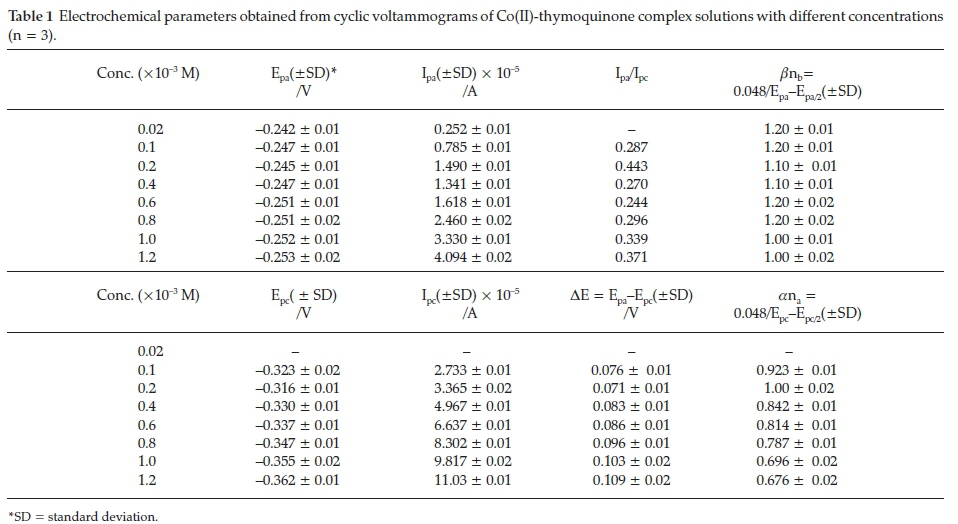
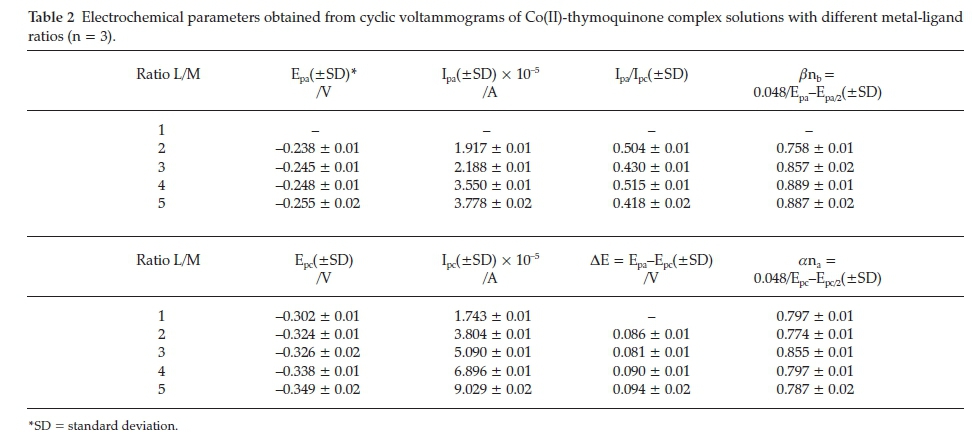
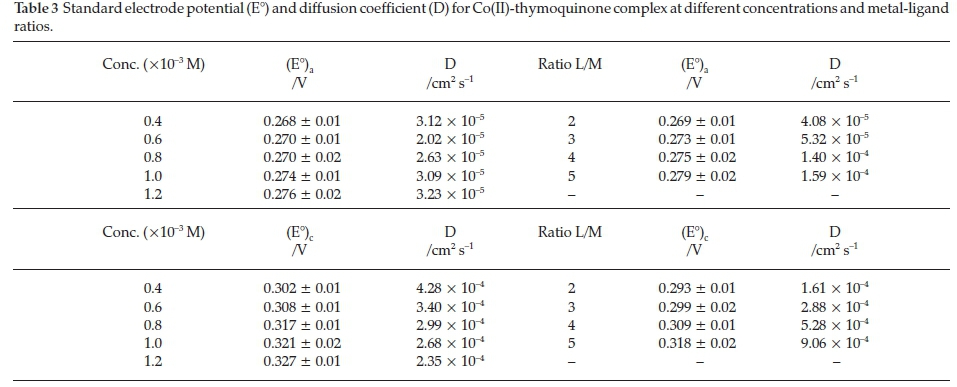
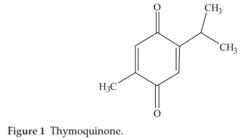
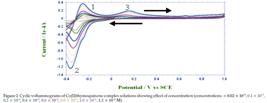
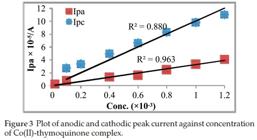
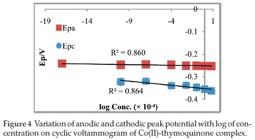
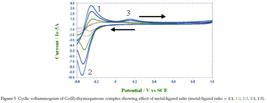
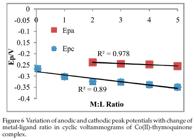
In this research quantitative studies of Co(II)-thymoquinone complex was performed using cyclic voltammetry. The electrodes used were glassy carbon as working, saturated calomel as reference and platinum as auxiliary electrode. All the work was done at standard temperature (25 ± 1 °C) in aqueous medium using NaCl as supporting electrolyte. Effects of different parameters, i.e. concentration and metal-ligand ratios on complex formation were investigated. Observations obtained by varying the metal-ligand ratio suggested a quasi-reversible electron transfer process in the complex. The effect of concentration followed the Randles-Sevcik equation. Values of the standard electrode potential (E°), diffusion coefficient (D), transfer coefficients (a and β) and different electrochemical parameters were also calculated. The E° for the complex was found to be 0.288 ± 0.01 V. The a values ranged between 0.676 ± 0.02-1.00 ± 0.02 whereas the values of β were found to be 0.758 ± 0.01-1.20 ± 0.01 respectively. Linear regression showed that cyclic voltammetry could be useful for the quantification of Co(II)-thymoquinone complex in pharmaceutical analysis.
Co(II)-thymoquinone complex; cyclic voltammetry; effect of concentration and metal-ligand ratio; Randles-Sevcik equation; quasi-reversible behaviour
 Thumbnail
 Thumbnail
 Thumbnail
 Thumbnail
 Thumbnail
 Thumbnail