A non-dispersive infrared sensor for real-time detection of cyanogen chloride
Abstract
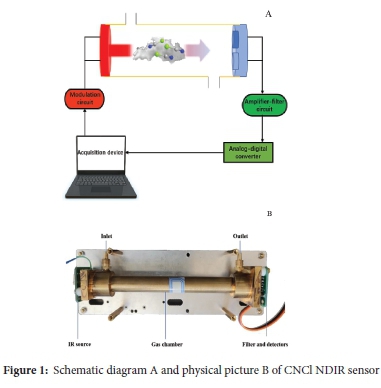
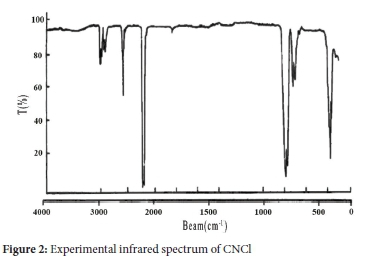
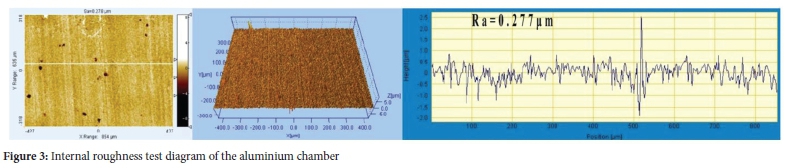
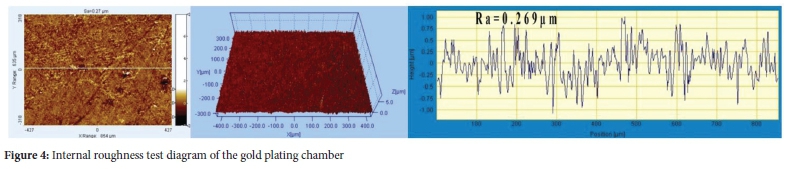
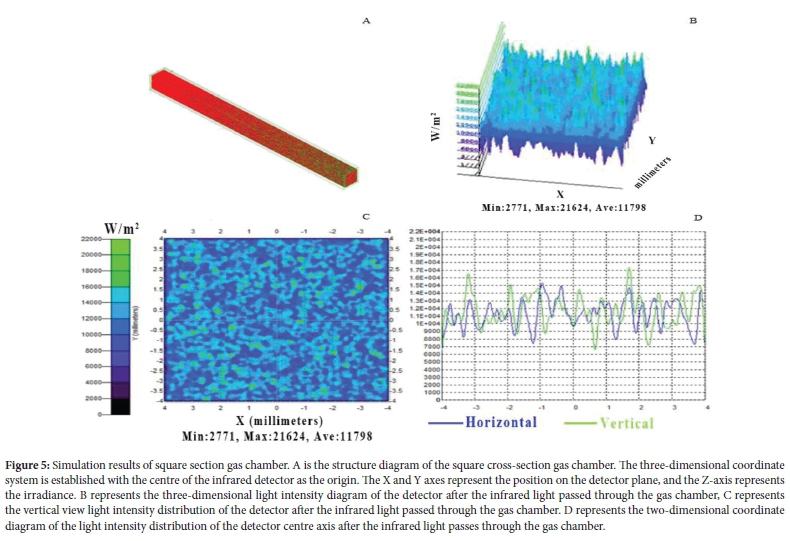
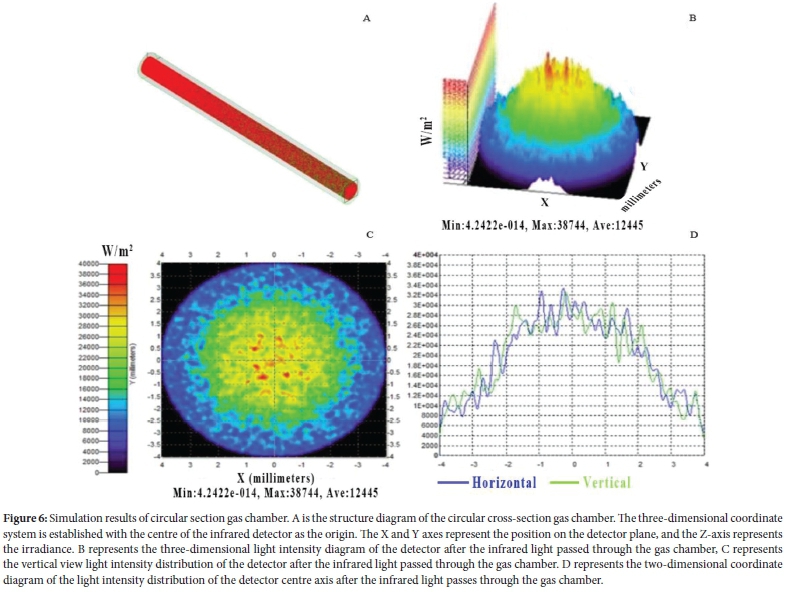
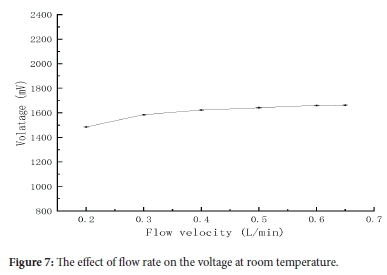
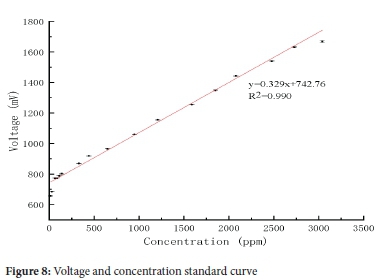
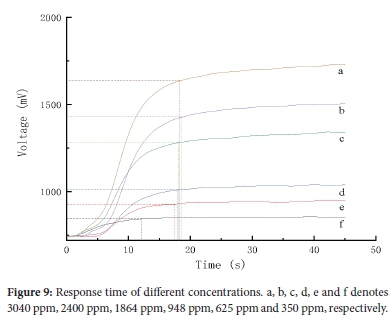
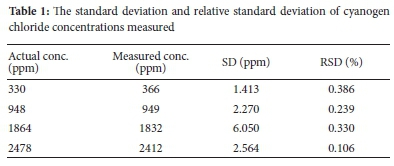
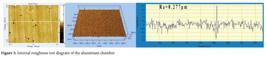
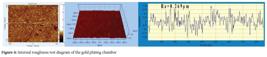
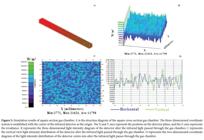
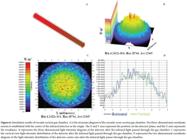
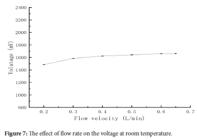
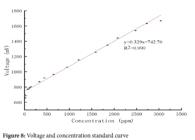
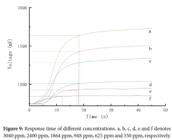
Cyanogen chloride, as a systemic toxic agent, can cause death rapidly. In this paper, a non-dispersive infrared sensor was designed for the infrared absorption detection of cyanogen chloride at 800 cm-1. The roughness of the internal coating material was analyzed by experiments, and the gold-plated gas chamber was selected. The light path propagation of different cross-section gas chambers was simulated, and the circular section gas chamber was selected to increase the infrared detector signal. The effect of flow rate on voltage was studied. The standard curve between voltage and concentration was obtained under the optimal condition of 0.4 L min-1. The maximum response time was 19 s, and RSD was less than 2%. The interference experiment results showed that common gases entering the gas chamber do not cause interference. The non-dispersive infrared sensor for cyanogen chloride has good stability and detects cyanogen chloride in real-time.
cyanogen chloride; NDIR; real-time; qualitative analysis; quantitative analysis
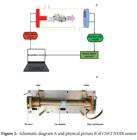 Thumbnail
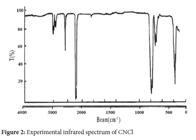 Thumbnail
 Thumbnail
 Thumbnail
 Thumbnail
 Thumbnail
 Thumbnail
 Thumbnail
 Thumbnail