Computer-Aided: Modelled Sustainable Hybrid Catalysts for a Nano-drug Delivery System
Abstract
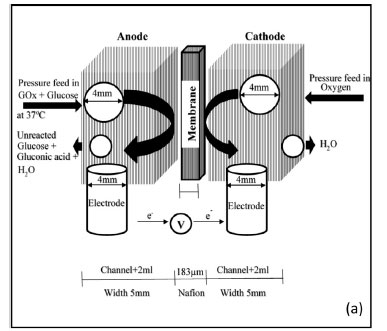
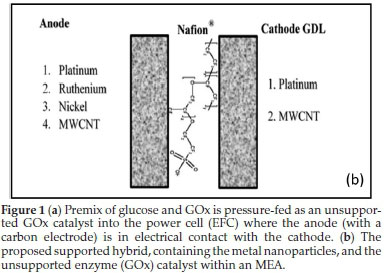
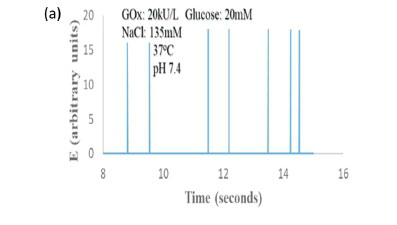
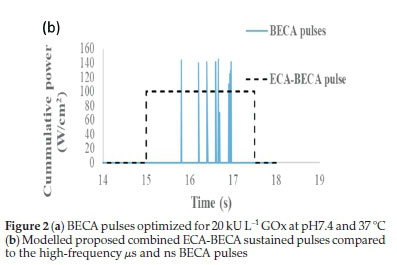
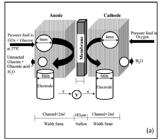
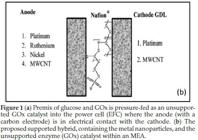
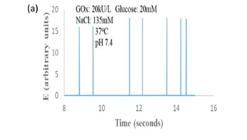
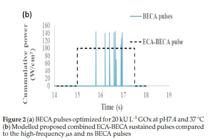
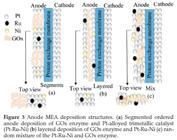
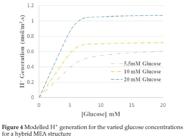
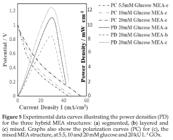
We evaluated a hybrid catalytic power source for less invasive internal electroporation with better tissue reach than the widely used and more invasive external electroporation. We modelled how open-circuit voltage optimizes platinum-loading in catalysts to improve the electrochemical activity (ECA) possible from bioelectrogenesis through these systems and address the high costs of nano-drug delivery systems. The effects of the catalysts' convective flux and proton concentration were modelled for an enzyme (glucose oxidase) biofuel cell that was fed glucose substrate at a current rate under isothermal physiological conditions. Glucose concentrations were varied relative to anode catalyst loading models with 0.1-0.5 mg cm-2 platinum and alloyed (Pt-Ru-Ni) with a narrow particle size distribution. Using the free (solvation) electron model, bioelectrochemical activity (BECA) and a high open circuit voltage were generated by 5.5,10 and 20 mM glucose with 20 kU L-1 glucose oxidase at 37 °C. BECA (glucose oxidase), on its own, produced pulses of various intensities for nano-microsecond durations whereas the hybrid BECA-ECA (glucose oxidase and platinum) anode catalyst provided sustainable pulses of microseconds-minute durations. Enhanced catalysis with the hybrid BECA-ECA's open circuit voltage favours compatibility of a hybrid-powered nano-drug delivery system for internal electroporation.
Catalyst optimization; platinum; alloys; free solvated electrons; hybrid fuel cell; drug delivery
 Thumbnail
 Thumbnail
 Thumbnail
 Thumbnail
 Thumbnail
 Thumbnail
 Thumbnail
 Thumbnail