Oxidation of 1-hexene using supported ruthenium catalysts under solvent-free conditions
Abstract
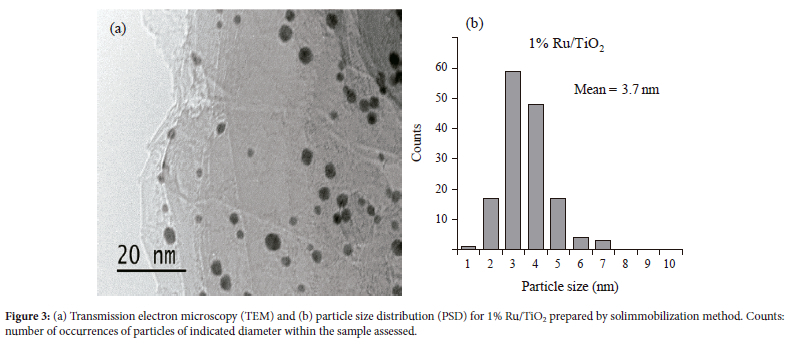
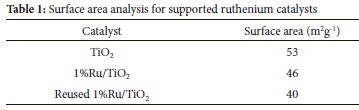
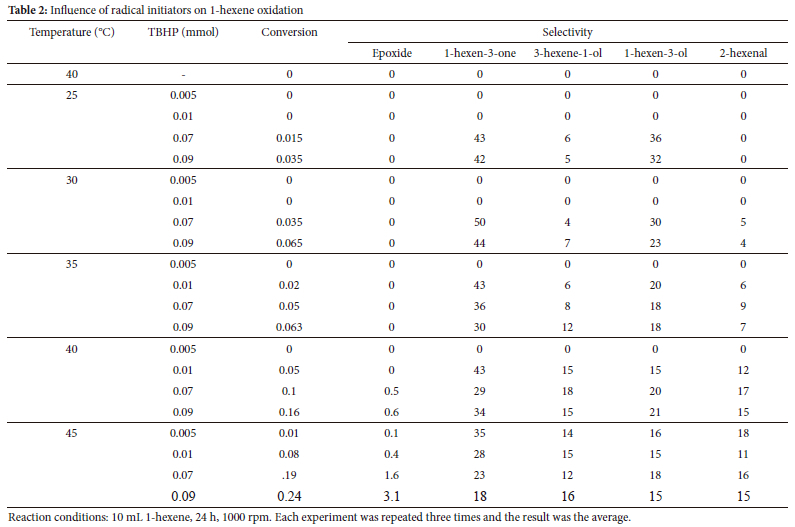
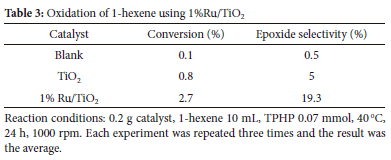
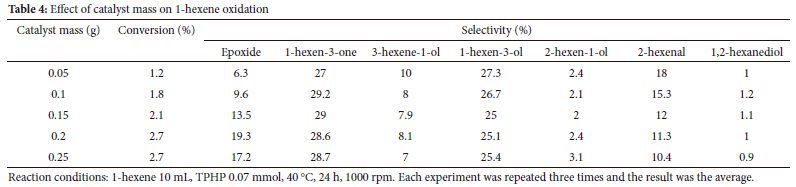
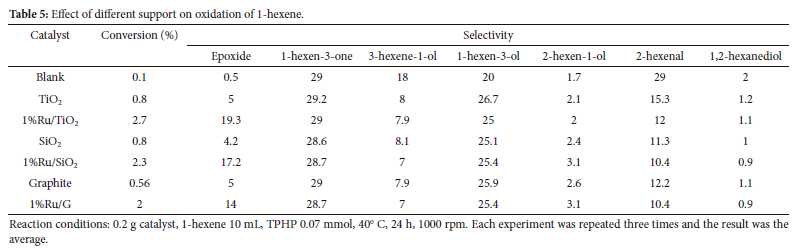
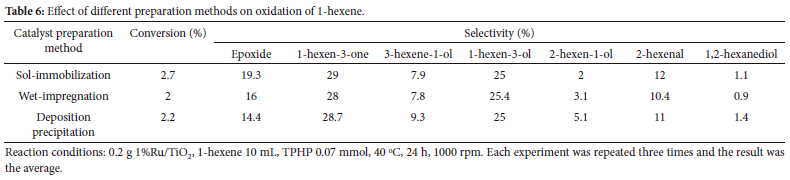
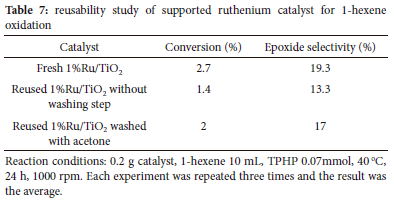
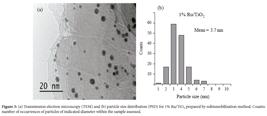
The study evaluated the solvent-free oxidation of 1-hexene utilizing supported ruthenium catalysts and a small amount of terbutyl hydroperoxide (TBHP) as a radical initiator. The characteristics of the supported catalysts were characterized using transmission electron microscopy (TEM) and N2 adsorption-desorption isotherms. The results of the study revealed that 1% Ru/TiO2 had favorable catalytic performance when subjected to environmentally friendly reaction conditions. This behavior was thought to be a result of Ru spreading and loading on the TiO2. To obtain optimal reaction parameters, the catalyst manufacturing process, temperature, reaction time, type of support, and activating amount were tuned. Compared to catalysts generated using wet-impregnation and precipitation techniques, those produced using sol-immobilization have greater activity.
1-hexene; oxidation; epoxide; ruthenium catalyst; sol-immobilization
 Thumbnail
 Thumbnail
 Thumbnail