Cytotoxic effects of Green Synthesised Canavalia rosea-derived ZnO nanoparticles
Abstract
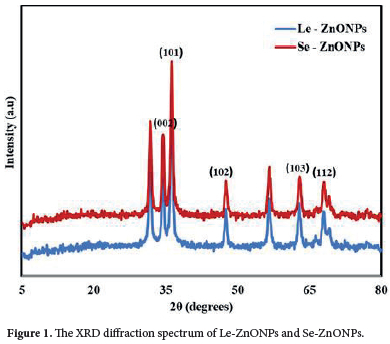
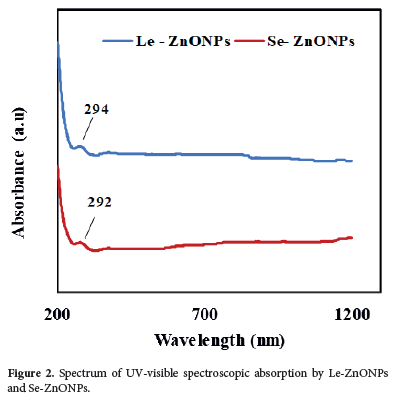
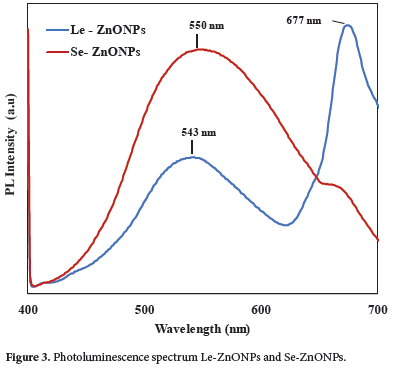
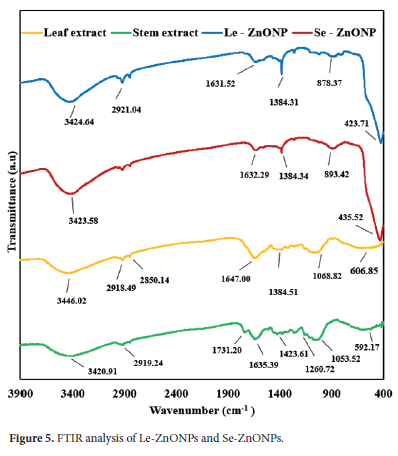
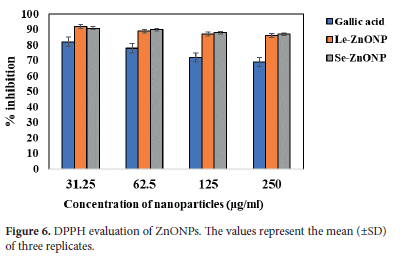
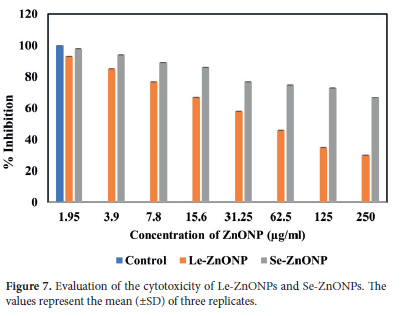
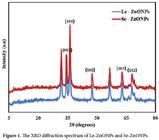
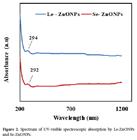
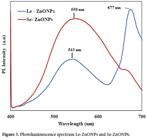
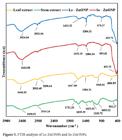
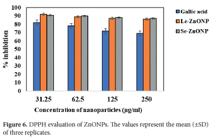
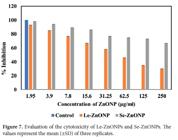
The investigation confirms the biosynthesis of zinc oxide nanoparticles and their antiproliferative capacity; this is the preeminent study to utilise Canavalia rosea leaf and stem extracts. Characterization techniques including Energy-dispersive X-ray spectroscopy, X-ray Diffraction, Fourier-transform Infrared Spectroscopy, UV-Vis Spectroscopy, Field-Emission Scanning Electron Microscopy, and Photoluminescence reveal the structural properties. By employing the DPPH assay, the antioxidant capacity of Le-ZnONPs and Se-ZnONPs at various concentrations (μg ml-1), including 31.25, 62.5, 125, and 250, was assessed. According to FESEM analysis, the agglomerates of irregular-shaped zinc nanoparticles have a size range of 50 to 100 nm. In the DPPH assay, the antioxidant activity of both ZnONPs presented a more favourable response, with inhibition ranging from 80 to 90 percent. The cytotoxic effect of ZnONPs on MCF-7 cells was assessed by determining the IC50 values for Le-ZnONPs (52.08 μg ml-1) and Se-ZnONPs (636.3 μg ml-1). The substantial outcomes associated with the cytotoxic and antioxidant capacities of ZnONPs indicate that they may possess antiproliferative properties.
in-vitro cytotoxicity; zinc nanoparticles; Canavalia rosea; MCF-7; FE-SEM; FTIR analysis
 Thumbnail
 Thumbnail
 Thumbnail
 Thumbnail
 Thumbnail
 Thumbnail