Unary Adsorption of Phthalates from Wastewater onto Water Hyacinth Biochar: Parameters, Drivers and Mechanism
Abstract
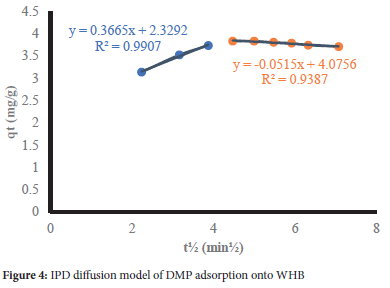
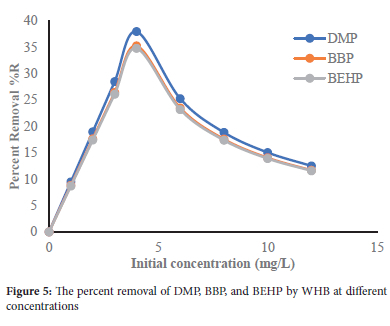
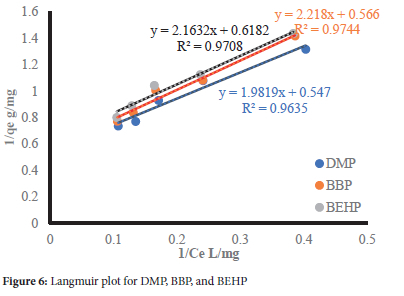
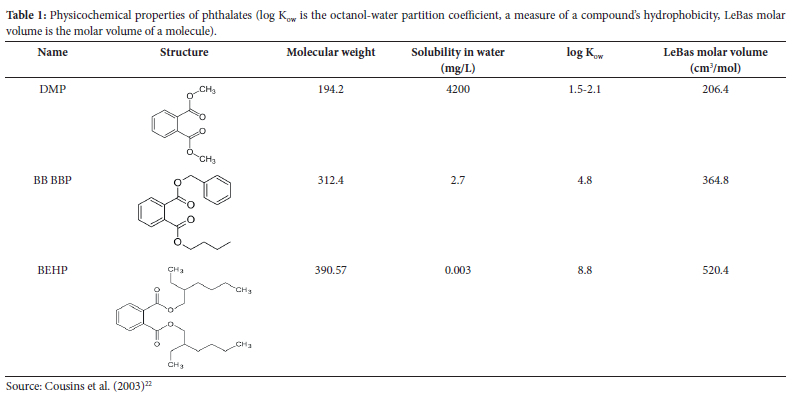
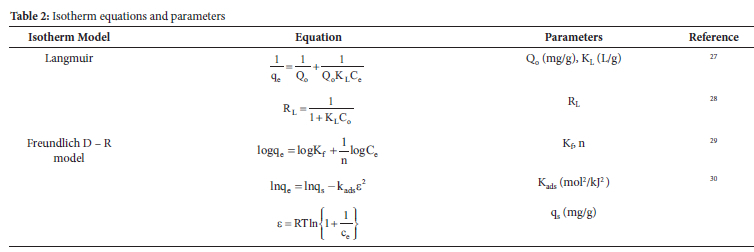
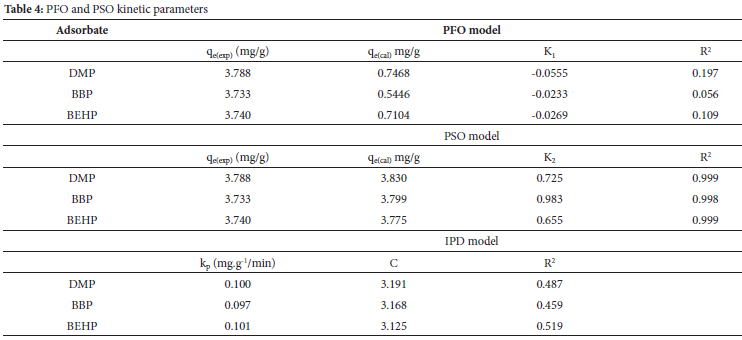
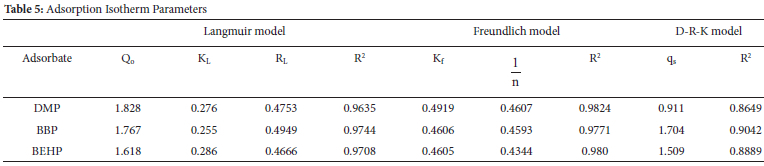
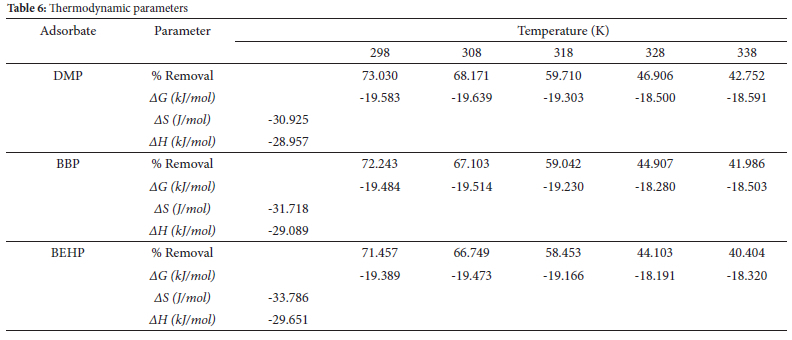
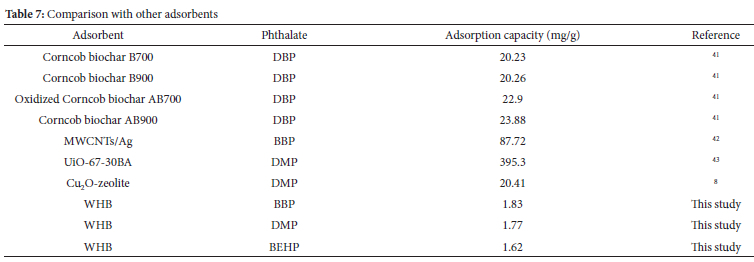
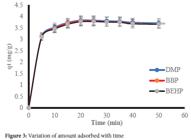
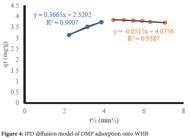
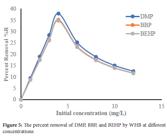
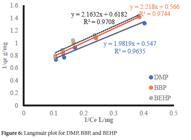
In this study, water hyacinth root-derived biochar (WHB) was prepared as a low-cost adsorbent for the removal of three phthalates, namely, benzyl butyl phthalate (BBP), dimethyl phthalate (DMP) and bis(2-ethylhexyl) phthalate (BEHP) from single solute aqueous solutions. The equilibrium data were best described by the adsorption isotherm models in the order Freundlich>Langmuir>Dubinin-Radushkevich-Kaganer (D-R-K) isotherms. The maximum monolayer adsorption capacity (Qo) was 1.83, 1.77, and 1.62 mg/g for DMP, BBP, and BEHP, respectively. The adsorption of the phthalates was diminished by increased molecular weight and molar volume of the molecules but compensated by their hydrophobicity. The kinetic data were best described by the pseudo-second order (PSO) model and pore diffusion was not the sole operative rate-determining step. The calculated thermodynamic functions, changes in Gibb's free energy (ΔG<0), enthalpy (ΔΗ<0), and entropy (ΔS<0) demonstrate the adsorption of DMP, BBP, and BEHP onto WHB is energetically favorable, exothermic, spontaneous and of a physical type controlled by hydrophobic interactions. The comparative adsorption capacities imply that WHB would sequester phthalates regardless of their physicochemical profiles.
Phthalates; Water hyacinth biochar; adsorption; physicochemical properties
 Thumbnail
 Thumbnail
 Thumbnail
 Thumbnail
 Thumbnail
 Thumbnail