Effects of precursor salt on colloidal cobalt oxyhydroxides composition and its application in non-enzymatic glucose electrooxidation
Abstract
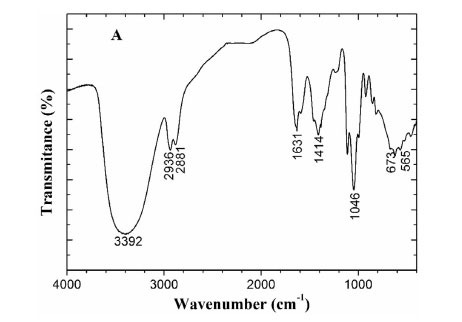
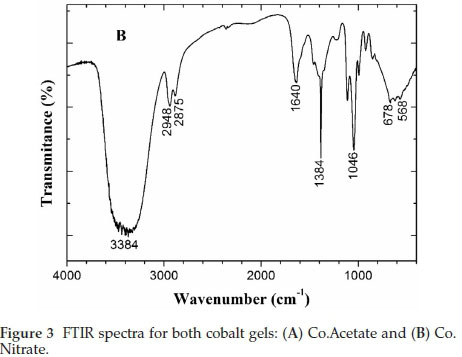
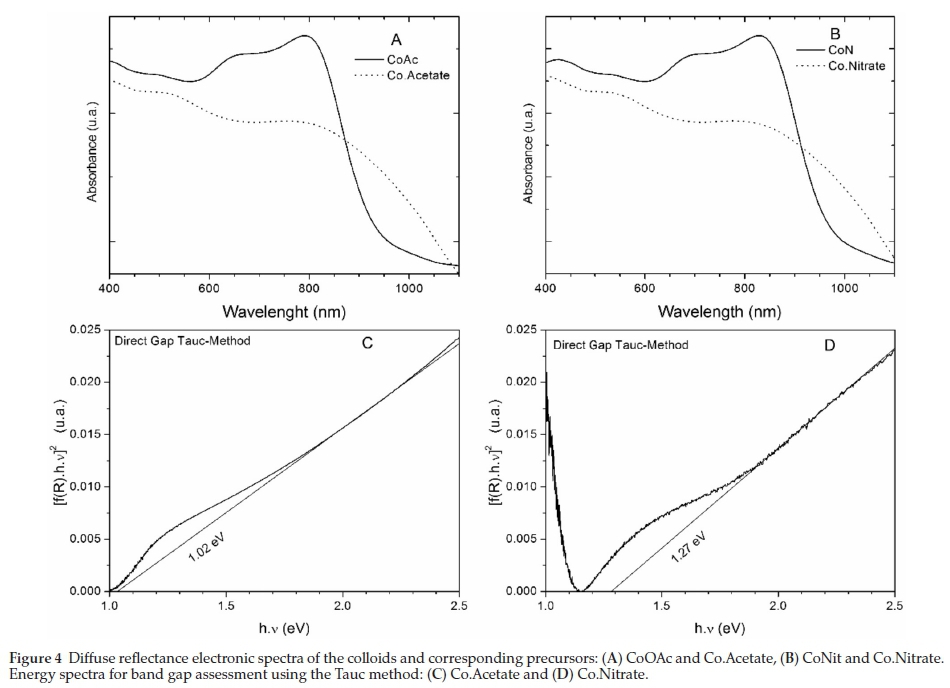
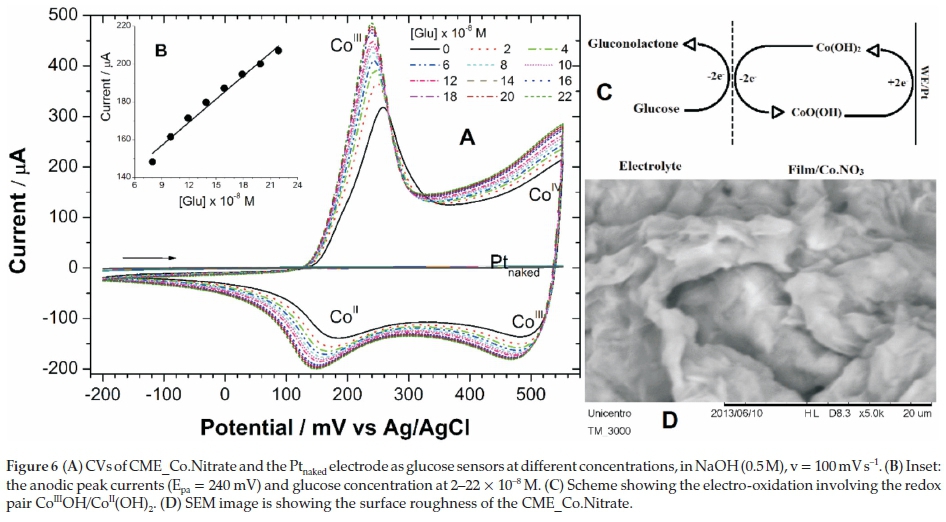
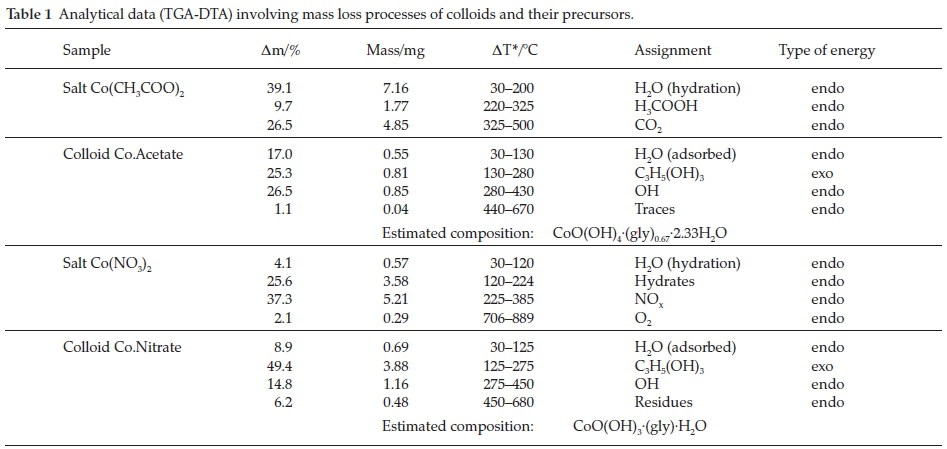
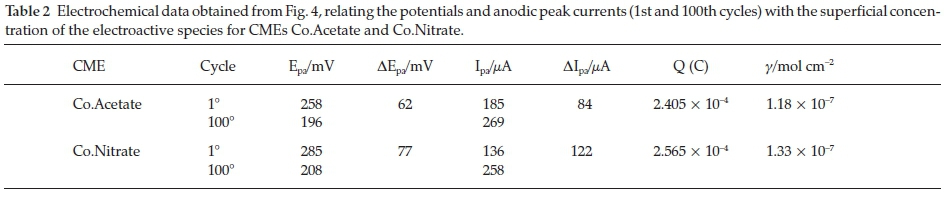
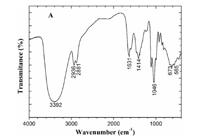
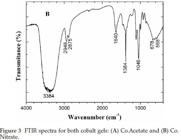
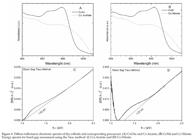
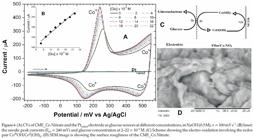
Colloidal cobalt oxyhydroxide [CoO(OH)] has been prepared from precursors cobalt acetate and cobalt nitrate. The cobalt colloids (Co.Acetate and Co.Nitrate) were characterized by simultaneous thermogravimetric/differential thermal analysis, scanning electron microscopy with energy-dispersive X-ray spectroscopy, Fourier transform infrared and electronic spectroscopy. Characterization data indicated the presence of counter ions (CH3COO- and NO3-), likely intercalated within the structure of the colloidal cobalt. The platinum working electrode chemically modified with cobalt colloid was studied by cyclic voltammetry in alkaline solution [0.5 M, NaOH], which revealed differences in the reproducibility and stability of the electroactive material. The colloidal Co.Nitrate modified electrode was applied to the non-enzymatic glucose (Glu) electrooxidation in the concentration range from 7.2 to 21.9 X 10⁸ mol L-1. The limits of detection (5.87 X 10 8 mol L-1) and quantitation (1.96 X 10 7 mol L-1) calculated suggest that colloidal Co.Nitrate has the potential to be used as a sensor for low glucose concentration.
Salt inorganic; colloidal cobalt; electrooxidation; low glucose concentration
 Thumbnail
 Thumbnail
 Thumbnail
 Thumbnail