Adsorption-Kinetic Studies of Mordant Exhaust Dyeing of Cotton and Silk Fabrics with Dye Extract of M. lucida Plant Species
Abstract
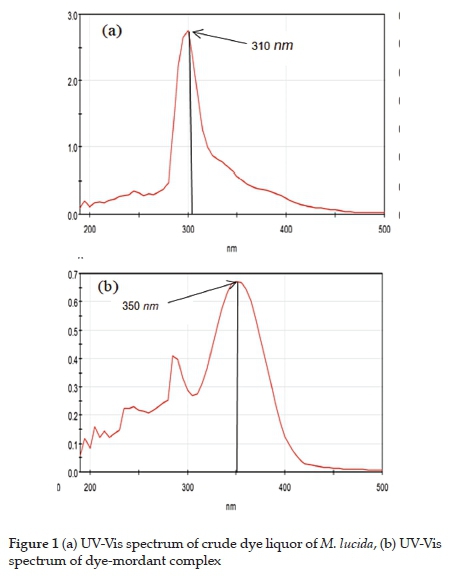
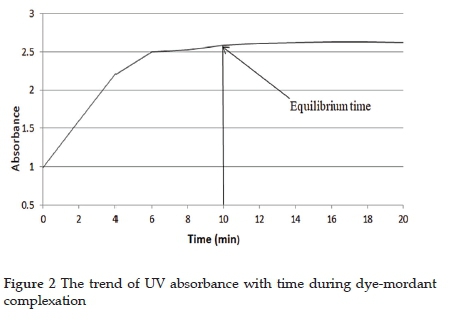
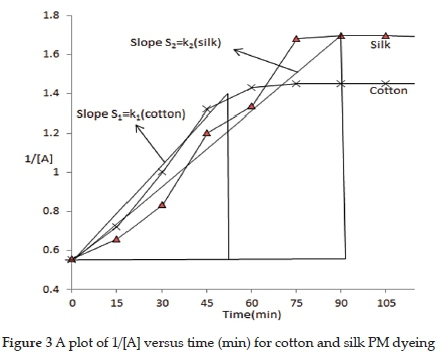
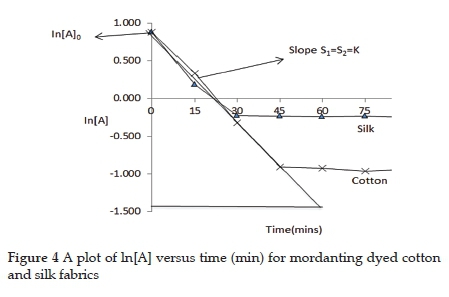
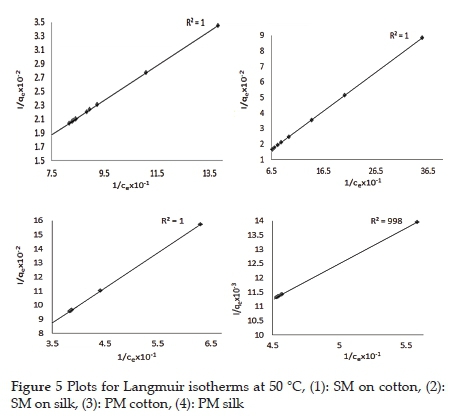
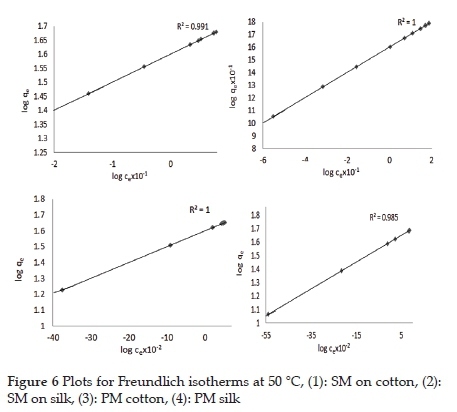
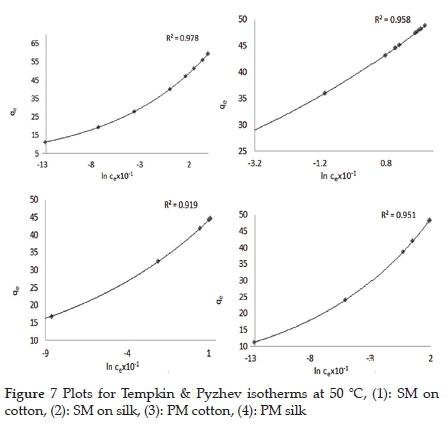
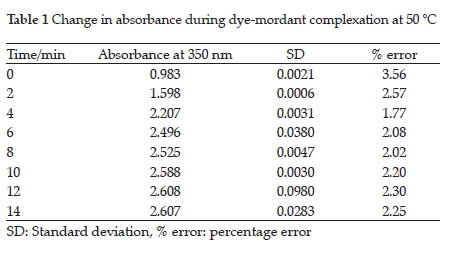
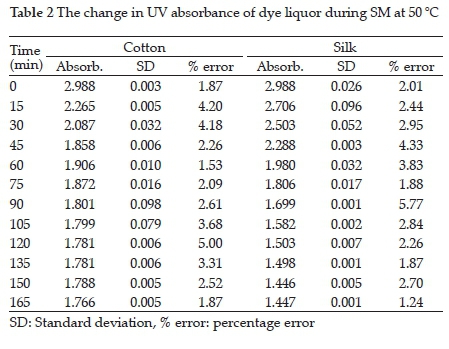
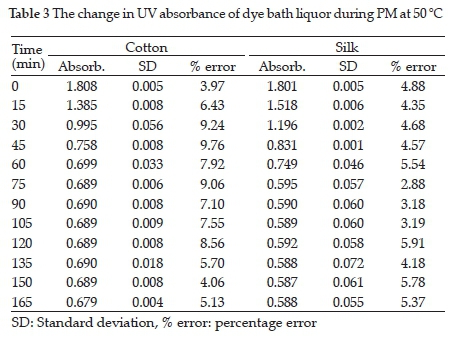
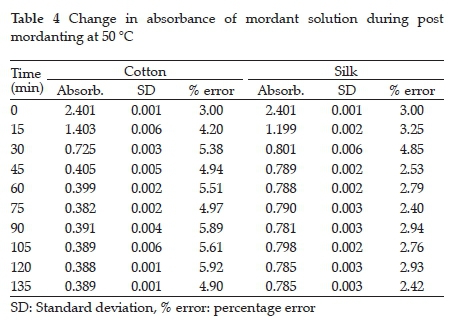
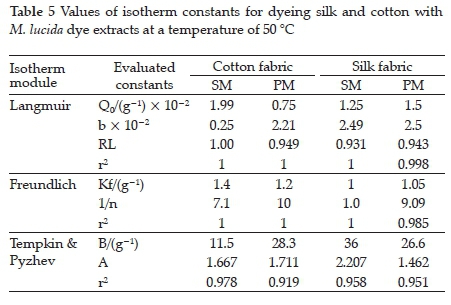
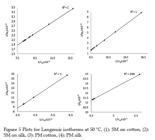
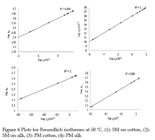
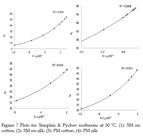
The kinetics and adsorption isotherms of the extremely slow traditional natural exhaust dyeing that takes many hours or days have been studied purposely to find means of improving the process. The dyeing of cotton and silk fabrics using dye extract of M. lucida at 50 °C were elucidated with graphs to predict the reaction orders and identify the appropriate adsorption isotherm model(s). Since the dye is UV active, changes in UV absorbance were used in place of changes in concentrations. The simultaneous and post mordanting methods followed pseudo-second-order reactions, hence chemisorption. However, mordant application to the dyed fabrics during post mordant followed a pseudo-first-order model, largely physisorption. Dyeing has followed Langmuir and Freundlich isotherm models with linear correlation r2 ranging between 1 and 0.998. From the Freundlich model and values of Langmuir constant RL (0.9307 to 1.0), the process is homogeneous, forming a favourable and linear monolayer. Accordingly, the dyeing speed can be improved by increasing the concentration of dye liquor. Additionally, according to the Freundlich model, higher dye intensity on fabrics is recorded in post mordanting.
adsorption isotherms; equilibrium; exhaust dyeing; mordant; rate law
 Thumbnail
 Thumbnail
 Thumbnail
 Thumbnail
 Thumbnail
 Thumbnail
 Thumbnail