Thermally regulated green living wall
Abstract
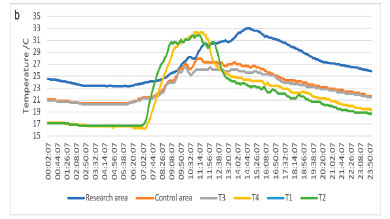
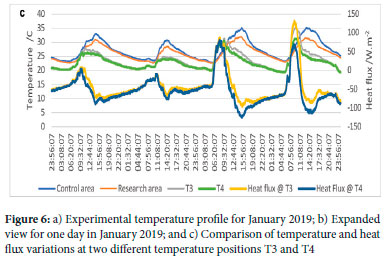
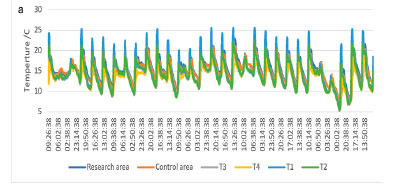
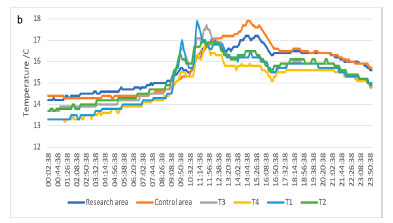
Green living walls can improve the aesthetic quality of a building and moderate the temperature within it. The purpose of this paper is to examine whether the green wall has any effect on the interior temperature of the building in the hot and cold months of the year. Temperatures on an outside wall as well as on research and control areas were monitored to capture temperature data for a one-year period that encompassed all seasons: sunny, cold and wet. The findings of this research contribute to the knowledge of the effects provided by green living walls in terms of cooling and heating, the influence on the proximity microclimatic conditions, and overall energy transfer. Heat flux of 20-100 W/m2 was found indicating an insulating effect that brings about cooling in the interior of the building. During summer months a cooling effect of 2-4 °C was observed, while the opposite effect was observed during winter in that the temperatures did not drop by much but provide a insulating effect of 2-3 °C higher than it was for the control area. Altogether, green living walls could be implemented to reduce and insulating interior living conditions and therefore reduce building energy demands.
energy performance; energy saving; green living wall; heat flux; indoor-outdoor analysis temperature measurements
 Thumbnail
 Thumbnail
 Thumbnail
 Thumbnail
 Thumbnail
 Thumbnail
 Thumbnail
 Thumbnail
 Thumbnail
 Thumbnail
 Thumbnail
 Thumbnail
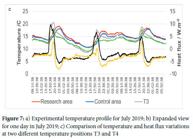 Thumbnail
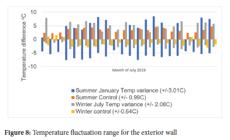 Thumbnail